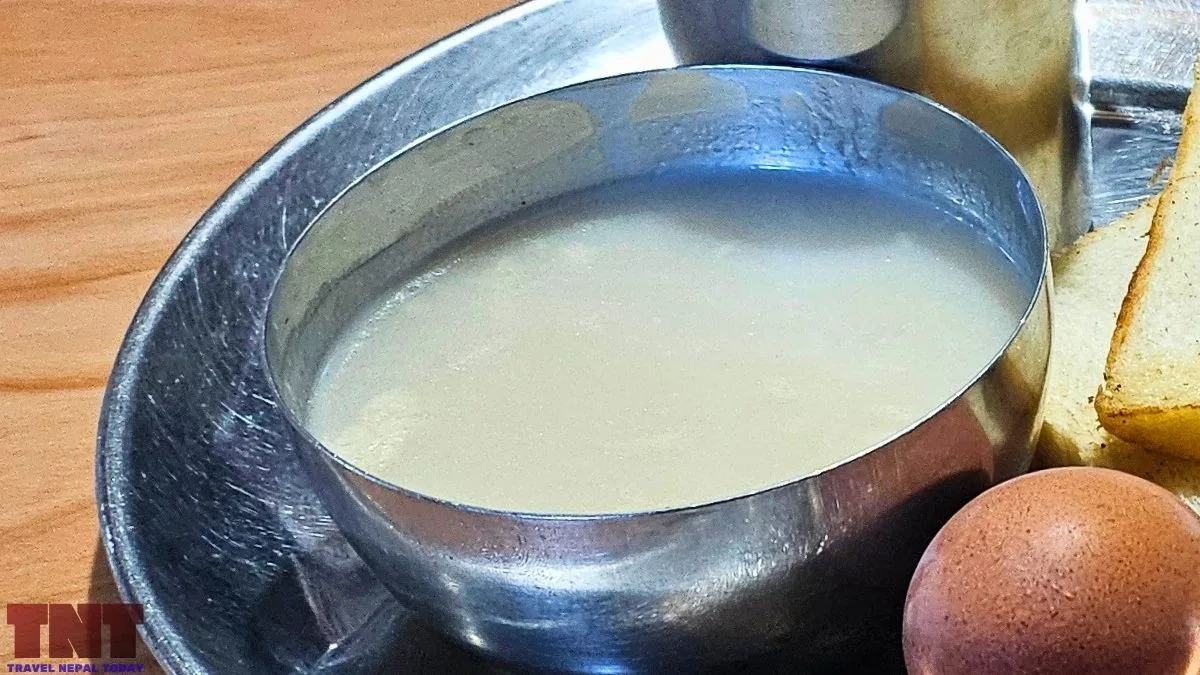
I will say it right away: garlic soup for altitude sickness is a myth, but garlic soup for trekking is still a very good idea!
Those two statements sound like they clash, but they do not. The gap between them is what this article is about.
As a food technology student, I wanted to check the chemistry behind the claim. On my Annapurna Base Camp trek, I ate garlic soup for breakfast, and it was delicious. That is a real experience, but it is not evidence, so I went looking for evidence.
Below you will find what medical bodies say, what a study of Nepali pilgrims found at 4,380 m, what happens to garlic in the pot, what a bowl really costs, and who should skip it. You will also get a recipe for making it on the trail.
Does Garlic Soup for Altitude Sickness Actually Work?
No! No good evidence shows that garlic prevents or treats altitude sickness, and the main health bodies say so plainly.
The US National Center for Complementary and Integrative Health, part of the NIH, states that no evidence supports claims that garlic helps with altitude illness.
A fact sheet from the International Society of Travel Medicine lists garlic alongside coca leaves and ginkgo as things that do not prevent it, despite popular belief.
To see why, look at what causes the problem. Acute mountain sickness (AMS, the headache, nausea, dizziness, and poor sleep that can hit when you climb too fast) comes from going up faster than your body can adjust to thinner air.
It is not a deficiency of garlic, vitamins or any other food!
The proven protection is a slow climb. Above 3,000 m, the Wilderness Medical Society advises gaining no more than 500 m of sleeping altitude per night and adding extra acclimatization days as you go higher, a rule the CDC Yellow Book repeats for 2026. No soup appears anywhere in that rule!
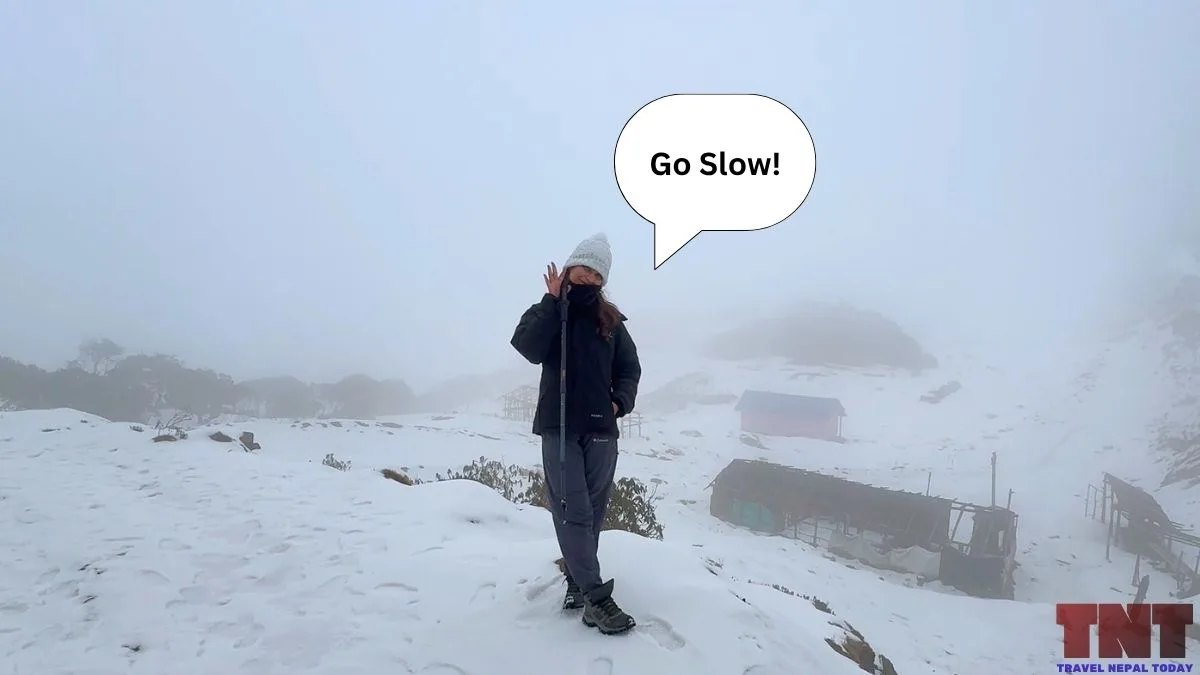
Garlic soup is also not a substitute for Diamox (acetazolamide), the prescription pill some doctors recommend when a fast ascent cannot be avoided. That decision belongs to you and your doctor.
So, where does the belief come from? My reading is that menus, guides and repetition built it.
A hot bowl feels like it must be doing something, and symptoms often settle after a night’s rest, so the soup collects credit it did not earn.
What a Study of Nepali Pilgrims Tells Us About Garlic
In 2012, researchers measured altitude sickness in pilgrims climbing to Gosainkunda (4,380 m) in Rasuwa, and the people who used garlic to prevent it got sick more often.
The numbers come from a PLOS ONE study by teams from the University of British Columbia and Tribhuvan University’s Institute of Medicine.
Each year thousands of pilgrims walk from Dhunche (1,950 m) to the lake for the Janai Purnima festival, often in 1 to 2 days. The team recruited 538 of them in Dhunche and assessed 491 on arrival at the lake.
Of those, 34% had AMS. About 70% had used garlic, ginger, lemon or mountain pepper (a Zanthoxylum spice) to prevent it, and those who chose garlic were about 1.7 times as likely to be sick as those who did not (relative risk 1.69).
Does that mean garlic causes altitude sickness? No, and the authors say so. Everyone eats some garlic in daily food, so a physical cause is unlikely. Their explanation is that people who trust a food remedy may pay less attention to what works, such as a slower climb.
The study has limits. Pilgrims picked their own pace and their own remedies, nobody was randomly assigned to eat garlic, and doses and timing went unrecorded. Speed mattered too: those who climbed in 1 day were more likely to get AMS than those who took 2 days.
The authors also cite an earlier experiment in which garlic eaten before exercise in low-oxygen air left oxygen use, oxygen saturation, heart rate, blood pressure and performance unchanged compared with a placebo.
That is not a trial of garlic soup. Still, it is the closest evidence from Nepal’s own mountains, and it points in one direction.
Here is the useful lesson: belief in a food remedy did not protect anyone at Gosainkunda. The thing that did matter, climbing speed, is the thing no soup can change.
What Happens to Garlic When You Crush, Boil and Drink It?
Crushing a clove starts a reaction that makes allicin, but heating soup soon stops the enzyme behind that reaction, so boiled garlic soup is chemically different from raw crushed garlic.
Here is the chemistry in plain terms: An intact clove keeps alliin (a sulfur-containing compound) and alliinase (an enzyme, meaning a protein that speeds up a reaction) in separate compartments. When you crush, chop or chew, the two meet and alliinase turns alliin into allicin, which gives garlic its smell and bite.
Allicin does not last. In water, it quickly breaks down into other sulfur compounds, including diallyl sulfide, diallyl disulfide, diallyl trisulfide and ajoene, according to a 2007 PNAS paper.
Those breakdown products carry much of the flavour you taste in a finished broth.
Heat matters even more! In rat experiments published in the Journal of Nutrition in 2001, a minute of microwaving crushed garlic wiped out its measured effect because it destroyed alliinase, but letting the crushed garlic stand for 10 minutes first saved part of the effect.
The test measured cancer-related activity, which has nothing to do with altitude. The kitchen lesson still holds: crush, wait 10 minutes, then cook.
Altitude changes the cooking too! At Annapurna Base Camp (4,130 m), water boils at about 85°C, because the boiling point falls by roughly 1°F for every 500 ft you climb, according to a New Mexico State University guide.
That is gentler than a sea-level boil, so food takes longer to cook. The heating studies suggest a simmer long enough to cook the soup will still switch the enzyme off.
Garlic’s sulfur compounds are clearly active in the lab. The same PNAS team saw them widen the blood vessels of rats, which sounds relevant to altitude. Here is why it mostly is not, which is exactly how a lab result turns into a trekking myth!
That is a lab result, and a lab result is not a trekking result. Being active in a dish and protecting someone at 4,000 m are different claims, and the simple version is just below.
What about chewing a raw clove? Chewing makes allicin instantly, so it is the strongest version, and NIH notes that garlic’s side effects are more noticeable with raw garlic. No trial shows that chewing it helps with altitude sickness either.
Garlic Explained Simply
What does allicin do? Allicin is the sharp-smelling compound that forms when you crush garlic. In the plant, it works as a defence against germs and pests. In lab dishes, it kills some bacteria, but a lab dish is not your body, and nobody has shown that eating garlic soup treats an infection.
What do the sulfur compounds do? Allicin breaks down quickly into other sulfur compounds. They give cooked garlic its smell and taste. After you eat them, they travel through your body and leave through your breath and skin, which is why garlic stays with you for hours. In the lab, some of them also widen blood vessels, which leads to the last point below.
Where are garlic’s medicinal uses? Folk medicine uses garlic for colds, infections and the heart. The best modern evidence is modest. The NIH says garlic supplements (pills, not soup) may lower cholesterol a little in people with high cholesterol, and the evidence for blood pressure and blood sugar is weaker. None of this evidence is about altitude.
How do wider blood vessels connect to altitude? They mostly do not! Think of your blood vessels as pipes that carry blood. In the lab, garlic’s sulfur compounds made rat blood vessels wider, and some people guessed that wider pipes would carry more oxygen. But the problem at altitude is that the air itself holds less oxygen, not that the pipes are too narrow. Wider pipes do not put more oxygen into thin air, and nobody has tested this idea on trekkers, so it stays a guess.
Why Garlic Soup Still Works for Trekkers?
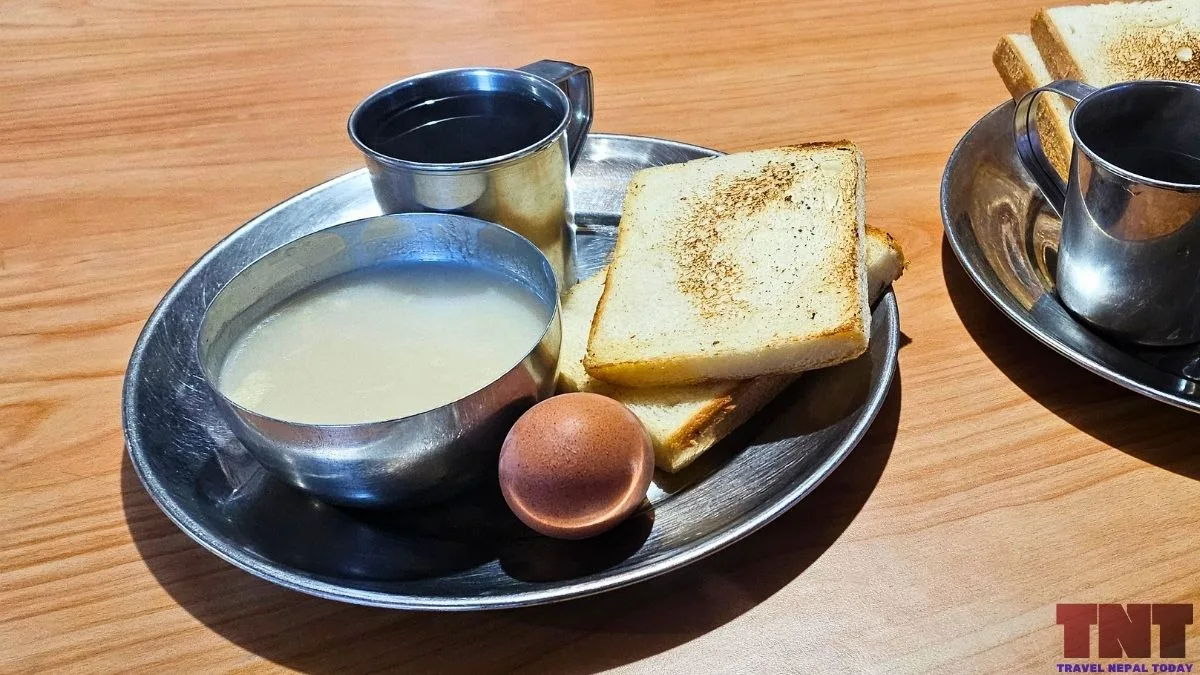
Garlic soup works as food: it delivers warm fluid, salt and a strong flavour in a form that is easy to eat when your appetite drops!
Here are the reasons I highly suggest trying at least a bowl of garlic soup a day:
- Appetite: Altitude can switch hunger off. In a chamber study of 27 healthy adults, 10 hours of low-oxygen air reduced hunger and appetite, mainly by cutting the desire for sweet, salty and fatty foods. Researchers who followed 12 trekkers up to 5,300 m tracked the same suppression of appetite and energy intake along the way.
- Taste: Here is my own working theory, and I want to be clear that it is only a theory. If sweet, salty and rich foods stop appealing, a broth built on pungent garlic may be one of the few things that still smells like something worth eating.
- Fluid and salt:Soup is water with salt, which makes it an easy way to take in fluid. The Wilderness Medical Society says forced overdrinking does not prevent altitude illness and raises the risk of hyponatremia (dangerously low blood sodium), yet staying hydrated still matters because dehydration can mimic AMS. A bowl of soup is fluid you actually want to drink!
- Practicality: Garlic soup needs no meat and no refrigeration, and garlic keeps well. In a kitchen where supplies arrive on someone’s back, that is a real advantage.
- Culture: Garlic is certainly a backbone of high-valley cooking. A Sherpa potato soup called rilduk starts with 5 cloves. A standalone garlic broth looks more like a trekking-menu staple that grew out of those garlic-heavy soups.
- Belief: People hear that garlic helps with altitude, order it, enjoy it, and recommend it. Popularity is not evidence, but it explains why the soup never leaves the menu.
All of this fits my breakfast at Annapurna Base Camp. I ate it happily, and a bowl that gets finished is a bowl that has done its job!
How Garlic Reaches a Tea House at 4,000 m and What a Bowl Costs?
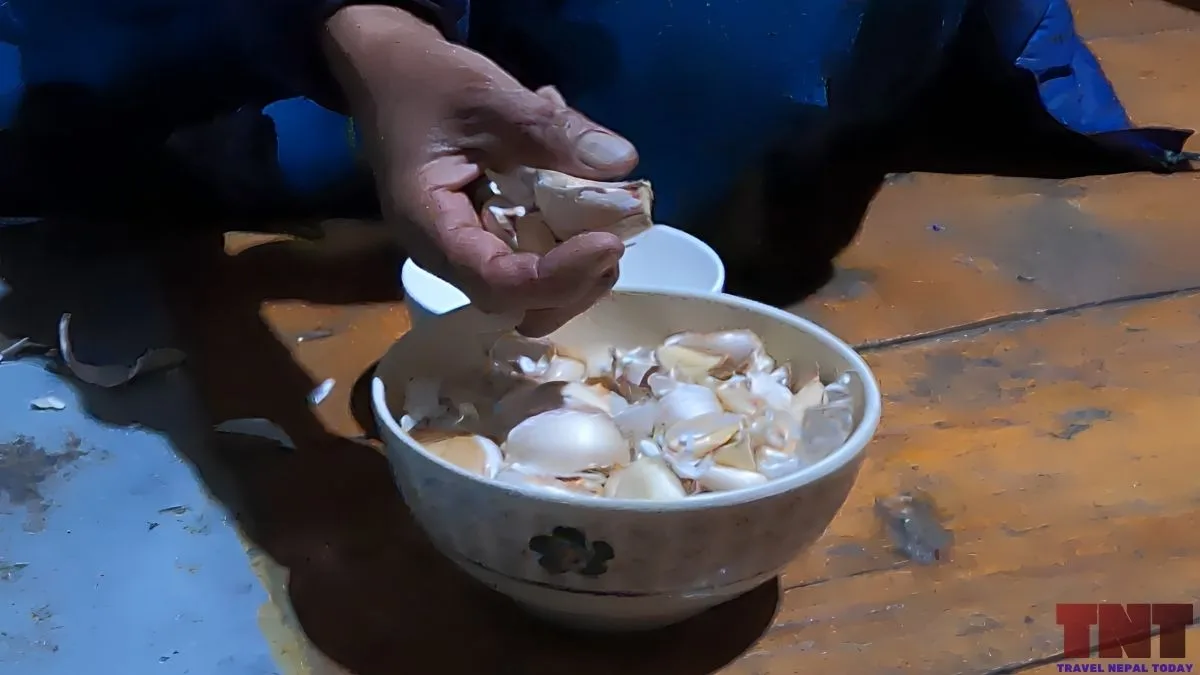
Nobody farms garlic at the base camps. Lodge kitchens buy it in lower valleys, it travels up by mule or porter, and a bowl costs roughly NPR 250 to 600 depending on route and altitude.
Garlic itself does grow in Nepal’s hills, including the high hills. Researchers at the Horticultural Research Station in Jumla trialled Bhote-type local garlic for the Karnali region in 2013/14 and 2014/15, because almost all earlier garlic research had focused on the Terai and mid hills.
In those trials, Mugu Local averaged about 48.5 tonnes per hectare against about 33.8 for Chinese garlic, roughly 44% more!
Local garlic still does not cover demand, so Nepal imports it. The Rising Nepal reported on January 4, 2026 that Nepal imported about 5,592 tonnes in the first 5 months of the fiscal year, and 5,575 tonnes came from China. By my math, that is 99.7% of imports.
The supply is fragile. A Kalimati trader told the paper that traders had sent Chinese garlic to India, where prices were higher, and Kathmandu retail prices tripled from about NPR 200 to NPR 700 per kg in 3 weeks!
Getting garlic to a tea house adds another leg. In Khumbu, OnlineKhabar reported in 2016 that supplies went by truck to Salleri, then by air to Syangboche, then by mule or on foot. Nothing grew in Phortse except potatoes and buckwheat, and a villager said prices there ran about 10 times Kathmandu’s!
What does a bowl cost? It’s about NPR 250 to 300 below 2,500 m, NPR 450 to 550 above 4,500 m, and NPR 400 to 600 on the Annapurna Base Camp route. Treat these as asking prices, because they vary by lodge and season.
Factors That Decide Whether Garlic Soup Helps You
Five factors decide what garlic soup does for you: how fast you climb, how it is cooked, how your gut reacts, what medicines you take and how much you eat.
| Factor | What It Changes | What to Do |
|---|---|---|
| Ascent speed | The biggest driver of AMS | Gain no more than 500 m of sleeping altitude per night above 3,000 m, with rest days. |
| Cooking method | Heat stops the enzyme that makes allicin | Crush, wait 10 minutes, then simmer. |
| Gut sensitivity | Garlic fructans can cause gas and bloating | Try a small bowl first, or skip it. |
| Medicines and allergies | Garlic can clash with some treatments, and allergies exist | Ask your doctor; avoid it if allergic. |
| Amount and timing | No dose has been shown to help with altitude | Eat it as a normal meal, not a ritual. |
This factor beats everything else on the table. The Gosainkunda pilgrims who climbed in 1 day got sick more often than those who took 2, and garlic made no difference!
If your itinerary gains height too fast, no soup can fix it, so check your plan before your menu.
Garlic Soup Cooking Method
Raw crushed garlic, boiled soup and dried powder each deliver a different mix of sulfur compounds.
At a lodge, you cannot control the method! But if you’re at a camp, crush the cloves and wait 10 minutes before heat, as in the recipe below.
Gut Sensitivity
Garlic is high in fructans (a type of carbohydrate). Fructans dissolve in water but not in oil, which is why garlic-infused oil is low in FODMAPs (Fermentable Oligosaccharides, Disaccharides, Monosaccharides, and Polyols) and why a broth can carry them.
People with IBS or fructan sensitivity may get bloating and cramps from a bowl of garlic soup.
Gas also expands as air pressure falls, a pattern doctors first reported in 1981 and named high altitude flatus expulsion, so a gassy food can feel worse at height!
Medicines and Allergies
Garlic allergy exists, and anyone with a known reaction should avoid it!
If you take blood thinners or have surgery planned, ask your doctor before eating large amounts of garlic or using supplements. An ordinary bowl of soup is not the same as a concentrated pill, but the question takes 1 minute to ask.
Amount and Timing
No study has found a dose or time of day at which garlic soup helps with altitude. Treat it as a normal meal.
I would keep it to a bowl or two a day, since side effects grow with quantity, and breakfast or arrival at the lodge are the easiest times to fit it in.
Too Much Garlic: Side Effects, Gas and the Stomach Question?
Normal soup portions are fine for most people, but too much garlic can cause bad breath, body odour, heartburn, stomach pain, gas and nausea, and some people are allergic as mentioned earlier.
Those side effects are listed by the NIH’s National Center for Complementary and Integrative Health, which also reports that garlic supplements may modestly lower cholesterol in people with high cholesterol, with weaker evidence for blood pressure and blood sugar. Those results come from supplements, not soup, and they say nothing about altitude.
Many families use garlic for gas or an upset stomach, and some people really do feel better. People often use the word gastric for acidity, gas, bloating and indigestion all at once, so it helps to ask which one is meant.
I found no good trials showing that garlic treats any of them, and it can work both ways: heartburn is a listed side effect, and garlic’s fructans (carbohydrates that gut bacteria turn into gas) cause gas in some people.
If garlic settles your stomach, keep using it. Part of the comfort may come from the warm, flavourful food itself, but that is my guess, not proven. Just do not count on it at altitude, where gas already expands and a trekker who feels nauseous or bloated may find garlic adds to the problem.
If a bowl leaves you burping or with heartburn, drop to one a day or switch to something else.
Alterntives to Garlic Soup on Trekking Trails
If garlic puts you off, skip it. Nothing in garlic is required for acclimatization, and other warm foods give you the same fluid and calories.
Liking garlic is partly genetic. A Monell Center-led study using UK Biobank data linked 268 variants across 117 taste and smell receptor genes to preferences for 96 foods, garlic among them. Raw, roasted and boiled garlic also smell different, so someone who hates one version may tolerate another.

Dislike is not the same as allergy or intolerance either. Order one of these instead:
- Plain vegetable or noodle soup: Ask the kitchen to leave out the garlic.
- Dal bhat (rice and lentils): It gives you carbohydrate, protein and fluid on one plate.
- Porridge or boiled potatoes: Easy carbohydrate when appetite is low.
- Ginger or lemon tea: Warm fluid, nothing more. The Gosainkunda pilgrims used ginger and lemon as remedies too, and neither was linked to lower AMS, so enjoy them as drinks, not protection.
Tea or coffee? Yes, but I say only 8 to 9 hours before sleep. Read my caffeine at high altitude guide to learn more.
The rule is the same for every option: food keeps you fed and hydrated, and slow ascent keeps you well.
How to Make Garlic Soup on a Trek or Carry It as Powder?
A good camp garlic soup takes 5 cloves, 400 ml of water and about 20 minutes, and it works best if you crush the garlic and wait 10 minutes before heating.
Ingredients for 1 serving:
- 5 garlic cloves (about 15 g)
- 1 teaspoon oil or ghee
- 400 ml water
- A pinch of salt and black pepper
- Optional: a thin slice of ginger, or a handful of noodles for energy
Method:
- Peel and crush the cloves, then leave them for 10 minutes.
- Warm the oil on low heat, add the garlic and stir for 30 seconds without letting it brown.
- Add the water and simmer gently for 8 to 10 minutes. Allow extra time at altitude, since water boils at a lower temperature there.
- Season at the end. [Add noodles for the last 3 to 4 minutes if you want more energy!]
- Carry whole bulbs rather than peeled cloves, because whole bulbs keep better.
Could a sachet work? From a food technology view, yes, as a flavour-and-warmth product. The drying method decides what survives.
A 2007 drying study found allicin retention fell as drying temperature rose, with 40 to 50°C beating 60°C and freeze-drying at 20°C keeping the most.
Another team at Tribhuvan University’s campus in Dharan dried garlic slices at 45, 55 and 65°C with different pretreatments and found that both choices change the powder’s physical properties and its retained bioactive compounds.
For a trekking sachet, I would design for flavour, moisture control and fast dissolving in hot water, and I would keep altitude claims off the pack.
When to Consume It: A Simple Plan for Your Trek
Garlic soup is not a must-have, but a bowl at breakfast or after you reach your lodge is a sensible habit if you like it!
| Trekker | Verdict |
|---|---|
| First-time trekker on a standard route | Order it if you like it, and plan the climb with the 500 m rule |
| Someone climbing to above 4,000 m in 1 to 2 days | Garlic will not protect you; slow down or ask a doctor about medication |
| Someone with IBS or a sensitive stomach | Try a small bowl at a lower altitude first, or skip it |
| Someone on blood thinners or with surgery planned | Ask your doctor before eating large amounts of garlic or taking supplements |
| Someone who dislikes garlic | Skip it; nothing is lost |
| Anyone with headache, nausea or dizziness at altitude | Stop climbing, tell your guide, and descend if symptoms worsen; soup is comfort, not treatment |
Your planning list:
- Fix the itinerary first, with no more than 500 m of sleeping altitude gain per night above 3,000 m and rest days built in.
- Order garlic soup because you enjoy it, not because you fear AMS.
- Drink to thirst through the day with water, tea and soup, and do not force fluids.
- If you cook, crush the garlic and wait 10 minutes before heat.
- Talk to your doctor before the trip about whether Diamox makes sense for your plan!
- Report symptoms to your guide early, and trust the descent rule over the menu.
Final Words
My first plan for this article was to call garlic soup a must-have at altitude. The evidence made me drop that word, and I think the trail is better off without it!
The harm in the myth is small on any single day and large over a season. A trekker who believes a bowl of soup protects them has a reason to climb a little faster, skip the rest day or wave off a headache.
At Gosainkunda, the pilgrims who leaned on food remedies were not safer, and the ones who climbed in a single day were sicker. Thousands of people make that climb every year, so the pattern deserves attention!
I would like tea houses and guides to change one habit: say “eat something warm” instead of “this protects you“. It costs nothing, it is true, and it keeps attention on the things that work, which are pace, rest, fluids to thirst, early symptom reports and, for some people, a prescription discussed in advance.
Meanwhile, the food itself deserves respect. Garlic soup is cheap in garlic terms, quick to make, easy to drink when little else appeals, and tasty.
As a food technology student, I find it more interesting as a product than as a remedy: the chemistry of the clove, the cooking at 85°C, the shifting appetite, the long carry up the valley. There is a good, honest story there without any medicine in it.
So, order the bowl, enjoy it, and tell your friends it tastes great. Just do not let it take the credit for getting you to 4,000 m. That belongs to your legs, your rest days and a sensible itinerary.
About The Author