Key Takeaways:
- Trekking at night in Nepal is unsafe because darkness, cold, fatigue, wildlife and slow rescue turn small mistakes into emergencies.
- Night trekking means walking between teahouses after sunset, and Nepal has no daily distance standard or monitoring to protect you.
- On the Sikles to Kori climb, I met trekkers walking until 10 pm while a closed lodge stranded us.
- Rushed, late-finishing days occur across Nepal’s regions, and officials recorded 72 altitude deaths over six years, mostly among Nepalis.
- Arriving late at Kori means unacclimatized sleep, cold, missed footing, active leopards and bears, and no helicopter rescue after dark.
- Foreign trekkers should not copy confident Nepali groups walking after dark, and hire a licensed guide who stops at sunset.
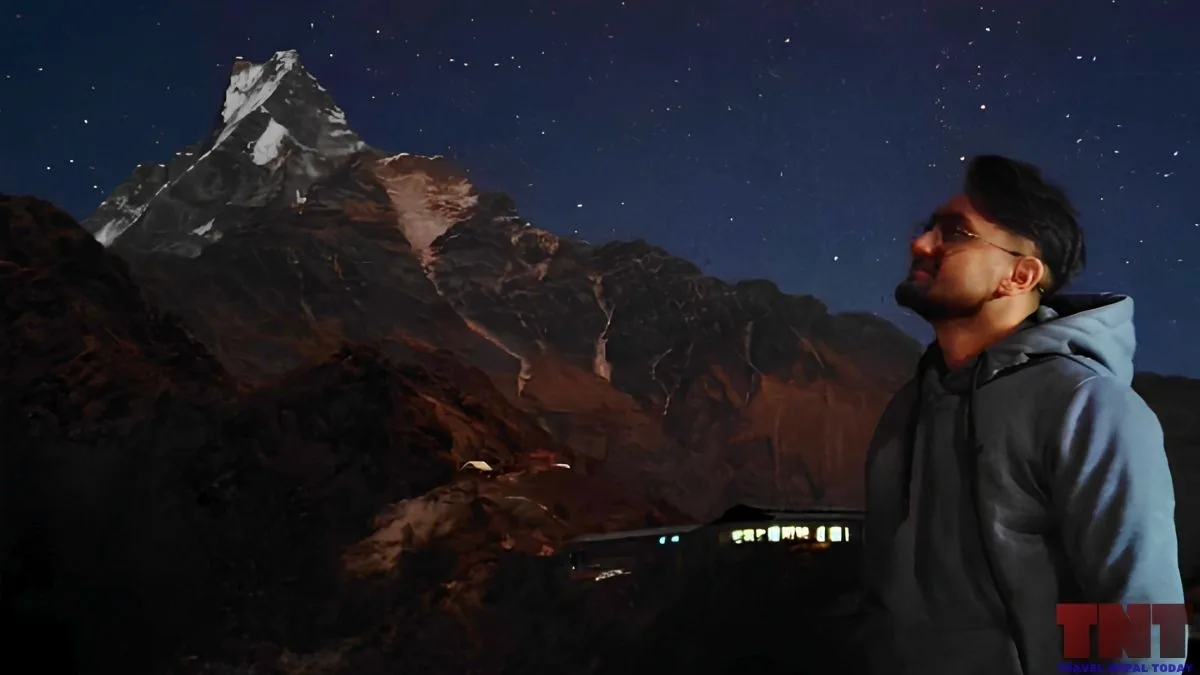
During my Kapuche-Kori Trek in November 2026, I was surprised by how many trekkers were still walking late at night!
The forested route from Sikles to Kori via Tasa and Chiga is dense. Locals had even told us about possible wild animals along the way. I am sure the trekkers I met in the dark had heard the same warning. Or maybe nobody told them at all?
It felt like many trekkers from Pokhara are used to walking in forests late night. So, they reach Sikles and try to reach Kori the same night? That worried me deeply!
I am talking about walking until 9 to 10 pm. Even with a morning start, that is how long this route can take in practice, unless you are a marathon runner.
On top of the darkness, you are climbing towards 3,800 m, where the risk of altitude sickness goes up. My partner was almost in tears when we reached our teahouse at 6:30 pm, and that was only for one night during the return.
Even then, we felt we should have stopped 1 to 2 hours earlier. That is the general rule I actually suggest: finish your walking day before the light fades!
Walking in the dark might sound adventurous, but it carries risks that many trekkers ignore. It is also not only a Kori problem. I went further to research this in the Annapurna, Langtang, and Manaslu regions, and I’m going to share what I found below.
Is It Safe to Trek at Night in Nepal?
No, trekking at night in Nepal is not safe as a regular plan, and I suggest you avoid it on every trekking route!
This applies to short hikes near Pokhara as much as it does to high passes! The reasons stay the same everywhere. You cannot see the trail well, your body is colder and more tired, and help takes longer to reach you.
Here is the difference I want to make clear. By night trekking, I mean walking between villages or teahouses after sunset because you ran out of daylight.
A planned pre-dawn start for a sunrise viewpoint is not the same thing. Even that plan needs warm layers, a good headlamp, a short and known trail, and a rested body.
Nepal also gives you very little safety net here! A November 2025 news report quotes officials who say Nepal has no official standard for daily distance or altitude gain. The Tourism Department’s director added that nobody monitors trekkers after they register at the entry checkpoint. As a result, the responsibility to stop walking falls on you!
Sharing My Experiences From Kori [Why My Concerns Grew]
Walking from Sikles to Kori in November demands long hours, and daylight runs out fast on the climb up to 3,800 m.
Along the way, I kept running into trekkers pushing deep into the night without clear plans or reliable stops ahead. Here is what I saw firsthand, and why the risks on this route stayed on my mind!
Why the Route Pushes Trekkers Into the Dark
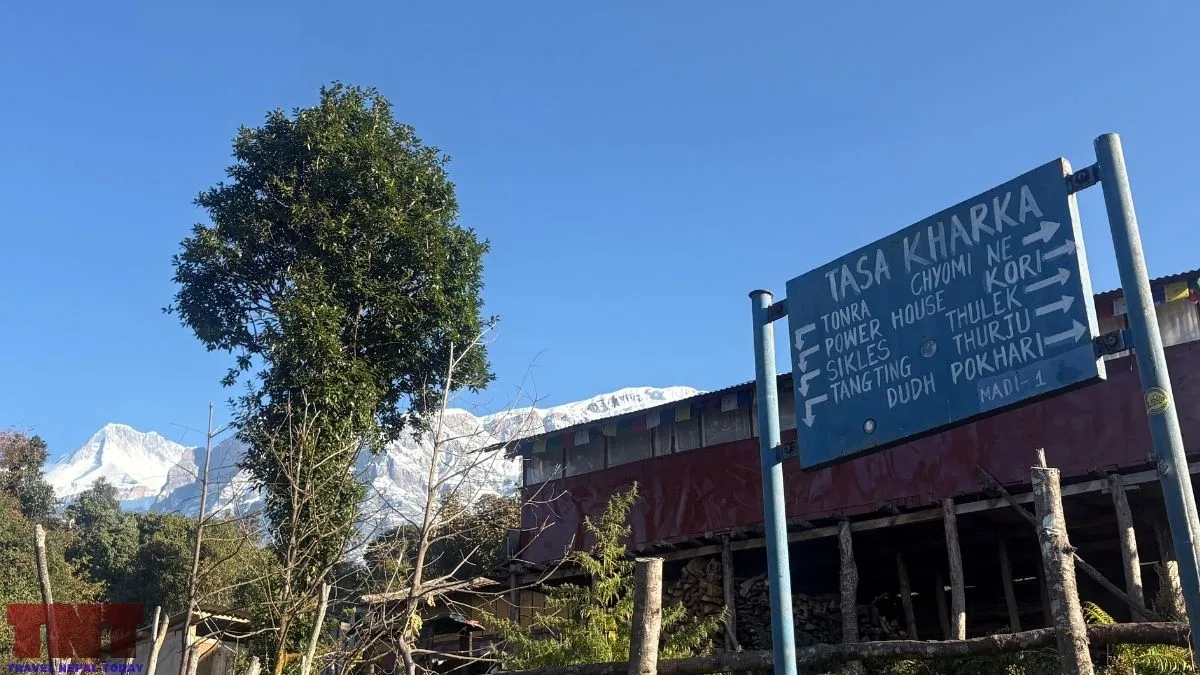
The Sikles to Kori route pushes people into the dark because the walking hours do not fit inside a November day.
Sikles sits at about 1,980 m and Kori sits at about 3,800 m, so you climb roughly 1,820 m!
It takes roughly 4 hours from Sikles to Tasa and then about 6-7 hours from Tasa to Kori Danda.
| Detail | Figure |
|---|---|
| Climb from Sikles to Kori | About 1,820 m |
| Sikles to Kori via Hugu and Nutah | About 12 hours (approx. 15-16 hours if you add Kapuche Lake Trek) |
| Sikles to Kori via Tasa | About 10-11 hours |
| Mid-November Daylight (near Pokhara) | Approx. 6:30 am to 5:30 pm |
| Total daylight | Approx. 11 hours |
Say it takes an estimated 9 hours to reach Kori from Sikles via Tasa. If you leave Sikles at 8:00 am, you will arrive around 5:00 pm (close to sunset), and that is before counting any rest stops!
Even that timeline only works if you stay in Sikles the night before. Instead, I saw trekkers taking a 2-to-3-hour jeep drive from Pokhara to Sikles, pushing all the way to Kori Danda the same night, and returning the next day!
In fact, many groups were speeding up around 5:00 pm near Chiga while we were heading back to Tasa. They likely reached Kori around 9:00 or 10:00 pm, which is far too late.
The Stretch Before Kori Has No Teahouse
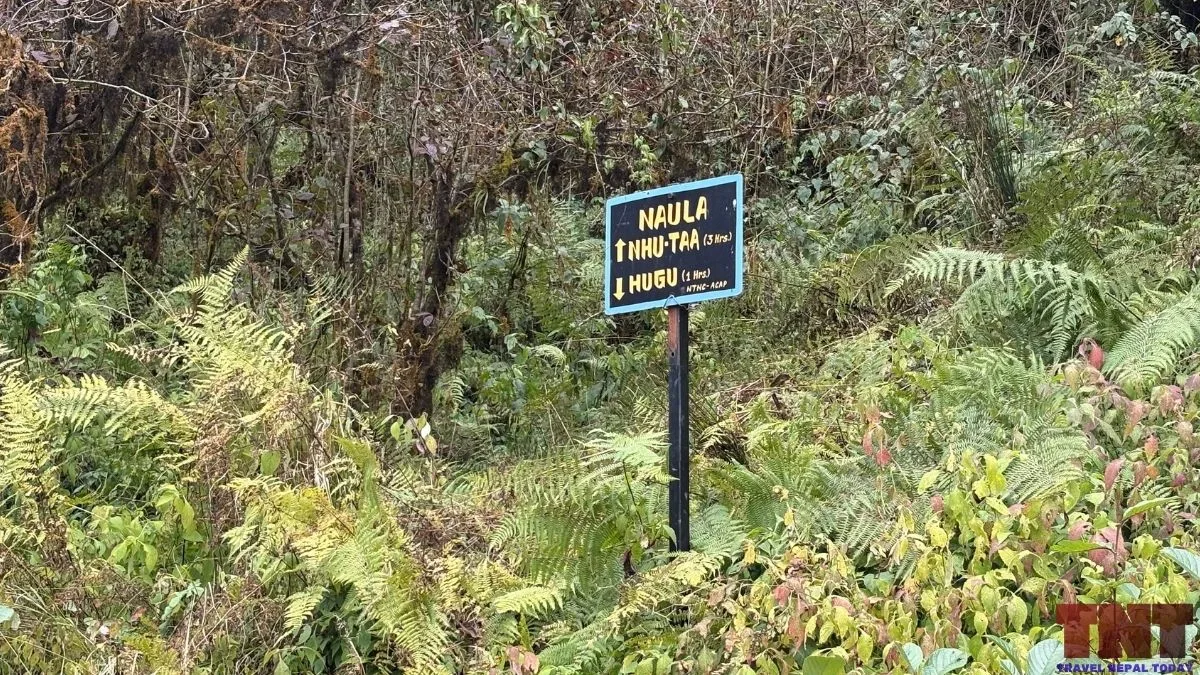
The most dangerous part is the section after Chiga. Someone who reaches Chiga in the afternoon often feels strong enough to push on.
But Kori is still 4 to 5 hours away for a normal trekker, and there is no teahouse in between. There are hardly any resting spots and not even a single place to fill water (as of writing this article)!
If nobody tells these trekkers how far it really is, the usual Nepali habit of “we will manage” takes over. I say this as a Nepali myself. Many of us find it hard to turn back once we have started!
We asked some trekkers to turn back and stay in Chiga for the night. They were too determined!
After them, we met another group, then another, and then one more. Thank God they were walking in groups, because going alone in a dark forest adds even more risk.
One even told me, “We don’t have much time, so we have to reach Kori anyhow.” Honestly, if you climb that fast unacclimatized, I am afraid you really won’t have time to come down! After them, we met another group, then another, and then one more.
The Night We Got Stuck Before Kori
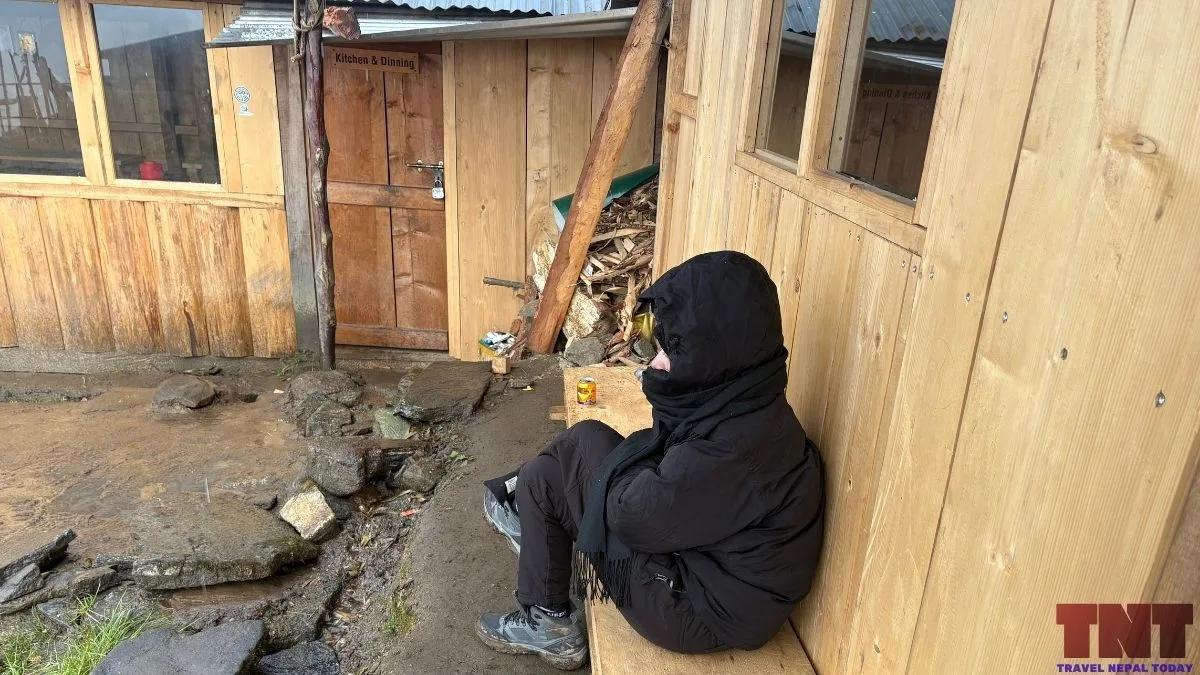
Late walking was not the only way this route went wrong for us. We were stuck for a night at Nutah, between Hugu Goth and Kori. The teahouses there were not open. I learned that during festive seasons, local people often go down to their villages, and lodges on the trail close!
That is when I understood the importance of booking, even in a quiet time of the year. Somehow we managed. Another teahouse was open and gave us a place to sleep, but there was no food. Climbing to Kori the next morning on an empty stomach was much harder than it should have been!
When I imagine the other outcome, I do not like it. If that teahouse had been closed too, we would have spent the night outside in the cold. Our only option was to push ahead, but it was raining, so we decided not to (it was a good decision, after all).
Night Trekking Is A Problem Across All Regions!
Rushed, late-finishing days happen across Nepal’s main trekking regions, and domestic trekkers make up most of the cases.
The National Disaster Risk Reduction and Management Authority recorded 257 altitude sickness incidents over six years, with 72 deaths! Officials said most victims were Nepalis!
The Annapurna Conservation Area Project (ACAP) recorded 25 altitude sickness deaths in the 2025/26 fiscal year. Of those, 15 happened in Mustang, 8 in Manang, 1 at Annapurna Base Camp, and 1 on the Mardi Himal route.
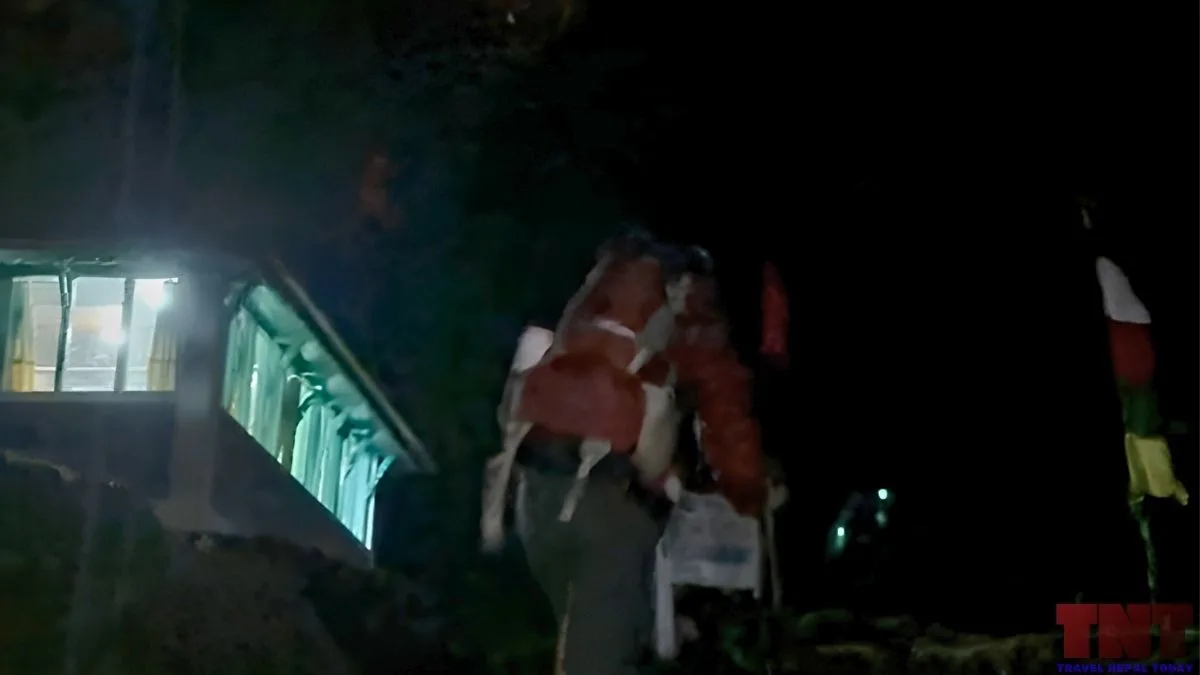
ACAP’s chief said altitude sickness is especially common among Nepali and Indian visitors who travel by road straight to high places like Muktinath!
There have been several news reports about overexertion and night rescue! In fact, on 25 October 2025, a young woman collapsed on the way to Annapurna Base Camp after walking 10 to 12 hours in a single day!
Three days later, on the night of 28 October, a Nepali trekker collapsed with altitude sickness at Machhapuchhre Base Camp, at about 3,700 m. Hotel staff carried her down overnight. She was still semi-conscious when they reached Dovan around 12:30 am, and she regained consciousness only after reaching Sinuwa.
The reason is clear: climbing too high too fast without rest causes such cases!
In October 2025, a group of 16 Nepali trekkers set out for Langtang during Dashain despite heavy rain warnings. Twelve of them turned back midway and became stranded until the Nepal Army rescued them.
Sadly, four people were swept away by a stream near Ghodatabela, a stopover on the Langtang route.
Well, we Nepali trekkers often think we are immune to altitude sickness and natural hazards. Now comes walking at night and long hours, which shows the next level of negligence!
Why Trekking in the Dark Is Dangerous? Main Factors Explained
The main dangers of trekking in the dark are altitude sickness, cold, falls, wildlife encounters, and slow rescue. Each one gets worse when the others are present. Here is how each factor works.
#1: Arriving Late Means Arriving Unacclimatized
Acclimatization is the process of your body adjusting to lower oxygen levels over several days. You cannot rush it by walking longer, and the number that matters is your sleeping altitude.
The Wilderness Medical Society guidelines set a clear limit above 3,000 m. Your sleeping altitude should rise by no more than 500 m per day, with a rest day every 3 to 4 days. They also rate a one-day ascent to a sleeping altitude above 3,500 m as high risk.
Now compare that with Kori! Pokhara sits at about 820 m, so sleeping at Kori at 3,800 m means gaining roughly 2,980 m in a single day. That is about 6 times the daily limit.
Just before our trek, on 29 October 2026, a 25-year-old trekker had to be airlifted from Kori Hill after falling ill with altitude-related sickness.
The cost of ignoring this is measurable. A study in Medicine & Science in Sports & Exercise looked at Alpine mountaineers who had suffered altitude sickness before. Among them, 58% developed it after a rapid ascent without prior exposure, compared with 7% after a slow ascent with prior exposure.
You see, fitness or how fast you can walk does not change this!
#2: The Night Is When Your Body Is Weakest
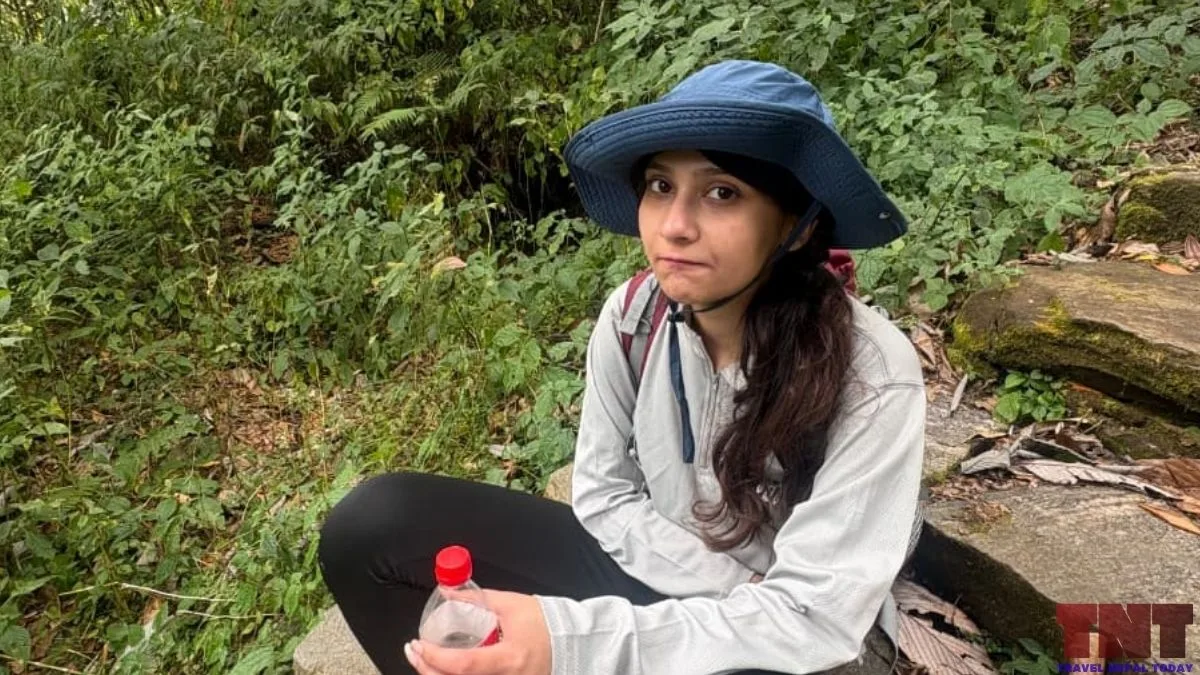
Low blood oxygen at altitude is at its worst while you sleep, and that is exactly when a late arrival puts you. Hypoxemia (low oxygen in the blood) at altitude is most severe during sleep.
Another study, published in Sleep in 2012, measured healthy mountaineers overnight. Their median oxygen saturation fell from 96% at 490 m to 67% on the first night at 4,559 m. Kori is lower than 4,559 m, so your drop would be smaller. However, the direction is the same!
Now, picture a trekker who arrives at 10 pm after 12 hours of climbing. They are exhausted, and they go straight to bed at 3,800 m with no time to notice early symptoms like headache or nausea.
Exercise intensity is also a recognized risk factor for altitude sickness. The cold adds to the problem!
Air temperature drops about 6.5°C for every 1,000 m you climb. Climbing 1,820 m from Sikles to Kori therefore means air that is roughly 12°C colder on average, before the evening chill is counted. And hypothermia begins when body temperature falls below 35°C.
Besides that, a sweaty trekker who keeps walking in the dark can lose heat faster than they expect!
#3: A Headlamp Does Not Show You the Whole Trail
A headlamp lights a small circle in front of your feet. In a dense forest, you cannot judge the slope beside the trail, loose rocks, wet roots, or a sudden drop.
I felt this during that late evening walk to Tasha too! We almost headed towards the forest at one time until our brain clicked and we saw there was a proper trail.
Every tree also looks the same, and a path made by animals or livestock can look exactly like the real trail!
Fatigue makes this worse, because tired legs miss steps that fresh legs would catch. On top of that, a fall at 9 pm leaves the rest of your group with a hard choice.
#4: Wild Animals Live in The Forests
My partner says that this is what scares her the most and I totally agree with her.
Wild animals are a real part of the risk, even if attacks are rare! A study in PLOS ONE recorded 77 wildlife attacks on people between 2011 and 2019. They happened in the mid-hills of Kaski, Lamjung, Tanahun, Syangja, and Parbat.
Those attacks caused 69 injuries and 8 deaths, and common leopards and Himalayan black bears were the main species involved. About half of the attacks happened between September and December, which is peak trekking season.
That study covers forests outside protected areas. However, both species also live in the Annapurna Conservation Area, where the Kori route lies!
We had even asked a couple ahead of us to tell the teahouse owners that we shall be managing the night in Nutah. And later when we reached Kori, one of the locals said Himalayan Black Bear was active last night. That did scare us and we pat ourselves on the back yet again for choosing to stay in the teahouse in Nutah!
Darkness matters because of when these animals move. Camera traps in Langtang National Park found that common leopards were largely crepuscular and nocturnal, meaning active around dusk, dawn, and night.
According to Discover Magazine, in Lapchi Valley, leopards are active at night about 64% of the time. This is yet another trending desitnation among local trekkers in the Gaurishankar region, so if you’re reading this and thinking of planning to reach there, make sure it’s not during the night time, alright?
These studies do not say trekkers are often attacked. They do say the animals locals warned us about are active when you would be walking. In the dark, you lose the chance to spot an animal early and give it space.
#5: Help Takes Longer When It Is Dark
Rescue is slower at night because rescue helicopters in Nepal cannot fly in the dark.
Nepal requires helicopter pilots to follow visual flight rules, which means keeping a clear line of sight. Note that helicopters cannot fly outside clear daylight hours. So, help after dark means people on foot (which is also only possible on well-established routes, not on smaller treks).
For instance, in the Kori-Kapuche trek, in the stretch between Chiga and Kori, there is no teahouse to run to. The same is the case on the other side (no teahouse between Nutah and Kori, too).
Why Foreign Trekkers Should Not Follow Nepali Trekkers at Night?
If you are a foreign trekker, do not follow Nepali trekkers who keep walking after dark, and always go with a guide instead.
I understand why people copy them. When a confident group walks past you at 6 pm, it feels like the right call. But confidence is not the same as knowledge!
In my experience, the people walking in the dark are mostly Nepali trekkers on short trips. They are not mountain residents who live and work on these trails.
In the ACAP figures above, 12 of the 25 victims were Nepali and 9 were Indian. ACAP’s chief links this to visitors who go straight up by road without acclimatizing!
This is about behaviour, not nationality. Thirteen of the 25 ACAP victims were foreign nationals, including 9 Indians and one each from Japan, Mexico, Spain, and Singapore.
Foreign trekkers are not safe just because they hold permits. They are safe when they follow a safe plan!
What a Guide Does That a Crowd Does Not
A licensed guide knows the trail, the real walking times, and which teahouses are open. Good ones also book ahead, check the weather, and call the stop at sunset.
Early signs of altitude sickness are easier to catch with someone watching, and the right choice is to descend immediately if you show signs of AMS. It’s best if you’re trekking in groups or at least with a licensed guide.
Trekking alone removes that second pair of eyes. In October 2025, a 35-year-old Nepali man who went trekking alone from Kathmandu died of altitude sickness at Deurali on the Annapurna Base Camp trail.
His sister said he would have survived if he had been rescued earlier. In the Everest region in October 2026, a 26-year-old Australian trekker fell from a cliff near Kongma La. He was reportedly walking solo and needed a helicopter evacuation to Kathmandu.
Honestly speaking, a guide is not magic! Four of the Nepali victims in the ACAP data were guides and porters. Even so, a guide gives you local knowledge, a second pair of eyes, and someone who knows who to call in an emergency.
Hire one through a registered agency, and ask them directly where you will sleep each night. In restricted areas like Manaslu, a licensed guide is required anyway!
Check the Weather and Book Ahead
Even when you stop before dark, two habits protect you on remote trails like Kori: reading the mountain weather and confirming your teahouse ahead of time. A sudden storm or a locked lodge can turn a normal day into an emergency (just like it happened with us).
Weather Can Turn a Late Finish Into an Emergency
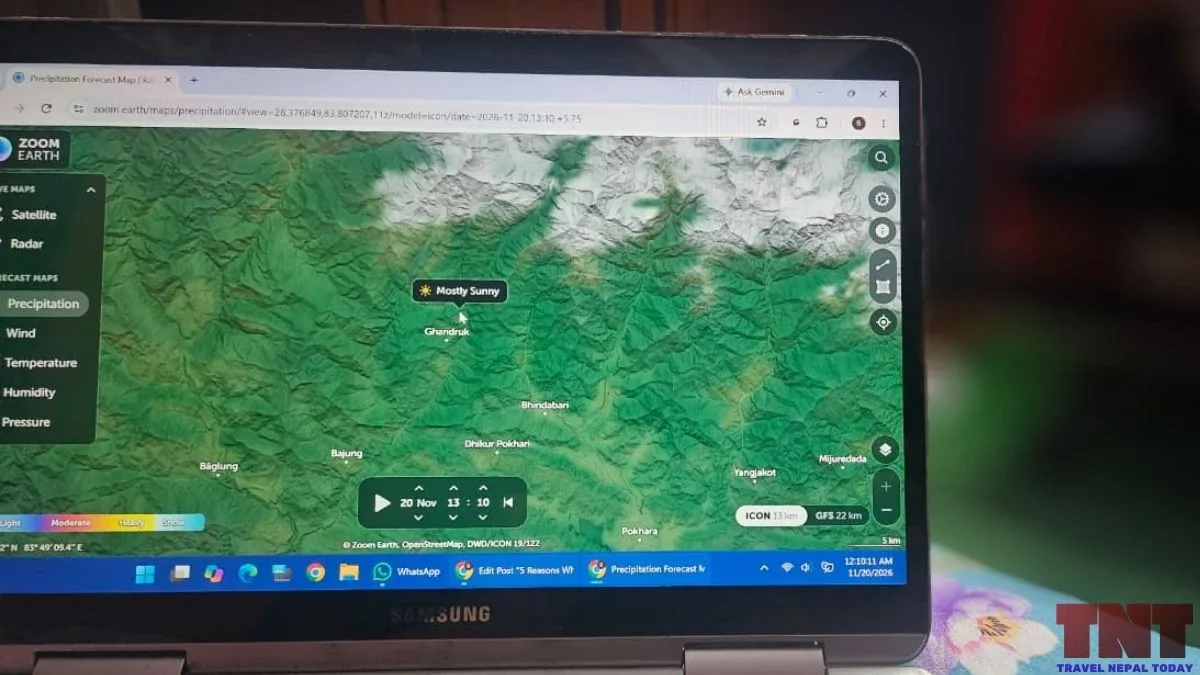
Bad weather is what turns a late finish into a real emergency. Snow, wind, and cloud make a dark trail harder to read.
It’s always best to read forecasts from the Department of Hydrology and Meteorology or a reliable weather app before heading to high-hill regions.
Always check the forecast the night before and again each morning. If the weather looks bad, stay where you are, even if it costs you a day!
A group of 5 young Nepali trekkers left Martadi for Badimalika, at about 4,200 m, on 25 October 2026. Heavy snowfall blocked their return. One had to be airlifted on 1 November, and a 20-year-old was found dead near Triveni Patan.
Book Your Teahouse, Even in a Quiet Season!
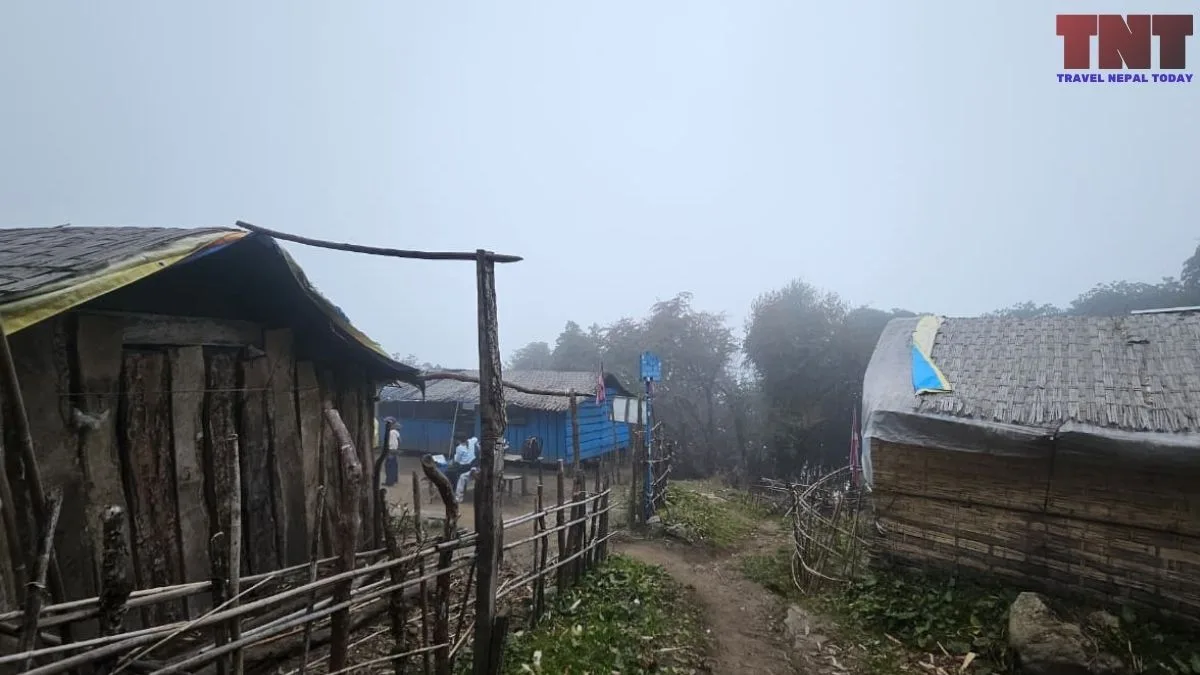
Booking is the second lesson from my stuck night. Lodges on remote routes like Kori can close without warning.
There are only a handful in Tasa, Chiga, Hugu, and Nutah. Usually, when one closes, another stays open. However, during festive periods, that might not be true. Booking ahead means they know to expect you and will either wait to serve you or let you know they are closed.
In our case, we were told to push up to Kori. Honestly, though, that long uphill stretch from Kapuche to Kori in a single day is a bad idea for beginners!
That is what happened to us when rain hit, so we decided to stop rather than risk getting wet and sick.
Since it was already late afternoon, we managed to find a room at one of the teahouses in Nutah. Not stocking up on enough food was a mistake, but choosing to stay put still set us up better for the next day.
I am sure a beginner in that spot would panic, though myexperiencee and preparation kept us calm, safe, and in good spirits. Even so, we missed things like booking ahead mostly because we were testing this route and weren’t sure of our exact itinerary yet, which is why I want to share a realistic one so you do not get stuck the way we did!
THE BEST KAPUCHE-KORI ITINERARY FOR BEGINNERS:
DAY 01: Kathmandu/Pokhara to Sikles, Explore village.
DAY 02: Sikles to Kapuche Lake. [Option to stay in Hugu]
DAY 03: Kapuche Lake to Nutah via Hugu Goth. [If you stay in Hugu, reaching Kapuche early morning and pushing to Nutah is also possible.]
DAY 04: Nutah to Kori Danda.
DAY 05: Kori Danda to Sikles.
DAY 06: Sikles to Pokhara/Kathmandu.
So, the gist here is that call or message your next teahouse the day before. Confirm that it is open, that it has a bed for you, and that it serves food.
And don’t forget to carry snacks as a backup (sleeping bag too). A closed teahouse is the moment a late walk becomes a night outside!
Final Words: The Destination Will Still Be There Tomorrow!
If you are reading this before any trek in or outside Nepal, please do not rush!
Kori will not run away, and you will reach it the next day if you stop tonight. The same goes for Annapurna, Langtang, Everest, and Manaslu. A viewpoint is not worth a night in the forest.
If budget is the reason you are rushing, delay your trek to next year. An extra day of food and lodging costs far less than a helicopter rescue or a hospital stay. Do not risk your life to save one day.
Beyond personal responsibility, authorities like the Annapurna Conservation Area Project (ACAP) also need to step up and introduce strict rules against late-night trekking.
Right now, checkpoints only register trekkers without enforcing cutoff times or monitoring late departures. Implementing clear time restrictions at trail checkpoints could stop unacclimatized trekkers from pushing into the dark before an avoidable tragedy happens.
Too often in Nepal, awareness starts only after something goes wrong. I would rather you read this today than read about an accident tomorrow!
About The Author