Key Takeaways:
- Alcohol lowers your blood oxygen during sleep and can hide altitude sickness warning signs.
- No study proves alcohol causes altitude sickness, but none clears it either.
- A hangover looks like altitude sickness, so treat a morning headache as altitude first.
- Alcohol dehydrates you slightly, and forcing extra water does not prevent altitude sickness.
- Locals are acclimatized and drink milder drinks, so their example does not protect visitors.
- Rum can make you feel warm, but in reality, it can lower your body temperature.
- Risk depends on sleeping height, climbing speed, grams of alcohol, timing, cold, and medicines.
- First-timers should skip alcohol while climbing higher and save the celebration drink for descent.
- Skip alcohol for 48 hours and never drink to help sleep.
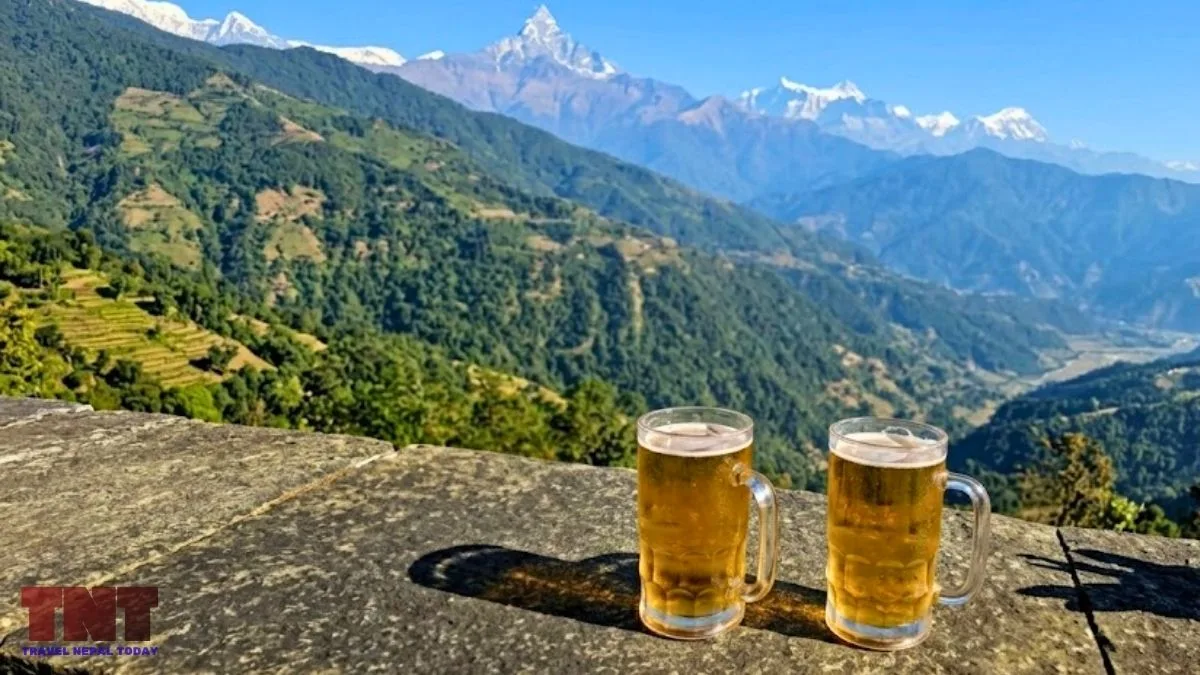
I saw some tourists in Mohare Danda raise a beer while I was shivering with cold at 3,313 meters. Well, the same happens on the Everest Base Camp or Manaslu Circuit route.
I always hear the same reply when people ask about alcohol in high altitude: “They drink, and they are fine.”
That reply is half true, and the other half is what worries me because I study food technology, and when it comes to such things, I want facts, not slogans!
I went through health advice from the CDC (Centers for Disease Control and Prevention), medical studies, and lab tests on Nepali home-made drinks. And in this guide, I’m going to share what I found.
Alcohol at high altitude probably does not cause altitude sickness by itself. But it lowers the oxygen in your blood while you sleep.
It can also hide the signs that tell you to stop climbing. And nobody on the trail knows how strong the glass in front of them really is.
In this guide, you will see 6 common claims tested, simple math on beer, tongba and raksi, a clear call for each popular trek, and a short plan for each trail.
6 Common Claims About Alcohol at High Altitude (Tested!)
Here’s the thing: none of the claims you hear on the trail is fully right. The table gives a quick verdict on each one. The sections after it show the proof.
| Claim | Verdict | Why? |
| “Alcohol causes altitude sickness.” | Not proven | Altitude sickness mostly depends on how high you sleep and how fast you climb. Studies on alcohol do not agree. |
| “Alcohol dries you out, so it brings on altitude sickness.” | Too simple | Alcohol does make you pee more, but the effect is small when you are already short of water (Hobson and Maughan, 2010). Forcing extra water does not stop altitude sickness either (Wilderness Medical Society summary). |
| “At altitude, 1 drink hits like 2 or 3.” | Not supported | In a US aviation test at 3,810 m, the alcohol in people’s breath was almost the same as on the ground: 0.078% against 0.077%. Your oxygen changes, not the alcohol in your blood! |
| “Stop drinking 72 hours before the trek.” | No source | The CDC rule is about the first 48 hours after you reach altitude. |
| “Rum keeps you warm.” | Only a feeling | Alcohol made people shiver less in lab tests, and it did not add body heat (Fox, 1979; Kalant and Le, 1983). |
| “Locals drink and walk fine, so it is safe.” | Does not follow | Locals are used to altitude, often drink less than you think, and you only notice the ones who feel fine. |
Notice what is missing from the table? It is the best-proven finding: alcohol lowers your oxygen at night. I’ll come to that section below!
Does Alcohol Cause Altitude Sickness?
No study I read proves it does! The studies also point in different directions.
Altitude sickness (the doctors call it AMS, Acute Mountain Sickness) gives you a headache, nausea and a tired body.
It mostly depends on how high you sleep, how fast you climb, and how your own body reacts. Being fit does not protect you. Here is what the alcohol studies found:
| Study | Who | What it found about alcohol |
| Pheriche survey, Everest region (data from fall 1996) | Trekkers at about 4,240 m. 29.8% had altitude sickness. | Alcohol was one of the things the doctors checked. Their big findings were that each extra night on the way up lowered the risk, and that drinking more fluids was linked with a lower risk. |
| Capanna Margherita study (2002) | 827 climbers at 4,559 m in the Alps. | Alcohol made no clear difference. Among people who get sick easily, 7% got ill after a slow climb with earlier altitude practice, and 58% after a fast climb with none. |
| Mount Fuji survey | 887 climbers | Drinking on the way up raised the risk in climbers aged 50 to 59, but not in younger ones. |
Look at the Alps numbers! Climbing speed made about an 8 times difference (58% against 7%). Alcohol made no clear difference. On Mount Fuji, only one age group showed an effect!
These are surveys, so they rely on what climbers remember. Nobody measured how much each person drank. So, alcohol has not been proven to cause altitude sickness. But it has not been cleared either!
The Real Danger: A Hangover Looks Like AMS!
Altitude sickness feels almost the same as a hangover. The main sign of both is a headache!
It also says altitude sickness usually starts 2 to 12 hours after you arrive or climb higher, often during or after the first night.
That is exactly the morning after a beer at a new, higher sleeping spot. According to the CDC, a hangover is one of the things that can look like altitude sickness.
It also gives 2 safety rules:
- The first is to know the early signs and admit them.
- The second is to never go higher to sleep while you have symptoms, even mild ones!
Someone who drank last night has an easy excuse to break both rules: “It is just a hangover.” To me, that is the real problem with alcohol at altitude! In fact, I say NO even if my boyfriend asks me to take a sip.
It is about bad decisions more than bad science. This is my own thinking, not a result from a study!
Here’s a clue for those who prefer drinking at high altitude:
- Symptoms that start more than 3 days after you arrive, with no new climb, should not be blamed on altitude sickness. So, a headache on day 4 at the same height is more likely a hangover!
- A headache the morning after you reach a new, higher bed should be treated as altitude sickness first.
What Alcohol Does to Your Oxygen When Breathing and During Sleep?
Alcohol lowers the oxygen in your blood at high altitude because it makes your breathing lazy!
Let me explain simply. The air is thin up high. At around 3,000 m, each breath gives you about 30% less oxygen than at sea level. Your body fixes this by breathing faster and deeper.
Alcohol slows your breathing down. So, when you drink, your body does the opposite of what it needs!
That’s the primary reason every health professional, researcher, and guideline you read online ask travelers to avoid substances that slow breathing. And on most trekking trails of Nepal, you’re likely going to find a board that says “alcohol should not be used to help you sleep at altitude.”
What the Studies Measured?
In 1995, a team in the Austrian Alps gave volunteers 50 g of alcohol, about 2 large beers. At 171 m, nothing changed. At 3,000 m, their blood oxygen dropped an hour later, and they breathed less. The team said alcohol slows the way the body first adjusts to thin air.
Another 2024 study in the journal Thorax tested 17 healthy people. They slept 4 hours in a room set to the air pressure of 2,438 m. On some nights, they drank alcohol first. Here’s what happened:
| While sleeping at 2,438 m | No alcohol | With alcohol | Difference |
| Oxygen in the blood | 88% | 85% | About 3 points lower |
| Heart rate (beats per minute) | 73 | 88 | 15 faster (20% higher) |
| Time with low oxygen (below 90%), out of 4 hours | 173 minutes | 201 minutes | 28 minutes more |
Moreover, deep sleep also got shorter! It fell to 46.5 minutes with alcohol, compared with 84 minutes when people drank at sea level.
Moving on, a 1982 US aviation test at 3,048 m also found lower oxygen after alcohol than after a fake drink.
That were 3 studies from 3 different decades, and all point the same way!
What These Studies Cannot Tell Us!
Being fair to the science, these were short studies on healthy volunteers. Nobody followed trekkers for 10 days.
Likewise, the 2024 study was built to learn about airplane passengers. The drink was a moderate amount, and the researchers say more alcohol might make things worse.
Still, every study points the same way, and it matches the CDC advice not to use alcohol as a sleep aid!
Does Alcohol Dry You Out on a Trek?
Yes, a little! What it does is make you want to pee more.
But how much more depends on how much you drink, how strong it is, and how much water you already lost.
In 2010, Hobson and Maughan tested 12 men after exercise in the heat. When the men had enough water in their bodies, a 4% beer made them pee 1,279 mL. An alcohol-free beer made them pee 1,121 mL. That is 158 mL extra, or about two-thirds of a cup (14% more, my math). When the men were already short of water, the gap was only 87 mL.
Another trial on older men used 30 gm of alcohol in different drinks. Only wine and spirits caused a small, short increase in peeing.
Neither study was done at altitude, so treat them as a guide, not a measurement on a high-altitude trekking trail.
Now the link to altitude sickness: forcing yourself to drink extra water does not prevent altitude sickness! It can even make the salt in your blood too low.
Staying hydrated still matters, because being dry can feel like altitude sickness.
So, what does this mean for you? Being dry can fake altitude sickness.
Drinking water steadily helps. However, extra water beyond thirst does not protect you.
Cold, dry air and fast breathing already take water from you on a trek, so there is less room for mistakes. Alcohol adds a small extra loss. That is a reason not to swap your water for beer (save beer, drink water!),
Why the First 48 Hours Matter!
The only timing rule with a real source is the CDC one: avoid alcohol for the first 48 hours at high altitude.
The CDC puts this in its list of ways to adjust to altitude, next to climbing slowly and doing only easy exercise for the first 48 hours.
Your body takes about 3 to 5 days to settle in. During that time, your breathing is still adjusting, and alcohol slows breathing down!
On the Everest route, the clock starts at Lukla. So, if you drink beer at your first teahouse or upon reaching Namche, it is still within the 48 hours. Why not skip when you’re going up and come back later to celebrate the completion of the trek?
Later jumps count too! The CDC warns that even people who have adjusted can get sick again when they sleep much higher, especially after a gain of 600 to 900 m. So, my suggestion is to use the 48-hour rule for those moments too.
Now, is drinking the night before a Lukla flight is harmless? No!
A hangover, a short night, and a dry mouth make day 1 harder. They also blur your first check for symptoms.
Think of it as common sense, not a study rule! And do not think day 3 is a green light as well. How much you drink, how high you sleep, the cold and the next day’s climb still matter!
Why Locals Drink Alcohol But Can Still Walk Well?
Because they are not in your situation! Their drinks are also often weaker than you think.
4 Reasons the Comparison Does Not Work
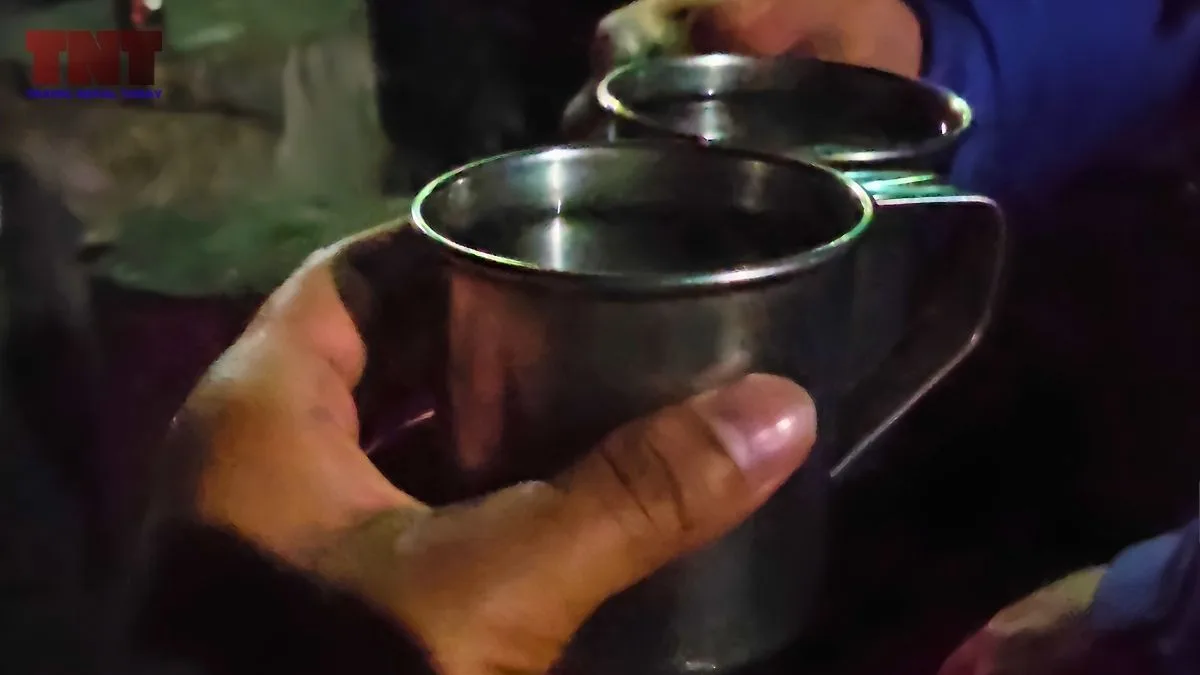
While high-altitude biology fascinates food tech researchers like me, these four trail realities explain why local customs don’t automatically protect visitors:
- They are used to altitude: A person who lives at 3,500 m is already adjusted. A visitor needs 3 to 5 days just to settle in. That’s the reason Sherpas have extra help! These are people who have lived on the Tibetan plateau for about 25,000 to 40,000 years. Thus, their genes seem to help their bodies cope with thin air. This is strongest for Sherpa and Tibetans in the Everest region. However, I would not say the same for every mountain community without proof.
- The amount is different: The size and strength of the drink decide how much alcohol you take in. The math is in the next part.
- The drink is diluted: For tongba, hot water is poured over fermented millet, which waters down what you sip. Home-made fermented drinks are also mild.
- You only see the winners: You notice the person who drinks and walks on. You do not see the one who slept badly, walked slowly, or stayed in bed. Finishing a trek without obvious altitude sickness says nothing about sleep, balance or judgment.
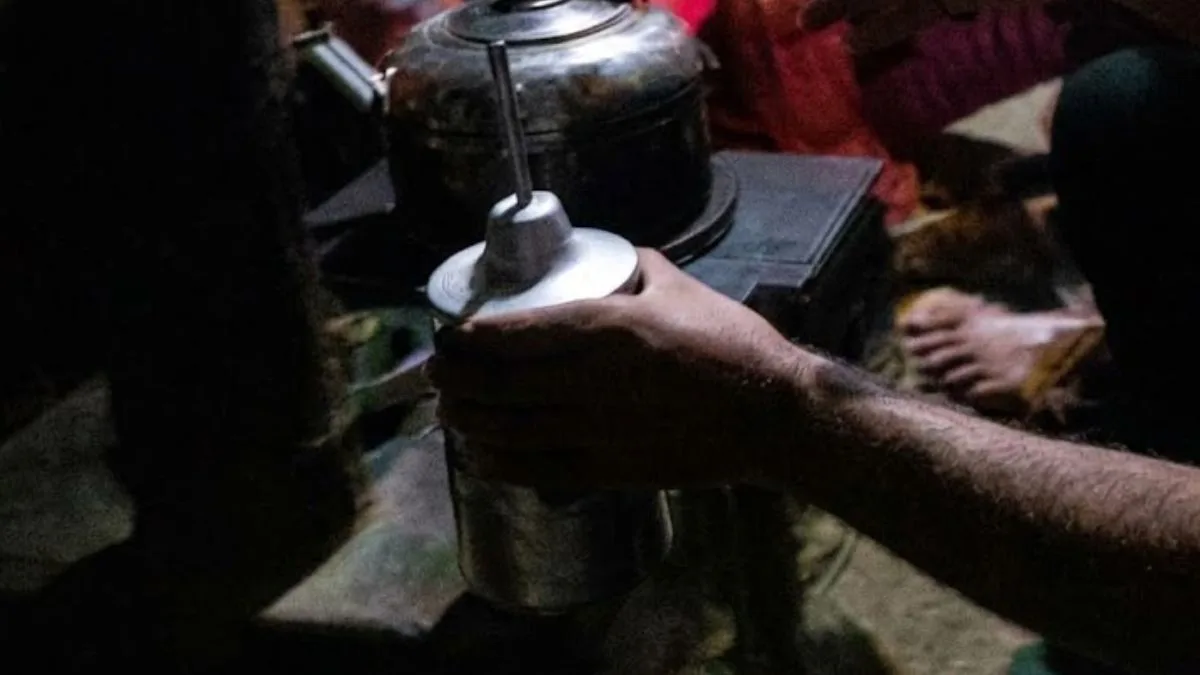
A word on Jhaikhatte:
Jhaikhatte (also spelled Jhwaikhatte) is a warm twist on raksi. Ghee (melted butter) is heated in a ladle or small pan. Rice grains are cooked in it until they turn light brown. Some locals even add honey!
It is linked mostly with the Gurung and Tibetan communities (like in Langtang) and is often served in winter with snacks like popcorn, sukuti (dried meat) and peanuts.
Since it is a version of raksi, I would treat it like raksi: nobody can tell the strength of the glass in front of you. It is also a drink for cold evenings, so remember that feeling warm is not the same as being warm.
Does Rum really keep you warm?
No. Rum changes how warm you feel. It does not add heat to your body!
Alcohol moves blood to your skin, which feels warm. But your body temperature tends to drop, not rise!
A 1983 review found that alcohol mostly makes you shiver less in the cold. That feels comfortable, but it can make your body cool faster.
The same review found that small amounts barely change body temperature, while a big drink plus cold and hard exercise can cause a sharp drop.
On the trail, the danger is what you do while feeling fine. A warm glow can talk you out of putting on your jacket, finding shelter from the wind, or walking back to a heated room.
What Decides Your Risk When You Drink at Altitude?
There are really 2 risks:
- The first is altitude sickness, which depends mostly on how high you sleep, how fast you climb and how your own body reacts.
- The second is trouble from the alcohol itself, which depends on how much you drink, when, how cold it is, and what medicines you take.
They overlap, but they are not the same thing!
| Factor | Why it matters? | What you can do? |
| How high you sleep and how fast you climb | These matter more than anything you drink. | Above 3,000 m, gain no more than 500 m of sleeping height a night, and add a rest night for every 1,000 m. |
| Your past | Having had altitude sickness before is a good warning sign. | Tell your guide on Day 1. |
| Grams of alcohol | The amount of pure alcohol matters, not the number of drinks. | Use the “Your alcohol plan for the trail” summary box below and count in standard drinks (14 g). |
| Type and strength | Home-made raksi swings between 10% and 19% for most samples. | Ask for a measured pour, or skip it. |
| Timing | Oxygen is lowest while you sleep, and alcohol makes it lower. | No alcohol in the first 48 hours and none close to bedtime. |
| Sleep and breathing | Uneven breathing at night is very common above about 2,700 m. | Never use alcohol to fall asleep. |
| Water, cold and dry air | Alcohol adds a little extra pee, but forced water does not prevent altitude sickness. | Drink when you are thirsty, and do not swap water for beer. |
| Food | Losing your appetite is a sign of altitude sickness, so a drink instead of dinner hides it. | Eat first. |
| Cold | A warm feeling can hide real cold. | Put on your layers before you drink anything. |
| Medicines | The CDC says to avoid things that slow breathing, and alcohol can mix badly with some medicines. One altitude medicine (acetazolamide) also makes fizzy drinks, including beer, taste strange. | Ask your doctor before the trip. |
| Health conditions | Lung disease, sleep apnea and some heart conditions need extra care at altitude. | See a doctor who knows altitude before you book. |
| Distance from help | On a remote trail, a late decision costs more! | Decide before you drink, not after. |
What to Do? Advice for Each Type of Trekker
The short version: going up is the risky part, and coming down is the better time for a drink.
| Trekker | What I suggest |
| First altitude trek, or you are not sure how your body reacts | No alcohol while you are climbing higher. Save the celebration beer for the way down. |
| You were fine at this height before, at a similar speed | Nothing for 48 hours after each big gain in sleeping height. After that, 1 measured drink (about 14 g) with dinner, well before bed, is a smaller risk. It is still not a guarantee! |
| You take sleeping pills or sedatives, or have lung disease, sleep apnea, or a heart condition | Do not drink. Talk to a doctor before you book. |
| You are 50 or older | Be stricter. The survey on Mount Fuji I mentioned eariler linked drinking on the way up with more altitude sickness in climbers aged 50 to 59. |
| You have a headache, nausea, or poor sleep at a new height | No alcohol and no climbing higher. Rest, tell your guide, and go down if it gets worse. |
Your Alcohol Plan for the Trail
Keep these core rules in mind before you order your next round. Following a structured plan helps protect your sleep, oxygen levels, and safety on the mountain:
- Skip alcohol for 48 hours after you reach altitude, and after each big gain in sleeping height.
- Never drink to fall asleep.
- If you drink, choose a measured drink, with food, well before bed, at the same height you slept at the night before.
- Put on your layers first, before you drink anything that makes you feel warm.
- Drink water when you are thirsty. Do not force it!
- Headache after a drink at a new height? Treat it as altitude sickness first. Do not climb higher, and tell your guide.
- Carry a pulse oximeter (a small finger clip that shows your oxygen level) if you like. The CDC says a good reading for your height is a helpful sign. Use it to track how you are adjusting, not to excuse a drink.
- Ask your doctor about any medicine before you travel.
- Save the celebration beer for the way down!
Final Thoughts
I did not start this blog to write a “never drink” lecture, and I still do not want to.
Alcohol is part of social life in many Nepali communities. A mug of tongba is a welcome at the table, and a beer on the way down after a hard pass is a joy I will not argue against!
What I argue against is smaller:
- I argue against the easy drink on the first nights above 2,500 m.
- I argue against the glass nobody has measured.
- And I argue against blaming a morning headache on the bottle before anyone checks the height of the bed.
Those 3 habits are where alcohol and altitude really meet!
This research also changed my own thinking. I started with dry mouths and water loss. The studies say that story is too simple!
The better story is about the night, your breathing, and the safety rules a hangover helps you break. I like that more, because you can act on it.
So, skip the drink on arrival nights, never use it to sleep, and treat a morning headache as altitude first until you have ruled it out.
Some travelers may say locals do it, with no source. However, that skips the questions that matter: how many grams, at what height, how close to bed, and which warning signs got ignored.
So here is my stance: on the way up, treat the headache as altitude first and the drink second. On the way down, pour slowly and enjoy it!
About The Author