Key Takeaways:
- Altitude does not make meat dangerous or hard to digest, because the risk comes from how the meat was handled before it reached your plate, so skipping fresh meat of unknown origin is smart but you do not have to give up meat entirely.
- Eat sealed tinned meat or fish and well-cooked, steaming-hot meat from a source you can trace, and skip fresh meat whose journey you cannot verify, because that rule is about food safety and not altitude.
- Altitude lowers your appetite and stresses your gut, but it does not stop you from digesting meat..
- Protein is not the problem at high altitude, because the extra energy cost of digesting it is under 1% of a trekker’s day.
- The real risk is the time, temperature, hands and water between slaughter and your plate, and Nepal’s mandatory meat inspection only reaches most rural municipalities from 17 July 2027, so do not assume anyone has checked your meat.
- Fresh meat is fine only if it arrives steaming hot, sukuti depends on how it was dried and stored, tins are built for the job if sealed and in date, and eggs are safe only when cooked hard and served hot.
- Tsum Valley, Rolwaling, and Khumbu each follow local customs against killing animals, and in Upper Tsum, you should not carry meat in at all, but this is a community rule for specific places and not a national ban.
- Build meals on dal, pulses, rice and potatoes with eggs, nuts, cheese and tinned fish, aim for about 98 g of protein a day at 70 kg, and squeeze lemon on your dal to help absorb plant iron.
- Ten factors shape the decision, but handling, local community acceptance and eating enough calories do most of the work, while altitude physiology matters least.
- First-timers on busy routes can eat cooked meat low down, while anyone above the last road-fed town should switch to tins, eggs and pulses, and everyone should treat their water, eat only hot food and stop climbing if nausea arrives with a headache.
My own opinion regarding meat in high altitude has leaned one way: avoid it!
It is only a few days, and once you are back downhill, you can eat whatever you like. I am a food technology student, so I went looking for the medical reason behind that rule.
Here is the thing: the medical reason is not there. Nobody has shown that meat causes altitude sickness, and the best measurement we have shows your gut absorbing protein at 5,000 m almost as well as at sea level.
What the research does show is more useful: the danger lives in the journey the meat took to reach your plate, not in the altitude where you eat it.
So my rule changes. It does not become “eat whatever you like“. It becomes a rule about what you can verify.
This article tests the three reasons you will read most often:
- The monks do not allow killing.
- There is no refrigeration.
- High protein is dangerous at altitude.
Some of these hold up, and some do not. By the end, you will know when to eat meat on a Himalayan trek, when to skip it, and what to eat instead so your muscles still recover. The examples come from Nepal’s trekking trails, but the physiology applies to any high Himalayan route in the world!
The Quick Answer: When to Eat Meat and When to Skip It?
Eat meat when you can verify two things: it is sealed or cooked through, and it reached the kitchen by a route you can trace. Skip it when you cannot. Altitude is not what separates those two cases!
| Situation | My Verdict | Why? |
|---|---|---|
| Sealed tinned or pouched meat or fish, in date | Fine | Built to keep without refrigeration until opened. Buy small and finish it in one sitting. |
| Fresh meat in a road-fed town low on the trek, served steaming hot | Reasonable | Shorter supply route, and you can see how busy the kitchen is. |
| Fresh meat higher up, with no way to know how it travelled | Skip | The reason is food safety, not altitude. |
| Dried meat (sukuti, dried yak or buffalo) | Your call | Drying preserves it, but safety depends on how it was dried and stored. |
| Eggs boiled or fried hard and served hot | Fine | Cooked through. |
| Any meat in beyuls (or sacred valleys) | Do not ask for it | Community rule |
Note: The “skip” row is my rule. If the meat arrives hot, thoroughly cooked, and from a place with a busy kitchen, I am not going to tell you it will harm you at 3,500 m. It will not!
Beyond Meat: What Altitude Does to Your Gut and Appetite
Altitude changes how much you want to eat and can irritate your gut, but it does not stop you from digesting meat. Both halves of that sentence matter. Allow me to explain.
The Digestion Myth (Tested)
You will often read that altitude “slows your digestion“. It is a tidy explanation for why a heavy dinner feels bad at 4,000 m. The measurement says otherwise!
In a 1992 study by Kayser and colleagues, six healthy men swallowed soya protein labelled with a heavier, traceable form of nitrogen (15N), and received the same label by injection as a control.
Comparing how much label reached the stool, the researchers calculated protein absorption at 122 m and at 5,000 m. The result was 97% at low altitude and 96% at 5,000 m, not a significant difference. Overall energy digestibility at altitude was 96%!
Look at that again! At 5,000 m, their bodies still absorbed almost all the protein in the test meal.
One limit is worth knowing. A 1994 study at 6,542 m found energy digestibility fell to 85%, though the authors put most of the energy deficit down to not eating enough rather than poor absorption. No teahouse trek goes that high!
How Altitude Really Affects Your Body
Appetite changes first! A 2024 mountaineering nutrition review notes that gut distress and loss of appetite at altitude can come from low oxygen itself and get worse with infection, and that weight loss is greatest in the first weeks.
In Karl and colleagues’ 2018 trial, 17 unacclimatized men lived at 4,300 m for 22 days on a controlled diet. Their appetite fell, and their food preferences shifted.
The amount of protein they ate (1.0 or 2.0 g per kg) did not change that. The same review adds that climbers in that study preferred high-fat foods after losing weight.
The gut itself also gets stressed. The same trial also found raised intestinal permeability (the gut lining becoming more leaky) at 4,300 m. It tells us the gut is under pressure at altitude. It does not tell us meat is the trigger (it is independent of what you eat).
Your Stomach Hurts? 3 Reasons Why
Nausea, vomiting and stomach pain are common in Nepal’s high areas, and a 2018 paper in the Journal of Nepal Medical Association lists the two usual causes: acute mountain sickness (AMS) or a gastrointestinal illness. A third, boring cause is simply a heavy meal on a day when you have no appetite.
| What you feel | Likely cause | What to do? |
|---|---|---|
| Nausea or vomiting after you climbed, usually with a headache | AMS (altitude illness) | Stop going up. Rest, tell your guide, descend if it worsens! |
| Diarrhoea, cramps and vomiting after a meal | Foodborne or waterborne infection | Fluids, tell your guide, seek help if it persists. |
| Bloated and uncomfortable after a large, fatty meal | Normal tolerance with low appetite | Eat smaller, simpler meals. |
Please do not blame the last meal if you feel sick after a big climb.
The Wilderness Medical Society guidelines centre prevention on how fast you ascend, and the US National Park Service’s Denali medical guidance says that eating and drinking enough does not directly prevent altitude illness.
The cure for AMS is not a menu change. It is stopping the climb!
Is Protein a Problem at High Altitude? What The Numbers Say!
No, protein is not what makes high-altitude treks go badly, and trekkers more often eat too little of it than too much.
The idea that a lot of protein is “heavy” at altitude has a real-sounding root, so it deserves a proper test.
Where The Idea Comes From
Protein costs your body more energy to process than carbohydrate or fat. Textbooks put this “thermic effect of food” at 20 to 30% of the protein’s calories, against 5 to 10% for carbohydrate.
From there, it is a short jump to “protein burns oxygen, and oxygen is scarce up here“.
I checked the size of that effect with a quick calculation. My method: take a 40 g serving of protein, apply the textbook range, and compare it with the energy a trekker burns in a day!
| Step | Number |
|---|---|
| Energy in 40 g protein (4 kcal per g) | 160 kcal |
| Processing cost at 25% | about 40 kcal |
| Same calories as carbohydrate, at 7.5% | about 12 kcal |
| Extra cost of choosing protein | about 28 kcal |
| Daily energy use on a Himalayan trek (a round figure inside the 3,000 to 5,400 kcal range in the 2024 review) | 4,000 kcal |
| Extra cost as a share of the day | about 0.7% |
A cost of under 1% of your daily energy is not what decides whether you enjoy your afternoon climb. (Energy and oxygen use move together, so this is a fair proxy, not a perfect one.)
What the High-Protein Trials Show
The best test is a trial at altitude:
Karl and Berryman’s team put 17 men at 4,300 m on diets with a large energy deficit, giving half 1.0 g protein per kg and half 2.0 g per kg.
Both groups lost weight (7.9 kg on average) and both lost similar amounts of fat-free mass. The high-protein group burned about 0.95 g per kg per day more protein as fuel, so the extra went into the furnace instead of building muscle!
The lesson is plain: protein cannot rescue a body that is not getting enough energy.
That study was a harsh military-style deficit, so it is not a picture of a teahouse trek, but the direction holds.
What the Guidelines Actually Say
The 2024 review recommends a minimum of 1.4 g of protein per kg per day for mountaineers, up to 1.6 g per kg during a prolonged energy deficit, spread across meals and snacks.
It also notes that mountaineers’ real diets were often too low, at 1.1 to 1.3 g per kg in two surveyed groups.
For carbohydrate, it suggests at least 6 g per kg per day while trekking or climbing, and at least 60% of energy. That is the bigger target and the one more trekkers miss!
Rice, potatoes, bread, porridge and noodles do that job, which is why the Dal Bhat habit works so well.
Caution: if you have kidney disease or any condition that comes with a set diet, kindly follow your doctor’s advice.
The Real Risk: The Journey Behind The Plate!
The risk is the time and temperature between slaughter and your plate, plus hands, water and kitchens, and none of that depends on altitude!
What I mean to say is: a chicken that sat warm for six hours at 2,000 m is just as risky when it is finally cooked at 4,000 m.
Time, Temperature and the “2-Hour Rule”
The US Department of Agriculture‘s food safety service explains that bacteria multiply fastest between roughly 4°C and 60°C, and its Danger Zone guidance advises against leaving perishable food out for more than 2 hours.
A cold night does not prove the meat stayed cold. What matters is the temperature of the meat itself at slaughter, during the carry, in storage, at cooking and at serving. Smell and colour are poor tests, because many of the bacteria behind food poisoning change neither.
Everything in the upper valleys that is not grown there is walked in. The Solu-Khumbu water study notes that even petrol for cooking is carried uphill by porters, so supply chains up there are long and slow. Meat that rides that chain has to survive it!
What Nepal’s Law Says, and When it Reaches the Mountains?
Nepal’s Animal Slaughterhouse and Meat Inspection Act requires licensed slaughterhouses and meat sellers, a health check of the animal before slaughter and a check of the meat afterwards.
It also carves out an exception: slaughter outside a slaughterhouse is allowed for traditional festivals, religious rituals, feasts and ceremonies.
A report says the government will make inspection mandatory in phases, nearly three decades after the Act was passed!
| Phase | Where | Start Date |
|---|---|---|
| 1 | All local levels of Kathmandu, Lalitpur and Bhaktapur | 17 November 2026 |
| 2 | Metropolitan, sub-metropolitan and municipal areas outside the Valley | 15 January 2027 |
| 3 | All remaining rural municipalities | 17 July 2027 |
Most trekking villages sit in rural municipalities. The Manaslu Circuit, for example, starts in Chumnubri Rural Municipality and ends in Nason Rural Municipality of the Annapurna region.
So, the earliest date a mandatory inspection rule reaches a typical trek village is 17 July 2027, and the same report notes that several slaughterhouses built at great cost, including a Rs 220 million plant in Butwal, sit idle or closed.
What that means for you: do not assume a meat inspector has looked at the meat on your plate. It is not a claim that local meat is bad. It is a reason to rely on what you can check yourself!
Water, Hands and Flies Hurt More Trekkers Than Meat Does!
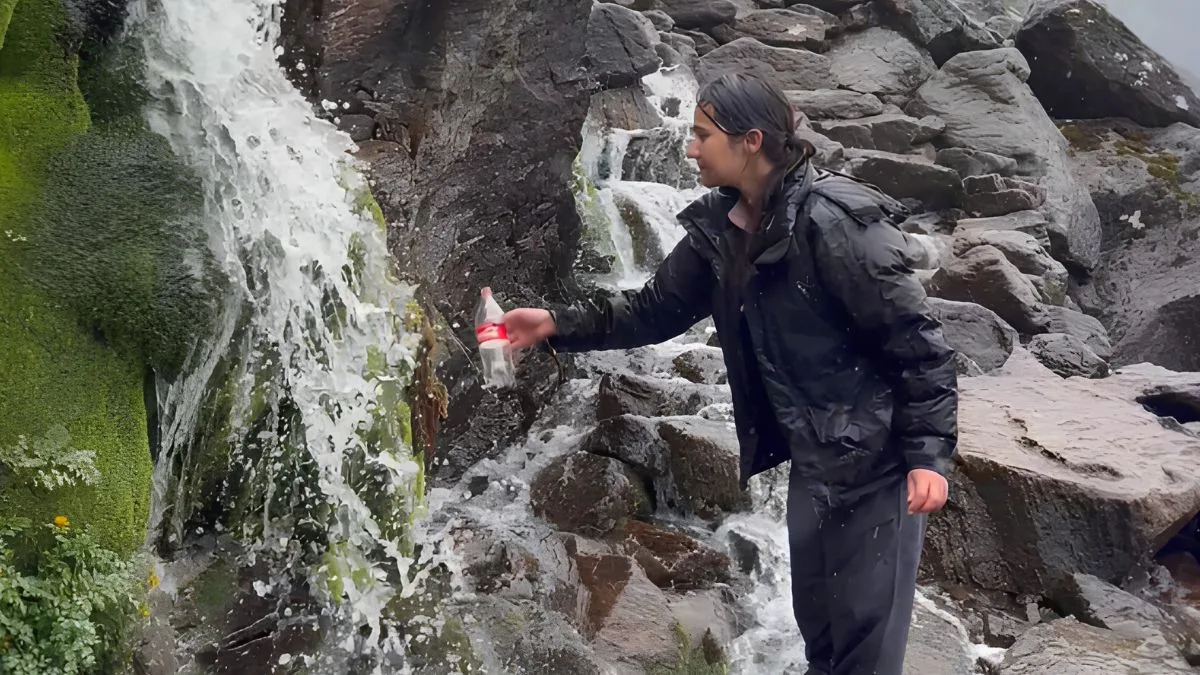
A team from RWTH Aachen tested 80 drinking water samples in Solu-Khumbu, from 2,608 m to 5,180 m. They found no thermotolerant coliforms (the bacteria that signal recent faecal contamination). But 46 of the 80 samples (58%) grew coliform-type or unidentified bacteria.
Lodge water was positive more often (25 of 36) than water taken at the source (22 of 48)!
The blame goes to handling and storage. They saw hose ends dropped in mud, containers never cleaned inside, a kerosene container used to store water, and people skipping hand washing.
They also note that cooking would disinfect water, but fuel is scarce. Their rule of thumb is that water taken straight from the source in a clean container is generally safer than lodge water!
An article by a travel medicine doctor says the flies lay eggs in stool, visit kitchens, and carry faecal bacteria on their feet.
So, the same kitchen that cooks your meat also fills your water bottle and washes your vegetables. A vegetarian meal is not automatically safe.
That’s why I say these measures matter more than anything: hand washing, boiled or reliable bottled water, steaming hot food, and avoiding raw salad.
What The Boiling Point Does to Your Cooking?
I estimated air pressure at each elevation with the standard-atmosphere formula, then solved for the temperature at which water boils at that pressure. Real weather shifts these by about a degree, so read them as close estimates.
| Place | Elevation | Water boils at (approx.) |
|---|---|---|
| Kathmandu | 1,400 m | 95°C |
| Namrung (Manaslu Circuit) | 2,630 m | 91°C |
| Namche Bazaar (Everest region) | about 3,440 m | 89°C |
| Dingboche | about 4,410 m | 85°C |
A pot of boiling water cannot get hotter than this. For example, meat simmered at Dingboche tops out near 85°C. That is still well above the internal temperatures food safety agencies set for cooking meat.
Altitude does not make cooking unsafe. That matches a CDC-linked analysis of boil-water guidance, which found boiling-point water cuts the listed waterborne pathogens within 1 minute at elevations up to 10,000 ft (about 3,050 m).
What altitude costs you is time and fuel. The 2024 review notes the lower boiling point means meals take longer to cook, and fuel is scarce up there. A thick piece of meat takes longer to cook through, and a rushed kitchen on a busy evening is where undercooking happens!
Cold Helps, But it is Not a Refrigerator!
One more finding from the earlier water study. Contamination was less common higher up:
At 2,500 to 3,000 m, 80% of samples were positive for coliform-type or unidentified bacteria, against 50% above 4,500 m, and the gap between the 2,500 to 3,500 m band and everything above 4,000 m was significant. This is because of the cold and fewer people and animals near the high sources, though they found no clear straight-line trend.
That is water, not meat, but the microbiology is the same: cold slows bacterial growth. If a piece of meat spends days on the trail, the stretch that worries me most is the warm lower valley, not the cold final climb.
That is my reasoning, and it is exactly why a source you can trace matters more than the altitude you eat at!
How Safe Are Fresh, Dried, Tinned Meat, and Egg in High Altitude?
Each form carries a different risk, and each one asks a different thing of you. Treating “meat” as one category is the first mistake.
Fresh Meat
Eat it only when it arrives steaming hot and cooked through, and when the kitchen is busy enough that food is not sitting around.
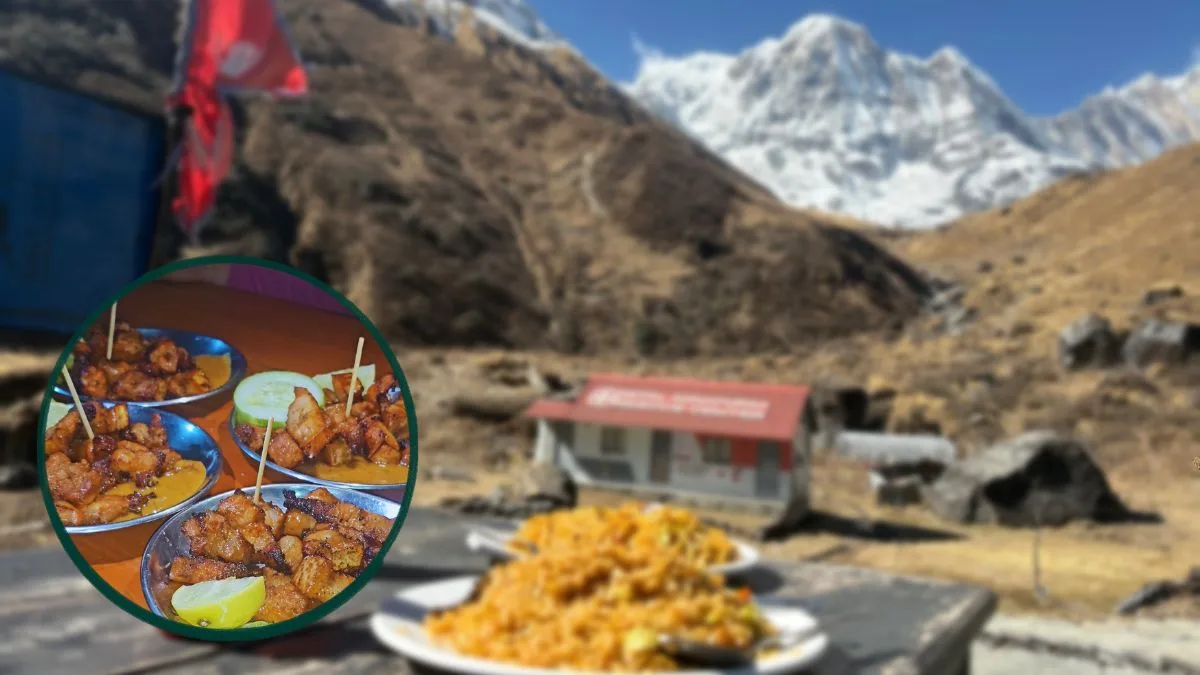
Skip lukewarm leftovers and anything reheated. In Nepal, this means buff momo (buffalo meat dumplings), chicken fried rice, and similar dishes.
If you cannot tell when it was cooked, treat that as your answer!
Dried Meat
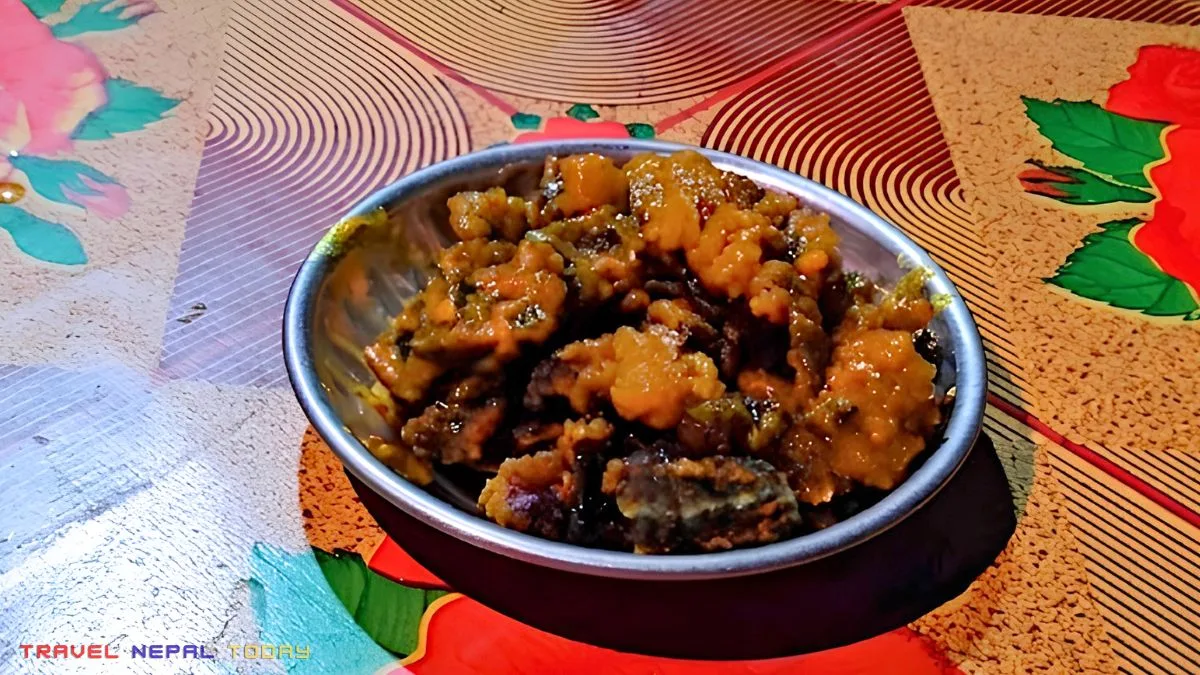
Sukuti (dried, spiced meat) is a real Nepali food, and drying is a real preservation method.
As a food technology student, I think about it in terms of water activity, meaning how much free water bacteria can use.
Drying and salting push that number down! Whether a given batch of sukuti is safe depends on how it was dried and how it was stored, and you cannot see that from the plate.
So, I treat it as your call, not a green light.
Tinned and Pouched Meat
This is the one form designed for the job. The US Food Safety Service explains that commercially processed shelf-stable foods are meant to stay safe without refrigeration while the package is intact.
Just be sure to follow these:
- Check the date.
- Skip anything swollen or leaking.
- Buy small, because once opened, the food needs the same care as fresh!
I have seen many trekkers carry tinned meat for the taste, and it is a sound choice for a better reason than taste.
Oh yes: don’t forget to carry the empty tin out with you!
Eggs
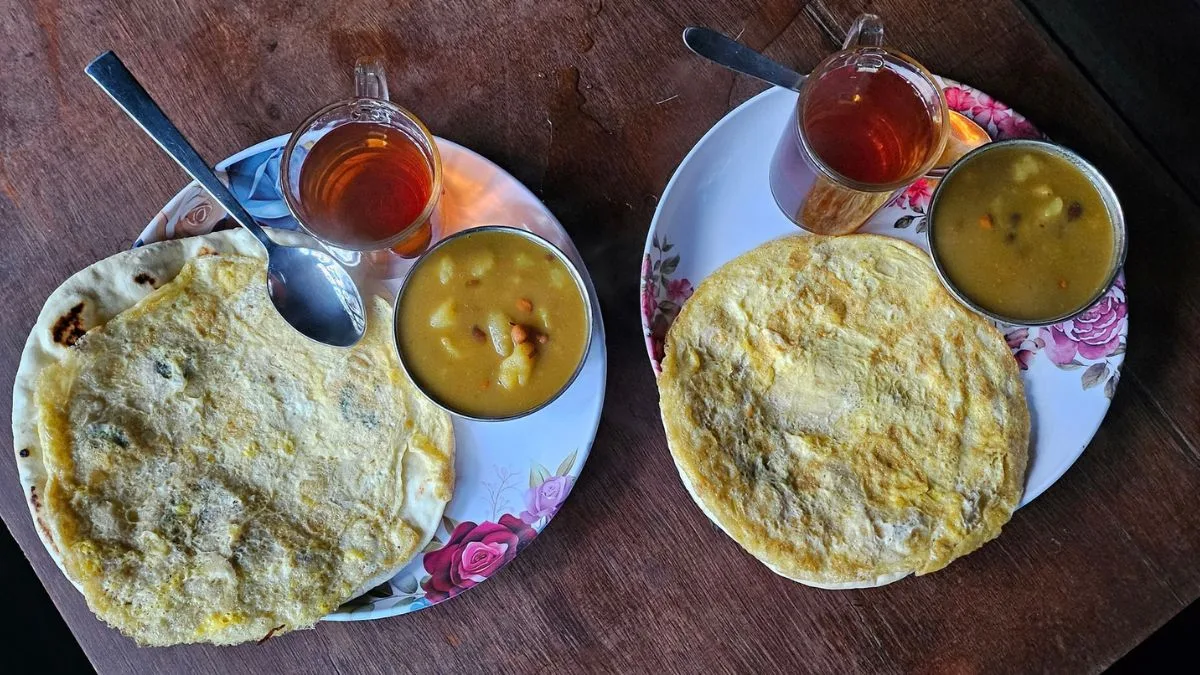
Eggs are not safe because they are not meat. Shell eggs can carry Salmonella, and storage and cooking both matter.
Boiled hard or fried through and served hot is fine. However, runny yolks in a remote kitchen are a gamble I would not take!
Where Meat is Not on the Menu?
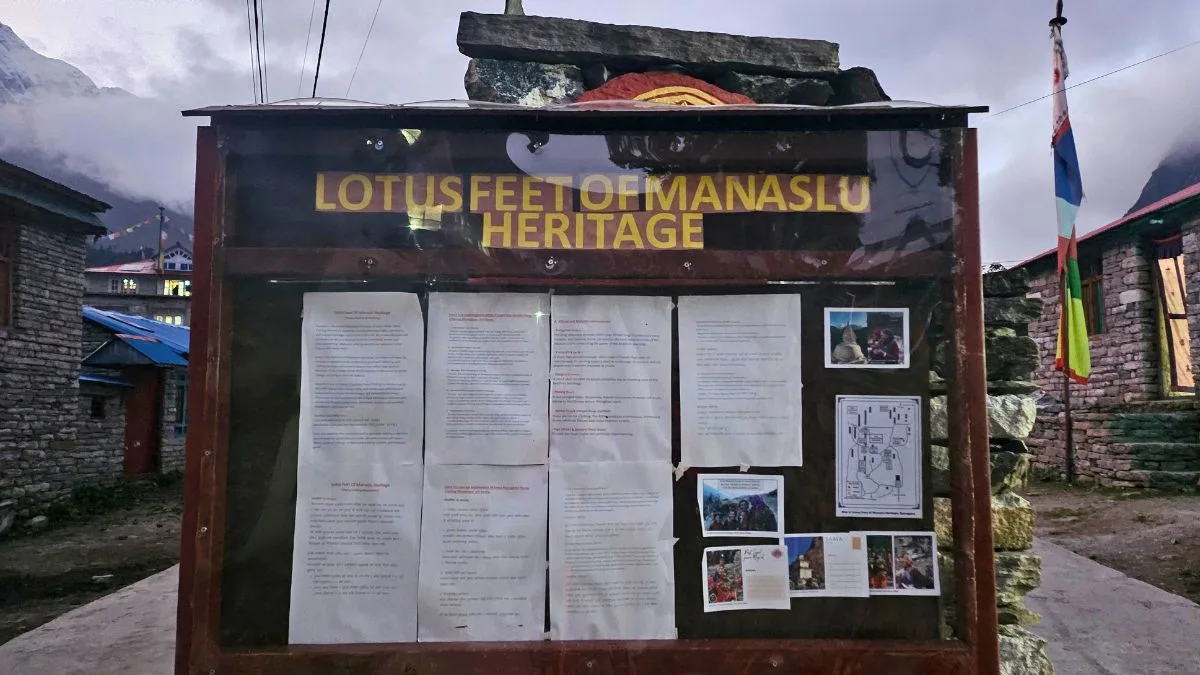
In in the remote high mountaineous region where Tibetan Buddhism is practised (like Tsum Valley Nubri Valley, Langtang Valley, etc.), the community keeps a non-killing tradition, and the trust that manages the area advises carrying no meat into it!
This is a community rule for specific valleys, not a national ban on trekkers eating meat.
For example, Tsum Valley that lies inside the Manaslu Conservation Area, where the people here (called Tsumba), call the tradition Shyagya (non-violence).
In these areas, killing animals is not allowed even for ritual purposes, and neither is the trade in meat, the collection of wild honey, or setting fire to forests.
Three distinctions keep this accurate and respectful:
- A community’s tradition is not a rule for every mountain in Nepal. Himalayan food cultures differ by people, religion, and livelihood.
- A ban on killing and trading in one valley is not the same as a law against a tin of tuna in your bag.
- National law regulates slaughter and the sale of meat, as the inspection act above shows. It does not forbid trekkers from eating legally sourced meat!
So, ask your guide and your lodge about local custom, valley by valley!
Even where nothing forbids meat, I follow the local lead. Asking for chicken in a valley that has kept the Shyagya for a century? Well, I say it’s not the right place to ask for a plate of momos!
What to Eat Instead of Meat in High Altitude?
Build your meals on dal and pulses for protein and on rice, potatoes and grains for energy, then add the optional cooked eggs, nuts, cheese and tinned fish.
Remember this: The first job is calories. The second is protein.
Protein You Can Actually Reach
As per the earlier 2024 review‘s range, a 70 kg trekker needs about 98 g of protein a day at 1.4 g per kg and about 112 g at 1.6 g per kg.
| Food | Protein per 100 g (approx.) | Trail Note |
|---|---|---|
| Cooked lentils (dal) | 9 g | On every teahouse menu |
| Boiled egg | 13 g | Cook it hard |
| Peanuts | 26 g | Carry them; also dense in energy |
| Roasted chickpeas | 19 g | Light and keeps well |
| Hard cheese from a sealed pack | 25 g | Good with bread |
| Tinned tuna, drained | 25 g | Sealed, ready to eat |
| Cooked chicken (for comparison) | 27 g | The meat you are skipping |
| Cooked rice | 3 g | Mostly energy |
One day without meat: 2 eggs (12 g), 300 g cooked dal (27 g), 300 g cooked rice (8 g), 50 g peanuts (13 g), 50 g roasted chickpeas (10 g), 30 g hard cheese (8 g) and one small tin of tuna, 80 g drained (20 g).
That adds up to about 98 g, right at the low end of the target!
The One Real Thing You’ll Give Up With Meat: IRON!
Meat does have one genuine edge. The 2024 review says iron needs rise at altitude because the body makes more red blood cells, and iron from meat (heme iron) is absorbed at roughly 5 to 35%, against 2 to 20% for plant iron.
It also says vitamin C helps plant iron absorption while polyphenols in tea and coffee, and calcium, reduce it!
My practical tips:
- Squeeze lemon on your dal.
- Drink masala tea between meals (not with Dal Bhat).
- If you worry about your iron, speak to your doctor before you plan a high-altitude trek.
Trail Snacks
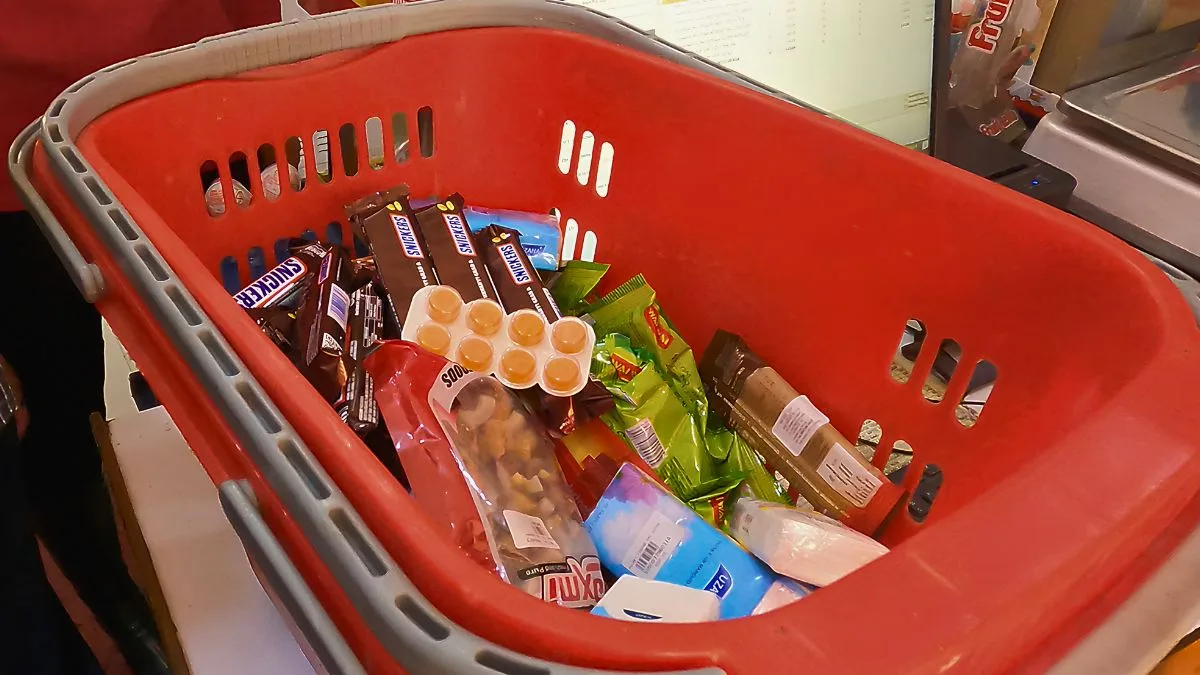
Peanuts, roasted chickpeas, nut butter, chocolate, dried fruit and protein bars are the best choices!
My advice is to test snacks in the cold first, because bars can freeze solid. Choose what you will actually eat, since appetite is the thing altitude takes first.
Local Staples Worth Leaning On
Dal Bhat is the obvious one. Tsampa (roasted barley flour) is a Sherpa morning staple, Dhido (a thick buckwheat or millet porridge) is hearty, and potatoes do well too!
Each gives energy first and a modest protein top-up, which is the right order.
10 Factors to Decide Choosing Meat in High Altitude
Ten factors shape whether meat is a good idea on a given trek, but three do most of the work: how the meat was handled, whether the local community accepts it, and whether you can eat enough calories.
Here they are in one place, so you can weigh them for your own route:
| Factor | Why it matters | What to do? |
|---|---|---|
| 1. Altitude physiology | Appetite drops and the gut is stressed, but protein absorption held at 96% at 5,000 m | Eat smaller, more frequent meals |
| 2. Food safety | Time, temperature, hands and water decide illness, not altitude | Hot, cooked food only. Treat your water |
| 3. Supply chain | Long walks in, seasonal access, little storage | Favour busy lodges on busy routes |
| 4. Local food system | Pulses, grains and potatoes are everywhere, meat is not | Lean on the staples |
| 5. Nutrition and performance | Carbohydrate at least 6 g per kg, protein at least 1.4 g per kg per day | Calories first, then protein |
| 6. Food processing | Fresh, dried and tinned meat have different safety needs | Choose sealed tins when unsure |
| 7. Culture | Shyagya in Upper Tsum, and other valley customs | Ask your guide, follow the local lead |
| 8. Regulation | Inspection reaches rural municipalities from 17 July 2027 | Do not assume inspection happened |
| 9. Environment | Tins and packaging become waste, and cooking meat burns scarce fuel | Carry out empties, prefer quick-cook food |
| 10. Individual circumstances | Medical conditions, diet, appetite and trek length | Match the plan to you, and ask your doctor |
Final Words
Your best choice depends on your route and your trek length. Here are my verdicts for the people I hear from most:
| If you are… | My verdict |
|---|---|
| A first-timer on a busy route (Everest or Annapurna) | Cooked, steaming-hot meat in busy lodges low on the trek is reasonable. As you climb, shift to eggs, pulses and tins |
| Trekking in the Beyul region (parts of Helambu, Langtang, Rolwaling/Gaurishankar, Dolpo, etc.) | Rely on dal, eggs and tins on the main trail. In Upper Tsum, do not ask for meat |
| A meat lover on a short trek (under 5 days) | Skip it and eat well when you are back downhill. It costs you very little |
| Vegetarian or vegan | You are fine. Watch protein and iron, and follow the same water and hand rules |
| Someone with a medical condition or special diet | Follow your doctor’s advice |
Here’s how you can plan:
- Decide your meat rule before you fly. Mine: sealed or cooked-through and hot, or skip.
- Pack a few small sealed tins or pouches of fish or meat. Small means no leftovers.
- Pack protein snacks you have tested in the cold: peanuts, roasted chickpeas, nut butter, bars.
- Treat every drop of drinking water, and clean your hands before eating.
- Eat food that arrives steaming hot. Send back lukewarm plates.
- Ask when the dish was cooked. A confident answer from a busy kitchen is a good sign.
- Stop ascending if nausea arrives with a headache, and tell your guide.
- Carry out your empty tins and wrappers.
- Ask about local custom in each valley, especially in Upper Tsum.
Happy travelling and bon appetite!
About The Author