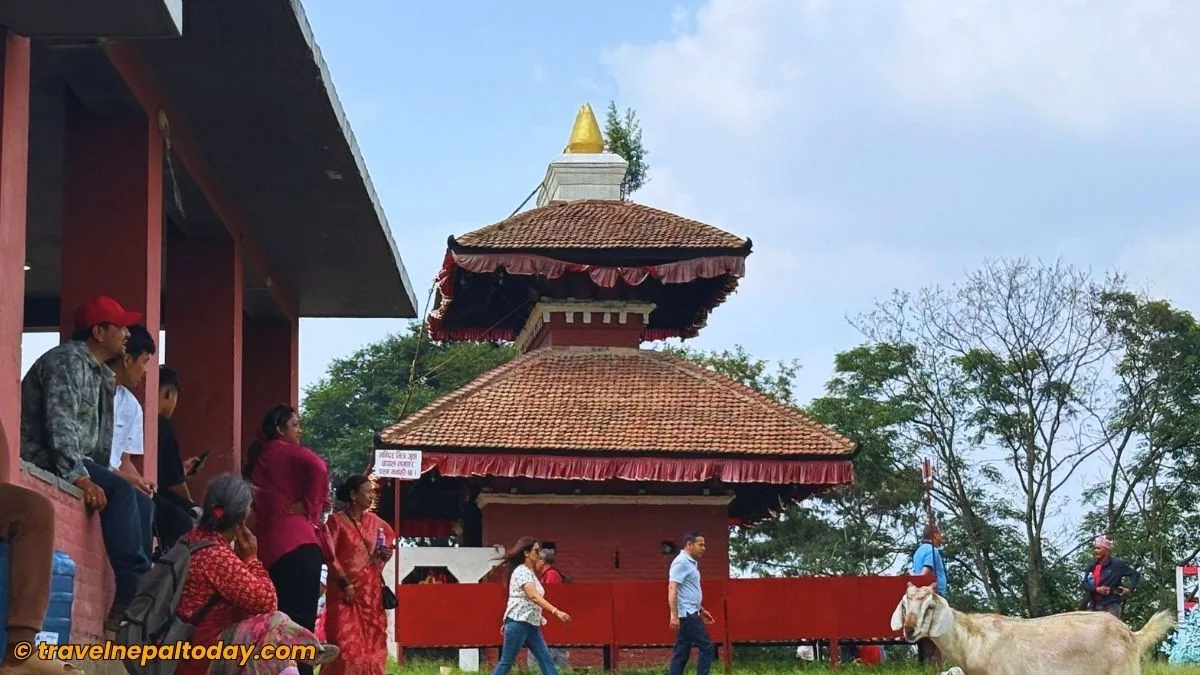
On our ‘Saturday Diaries’ short travel series, we recently went to Lalitpur’s Khokana with plans to visit all the places there. But we ended up roaming around just the Sikali Temple area.
I personally had a talk with a Newari priest here who told me that the temple is over 400 years old. However, upon further research, I learned that its history dates back to 336 Nepal Sambat (which, according to calculations, corresponds to 1215 AD, more than 800 years old!).
And because the place is ultra-photogenic, we couldn’t stop taking snaps on every corner. There appears to be a suspension bridge too, which many visitors miss out on.
Today, I’m here to share Sikali Temple’s history, how to get there, the famous Sikali Jatra, picnic tips, and our real experience. Let’s get started.
Key Facts About Sikali Temple
| Location | Khokana, Lalitpur, Bagmati Province |
| Mode of Transportation | Private vehicle |
| Distance (from Koteshwor) | 10 km approx. |
| Time to reach | 30 minutes approx. (depends on where you’re coming from) |
| Best Time to Visit | During Sikali Jatra (Dashain Time, in September/October) |
How to Reach Sikali Temple?
There are multiple routes to reach Sikali Temple, and it really depends on where you’re coming from. The following direction is based on my personal experience:
- First, reach Bhaisepati.
- Then, head onto the Khokana road.
- You’ll see a board that says “Sikali Temple”, which indicates going to the right.
- You’ll come across another board that says “Sikali Mandir Jane Bato“, which translates to “Way to Sikali Temple“.
- Follow the unpaved road and you’ll reach the parking area within the next five minutes.
- From there, walk through the main gate onto the grassy temple grounds. It’s perfect for dry picnics!
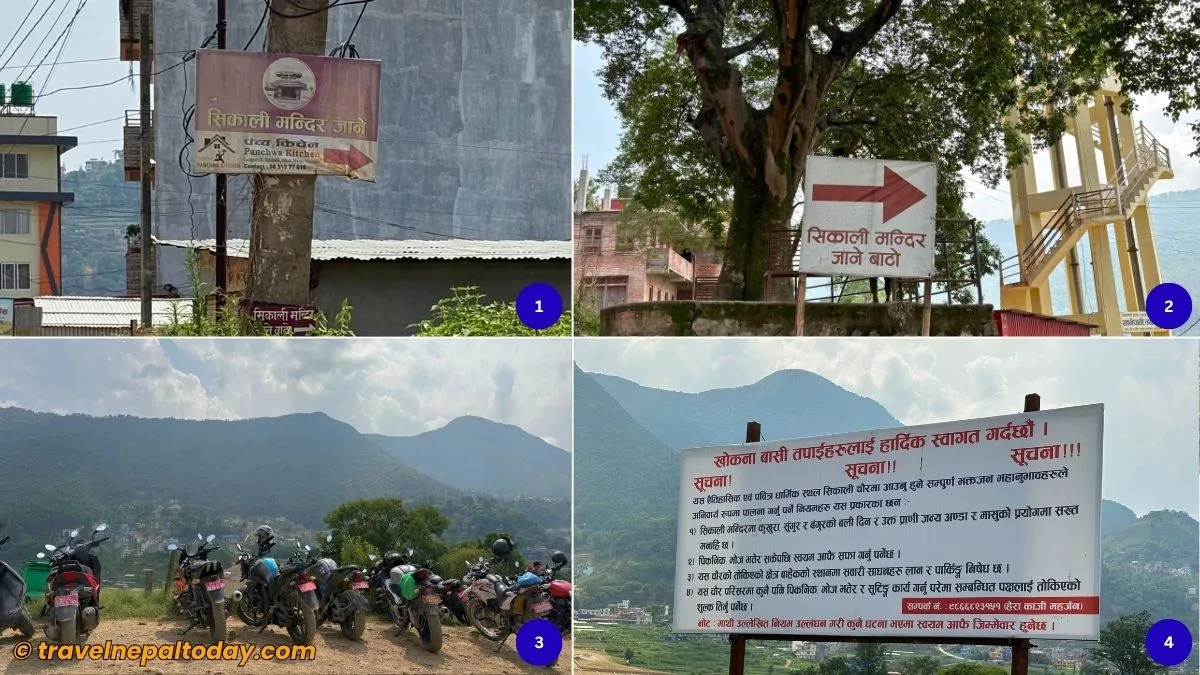
Talking about the road condition, 90% is paved while the final section remains unpaved but still smooth.
For those who are planning to come here by a public vehicle, find a local micro that goes to Khokana. I’m not entirely sure about this.
Also, since there are multiple ride-sharing apps already available in Nepal, you could easily get to Sikali Temple.
What I did see is that many visit here with their friends or family for picnic purposes. So maybe plan it with them on a reserved vehicle?
What You Should Know About Sikali Jatra
Khokana does not celebrate Dashain in the usual way. Instead, locals observe a unique nine-day Sikali Jatra from Ghatasthapana through Kojagrat Purnima (full moon).
I couldn’t experience it during my Saturday trip, but I’m really eager to witness it live. It’s a one-of-a-kind celebration rooted deeply in local faith and tradition.
In case anyone reading this is from Khokana and wants me to explore it in-depth, please don’t hesitate to reach out to me. There’s more I want to learn and update here on Travel Nepal Today!
Origin & History of Sikali Temple
As mentioned earlier, the Sikali Temple dates back to approximately 336 Nepal Sambat, around the 14th to 15th century, during King Amar Malla’s reign (source).
The name ‘Sikali’ likely comes from the Sanskrit word ‘si’, meaning ‘stone‘, referring to the sacred rock idol inside the temple. And ‘kali’ obviously is Ma Kali herself!
Others believe it comes from the Newari word ‘sinkar’, meaning ‘wood tax‘, which traces back to Khokana’s time as a timber-rich, forested community where wood stood out as a major part of local life and economy (source).
The temple houses a stone idol known as Dhyan Chyo Maju, decorated with vermilion and trident symbols. This deity represents goddess Rudrayani (also called Sikali or Ajima), who is worshipped as Khokana’s protector and healer.
Khokana Celebrates Dashain In Its Own Way!
People in Khokana replace Dashain with a nine-day Sikali Jatra spanning Ghatasthapana to Kojagrat Purnima. Each day involves different rituals and community gatherings:
- Day 1 (Ghatasthapana): Eight unmarried boys from the Tagu and Salagu Guthis enter the temple for a secret tantric puja. They stay inside the temple walls for four days, eating just once a day, bathing in the Bagmati River, wearing only a daura, and avoiding meat, eggs, garlic, and alcohol.
- Day 2 (Dwitiya): The boys remain inside the temple, observing their rituals and discipline while the local community respects their sacred solitude.
- Day 3 (Tritiya): Sacred offerings have been gathered, and three male buffaloes, offered by Tagu, Salagu, and Jagu Guthis, are sacrificed outside the temple. Their blood and organs are used inside as part of the ritual offerings.
- Day 4 (Chaturthi or Choilabu): Known locally as Choilabu, this is a day of community feasting. Village leaders and householders serve meals made from sacrificial buffalo to Guthi members and villagers.
- Day 5 (Panchami): The idol of Goddess Rudrayani is placed in a wooden chariot and brought to the Sikali Temple hill. It is installed with nine copper vessels. Priests and Guthi leaders perform ceremonies, including the Ashwamedha Yagya.
- Day 6 (Shashthi or De Sa): Forty-six Devagans don masks and costumes are brought to represent fourteen Hindu deities. They perform sacred masked dances through the temple grounds. Some even walk through fire. Moreover, Guthi leaders walk with pots of rice, distributing the prasad, believed to cure stomach diseases!
- Day 7 (Saptami / Phulpati): The masked dances continue in neighborhood streets. Community elders host feasts to thank villagers.
- Day 8 (Ashtami / Navaami): The idol is returned to the shrine in Khokana and reinstated via tantric rituals. A big communal feast follows.
- Day 9 (Kojagrat Purnima): Celebrations wrap up on the full moon night. The community worships goddess Lakshmi for prosperity before resting and preparing for the harvest.
When Is Sikali Jatra in 2025?
In 2025, Ghatasthapana falls on September 22. So, Sikali Jatra will be celebrated around September 22 to October 6, ending on Kojagrat Purnima.
You’ve probably put the ‘rato tika’ on Dashain every year. How about a different Dashain experience in Khokana this year? If you’re interested, mark your calendars right away!
What to Do at Sikali Temple?
You’ve read the history and made plans to visit. But if you’re still wondering what to do when you’re at the Sikali Temple area, let me make it even simpler for you:
First, Take Blessings from Sikali Temple
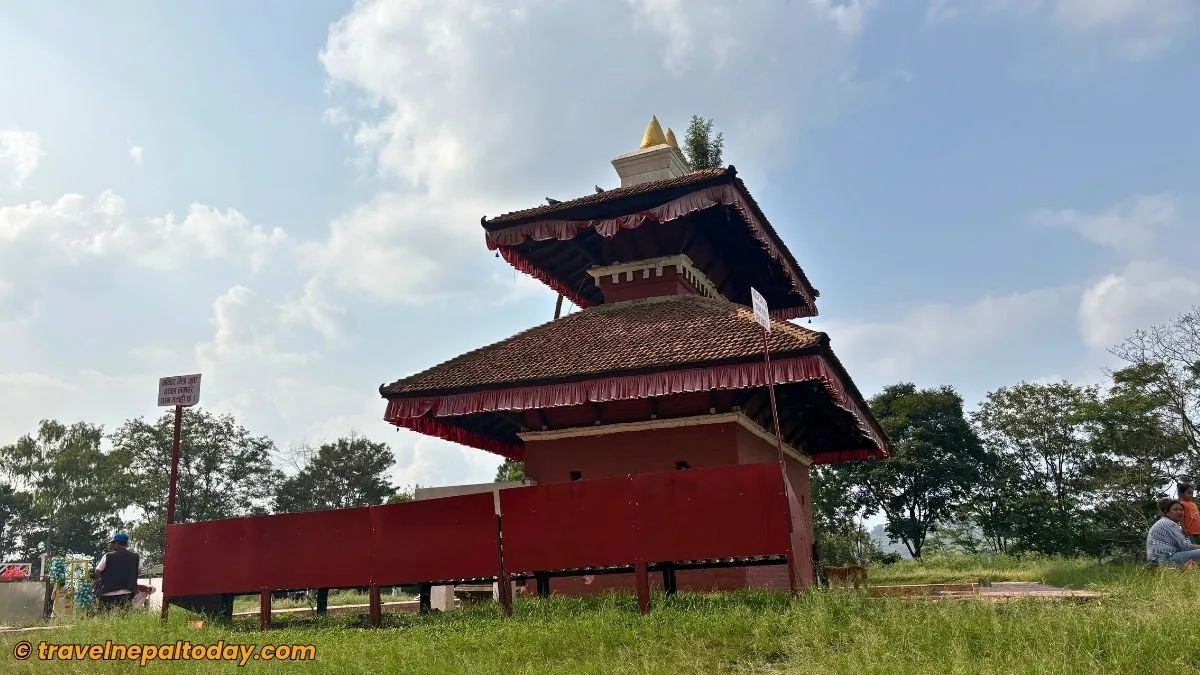
Start your visit with a short walk around the sacred black stone idol of Sikali inside the temple. During my visit, I was disheartened to see houseflies all over the stone.
And I wasn’t the only one! Even an aunty nearby asked about it, but neither of us got a proper answer. In case any of you know the reason behind it, do let me know in the comments below!
After the blessing, I did a single round of circumambulation. If you’re someone who believes in energy or tradition, do like I did :p…
Visit the Small Park in the Middle
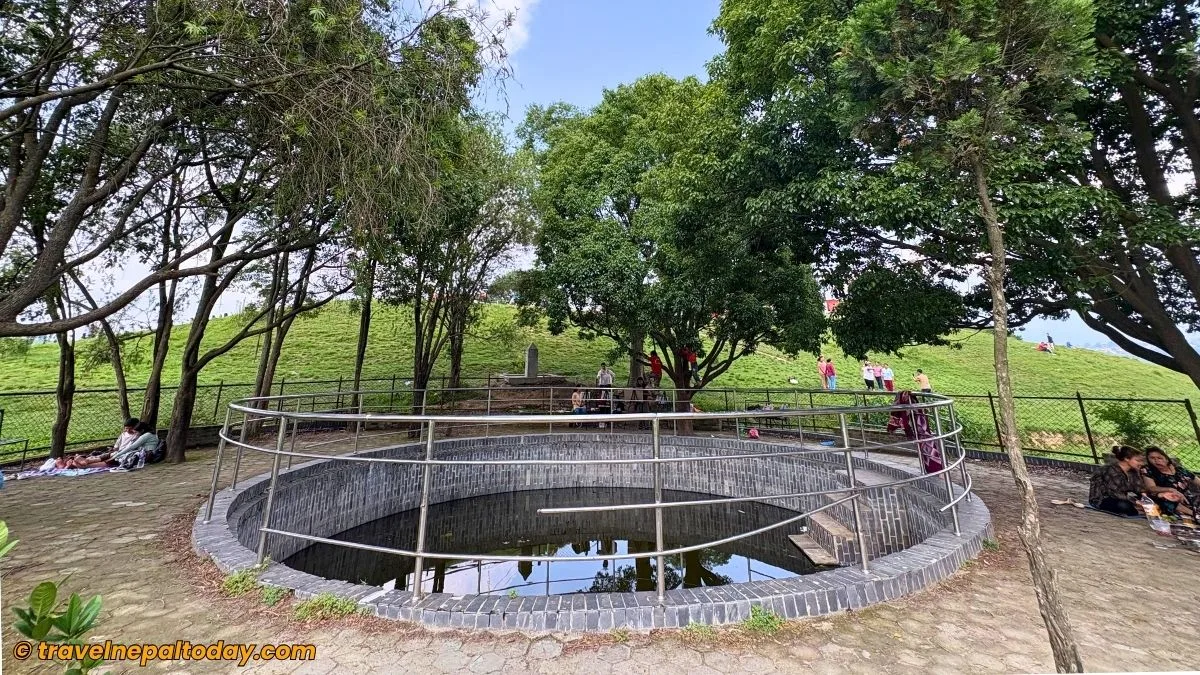
We also dropped by a small park near the temple. Interestingly, a few artists were there sketching. so if you’re into art or looking for a quiet space to reflect, this place could be worth checking out!
There’s also a small pond in the middle. But sadly, it was filled with garbage. Disappointed, really.
Why? It’s simple. Visitors who come here for picnics often throw trash around. Well, whoever’s responsible, we hope they step up and take care of such a touristic and spiritual spot.
And there are also trees in the temple premises that make great spots for snaps. I personally loved the two peepal trees right in front of the park!
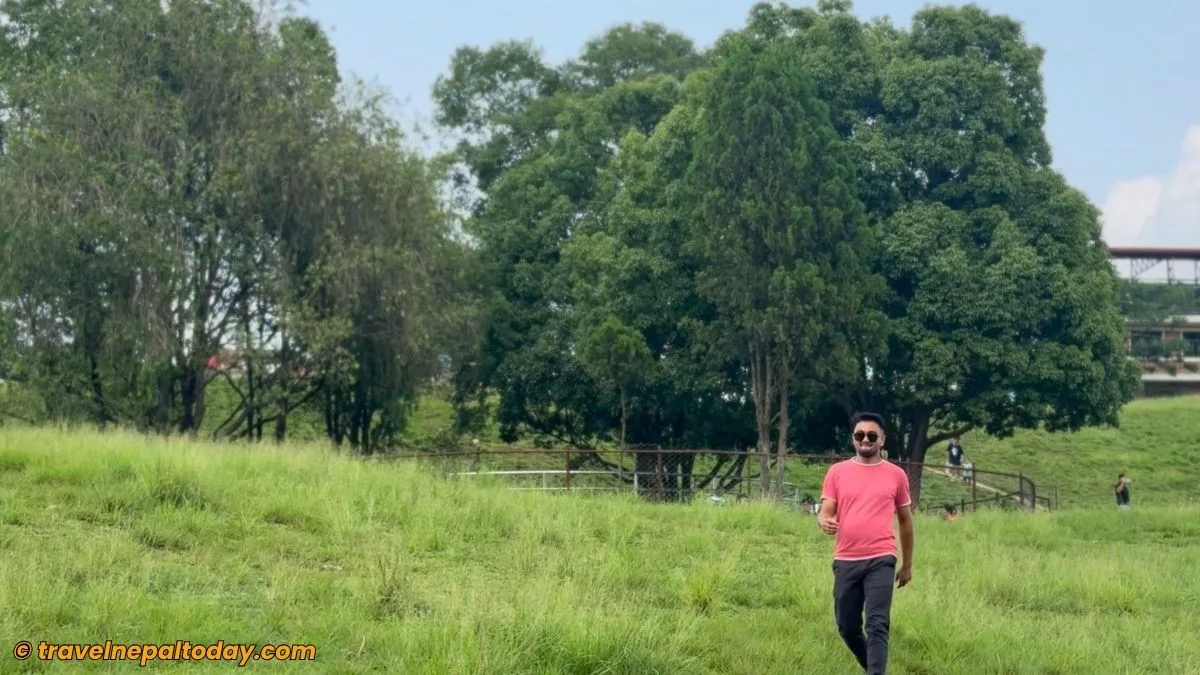
Dry Picnic at the Sikali Temple Ground
The temple grounds are the main highlight here. They’re flat, scenic, and perfect for a casual hangout.
We treated ourselves to chatpate and panipuri from a vendor right outside—a classic street snack that never disappoints!
We didn’t carry dry picnic snacks, but many others around us had. People were genuinely enjoying the atmosphere. Some were even shooting music videos.
It felt like going back to the 2000s. A reminder that people still love spending weekends outdoors with good food and friends.
Get to the Viewpoint
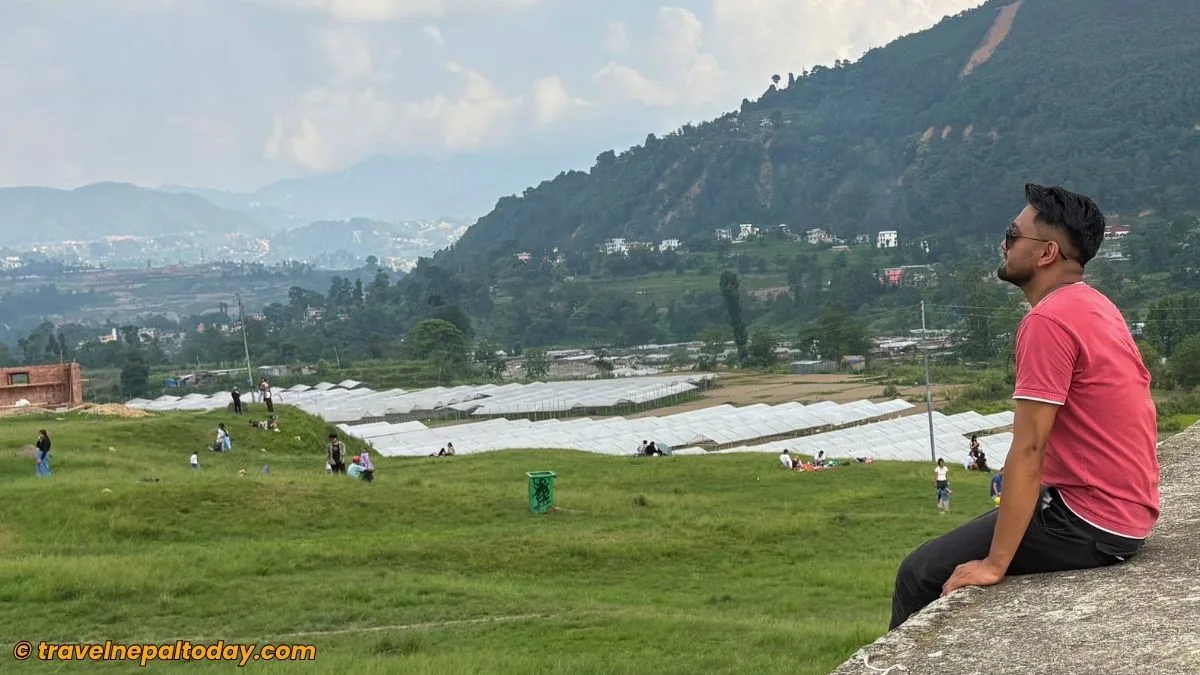
Right next to the Sikali Temple, there’s a simple one-storey house that offers a slightly elevated spot to catch a panoramic view of the grounds.
It’s not exactly a high vantage point, so the views aren’t jaw-dropping, but it still works as the official viewpoint of the premises. There’s a small staircase that you need to climb to get here.
Horse Riding at Sikali Temple
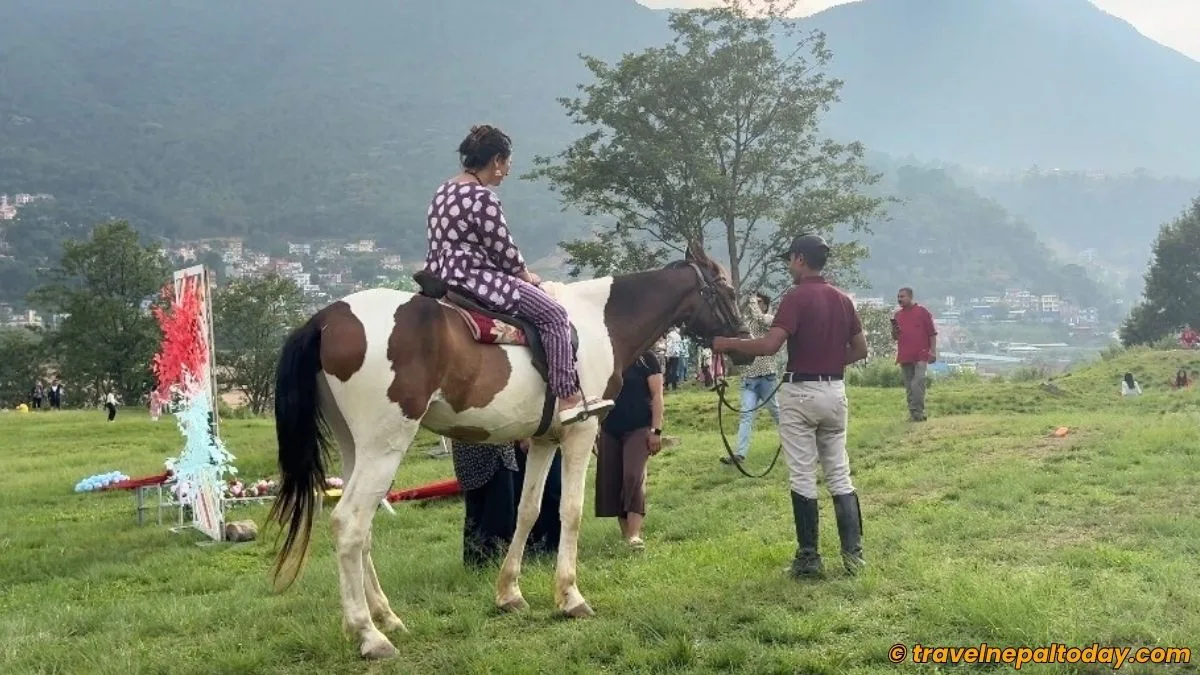
I didn’t try it myself, but there were a few people enjoying horse rides around the temple area.
The charge is around NPR 100 per ride. If you’ve never ridden a horse before, this is a solid chance to give it a shot while exploring Sikali!
Camping in Sikali Grounds: Is It Possible?
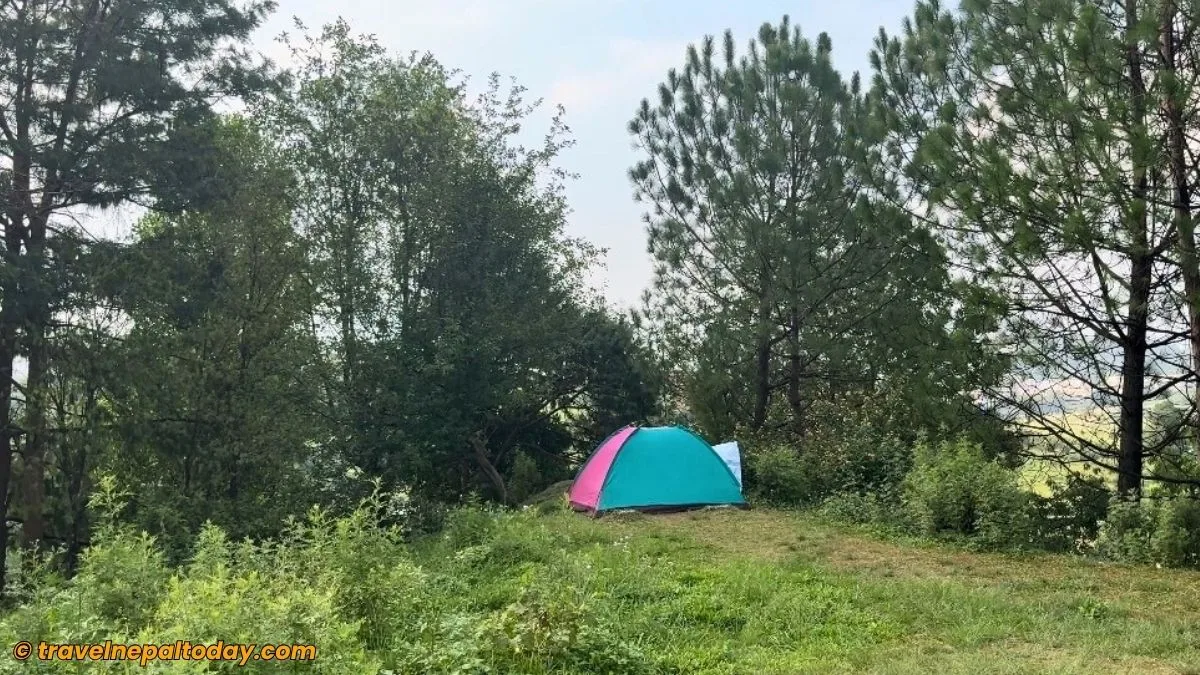
Yes, camping is allowed here! We even saw a camp set up during our visit, so it’s clear the temple grounds welcome campers.
That’s a great news for nature lovers looking for a peaceful weekend escape. Just keep in mind that you’ll need to get permission beforehand. Make sure to arrange it outside the temple area before you set up camp.
Walk to the Suspension Bridge
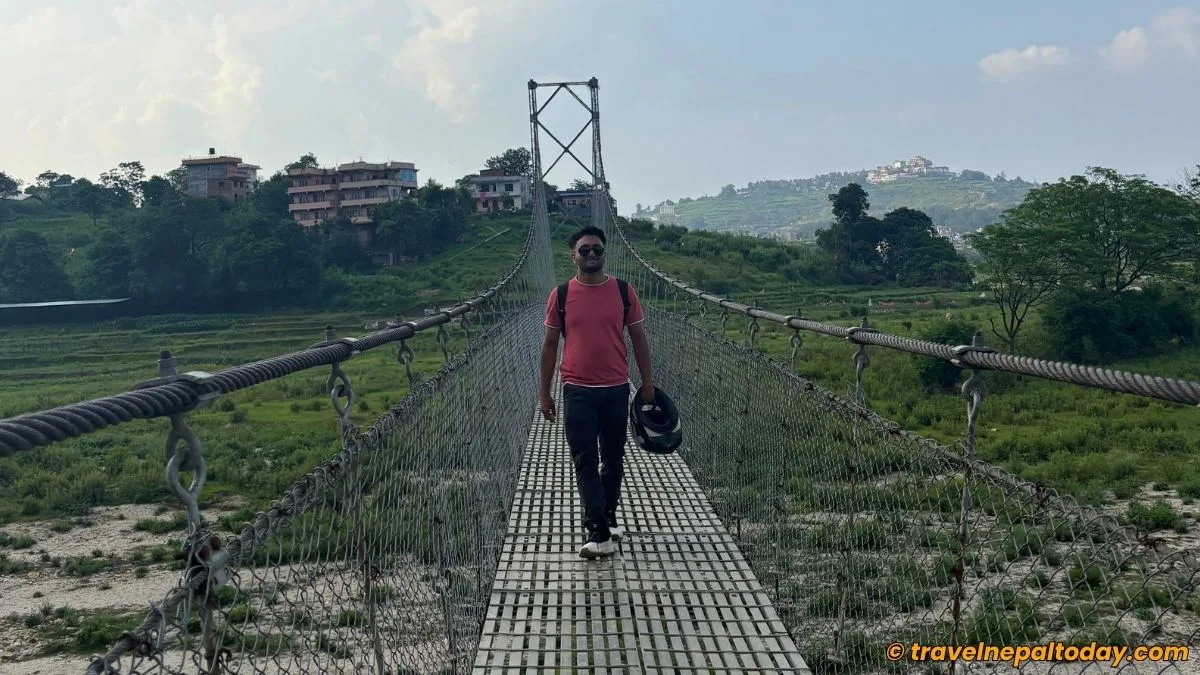
There’s a narrow trail that leads down toward the Bagmati River. If you love photos, you might want to explore this spot!
However, just a heads-up, the river was extremely dirty when we went! I had to literally close my nose because of the strong smell. I’ll leave it up to you whether you want to check it out.
Nearby Places to Visit
While we planned to cover more, we started our trip a bit late. So, for now, these places are saved for another episode of Saturday Diaries (which I also upload on my social media):
- Khokana Museum: It is the first house in Nepal where electricity was installed.
- Taudaha Lake: Located right opposite but needs a different route.
- Chobhar: The hills and monastery are clearly seen from here.
- Dakshinkali Temple: A powerful temple where animal sacrifice still takes place.
- Rato Machhindranath Temple in Bungamati: A key spiritual site for the Newar community.
All these places are nearby and can easily be combined into a single day trip if you start early. I’ll soon come up with the itinerary for you!
Expected Budget For Your Trip to Sikali, Khokana
This really depends on your spending habits. For us, we managed to complete the trip under NPR 500 per person. That included everything from our snacks to fuel expenses.
If you’re planning to do a small puja or even offer flowers or bali (animal sacrifice), your expenses might go a bit higher. Still, it’s totally manageable for a day trip.
Also, since Khokana is a Newar town, don’t leave without trying local Newari food. We’ll be listing some of the best restaurants in the region very soon. So stay tuned for that!
Final Words
Honestly, I’m still not satisfied with just one single trip to Sikali Temple. I’ll be sure to drop by again during my next visit to Khokana, where I’ll also visit the first electricity house along with Bungamati.
In fact, if I get the chance to see the Sikali Jatra, I would be able to tick that off my festival bucket list too. Calling out for help from my local readers!
And if you wish to learn more about my Saturday Diaries series, keep posted on my social media accounts. It’s a slow travel series helping everyone explore more of Kathmandu and its outskirts.
Happy traveling to Lalitpur!
About The Author