The Panch Pokhari Trek in the Sindhupalchowk district is undoubtedly on everyone’s bucket list.
I was so excited to reach this stunning destination that I decided to go alone. And I must say, it didn’t disappoint, even though I trekked during the off-season.
Nestled in the heart of Langtang National Park, many opt to do the Panch Pokhari Trek during the monsoon season. However, winter offers its own unique charm and presents an even greater challenge.
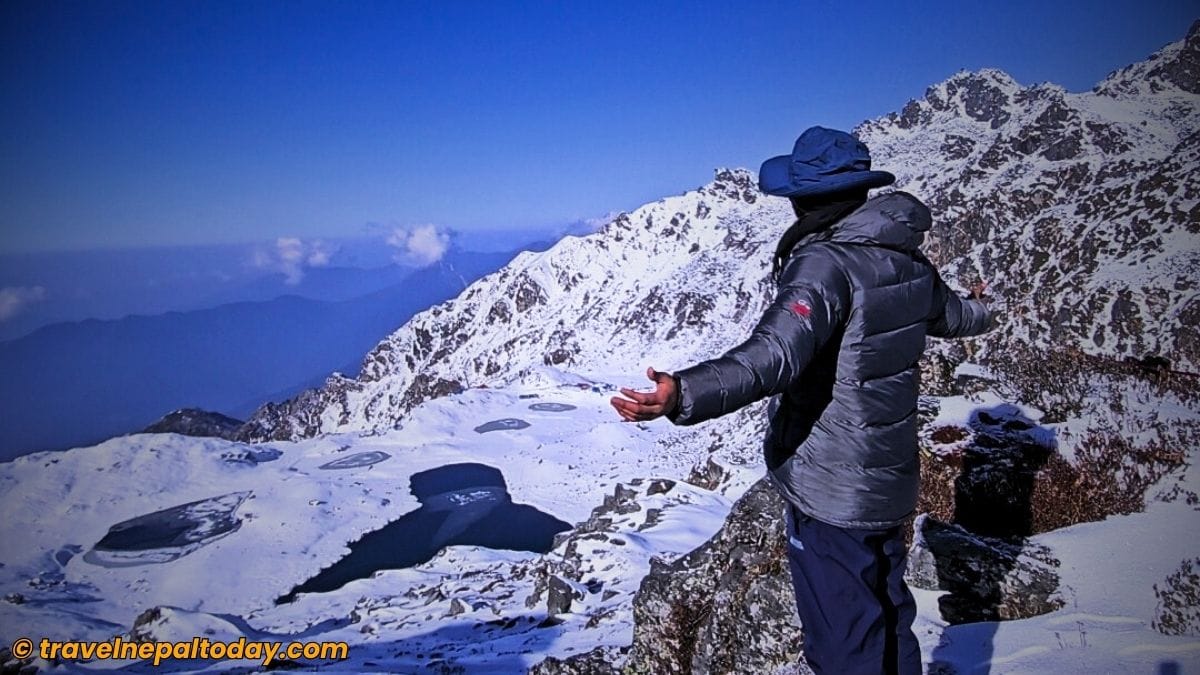
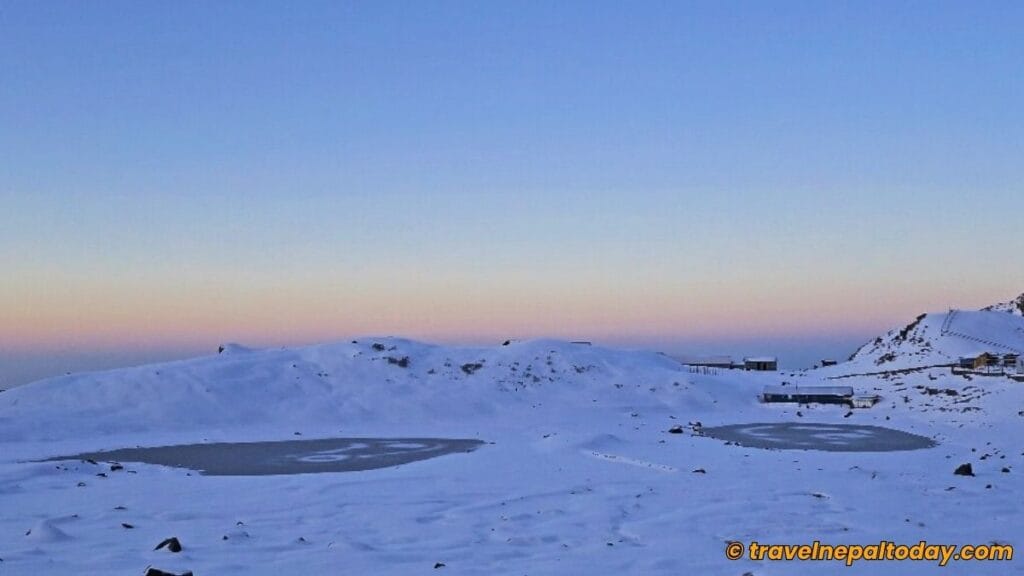
At the Viewpoint (at 4,300 m), I was treated to a breathtaking view of the five ponds, surrounded by snow-covered landscapes on all sides. The sight was nothing short of spectacular, with towering mountains standing right behind me.
Based on my personal experience, I’ve put together this detailed travel guide for the Panch Pokhari Trek.
Be sure to read through until the end to discover the complete itinerary, along with a cost breakdown and essential tips that I’ll share along the way.
Key Facts About Panch Pokhari Trek
| Region | Langtang National Park, Sindhupalchowk District, Bagmati Province |
| Max. Altitude | 4,300 m (Viewpoint) |
| Trip Duration | 4 days |
| Trek Duration | 3 days |
| Trek Difficulty | Moderate to Challenging |
| Network Availability | Tuppi Danda and nearby areas only |
| Charging Availability | Solar / Generator (so, limited) |
| Best Time to Visit | April – July and October – January |
| Permits & Fees | For Nepalese: Free of cost (there’s a plan to charge for National Park entry in the coming years) |
| For tourists: Langtang National Permit & TIMS Card (I’ll cover this better in another guide) |
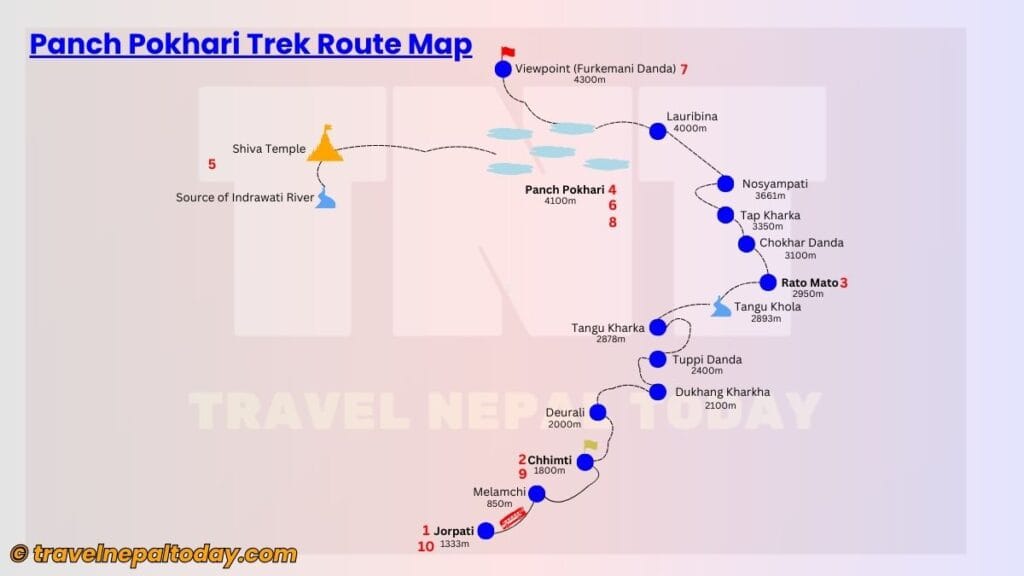
Panch Pokhari Trek Route Map
Kathmandu to Chhimti Bus Details
| Bus Service Provider | Samyukya Ticket Counter |
| Location | Shiva Chowk, Jorpati, Kathmandu |
| Contact Details | 01-5223131 |
| Bus Fare | Rs. 600 (can vary) |
| Bus Timing | 6:20 AM (preferred), 8:20 AM, 11:00 AM |
| Final Destination | Chhimti (possible stop somewhere in Bhotang due to road conditions) |
The first step of your Panch Pokhari Trek is to reach Panch Pokhari-Thangpal Rural Municipality in Sindhupalchowk.
If you’re traveling from other parts of the country, make sure you’re in Kathmandu first. Currently, buses are not available from anywhere else (unless you manage to make your way to Melamchi).
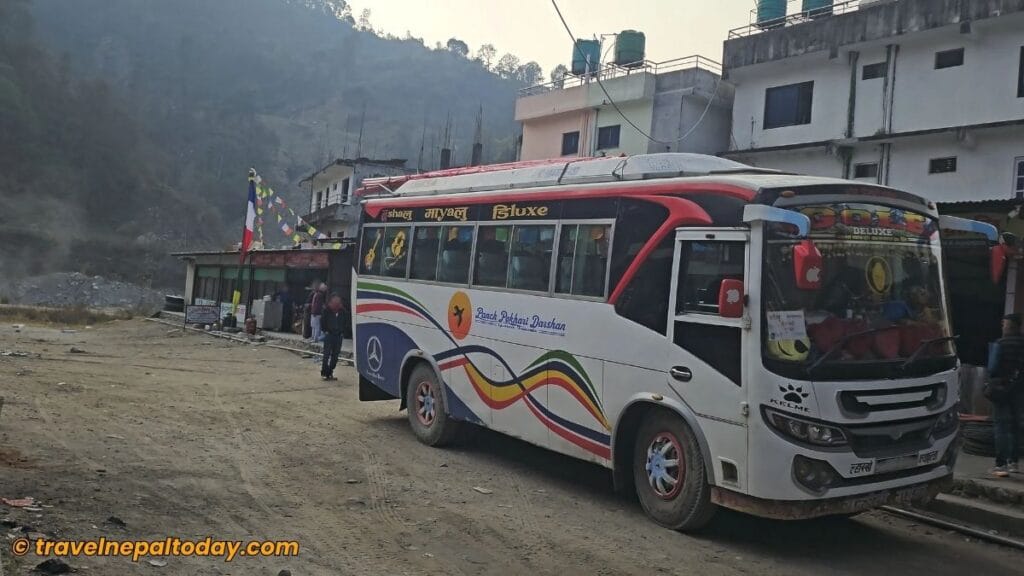
Based on my experience as of February 2025, here’s what you need to know about the Kathmandu-to-Chhimti bus:
- Be sure to purchase your ticket a day in advance.
- Get to the Samyukya Ticket Counter at Shiva Chowk, Jorpati.
- Consult with the in charge and purchase your ticket for the first bus to Bhotang (departing at 6:20 AM).
- Tickets for buses departing at 8:20 AM and 11:20 AM are also available.
- The ticket price tends to fluctuate. During my trip, I paid Rs. 600.
- While the in charge mentioned that the bus would only reach a certain point in Bhotang due to poor road conditions, I got lucky, and the bus dropped me directly in Chhimti.
- Your drop-off point will depend on the road conditions, so there’s no guarantee where you’ll be dropped off.
Note: If you plan to reach Chhimti by private vehicle, you can drive either a two-wheeler or a four-wheeler up to Dukhang Kharka (a little beyond Deurali). However, the road conditions aren’t ideal, so ride carefully!
4-Day Panch Pokhari Itinerary
My solo winter trip to Panch Pokhari was quite a challenge due to the snowy trail conditions.
If you visit during the right time, it’s even possible to complete the trip in just 2 nights and 3 days. However, altitude sickness is still a concern, so it’s important to be mindful of your health.
Regardless of the season, my approach to reaching Panch Pokhari in 3 nights and 4 days remains the shortest, easiest, most comfortable, and budget-friendly. Let’s begin.
Day 1: Kathmandu to Chhimti to Rato Mato
| Drive Duration | 5 to 6 hours |
| Hike Duration | 4 to 5 hours |
| Altitude Shifts | 1333m > 850m > 1800m > 2950m |
| Elevation Gain | 1617m |
| Difficulty Level | Easy |
| Accommodation Type | Teahouse Lodge |
As mentioned earlier, you’ll be taking the first bus at 6:20 AM. Make sure not to be late, as the bus departs exactly on time. Based on my experience, there was only a 10-minute delay.
The bus starts from Jorpati (1,333 m) and follows the Sankhu-Melamchi road. From there, it heads towards Thangaldhap and finally reaches Bhotang.
The bus makes a stop in Melamchi (850 m) for lunch, and within 5-6 hours, you should reach the starting point of the Panch Pokhari Trek, Chhimti (1,800 m).
If you’re traveling by motorcycle or any other private vehicle, you can follow the same route. From Chhimti, proceed towards Deurali (2,000 m) and then onto Dukhang Kharka (2,100 m).
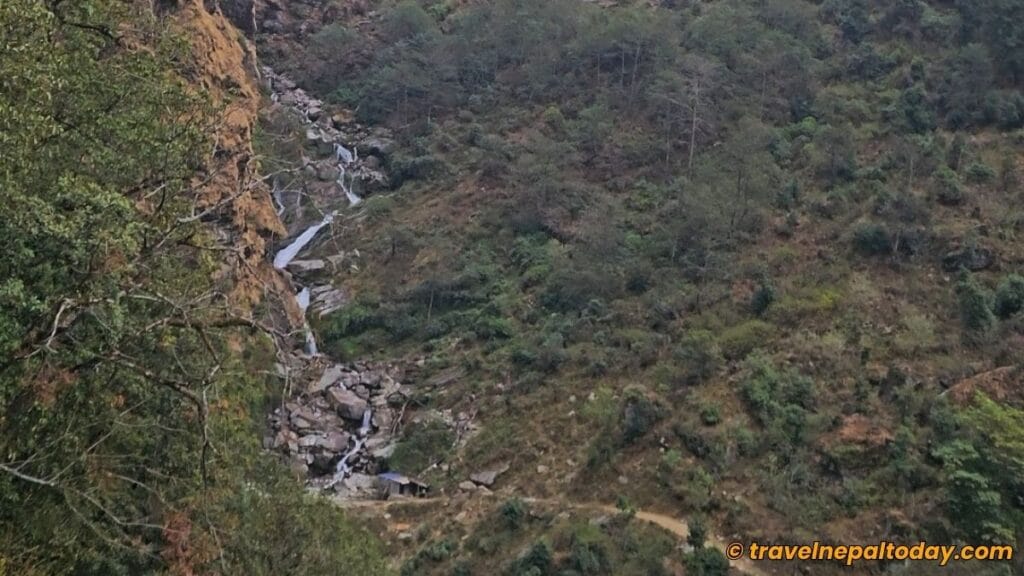
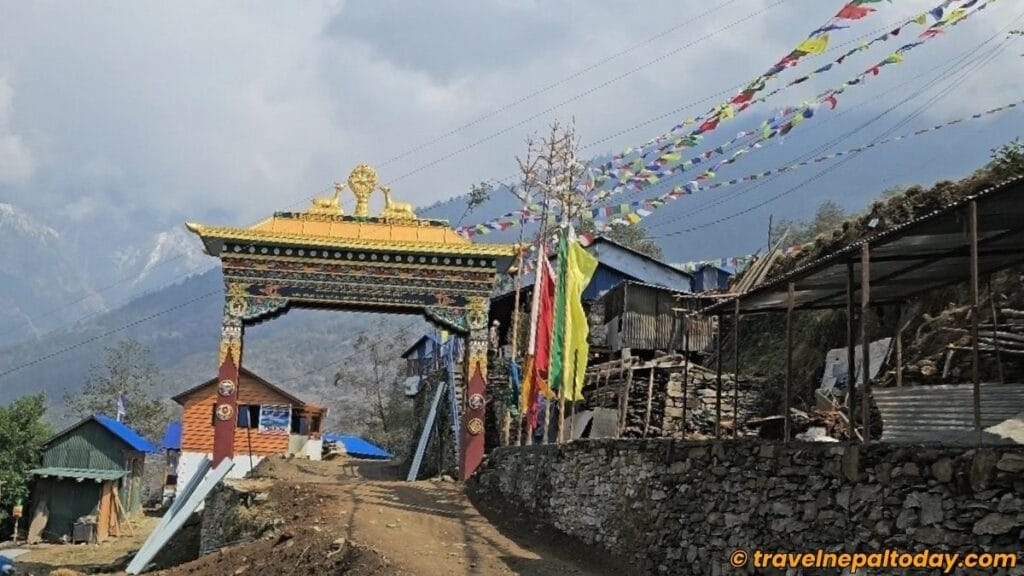
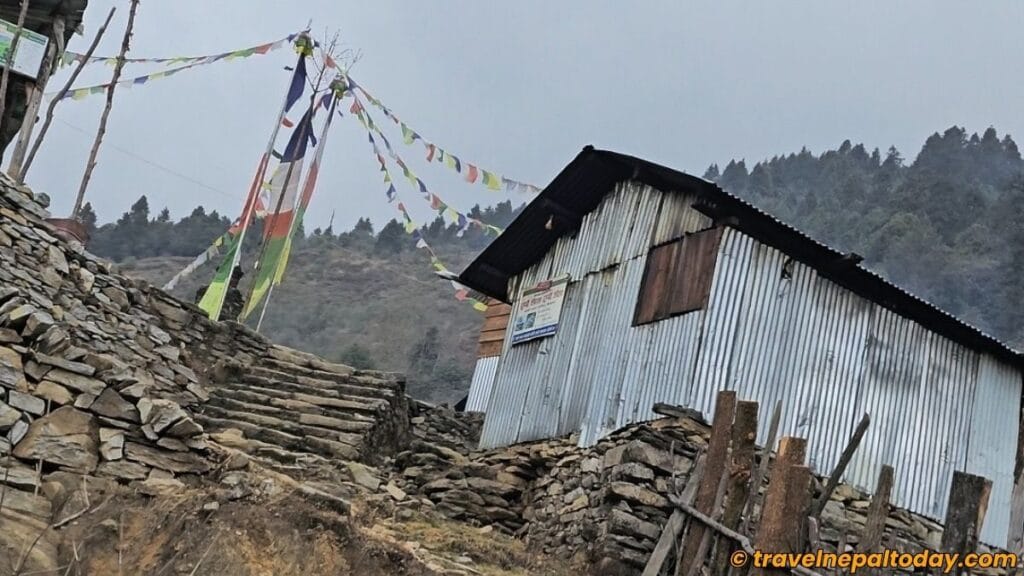
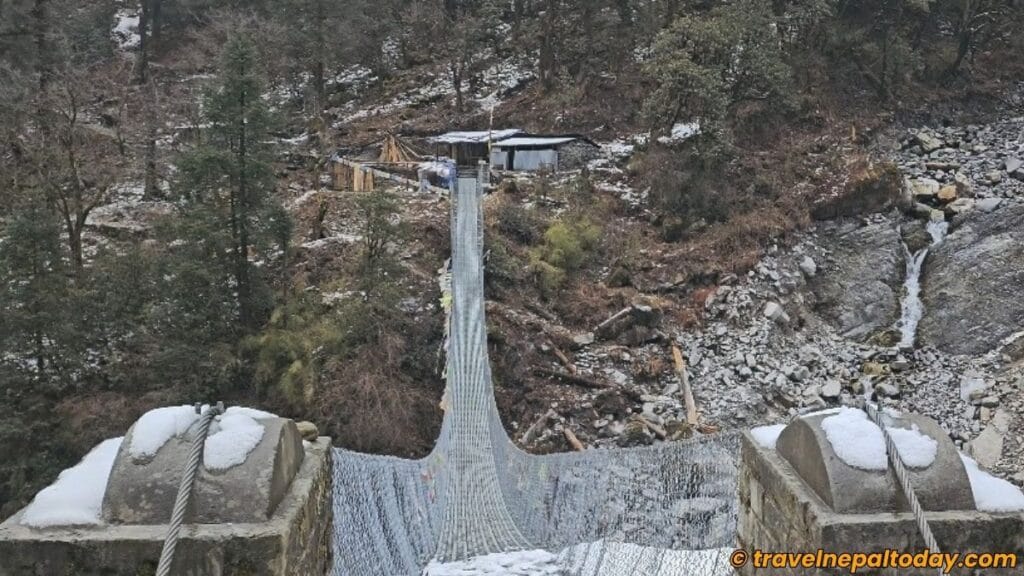
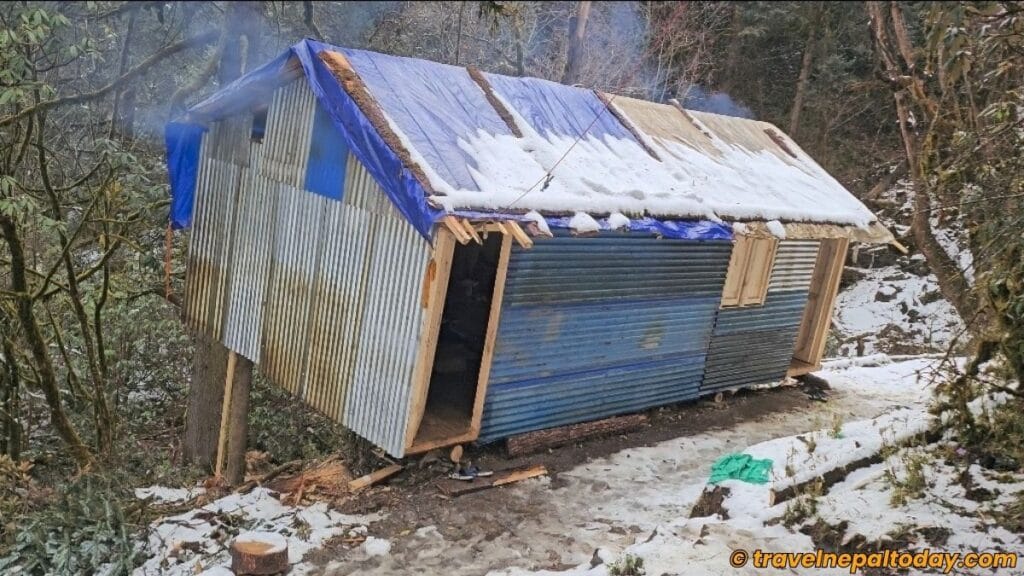
For those reaching Chhimti by bus, enjoy lunch at one of the local hotels and then start the trek to Deurali and Dukhang Kharka. You’ll notice bikes parked in this area.
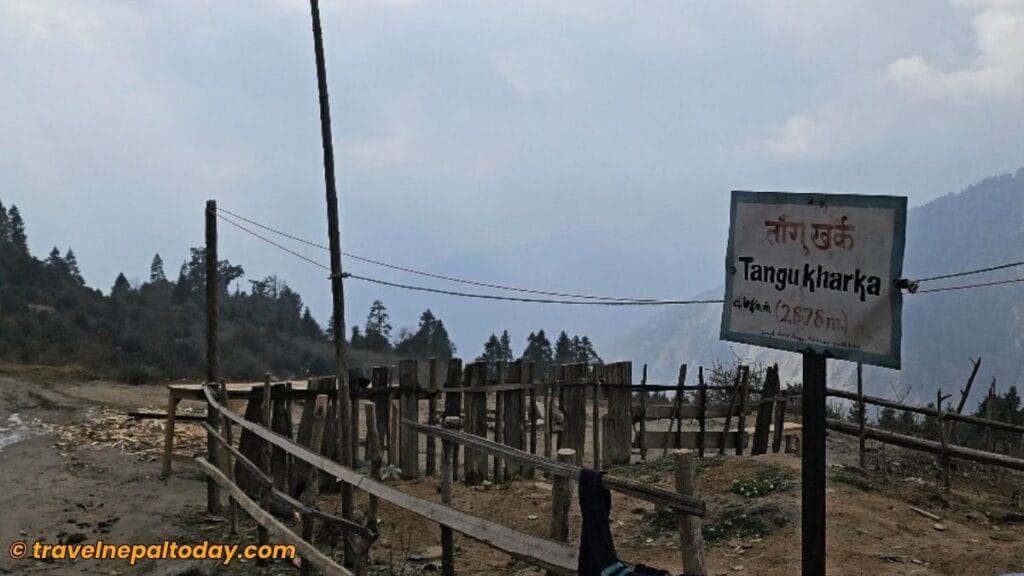
Next, continue towards Tuppi Danda (2,400 m). If you’re traveling on a later bus or have to walk from farther away, you may only reach Tuppi Danda or possibly Tangu Kharka (2,878 m) this day. So, consider staying in one of these locations.
But if you’re with me, you’ll likely reach Tangu Khola (2,893 m), followed by Rato Mato (2,950 m) quite comfortably.
After 4 to 5 hours of hiking on the first day, the teahouse at your destination should provide just enough comfort for a restful night’s sleep.
Day 2: Rato Mato to Panch Pokhari
| Hike Duration | 5 to 7 hours |
| Altitude Shifts | 2950m > 4100m |
| Elevation Gain | 1150m |
| Difficulty Level | Challenging |
| Accommodation Type | Mountain Lodge |
While the first-day trek was relatively easy, the second day presents more challenges. Be sure to have a hearty breakfast before starting your hike from Rato Mato.
Head towards Chokar Danda (3,100 m), then continue to Tap Kharka (3,350 m) and finally Nosyam Pati (3,661 m). You can stop here for lunch or snack.
If you’ve been coming from Tuppi Danda or Deurali and are already running late, it’s best to stay here for the night rather than pushing further.
For those of you starting from Rato Mato, you can definitely make it to Panch Pokhari. However, keep in mind that the path forward can be strenuous, especially during the off-season.
Continue towards Saat Ghumti (3,800 m), where the real challenge begins. The uphill climb can be tough (especially for beginners), and the path is narrow.
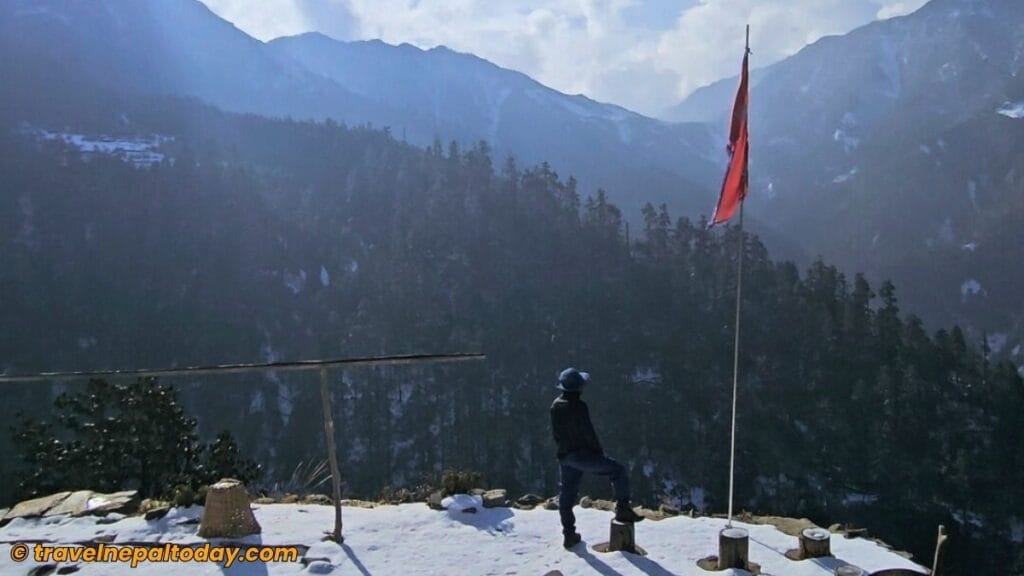
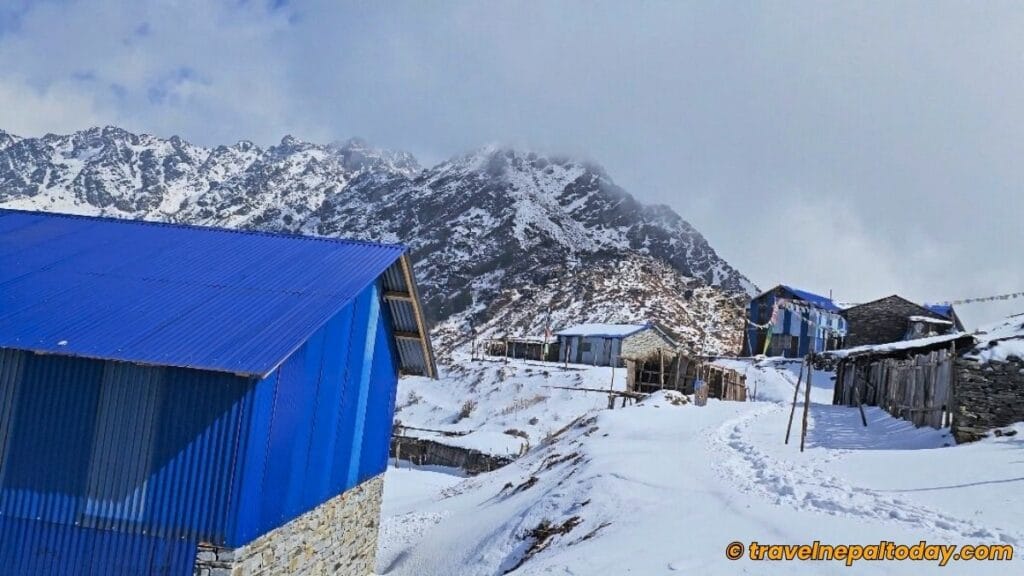
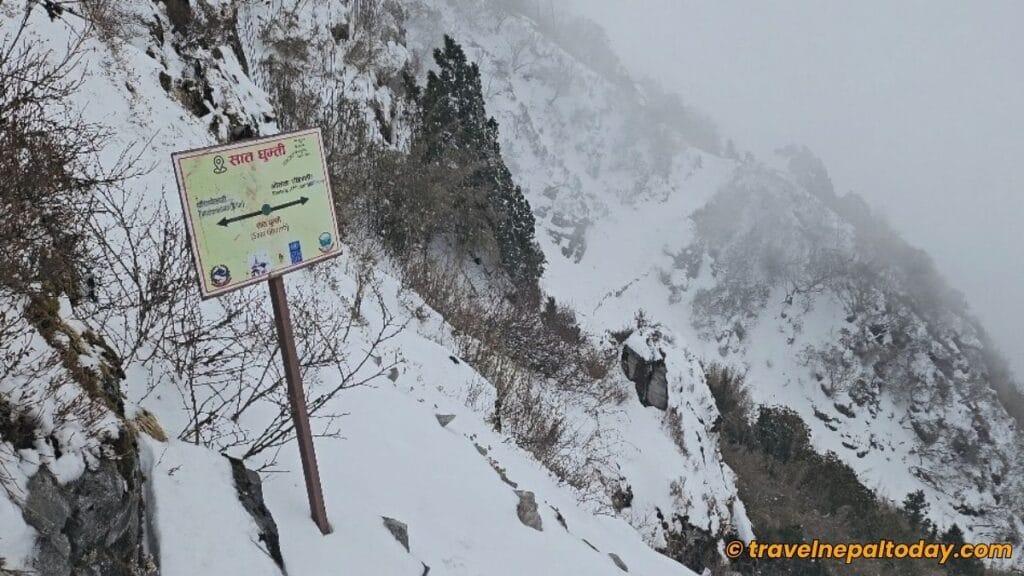
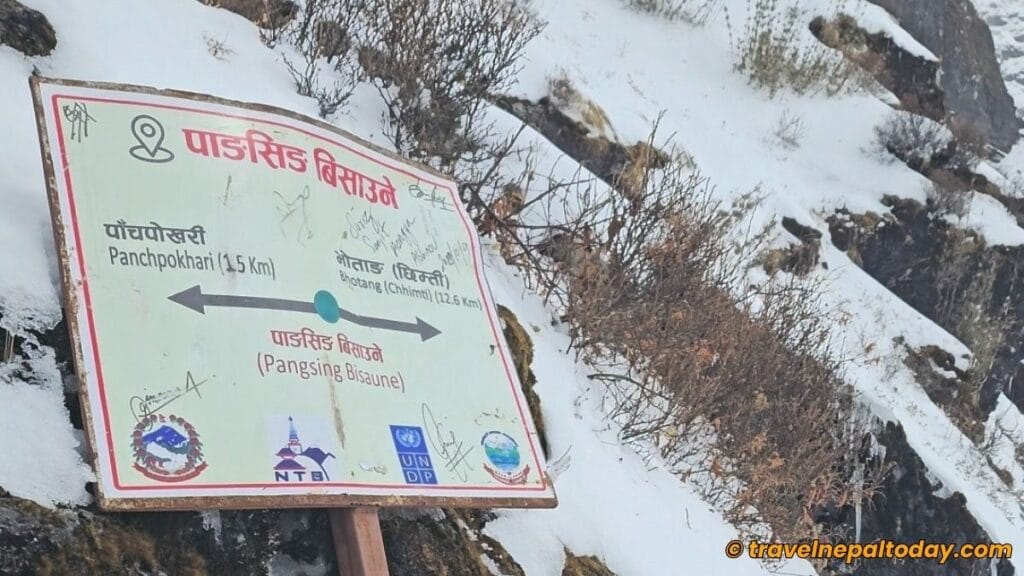
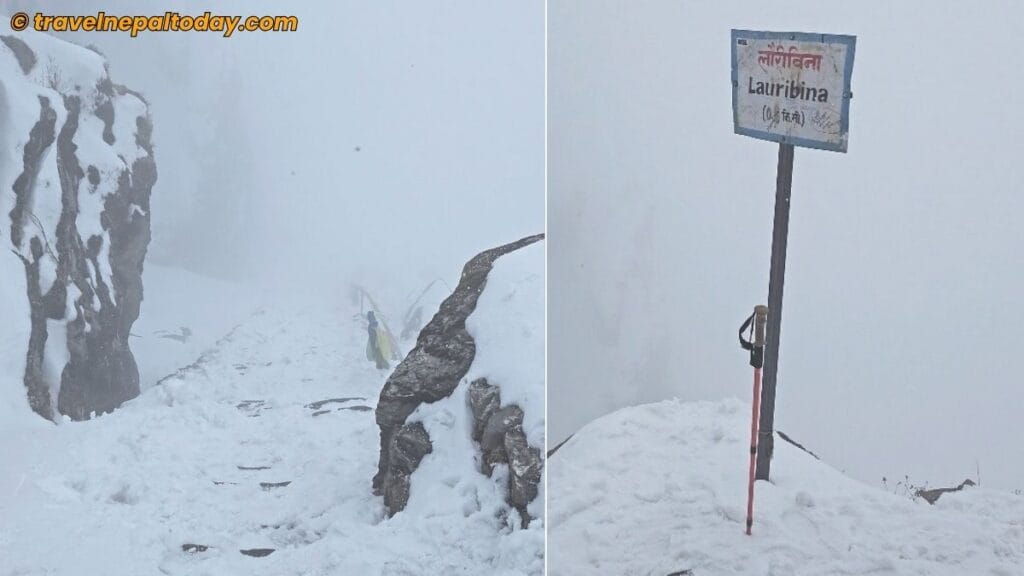
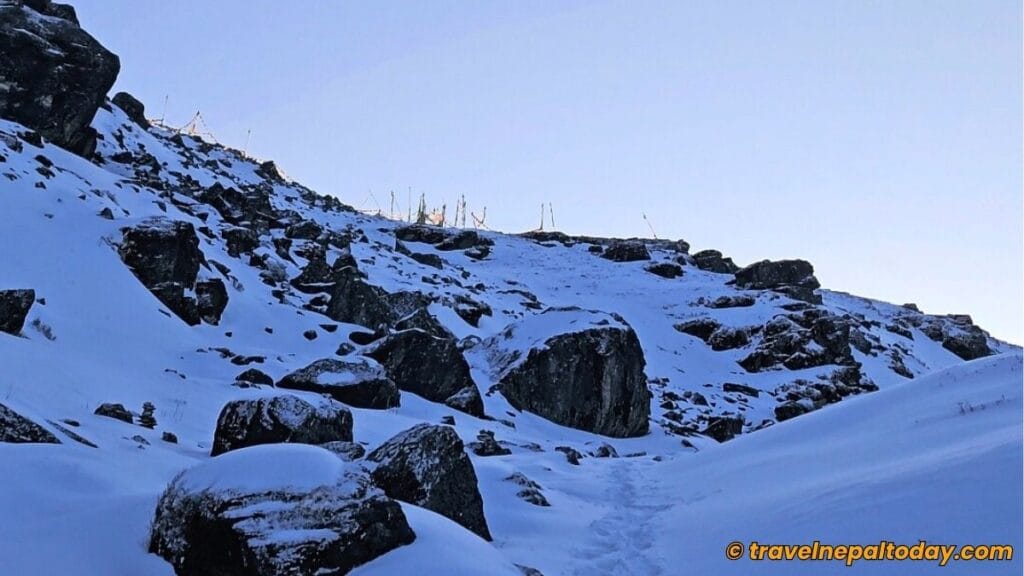
Carefully proceed towards Pangsing Bisaune (3,900 m) and Lauribina (4,000 m). The steep ascent to Lauribina is likely the most challenging stretch.
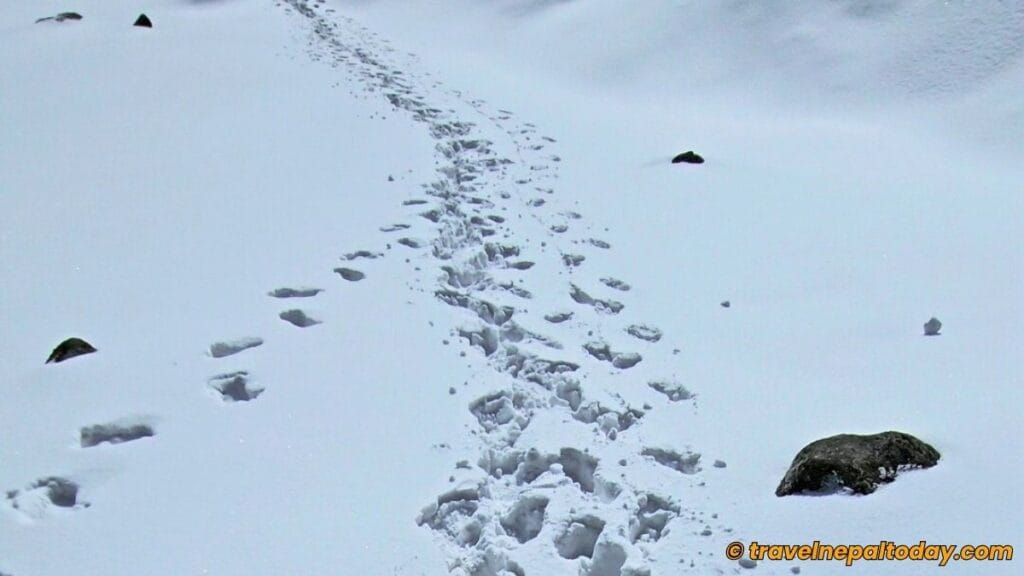
For me, it was particularly difficult because the snow had covered everything, and even the sidebar had collapsed in the upper section.
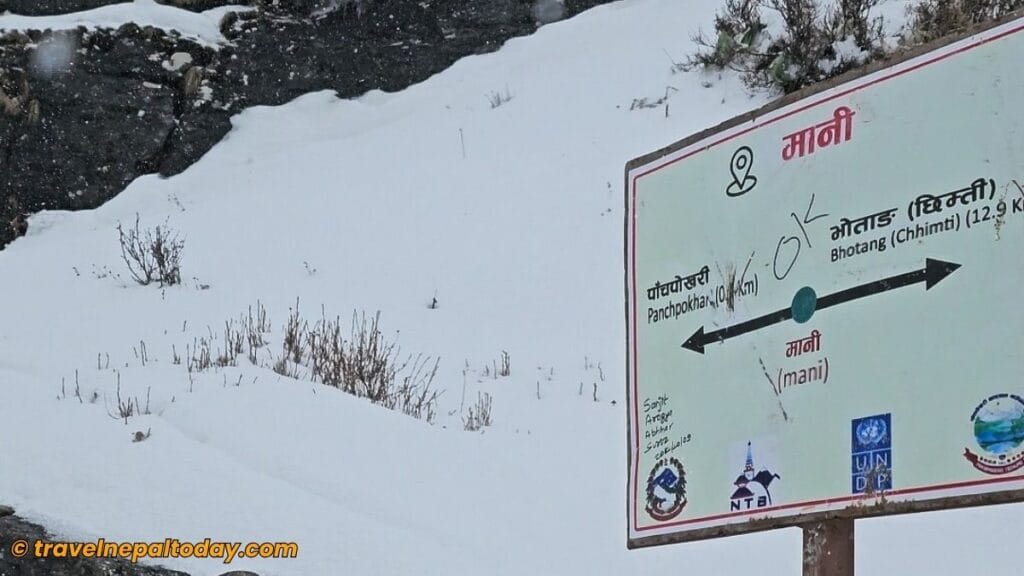
Once you’ve crossed Lauribina, the trail becomes a lot easier. Proceed towards Mani (4,050 m), and you’ll soon reach Panch Pokhari (4,100 m).
It took me approximately 5.5 hours to reach Panch Pokhari from Rato Mato. The walking duration depends on your pace, prior experience, and trail conditions, so it may take up to 7 hours.
If you arrive early, you can even head towards the Viewpoint on the same day. However, be aware that the weather conditions in Panch Pokhari can be unpredictable.
Since I was alone and had to prioritize safety (especially with the risk of altitude sickness), I decided to stay at Panch Pokhari itself. Honestly, this is probably the best option for all of you.
This way, you’ll get to explore the area more thoroughly:
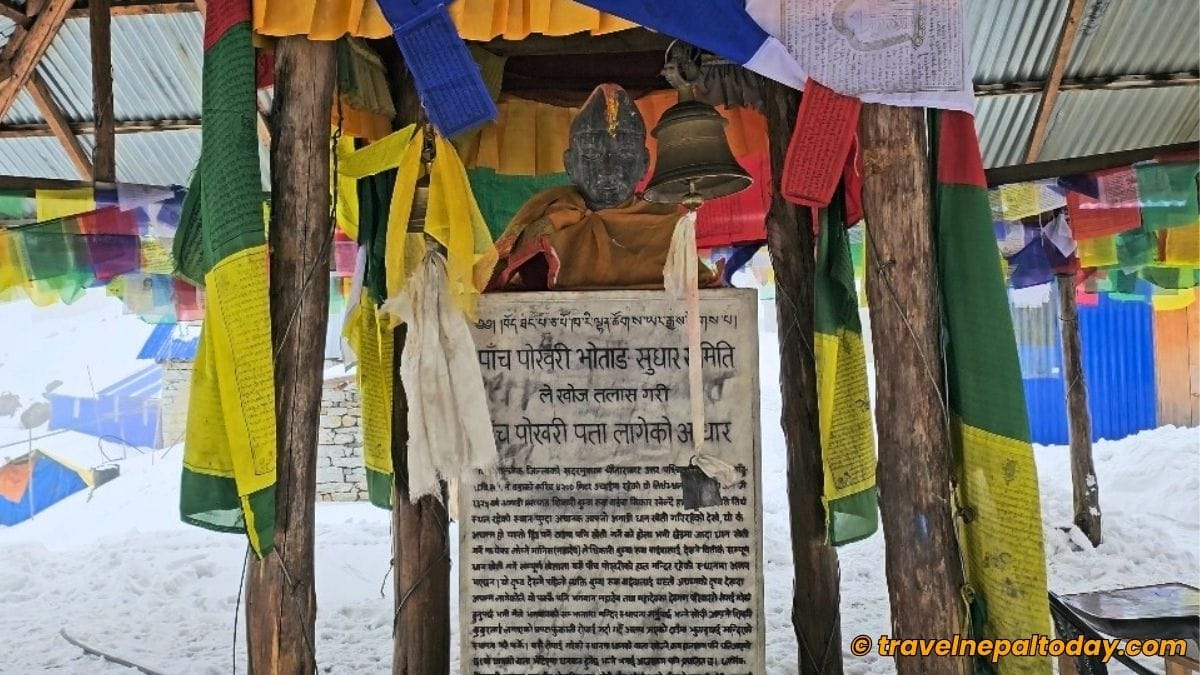
- As soon as you step out of your accommodation, you’ll encounter the Bumba Ruwa Waiba Memorial, dedicated to the person who discovered the five ponds.
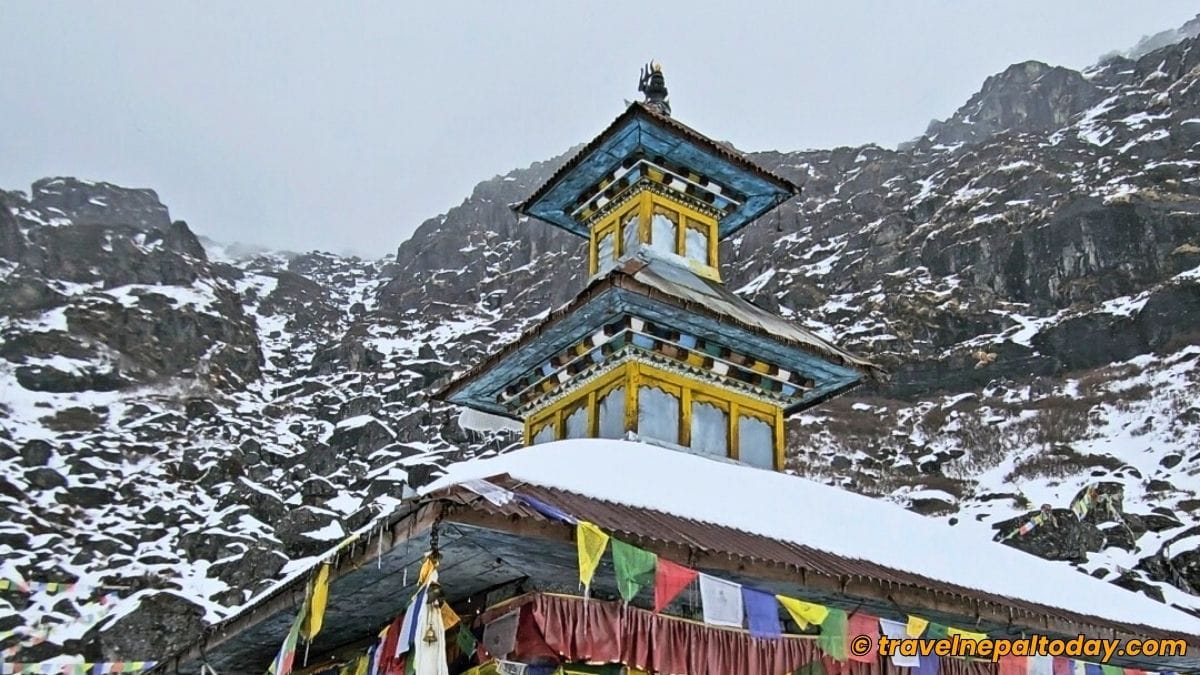
- The Shiva Temple, which is just a 5-minute walk from the hotel area.
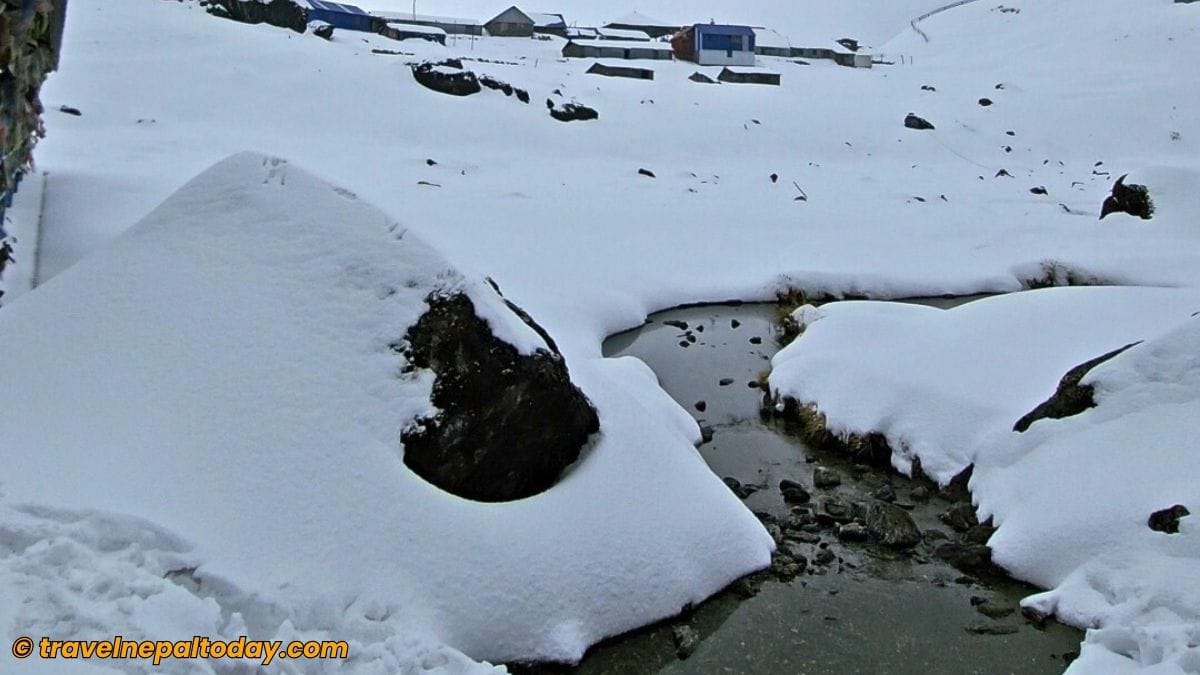
- The Source of the Indrawati River, located right in front of the temple.
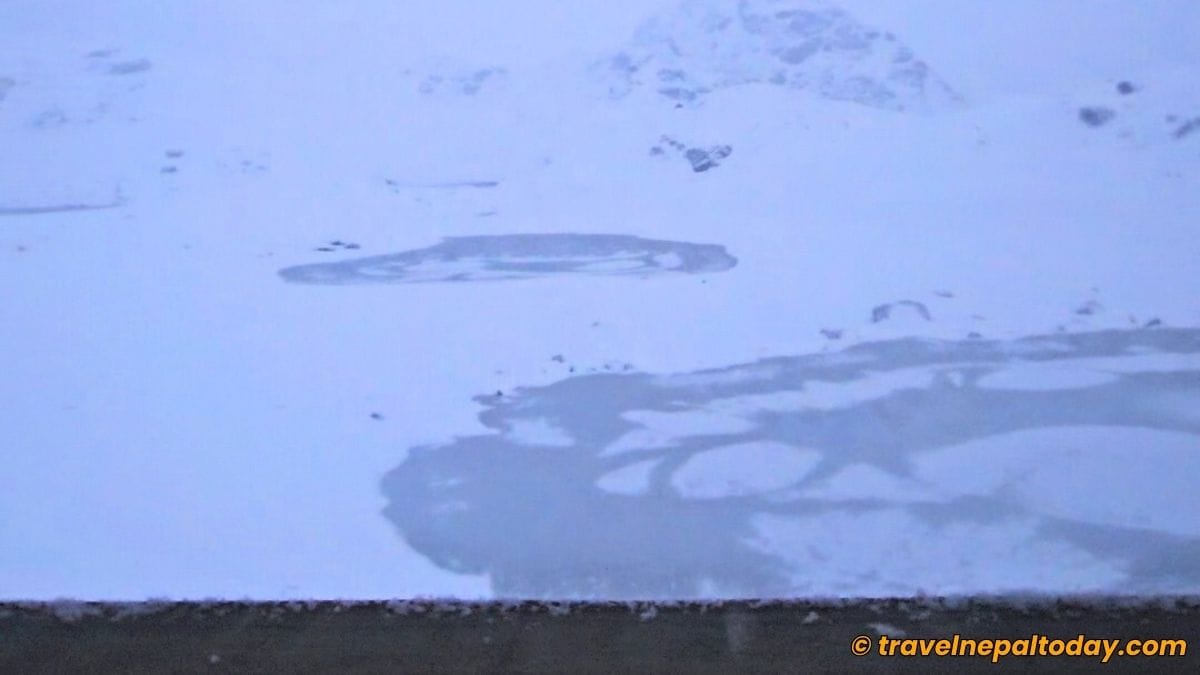
- Bhairav Kunda and Saraswati Kunda, which are right before you (and visible from your room).
- If you have time, you’ll also be able to explore all five ponds!
Day 3: Panch Pokhari to Viewpoint and Back to Chhimti
| Ride Duration | 8 to 10 hours |
| Altitude Shifts | 4100m > 4300m > 1800m |
| Elevation Gain | 200m |
| Difficulty Level | Moderate |
| Accommodation Type | Guest House |
On this day, you must wake up as early as possible. My suggestion? Start your hike before sunrise.
I had missed a stunning sunrise over the Jugal Himal range and the surrounding mountains. Don’t make the same mistake!
If you already hiked to the Viewpoint (Furkemani Danda) the previous day, consider yourself lucky. You’ll get to enjoy a mesmerizing view without any extra effort.
The hike to the Panch Pokhari Viewpoint (4,300 m) takes about 45 minutes to an hour. From here, you’ll get a breathtaking view of the five sacred ponds. Whether covered in flowers or snow, this is the sight you’ve come for!
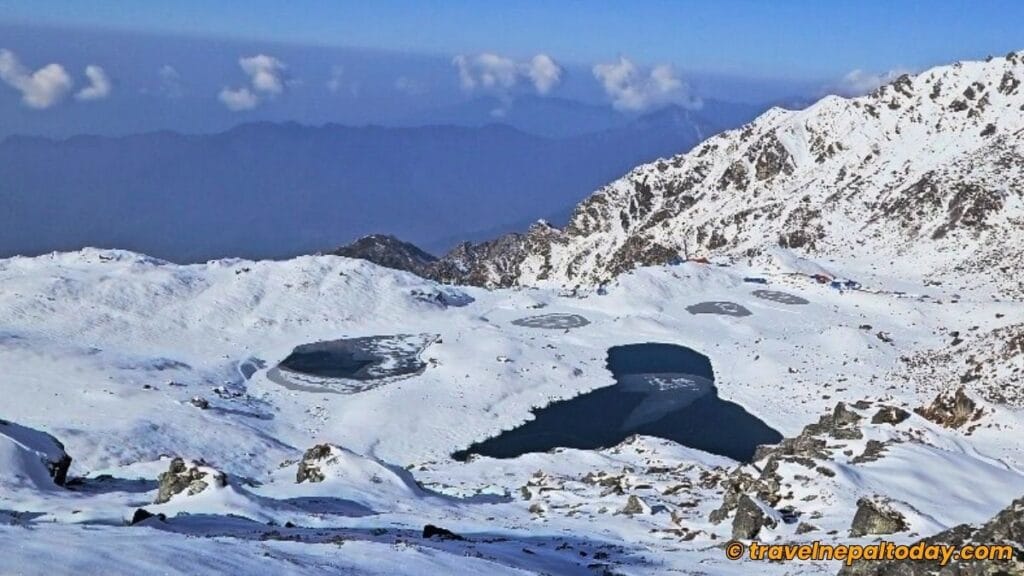
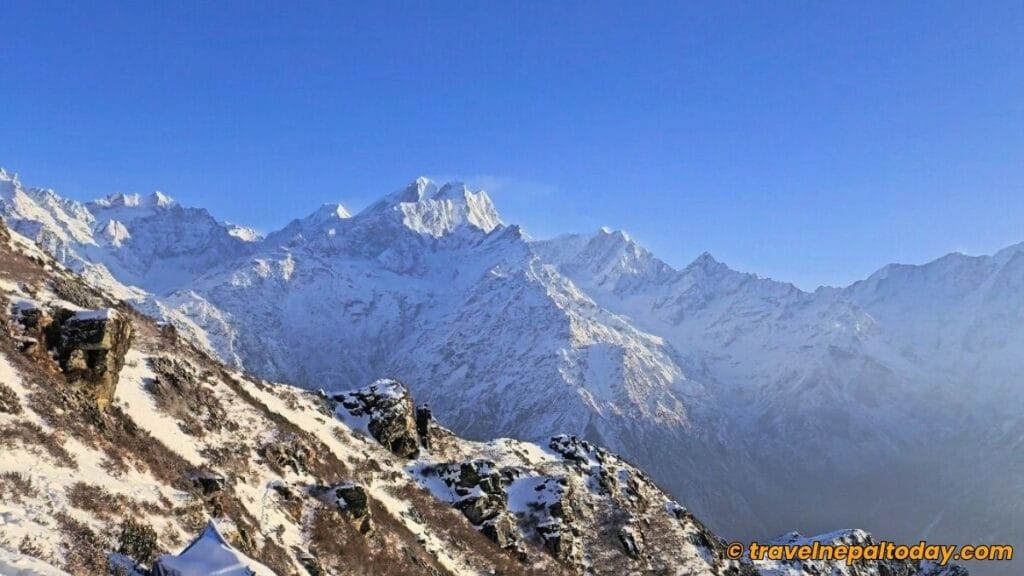
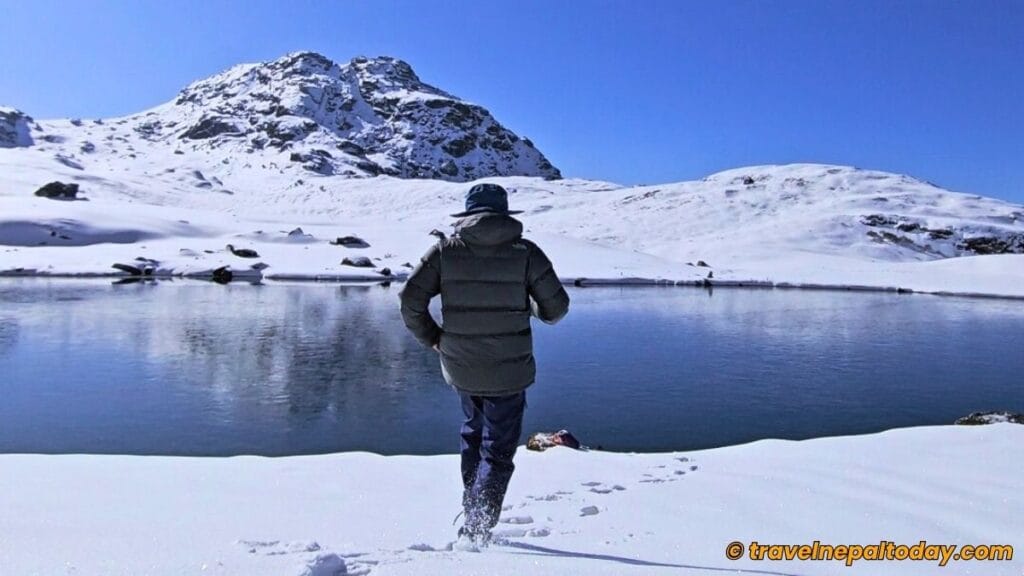
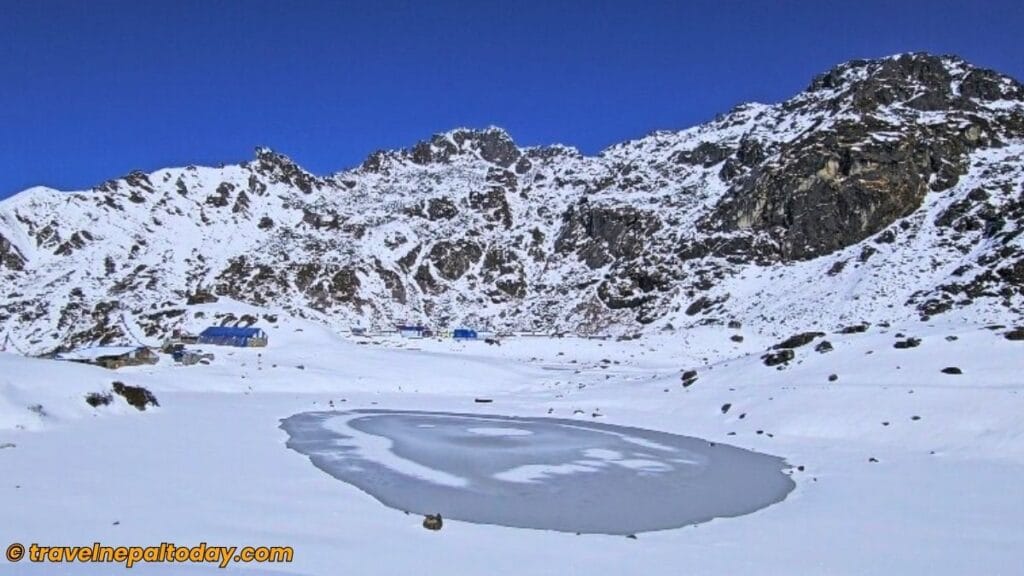
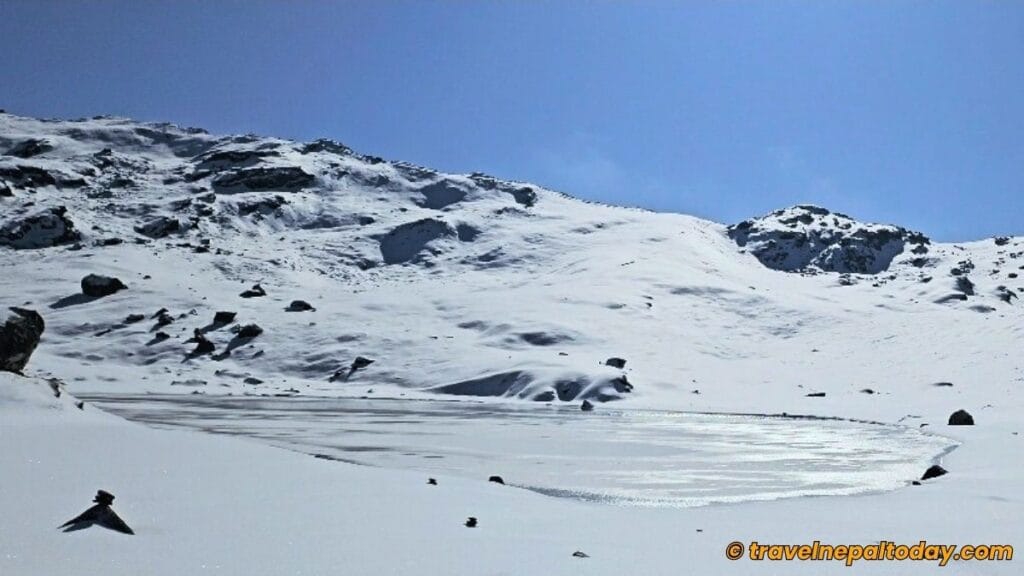
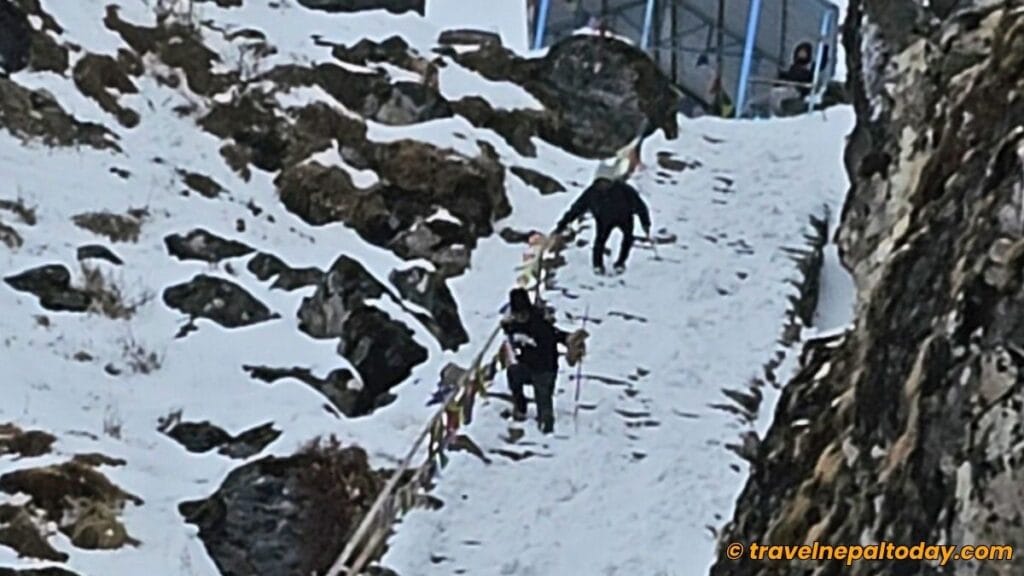
There’s a small cottage at the viewpoint, where you can enjoy a cup of tea or have breakfast while soaking in the panoramic mountain views of Gaurishankar (7,134 m), Dorje Lakpa (6,966 m), Langtang Lirung (7,234 m), The Jugal Himal range, and other Tibetan Himalayan peaks.
The return hike takes about 20 to 30 minutes. But before heading back to your lodge, make sure to visit all the remaining ponds you may have missed the previous day—Surya Kunda, Ganesh Kunda, and Naag Kunda.
After collecting your belongings, begin your descent to Chhimti via the same route. You can stop at Nosyam Pati for lunch, or if you have snacks with you, make use of them (just like I did)!
If you’re trekking during the snowy season, the trail condition can worsen, especially in the Lauribina-Saat Ghumti section, which poses the most risk. Hike downhill cautiously to avoid slipping or injury.
It should take about 7 to 8 hours to reach Chhimti, where you’ll stay for the night before wrapping up your Panch Pokhari adventure.
Day 4: Chhimti to Kathmandu
| Drive Duration | 6 to 7 hours |
| Altitude Shifts | 1800m > 1333m |
| Bus Service Provider | Chhimti Bus Committee |
| Bus Fare | Rs. 520 |
| Destination | Shiva Chowk, Jorpati, Kathmandu |
| Bus Timing | 8:00 AM (preferred), 1:00 PM |
You can easily book your bus tickets to Kathmandu from the hotel you’re staying in, as they hold the responsibility of managing the reservations.
The bus usually departs from Chhimti, but depending on road conditions, you may need to walk a short distance to Bhotang to catch it. So, be mentally prepared for this possibility.
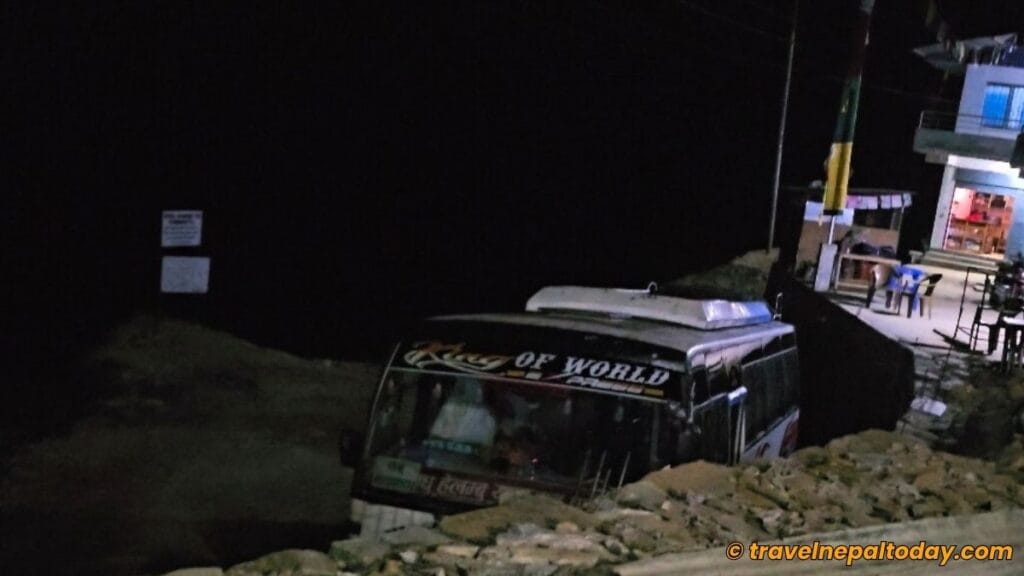
Also, the departure time varies based on road conditions. The bus might take an alternative route if the usual path is blocked or damaged.
I recommend taking the first available bus, just as you did on Day 1. My return bus was at 8 AM, but if you’re lucky, you might find one as early as 6 AM.
The bus stops at Melamchi for lunch. Expect a 6 to 7-hour ride to reach Jorpati, Kathmandu.
Best Time and Season to Visit Panch Pokhari
| Season | Months | Attractions | Difficulty Level |
| Spring | March & April | Blooming rhododendrons, clear mountain views | Easy to Moderate |
| Summer | May & June | Lush green trails, mild weather | Easy to Moderate |
| Monsoon | July to September | Vibrant greenery, occasional rain challenges | Moderate to Challenging |
| Autumn | October & November | Crisp air, stunning mountain views | Easy to Moderate |
| Winter | December to February | Snow-covered landscapes, extreme cold | Challenging to Difficult |
My solo trek to Panch Pokhari in February 2025 was a true winter adventure. I arrived just in time for fresh snowfall, which made the landscape breathtaking but also turned the trail into a serious challenge (especially beyond Nosyam Pati).
While I was fortunate to experience the perfect snowy conditions at Panch Pokhari, I suspect the situation had worsened after my return.
In fact, based on conversations with local hotel owners, even they admitted that heavy snowfall could force them to head back to Chhimti. So, if you’re planning a winter trek, consult the locals beforehand to assess the trail conditions.
For beginners, a winter trek to Panch Pokhari isn’t recommended. Instead, consider visiting during the summer or monsoon, when the trails are easier to navigate.
The Janai Purnima festival brings a vibrant crowd to Panch Pokhari and the Shiva Temple, making it the best time for a cultural experience.
If you’re drawn to nature, the monsoon season offers lush greenery and a variety of flowers, though mountain views may be obscured by rain and fog.
For the best of both worlds (flowers in bloom and clear mountain vistas), late spring and early autumn are the best times to visit.
Panch Pokhari Hotels: How Hard is Finding Accommodation?
Accommodation in Panch Pokhari isn’t hard to find. The trekking committee ensures that at least one hotel remains open every 2–3 hours of walking distance, especially in the off-season.
During peak seasons, particularly Janai Purnima, all hotels operate, but expect heavy crowds. Many trekkers even opt to set up tents.
You’ll find accommodation at all major points along the Panch Pokhari trail: Chhimti, Deurali, Dukhang Kharka, Tuppi Danda, Tangu Kharka, Rato Mato, Chokhar Danda, Tap Kharka, Nosyam Pati, Panch Pokhari, and the Viewpoint (Furkemani Danda).
However, in the off-season, hotels remain open only at Rato Mato, Nosyam Pati, Panch Pokhari, and the Viewpoint. This can change, so be flexible with your plans.
Note: I’d share hotel contact numbers, but there’s little use. Most of the trail has no mobile network.
Cost Breakdown of Panch Pokhari Trek
For your Panch Pokhari Trek, you should budget around NPR 6,000 to 7,000 per person for a standard trip.
This is a budget-friendly estimate, so if you prefer more comfort or flexibility, expect to spend a bit more.
If you’re a foreign tourist, the cost will be significantly higher due to permit fees, higher hotel charges, and additional services for a more comfortable experience.
But don’t worry! Travel Nepal Today shall soon bring you the best travel package this industry has to offer!
For now, let’s focus on the local budget. Personally, my solo trek to Panch Pokhari cost me around NPR 5,500. Below is my expenditure that should help you get a generic idea:
| Bus to Chhimti | 600 |
| Medicines | 140 |
| Lunch in Chhimti | 250 |
| Rato Mato Package (stay + dinner + breakfast) | 800 |
| Panch Pokhari Package (stay + dinner + breakfast) | 1400 |
| Chhimti Package (stay + dinner + breakfast) | 800 |
| Bus to Kathmandu | 520 |
| Extra (mostly snacks) | 1000 (approx.) |
| Total | NPR 5,510 |
Final Words
Now that you have a complete guide to the Panch Pokhari trek, share this article with your travel buddies and start planning your adventure!
I originally planned to include a packing list, but I’ll leave that to you. Just remember to pack light and don’t froget a headlamp/torch, necessary medicines, light snacks, power bank, and crampons (if trekking in winter, as the trail can get icy).
While a solo trek to Panch Pokhari is possible (as I did), stay very cautious. Check the trail conditions beforehand, and if you have any questions, feel free to ask in the comments below!
Happy traveling to Sindhupalchowk!
About The Author