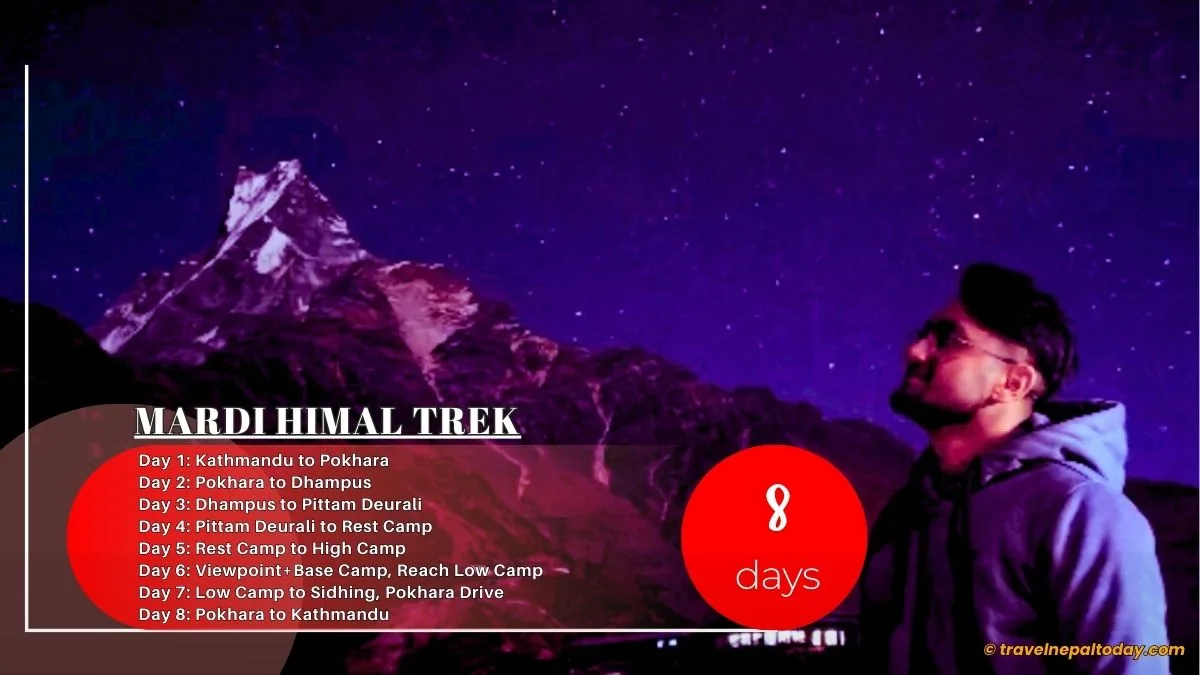
Are you visiting Nepal for the first time and want a relaxed vacation with a trek included? There’s so much to do in this beautiful country, and if you’ve allowed enough time for exploration, this Mardi Himal Trek 8 days with Dhampus and Australian Camp itinerary is a perfect option to consider.
While the Mardi Himal Trek itself is a short trip from Pokhara, if you’re looking for a more engaging and immersive experience, this 8-day adventure fits perfectly.
I’m assuming you’re already in Kathmandu. After visiting the UNESCO World Heritage Sites, you’ll need to head to Pokhara. From there, explore this touristy city before driving to Dhampus Village, a Gurung cultural hub that shows you what life in the Himalayas truly feels like.
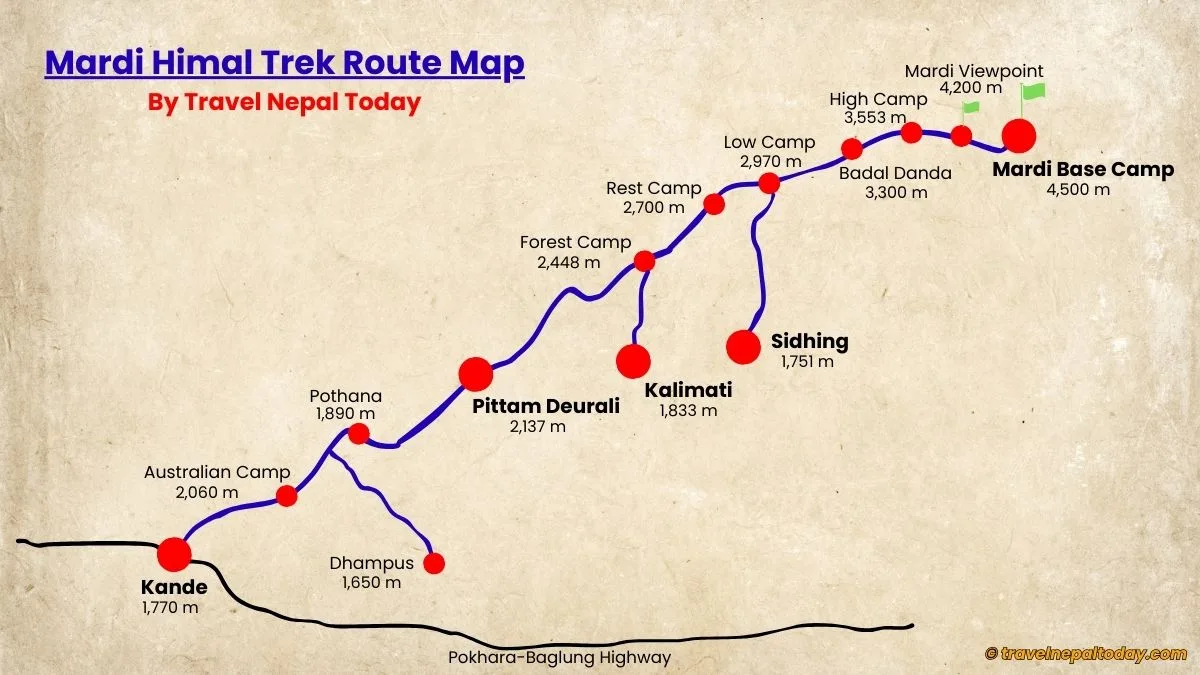
Dhampus serves as the starting point of this 8-day Mardi Himal Trek, and within the next four days, you’ll pass through the settlements of Australian Camp, Pittam Deurali, Forest Camp, Rest Camp, Low Camp, and High Camp before reaching Mardi Viewpoint and Mardi Himal Base Camp.
The highest point of the trek is at 4,500 m, making it perfect for a high-altitude challenge. You’ll then hike down to Sidhing Village before ending your journey with a bumpy jeep ride back to Pokhara. After that, you can explore more of the tourism capital of Nepal before heading back to Kathmandu.
That was just the summary. Now, let me take you on this adventure in greater detail.
Key Facts About 8-Day Mardi Himal Trek
| Trek Difficulty | Moderate |
| Route Overview | Kathmandu > Pokhara > Dhampus > Austarlian Camp > Pittam Deurali > Rest Camp > High Camp > Mardi Viewpoint > Mardi Himal Base Camp > Low Camp > Sidhing > Pokhara > Kathmandu |
| Trek Distance | 43 km |
| Best Time | March to June and October to December |
| Suitable For | All |
| Budget | USD 555 to USD 750 for Foreigners |
| NPR 15,000 to 20,000 for Nepalese |
Mardi Himal Trek 8 Days Itinerary Explained
On this website, I’ve shared clear ideas on how to complete the Mardi Himal Trek, ranging from a 3-day itinerary to this detailed 8-day guide. I personally completed the trek in 5 days from Kathmandu, and you can read my experience in the linked article.
Even this 8-day plan is just a suggestion. If you’re on a tight schedule and want to complete your Nepal trip within a total of 8 days, that’s absolutely possible too. If you need more help or clarification, feel free to drop a comment below.
But this particular itinerary is for those who are ready to fully explore the Mardi area of the Annapurna region. So, here we go.
Day 1: Kathmandu to Pokhara
| Drive Distance | 200 km |
| Drive Duration | 6 to 7 hours |
| Elevation Gain | -500 m approx. |
Your first day will likely be spent reaching Pokhara itself. You have multiple options for that.
- Via bus: Day and night shifts are available.
- Via passenger van: It gives you the flexibility to choose almost any time. You can even choose an evening one, around 4 PM, which is usually the last one, and reach Prithvi Chowk. This option is best for Nepali office employees. Nowadays, even electric vans operate on this route, so if you’re environmentally concerned, you may opt for that!
- Via flight: Kathmandu to Pokhara domestic flights are the most common option. If you want more comfort, you can definitely choose this.
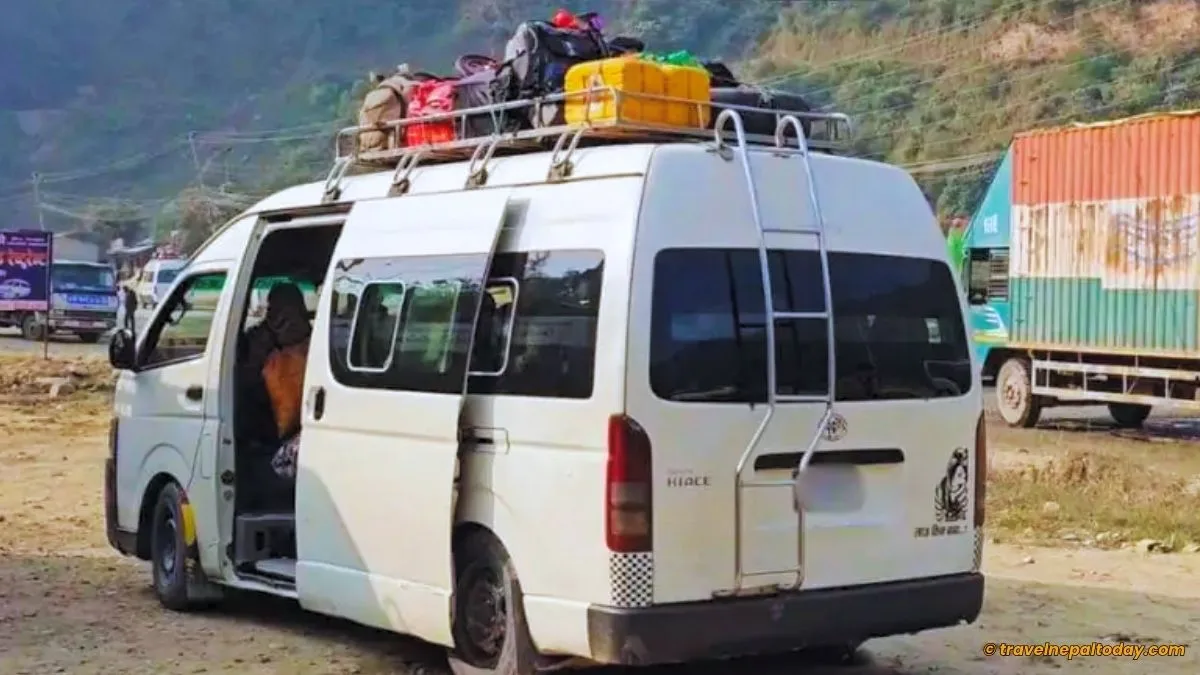
Even if you reach early via flight or a morning van, you can use this day to explore Pokhara city, which is also the tourism capital of the country.
Or simply hang around the Lakeside area, do the final shopping for your Mardi trek, and definitely don’t miss the sunset if the weather is alright.
Day 2: Pokhara to Dhampus Drive, Explore Village
| Drive Distance | 25 km approx. |
| Drive Duration | 1.5 hours |
| Elevation Gain | 828 m |
Today, you and your travel squad need to reach Dhampus Village (1,650 m), which lies about 25 km from Pokhara (822 m). You can start the day as per your preference, as shared vans and private jeeps are available from Zero Kilo, Pokhara–Baglung Bus Park, and even Hari Chowk.
No, you don’t need to start your hike on this day itself. Instead, I suggest taking your time to explore the cultural side of the village. It’s totally worth it, with beautiful mountain views combined with the rich Gurung culture.
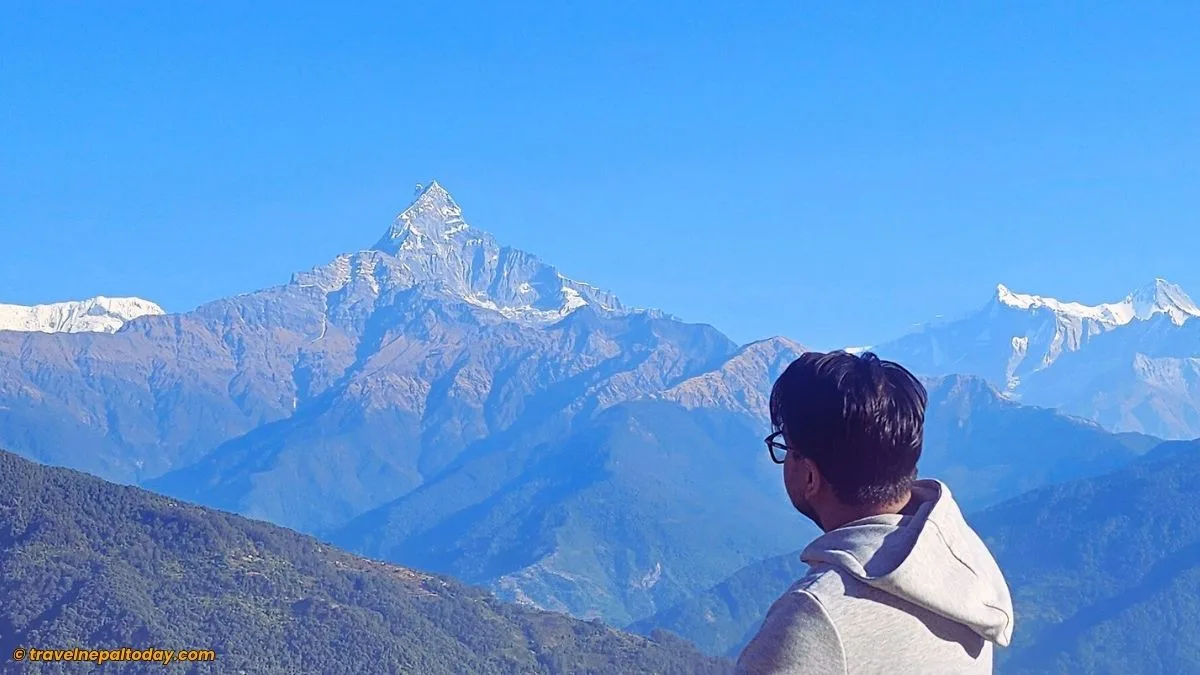
You see, this itinerary is more about cultural exploration rather than hurriedly finishing a trek and ticking off your bucket list. Don’t miss the sunset. Machhapuchre turning golden has always been one of my favourite sights to watch.
Note: You can even opt for a warm-up hike on this day. Start your hike from Phedi or Ghatte Khola, and within two hours, covering 4 km, you’ll reach Dhampus.
Day 3: Dhampus to Pittam Deurali via Australian Camp
| Hike Distance | 7 km |
| Hike Duration | 3 to 4 hours |
| Elevation Gain | 487 m |
| Difficulty Level | Easy |
Wake up to a beautiful sunrise and golden mountain views. Have your breakfast here and start preparing for the trek. Don’t forget to do some light stretches for today’s short hike.
Before proceeding directly onto the Mardi trail, be sure to take the route towards Australian Camp (2,060 m). It’s another serene spot in this part of the Annapurna region. Have your lunch there, enjoy the views, and only then continue forward.
From Australian Camp, you’ll hike about 3.5 km in roughly 1.5 hours to reach Pittam Deurali (2,137 m), which is the actual starting point of the trek. You’ll pass through Pothana (1,890 m), from where the Annapurna Conservation Area begins, so you’ll need to show your permits (ACAP).
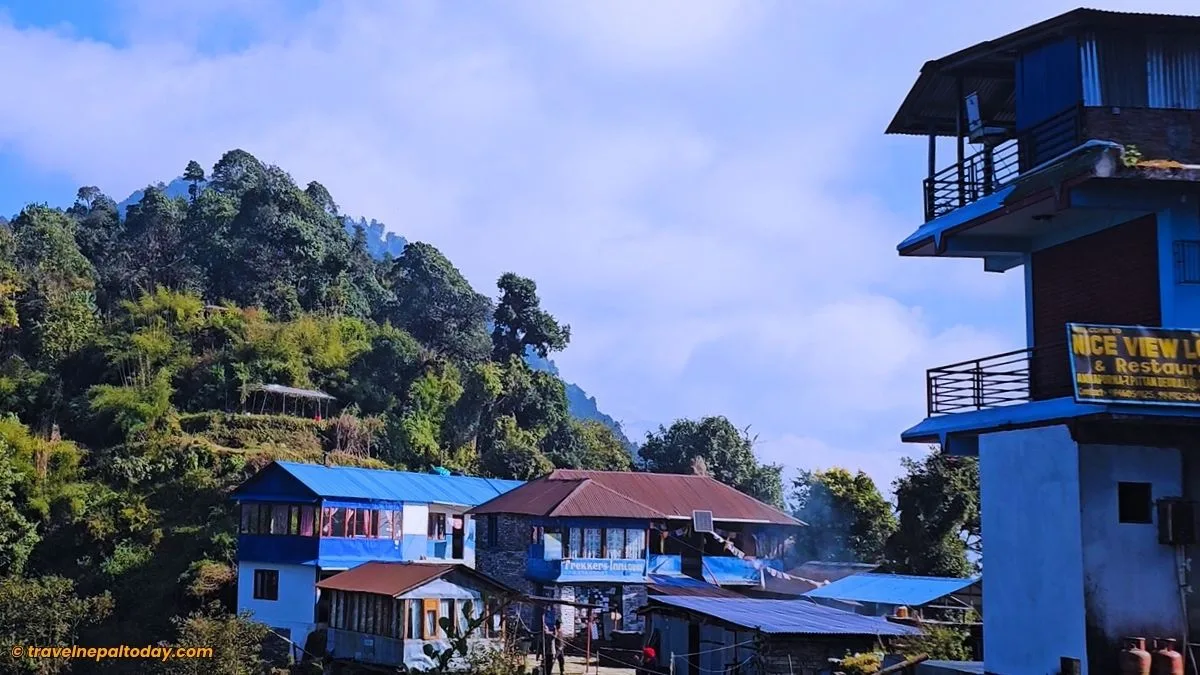
Pittam Deurali is another mountainous village inhabited mostly by the Gurung community. Your stay here also means you get to explore more culturally. Only after this day does the real trek begin, so be sure to take enough rest and keep yourself motivated for the coming days.
Note: Transportation is available from Dhampus to Pittam Deurali via a private jeep. If you’d like to cut down days and are not very interested in exploration, you can instead go for the 7-day itinerary I’ve shared for you.
Day 4: Pittam Deurali to Rest Camp
| Hike Distance | 9 km |
| Hike Duration | 5 to 6 hours |
| Elevation Gain | 563 m |
| Difficulty Level | Easy |
Your morning begins with beautiful mountain sights. These are the same ones that kept you company on Day 2. But as the day progresses, the views slowly disappear as you’ll be passing through mostly forested sections.
Passing via Suire Danda (2,440 m), Dhod Kharka (2,559 m), and Besal Baari (2,572 m), you should reach Forest Camp, aka Kokar (2,448 m), covering around 8 km in about 3.5 to 4 hours. Many opt for a night stay here, but in this itinerary, you’ll have lunch and move on.
Within the next 2 hours, you should easily reach Rest Camp (2,700 m). Even Low Camp is possible, but why hurry? The only place you can reach tomorrow is High Camp, and that’s easily doable within 6 to 7 hours.
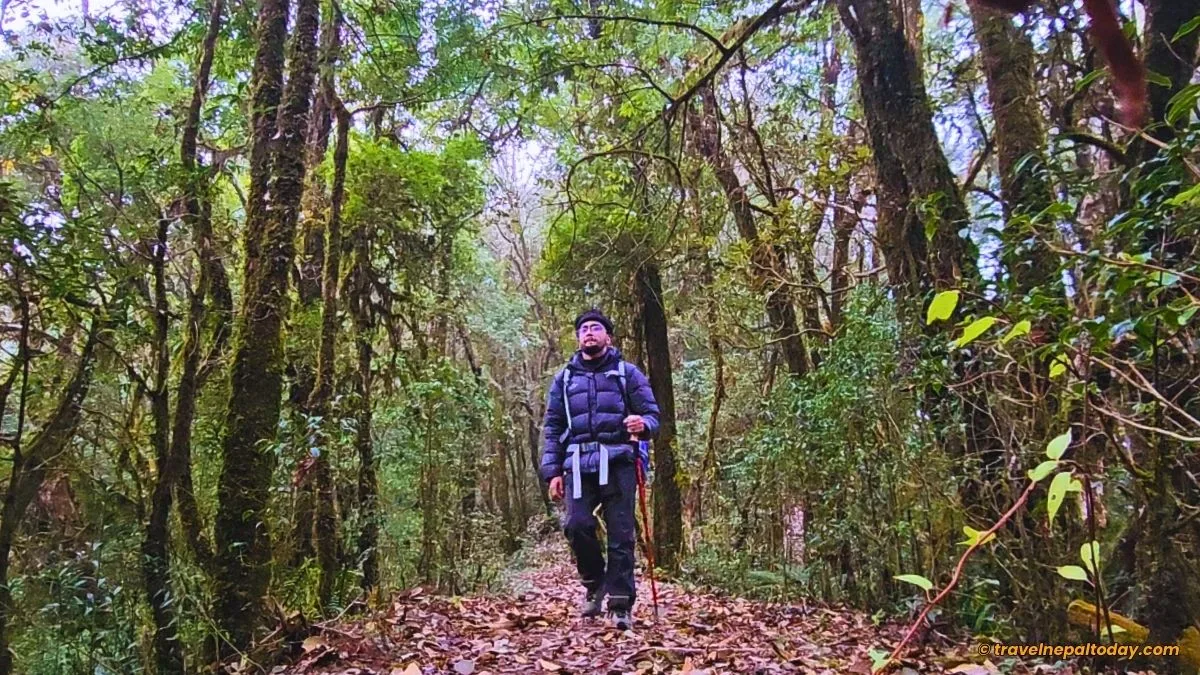
There are no major attractions today. It’s entirely a forest route, with rhododendron, oak, birch, maple, and hemlock trees.
Day 5: Low Camp to High Camp
| Hike Distance | 6.5 km |
| Hike Duration | 6 to 7 hours |
| Elevation Gain | 853 m |
| Difficulty Level | Moderate |
Wake up early today, as the sunrise from Rest Camp is spectacular. In the right season, clouds in the morning can make your experience even more memorable.
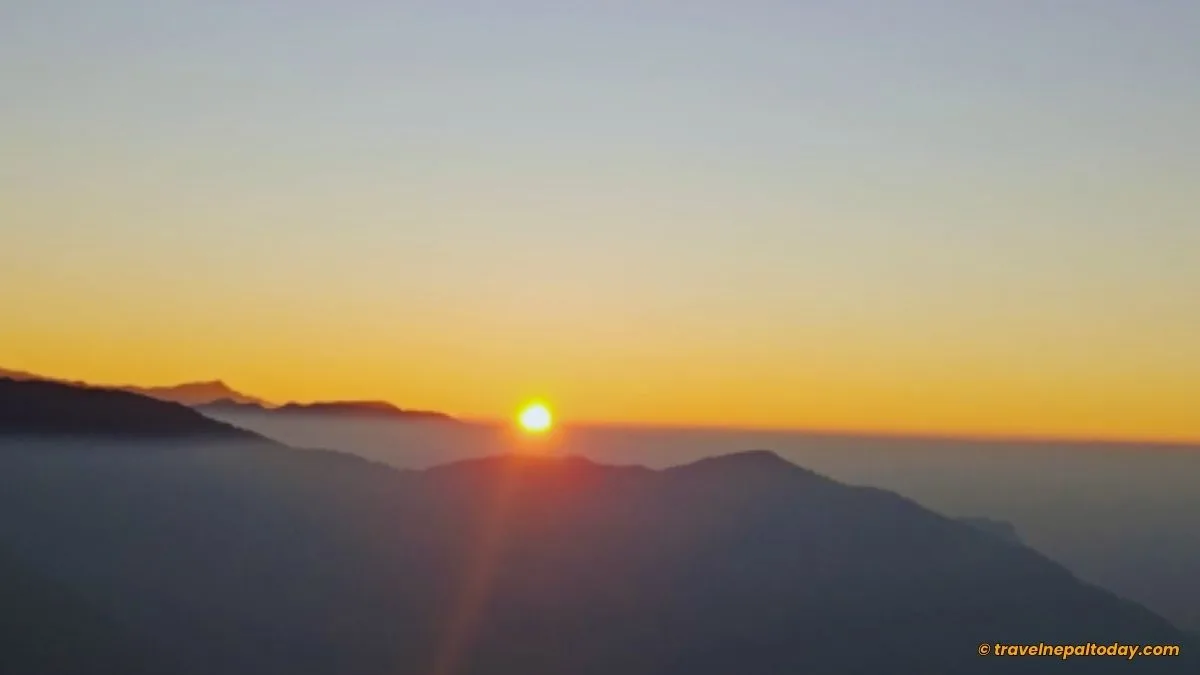
Today, you’ll head to Kamkiku (2,793 m), followed by Low Camp (2,970 m), Mid Camp (3,209 m), and Badal Danda (3,300 m). It’s a great spot to pause, and if you’re lucky, the cloud inversion makes you feel like you’re above the clouds.
You can have lunch there or go slightly higher to Low High Camp, aka Upper Badal Danda (3,357 m). These spots bring Machhapuchhre, Annapurna South, and Hiunchuli even more closer!
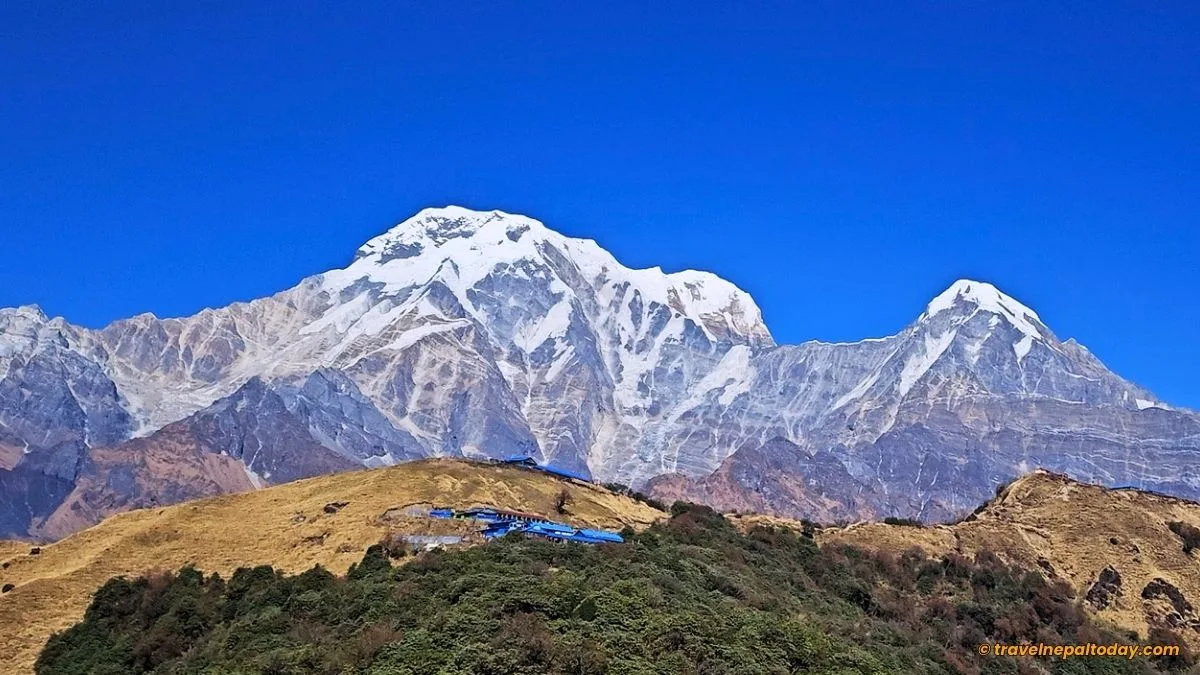
At the end, it’s a little uphill to reach High Camp (3,553 m). If you’re following this itinerary right, you should be able to reach there before sunset to enjoy the golden views of the three mountains.
Don’t just sit inside the dining. Explore the surroundings, right beneath the mountains, where cloud inversion adds a magical touch for sure!
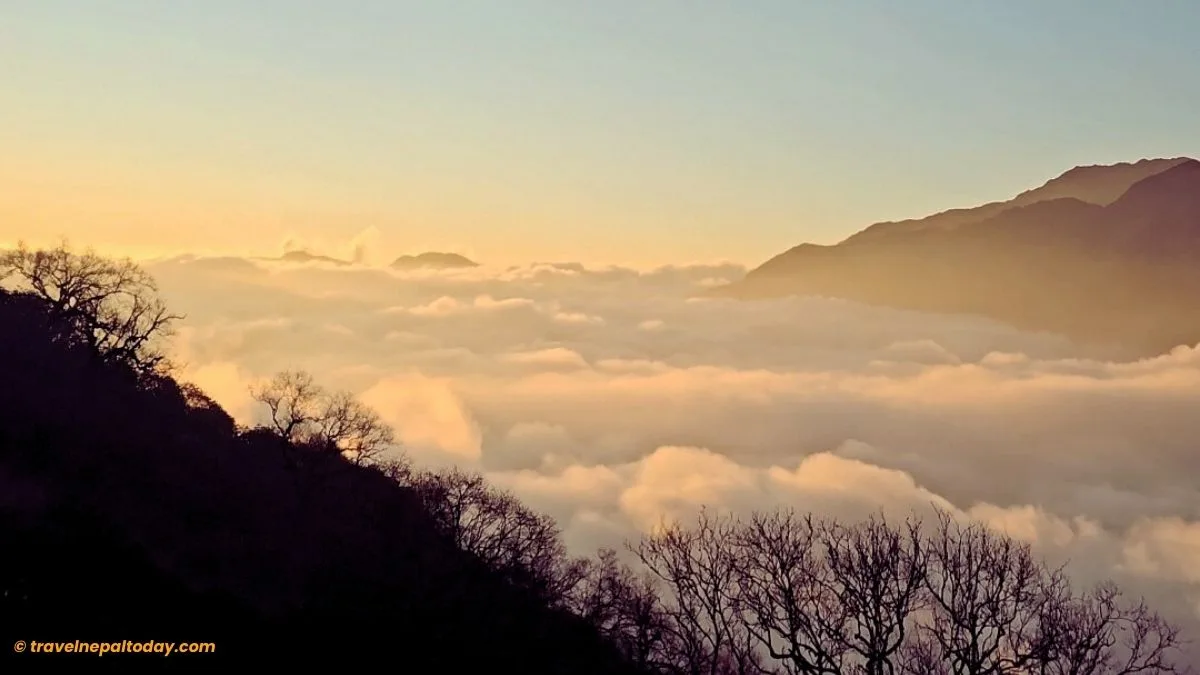
Once it’s evening time, stay in the warm dining area, enjoy the firewood warmth, and don’t forget to fill your thermos for the night. Staying hydrated at high altitudes is essential.
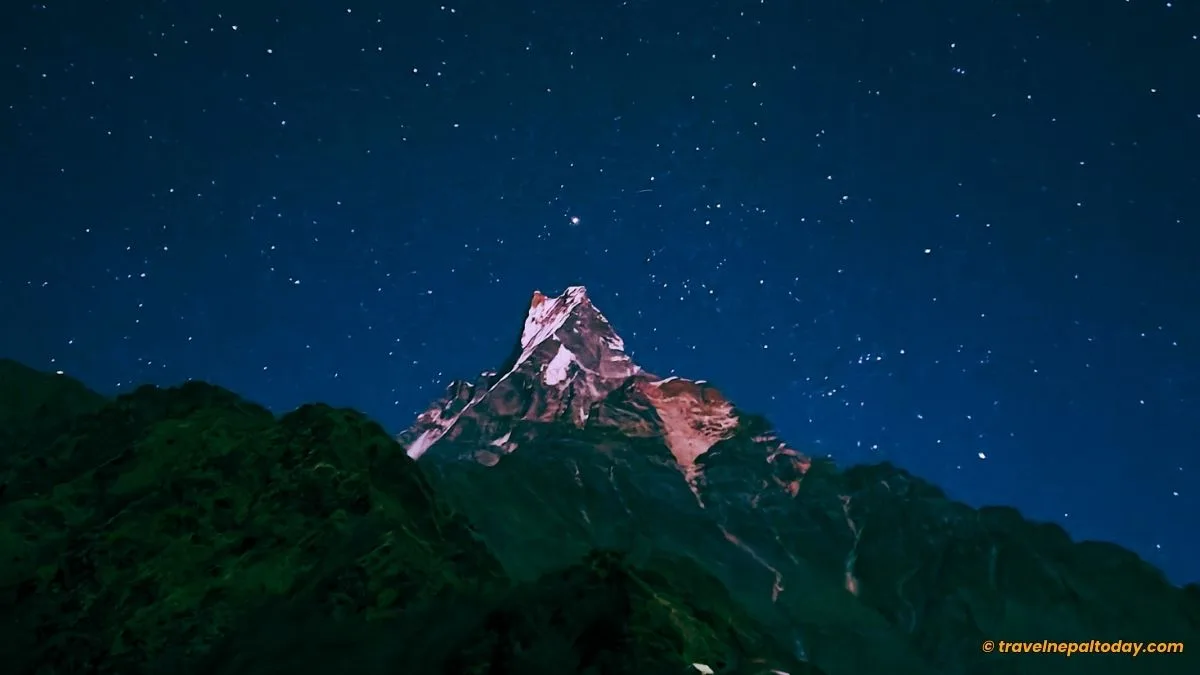
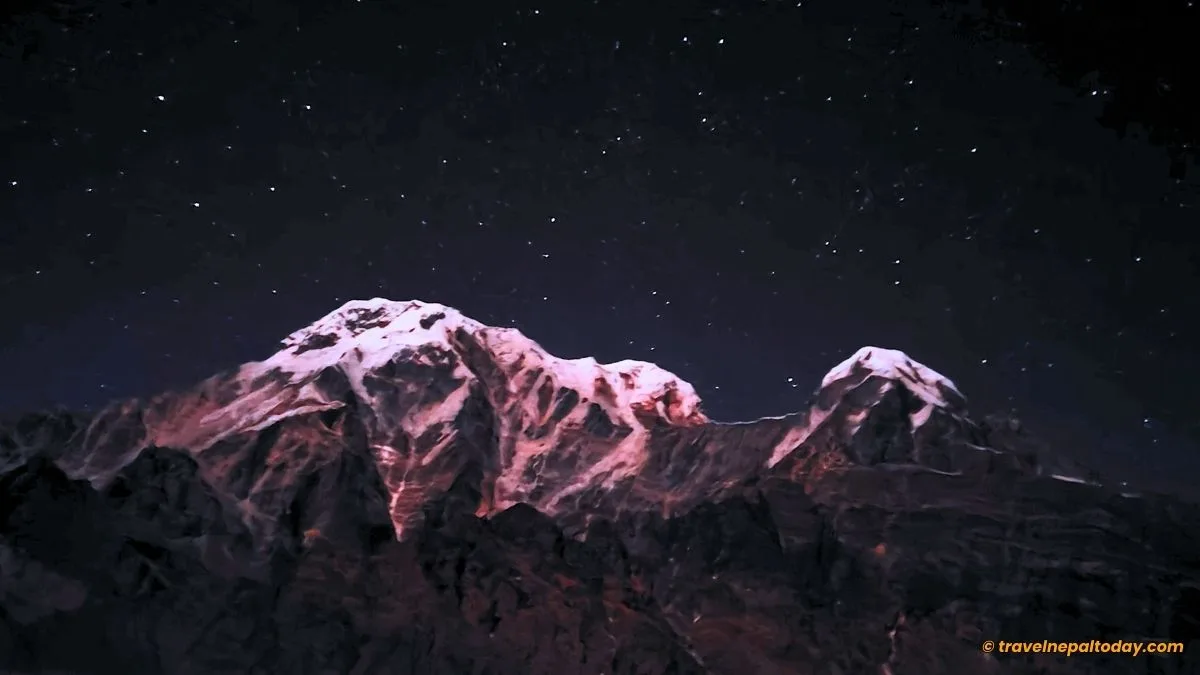
You’ll meet both local and international trekkers, so socialise! And if the weather is clear (mostly in late autumn and winter), be sure to get out for stargazing.
Sleep early, as you’ll need to wake up at 3 am for the next hike. So, for your packing list, be sure to carry a headlamp or reliable torch. Or you may drain your phone if you’re using it for light!
Day 6: Mardi Viewpoint & Base Camp Explore, Low Camp Return
| Hike Distance | 16 km |
| Hike Duration | 7 to 8 hours |
| Elevation Gain | 947 m |
| Difficulty Level | Intermediate |
This day is a little difficult compared to the others as you’ll be reaching 4500 meters!
Waking up at 3 AM is tough for many. Before starting, check signs of AMS. Don’t hike in the chilly morning if you’re showing symptoms. Rather, seek help from your guide or lodge staff.
In winter, water in drums freezes! So, my dear Nepalese and South Asian trekkers, be sure to carry wet tissues or toilet paper!
For the final hike, don’t forget to fill your water bottle full, as there won’t be refill points in between, though a few tea shops at viewpoints sell tea.
The morning hike may feel cold, but as the sun rises, you’ll be glad you’ve done the Mardi Himal Trek! Stars, sunrise, and the Milky Way make it a paradise for astrophotography lovers, too.
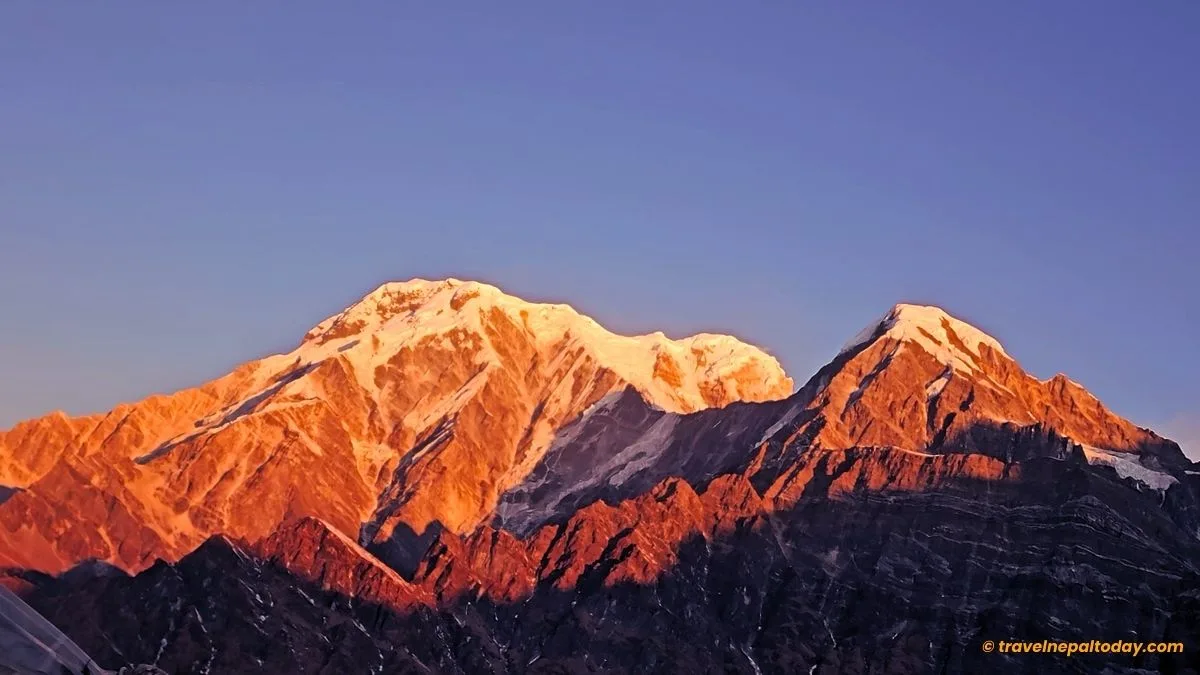
Passing via Lower Viewpoint (3,981 m), you’ll reach Upper Viewpoint, aka Mardi Himal Viewpoint (4,200 m). That’s where you get one of the best sunrise views in Nepal.
Mountains appear even closer, especially Mardi Himal (5,587 m) and Machhapuchhre (6,993 m). You can also see distant peaks like Khangsar Kang, Tarke Kang, Tare Kang, Asapurna, and Gangapurna.
While many make a return, I highly recommend proceed ahead. First to Lower Base Camp (4,218 m) and then to Mardi Himal Base Camp (4,500 m), which happens to be the west base camp. It’s just about 1.5 to 2 hours away from the viewpoint, so definitely don’t miss it.
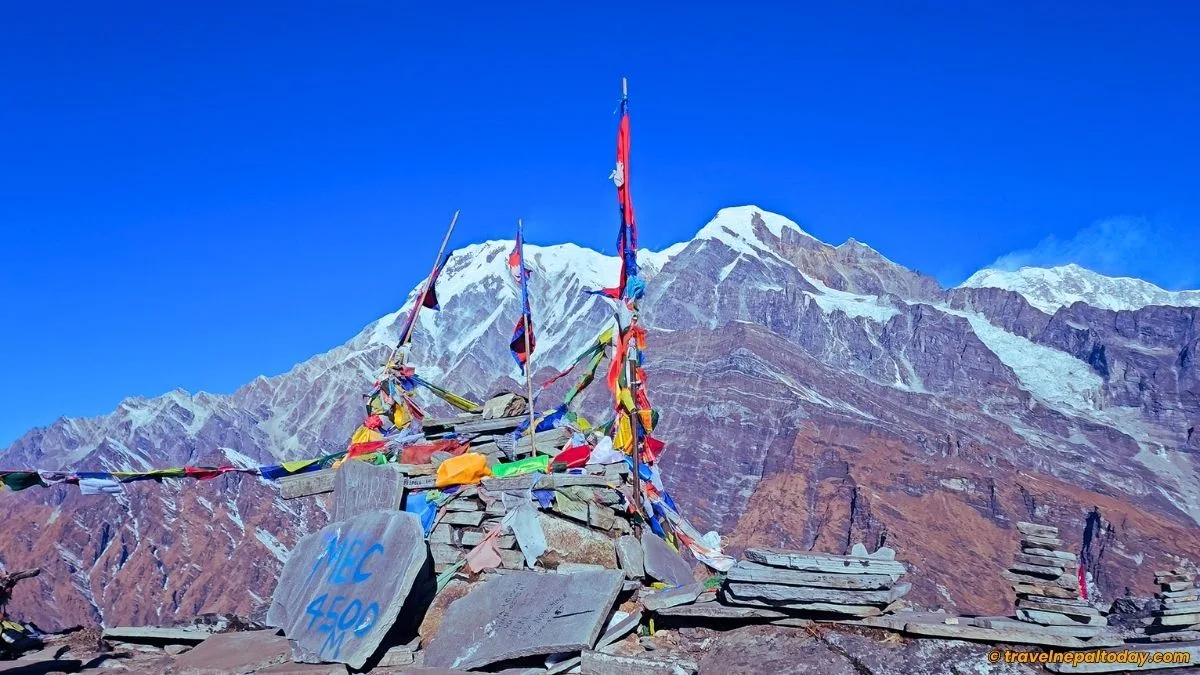
I only recommend spending a little time at the base camp, as you have already gained almost 950 meters by now in a short span of just 4 hours. But there’s no need to hurry if you’re all good.
That’s the advantage of doing the 8-day trek. Even during the return to High Camp, you can walk in a relaxed way, as you don’t have to reach all the way down. You’ll also realize those insane stairs you had climbed in the dawn.
Have your breakfast, pack your things, and start the downhill. Stop for a late lunch at Badal Danda, and if you wish, you can even stay here up to sunset to watch clouds gather below at that time. You’ll be on cloud nine, literally!
Today’s final downhill from Badal Danda to Low Camp takes roughly 45 minutes to 1 hour. The advantage of this 8-day plan is that you don’t have to rush and reach Low Camp at your own pace.
Day 7: Low Camp to Sidhing, Drive to Pokhara
| Hike Distance | 5 km |
| Hike Duration | 3 to 4 hours |
| Drive Distance | 31 km |
| Drive Duration | 2 to 2.5 hours |
| Difficulty Level | Easy |
It’s the last day of this 8-day Mardi Himal Trek, and it’s going to be completely downhill through the forests of the Annapurna Conservation Area.
On the way, you’ll pass small settlements like Takaichi (2,285 m) and Ratencho (2,092 m) before reaching Sidhing (1,751 m). Since you’ll be descending gradually, your knees feel less stressed compared to shorter treks. Still, I suggest wearing knee support if you think you’ll have knee issues.
The place to get a jeep is actually called Bhimjung (1,935 m), where you can share a jeep with other friends that you met on the trail.

Within two to three hours, you’ll reach Pokhara today, and this gives you enough time for sightseeing. If you have energy left, try kayaking, a trending activity in Phewa Lake!
It’s even possible to return to Kathmandu the same day. Head to Prithvi Chowk and you’ll easily find evening microvans or night buses. But let’s be honest, you’d rather want to give yourself a celebration night in Lakeside, don’t you?
Day 8: Pokhara to Kathmandu Return
| Drive Distance | 200 km |
| Drive Duration | 6 to 7 hours |
| Elevation Gain | 500 m |
Time to return to the capital city. Just like how you arrived, you can choose the same option.
I had personally gotten on an afternoon van after a good night’s sleep until late morning. You’ll reach within 6 to 7 hours if you follow my approach. But if you take the bus, you need to get on an early morning one, and it takes about 8 hours.
You can even go for a final morning stroll if you wake up early. Have breakfast in the Lakeside area itself. Totally up to you!
Mardi Himal Trek 8 Days Cost & Packages
The overall 8-day Mardi Himal trek cost or budget for international tourists varies depending on whether you’re trekking independently, with a freelance guide, or with a travel agency.
The best option is definitely choosing a registered trekking agency because you’ll be safer and everything else will be handled for you!
Packages for 8 days usually cost USD 555 to USD 750, depending on how reliable the agency is and the level of luxury you prefer. Generally, this price covers your vehicle expenses, BLD during the trek, guide fees, porter fees, etc. Overall, it’s a good deal, but I suggest tipping the guides and porters.
But which agency should you choose? Well, our TNT team is working on reviewing travel agencies through various means, and we’ll soon update it here on the site with the best ones.
But for the time being, you can fill up the form below to book your Mardi Trek, and we’ll get back to you with the best possible option:
Remember: Travel Nepal Today is not a trekking or travel agency. Our job on the internet is to provide you with actual and factual information about Nepal and also help you out in every possible way so you get to explore the beauty of this beautiful country.
For Nepalese trekkers, it’s best to opt for a 4-day itinerary from Pokhara or a 6-day itinerary from Kathmandu. You’ll still be able to pass through Kande and complete the trek comfortably.
But if you’re trekking in this part of the Annapurna Conservation Area, taking your time and completing it in 8 days is also a great idea. Expect to spend anywhere from NPR 15,000 to NPR 20,000.
Bonus: Gear Needed for 8-Day Mardi Himal Trek
The packing list for any trek depends on multiple factors, such as the number of days, the season, and the teahouse conditions. You should pack things that make you comfortable, because you’ll be carrying that backpack and relying on yourself throughout the trek.
I’m going to share my own packing list and also suggest some recommended products, based on good reviews. These items should be enough for your 8-day Mardi Himal Trek in any season:
Final Words
Loved the 8-day Mardi Himal Trek itinerary? I really enjoyed writing it for you. Don’t forget about permits and the packing list. I’ve shared them all in separate guides.
Seriously, getting very close to the mountains, particularly Mt. Machhapuchhre aka Fishtail, is something beyond words. So, don’t hesitate and plan your visit to Nepal right away.
If you make it, be sure to tag Travel Nepal Today on your Insta stories. I’m waiting…
Happy travelling to Kaski!
About The Author