“How difficult is Mardi Himal trek?” This is one question you’ve probably asked yourself if you’re planning to explore this trending destination in the Kaski district.
On paper, it might seem like just another trek in the Annapurna region, but in reality, the difficulty depends on multiple factors. You need to consider altitude, trail type, season, your fitness, and even accommodation availability.
The good news? Despite these challenges, the Mardi Himal trek is definitely manageable. Even beginners can enjoy this trek with proper preparation and right pacing.
In this guide, I’ll break down the factors that influence difficulty based on my own experience, share practical tips, and help you understand what to expect so you can plan your trek confidently.
8 Factors Defining Mardi Himal Trek Difficulty
Although Mardi Himal is doable for beginners, its difficulty comes from a combination of factors such as altitude, trail type, season, and daily elevation gain. Each of these can influence how strenuous the trek feels. So, let’s break them down one by one.
#1 Trek Length, Itinerary & Elevation Gain
Mardi Himal Trek can be completed in 3 to 8 days, depending on your pace and itinerary. The longer you take, the easier it becomes, as you can spread the elevation gain over multiple days.
Daily elevation gain plays a major role in determining difficulty. The more meters you climb in a day, the harder your trek becomes.
Beginners with zero trekking experience can still reach up to Mardi Himal Base Camp comfortably if they choose a slower itinerary and avoid rushing elevation gain. Simply put, the trek feels easier when you give yourself more time.
I’ve made sure each of the itineraries presented here on Travel Nepal Today is altitude-friendly. Definitely check out the 3-day, 4-day, 5-day, 6-day, 7-day, and 8-day itineraries. Choose the one that suits you best based on your prior trekking experience.
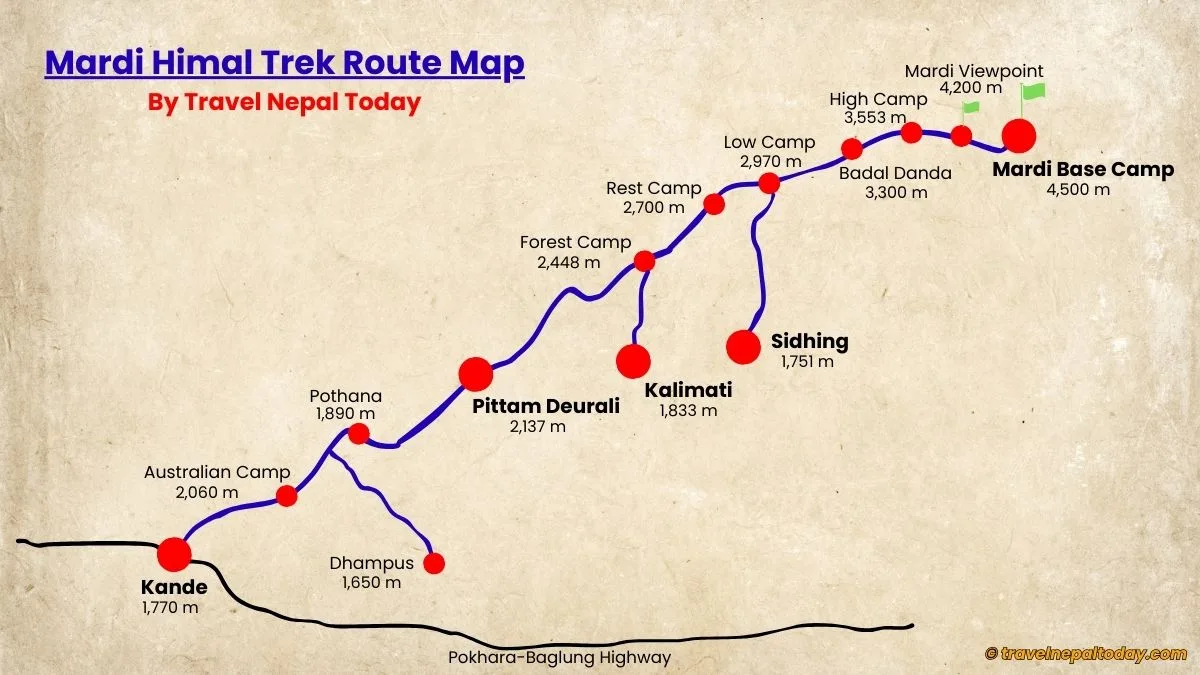
Depending on the starting and ending points, the trek length varies:
- Pittam Deurali to Sidhing: 36 km
- Kalimati to Kalimati: 32 km
- Sidhing to Sidhing: 30 km
- Kande to Sidhing: 42 km
But length isn’t the only factor to consider. Sometimes a longer route can be easier to follow, which is the case with the Mardi Himal Trek.
For example, the Pittam Deurali to Sidhing route is much easier compared to the Sidhing to Sidhing route, despite being longer. The latter involves more strenuous uphills. So, even though it’s shorter, I would recommend the former route for a more comfortable trekking experience.
#2 Maximum Altitude & Physical Challenge
The highest sleeping altitude on Mardi Himal Trek is High Camp at 3,553 m.
So, the possibility of altitude sickness is lower, although not completely minimal, as AMS symptoms can start appearing from 2,500 m itself. Hence, gaining less elevation per day for proper acclimatization is absolutely essential on this trek.
You’ll still be heading to Mardi Base Camp (4,500 m) or at least to the Mardi Himal Viewpoint (4,200 m). So, you need to be cautious of altitude sickness particularly on the last day the most.
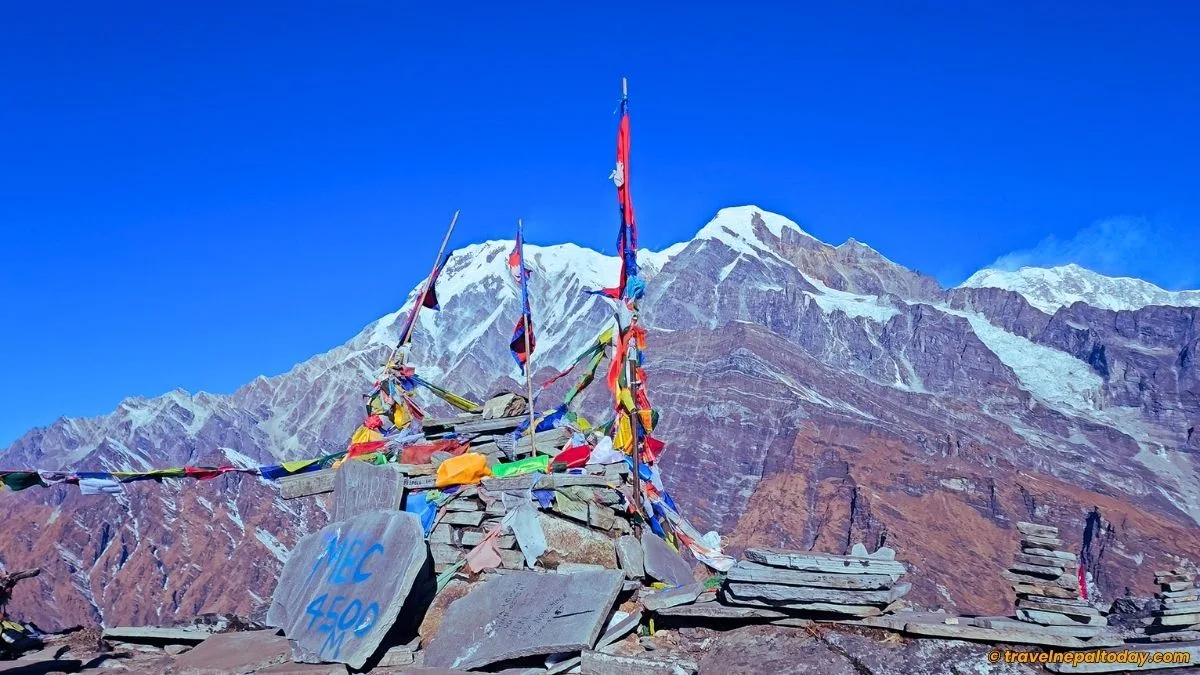
Even if you show signs of AMS at lower elevations, this trek allows flexibility. You can always turn back to a lower camp if needed.
Regarding physical challenge, the Mardi trail is mostly gradual in the lower sections but becomes steeper and more rugged as you approach High Camp and Base Camp.
Uphill stretches require stamina. You need to be able to walk 6 to 7 hours per day with your backpack.
Personally, I found the morning stretch to the Viewpoint the most strenuous. One of our team members (a beginner) called it quits halfway, while another decided not to hike up to Base Camp.
Both experiences were due to how physically demanding the trek can feel for beginners, even though it’s actually manageable!
#3 Season & Weather Conditions
The season and weather conditions you choose are a definite factor that affects the difficulty of Mardi Himal Trek. Trekking during peak season versus off-season feels very different.
Every month brings unique views, and with that, varying challenges. Here’s a general idea of how difficult the Mardi Himal Trek can be during different Nepali seasons:
- Basanta (Spring, March–April): Ideal temperatures, mostly clear trails, occasional wind. Peak season means lodges can be crowded.
- Grishma (Summer, May–June): Good weather, fewer crowds, occasional rain in forested sections up to Badal Danda, making the trail slightly muddy.
- Barsha (Monsoon, July–September): Trails can be slippery, muddy, and more challenging; even road conditions may be affected. Accommodation is available, but trekking becomes tougher.
- Sharad (Autumn, September–November): Mostly clear skies, occasional post-rain mud, chilly mornings and evenings. Peak season may require sharing rooms.
- Hemanta (Pre-Winter, November–December): Cold temperatures, strong winds, fewer crowds, good trail conditions.
- Sishir (Winter, January–February): Very cold, high chances of snow, limited daylight hours.
This was just a basic overview. It’s more important to note that seasonal shifts have drastically affected trekking trails across Nepal in recent years.
Spring is lasting a bit longer, summer extends up to late July, monsoon now reaches into September (it even rained in October 2025), and winter has become shorter but harsher.
Always track weather updates before your trek and avoid Mardi Himal during harsh conditions. Safety should always be your top priority!
In Nepal, monsoon usually damages trails and connecting roads as landslides are frequent. In fact, that leads to muddy sections lasting even up to autumn. So, mu suggestion is to always check recent trail updates before planning your trip.
#4 Trail Type & Terrain
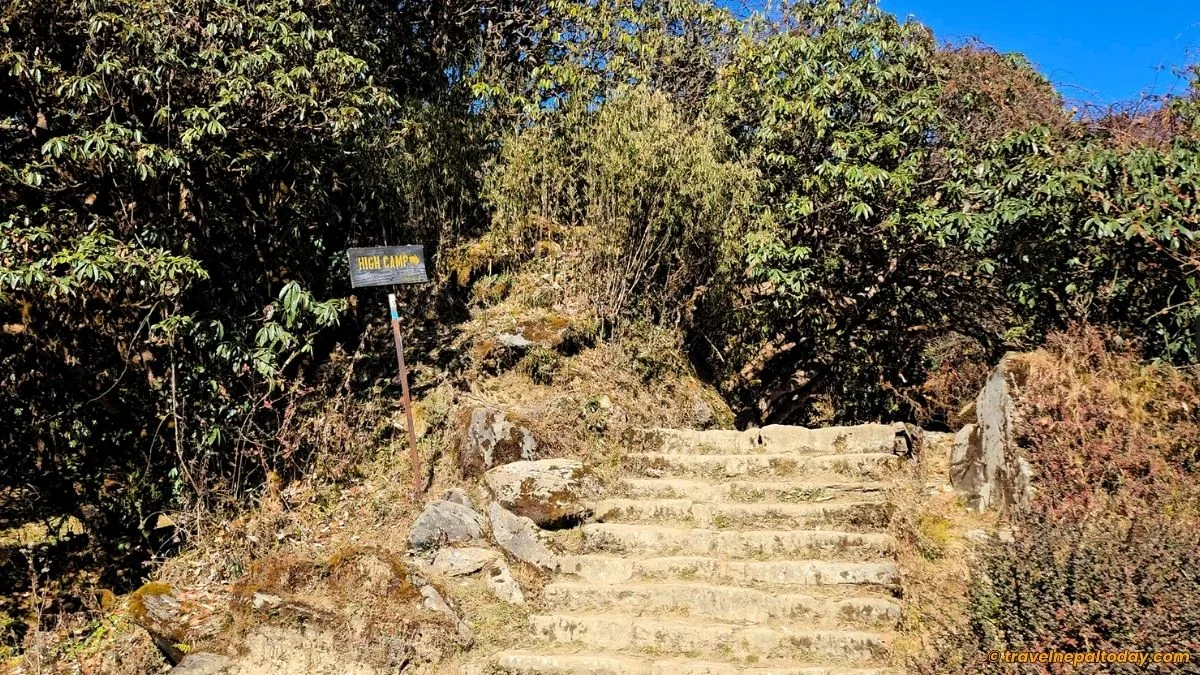
On the Mardi Himal trek, the lower sections (up to Lower Badal Danda) consist of forested trails with well-maintained stairs.
The more rugged sections begin only after High Camp, especially when heading toward the viewpoint and base camp.
Snow or ice in early spring and winter can increase difficulty and require extra caution.
No matter how challenging the higher sections may seem, the Mardi Himal trail remains safe for beginners as long as you maintain balance and pace.
#5 Accomodation & Logistical Considerations
Accommodation along the Mardi Himal trek is generally comfortable and easily available, though it depends on the season. And cost-wise, the Mardi Himal trek is quite reasonable.
Most lodges offer solo beds with blankets, and hot showers are available for a small extra fee. Food prices increase as you go higher.
You can go independently, paying for rooms and meals along the way. Or you can just opt for a package system offered by lodges, which typically covers stay, dinner, tea/coffee, charging, hot water, and breakfast.
During the peak season, rooms in High Camp can get crowded, so you may need to share rooms with other trekkers. In the off-season, however, lodges tend to be quieter with more availability.
Drinking water above the lower landmarks mainly comes from melting snow. So, I highly recommend carrying purification tablets or a portable filter for convenience.
Overall, logistical challenges are minimal. But during peak season, limited accommodation and slightly higher food prices are to be kept in mind. Nonetheless, with a bit of planning, your trek can remain smooth and stress-free.
#6 Road Access, Vehicle Availability & Emergency Support
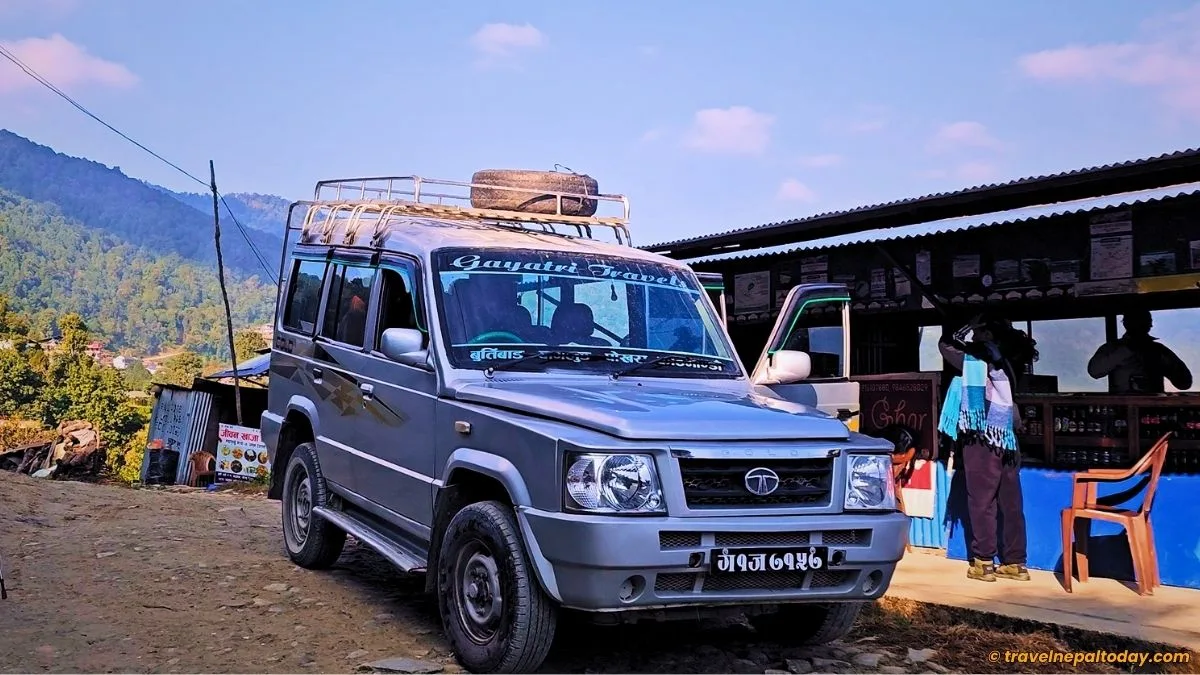
The road network to Mardi Himal is decent but limited. Jeeps and buses reach Pittam Deurali, Sidhing, and Kalanki, which are available depending on the season and road conditions.
For emergencies, locals and porters can assist with minor issues and take you up to the roads. However, if something serious happens, helicopter evacuation is the only option.
So, make sure to have travel insurance. We’ll soon share a guide on the best travel insurance options here on TNT!
One of the most beautiful aspects of trekking here is the strong local support. Teahouse owners, porters, and guides along the route know the mountains well and are extremely helpful during bad weather or if you’re struggling physically.
#7 Personal Fitness & Group Dynamics
You don’t need to be a professional trekker for Mardi Himal, but basic fitness and good mental strength are definitely important.
As mentioned earlier, walking 6 to 7 hours per day with your backpack is the norm here. Being able to handle moderate uphill stretches will make your trek more enjoyable rather than exhausting. I promise!
Group dynamics also matter. Trekking with supportive companions makes the experience smoother, while trekking solo requires extra caution.
That’s why I suggest hiring a local guide at the very least. Someone familiar with the route can be extremely helpful, especially in challenging conditions.
#8 Navigation & Minor Hazards
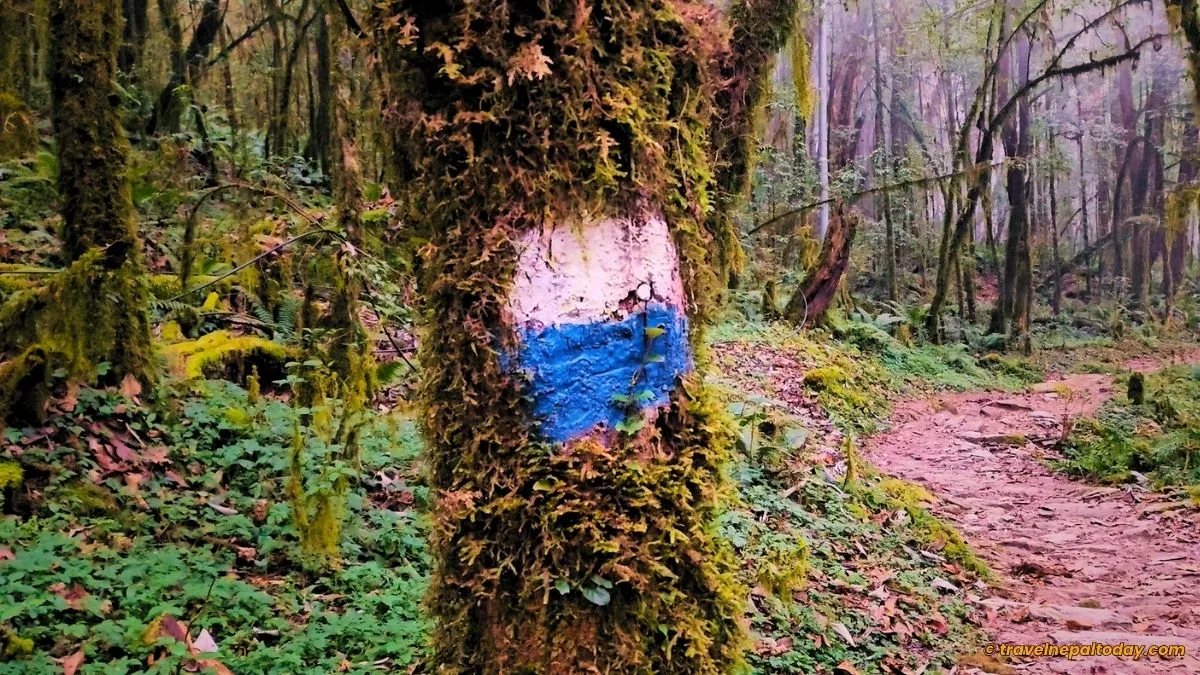
The Mardi Himal trail is mostly well-marked. There are paints on trees and signboards all along.
But at some points, it can be confusing due to multiple paths. I prefer using maps.me as it helps me navigate easily. In fact, the most popular routes of Nepal have been updated in their app.
Moving on, wildlife activity is minimal, but you’ll definitely hear chirping birds and enjoy rhododendrons during spring.
Natural hazards are also rare, though icy patches in snowy conditions require extra caution, as I’ve mentioned multiple times in this guide.
Overall, the technical difficulty of the Mardi Himal trek is low. No heavy gear is needed. Just be sure to carry your rain gear and crampons when the higher regions have icy patches (during the winter period).
Just because it’s less risky doesn’t mean you should be overconfident. There have been past incidents of trekkers getting lost on the route. So, it’s essential to stay alert and careful!
So, What is Mardi Himal Trek Difficulty Level?
For each factor discussed above, I’ve assigned a difficulty rating level. By averaging these, we can estimate how difficult is Mardi Himal Trek:
- Trek Length, Itinerary & Elevation Gain: Moderate
- Maximum Altitude & Physical Challenge: Moderate to Difficult
- Season & Weather Conditions: Varies by season
- Trail Type & Terrain: Easy to Moderate
- Accommodation & Logistical Considerations: Easy
- Road Access, Vehicle & Emergency Support: Easy
- Personal Fitness & Group Dynamics: Easy to Moderate
- Navigation & Minor Hazards: Easy to Moderate
Looking at these, we can rate the overall Mardi Himal Trek difficulty level as ‘Moderate’. Not too easy, not too hard, and just right for beginners seeking a challenge.
Tips to Tackle Mardi Himal Trek Difficulty
After analyzing all the factors that affect the difficulty of Mardi Himal Trek, here are some practical tips to make your trek smoother and safer:
- Don’t force yourself. Know your pace. Some finish in 2 days, while others may take 5. There’s no need to rush.
- Don’t go beyond High Camp on the first day. Explore nearby areas to acclimate, and save the Viewpoint and Base Camp for the next day.
- Limit time at Base Camp (4,500 m). Descend quickly if you notice any AMS symptoms.
- Avoid trekking at night, especially on forest trails.
- Check weather forecasts before and during your trek (I personally prefer Zoom Earth).
- Avoid trekking in extreme snow. Stay put and follow local updates.
- Never trek alone. Take a local guide or stick with other groups for safety.
- Use trekking poles and knee pads, especially for descents (very helpful on the Sidhing downhill).
- Hydrate well, stay warm, wear proper clothing, carry snacks, and take breaks instead of pushing through in one go.
- Carry crampons if the route has become icy (especially in winter afternoons when snow is melting).
- Book your lodges in advance; availability can be unpredictable. We’ll soon introduce a method for this here at TNT (stay tuned!).
- Keep in touch with your booked lodges while trekking. Plan to reach each destination by daylight (around 4 to 5 PM).
- Don’t bargain excessively; respect local livelihoods. If needed, confirm prices with other trekkers and report to NTNC later in case you suspect scams.
- Tip your guides/porters at least 10% of your overall trekking budget.
Want more such tips? Be sure to subscribe to our newsletter for helpful posts related to Nepal travel.
Bonus: Gear List to Make Mardi Himal Trek Easier
I’m now going to share some products that can make your Mardi Himal trek significantly easier and safer. Having these ready before you hit the trail will help you tackle challenging sections with more confidence, reduce strain, and enjoy a smoother trekking experience.
| Item | Where to Get | |
| Amazon | Daraz | |
| Quality trekking poles | Cascade Mountain Tech Lightweight Aircraft-Grade Aluminium Trekking Poles | |
| Knee compression sleeves for steep descents | McDavid Hex Knee Pads | |
| Crampons for snowy/icy sections above Badal Danda | Kahtoola MICROspikes Footwear Traction | |
| Lightweight hiking boots with strong grip | Columbia Men’s Newton Ridge Plus Ii Waterproof / Columbia Women’s Newton Ridge Plus Waterproof | |
| Lightweight trekking backpack with proper support | Gregory Wander 50L Unisex Youth Backpack | |
| Headlamp with long battery life for morning hike to Viewpoint | Coast XPH30R 1500 Lumen USB-C Rechargeable Dual Power Headlamp | |
| Buff / multi-use headwear (I usually take one as it covers my neck, sometimes my ears, and someotimes I use it as facemask) | Buff CoolNet UV Neck Gaiter | |
| Ankle braces (gives protection against accidental ankle sprains) | ACE Deluxe Ankle Stabilizer, Adjustable | |
| Tablets or liquid drops for water purification | Potable Aqua Water Purification Tablets with PA Plus | |
Final Words
Now that you’ve finished reading, you’re aware that the challenge of the Mardi Himal trek depends on multiple factors, from altitude and trail type to weather and your own fitness.
But don’t worry! With proper planning and by following my tips, even beginners can enjoy this beautiful trek safely. Choose the right time by understanding the risks, trail conditions, and weather forecast for an optimal experience.
Take your time to prepare, check your gear, and keep those suggestions in mind. I’m pretty sure you’ll find the Mardi Himal trail not just manageable but truly rewarding after that.
Happy travelling to Kaski!
About The Author