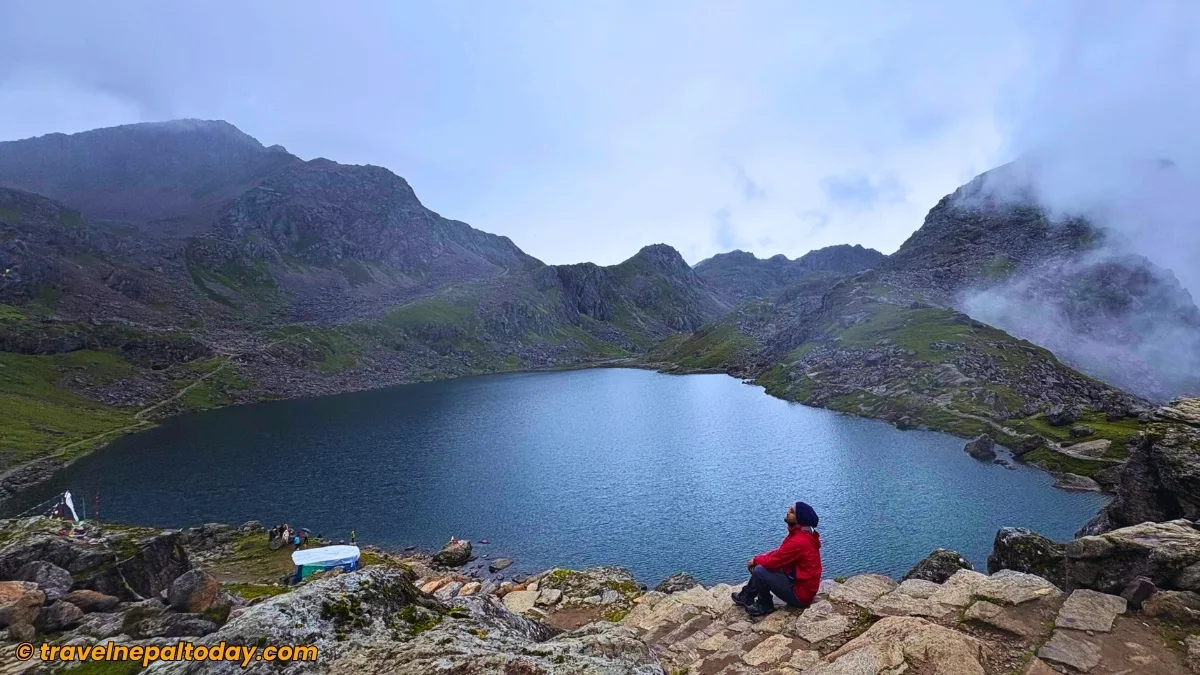
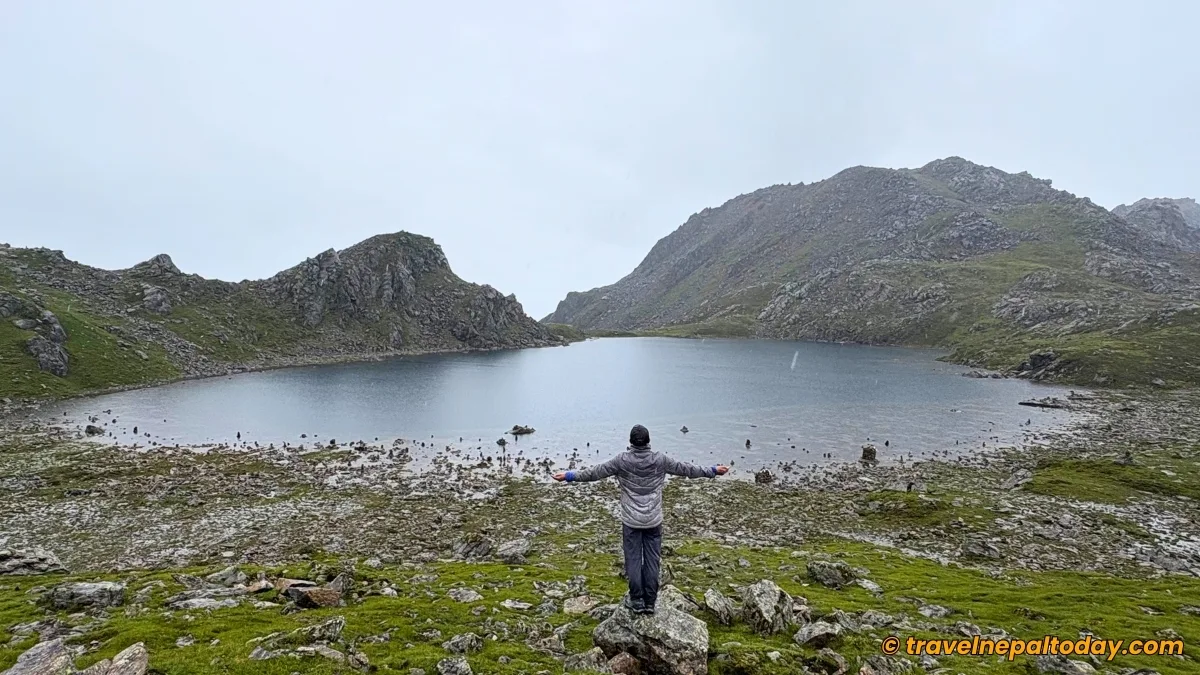
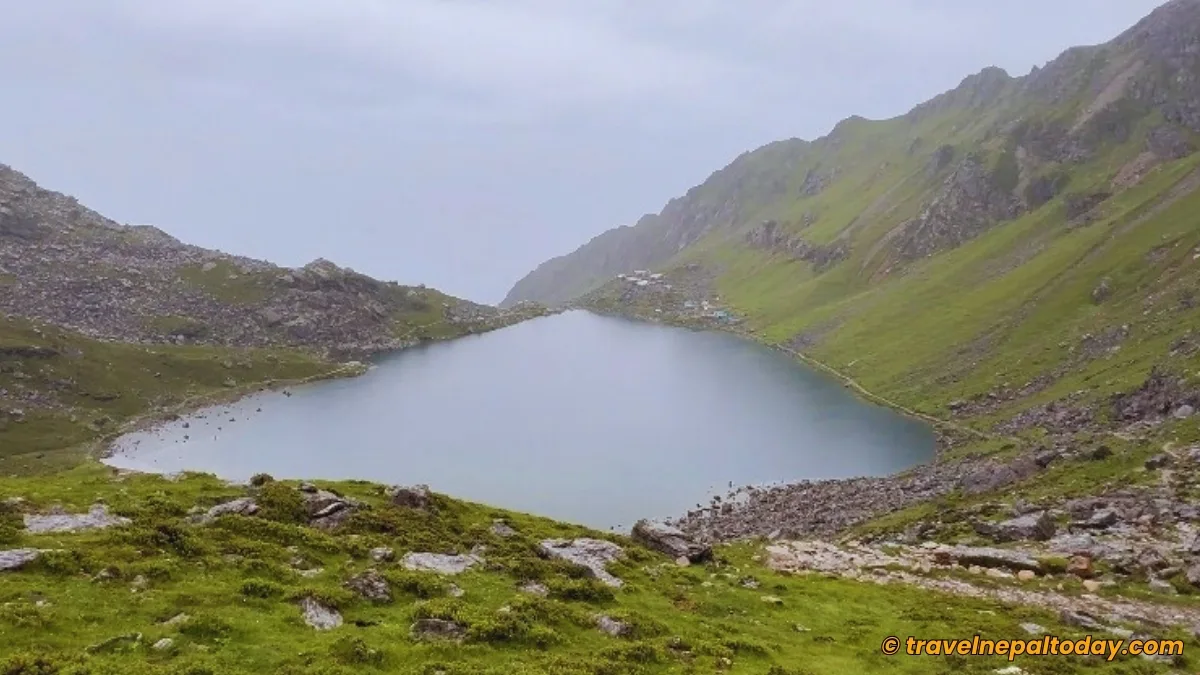
Gosaikunda Trek (especially during Janai Purnima) sits high on the bucket list of countless Lord Shiva devotees for sure.
And honestly, why wouldn’t it? This sacred lake, steeped in religious significance, draws thousands of pilgrims every single year.
I myself made the journey during the monsoon (not exactly in the fair, but just a week prior). And let me tell you, it was absolutely worth it!
The only thing I’d say is: be extra cautious while taking the holy dip. Something tragic happened during our trip. I’ll share the details later.
And it’s not just about Gosaikunda. You can also reach Suryakunda Lake, the highest point in the region at 4,610m, on the same trek.
There are multiple routes to Gosaikunda, but we went for the classic Dhunche route. So, this guide will be focused on that. I’ll help you digitally, from transportation (electric van!) to a complete day-by-day itinerary.
It’s a beginner-friendly trek that can be combined with other adventures. Don’t worry! I’ll break everything down for you, heading by heading.
Key Facts About Gosaikunda-Suryakunda Lake Trek
Region
Gosaikunda and Dupcheshwor Rural Municipalities, Rasuwa and Nuwakot Districts, Langtang National Park, Bagmati Province
Max. Altitude
4,610m (Suryakunda Lake, Nuwakot District)
Trip Duration
4 days
Trek Duration
4 days
Trek Difficulty
Moderate
Itinerary
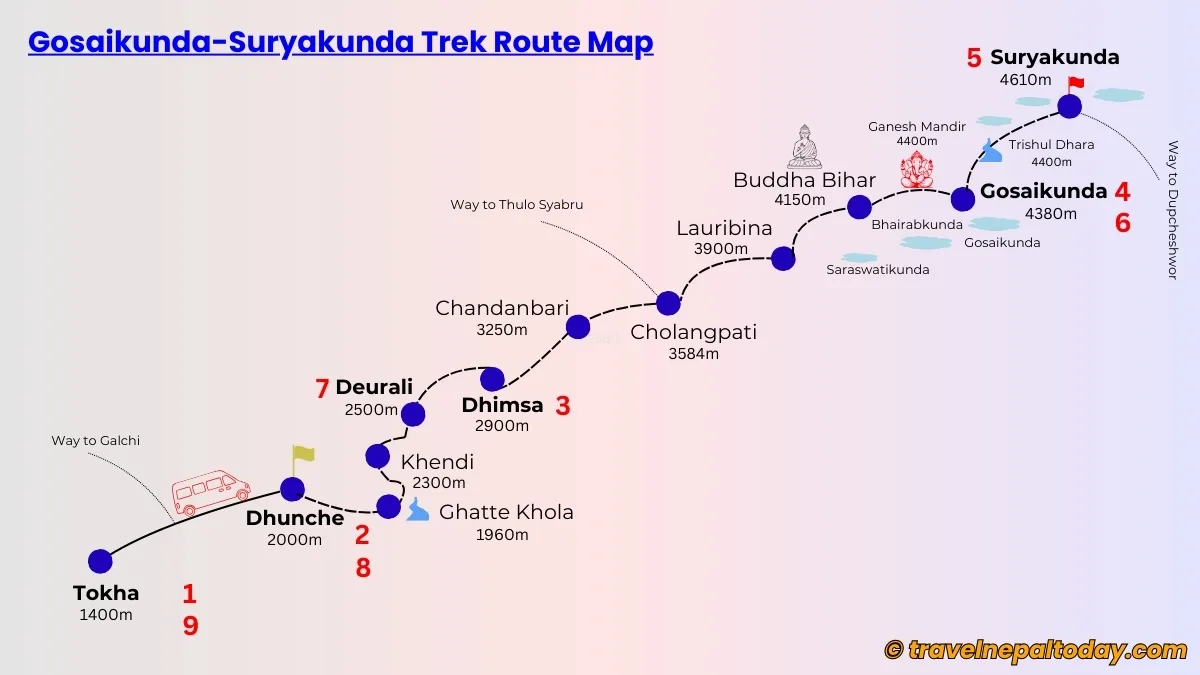
Kathmandu > Dhunche > Sapche > Ghatte Khola > Khendi > Deurali > Dhimsa > Chandanbari > Dharmadwar > Cholangpati > Polangpati > Lauri Binayak > Buddha Bihar > Ganesh Temple > Saraswati Kunda > Bhairabkunda > Gosaikunda > Trishul Dhara > Barda Kunda > Nilkantha Kunda > Surya Kunda > Gosaikunda > Deurali > Dhunche > Kathmandu
Network Availability
Available up to Gosakunda Lake (some sections can experience problems)
Charging Availability
Limited (suggestion: carry a power bank!)
Peak Season
Janai Purnima (August full moon)
Best Time to Visit
All seasons
Langtang National Park Permit Fees
For Nepalese: NPR 100
For SAARC Nationals: NPR 1500
For Foreigners: NPR 3000
Gosai Kunda Trek Route Map
Why Gosaikunda is So Sacred? The Full Story Explained
When someone hears the word “Gosaikunda” in Nepal, they already know how sacred it is. Doesn’t matter if they’re 18 or 80, every generation knows the name.
But here’s the thing: while everyone understand it’s a holy lake, very few know the real reason behind why it’s so sacred. To understand that, we need to go way back. Like way back in time to Samundramanthan!
Samudra Manthan, Shiva, and Gosaikunda’s Origin
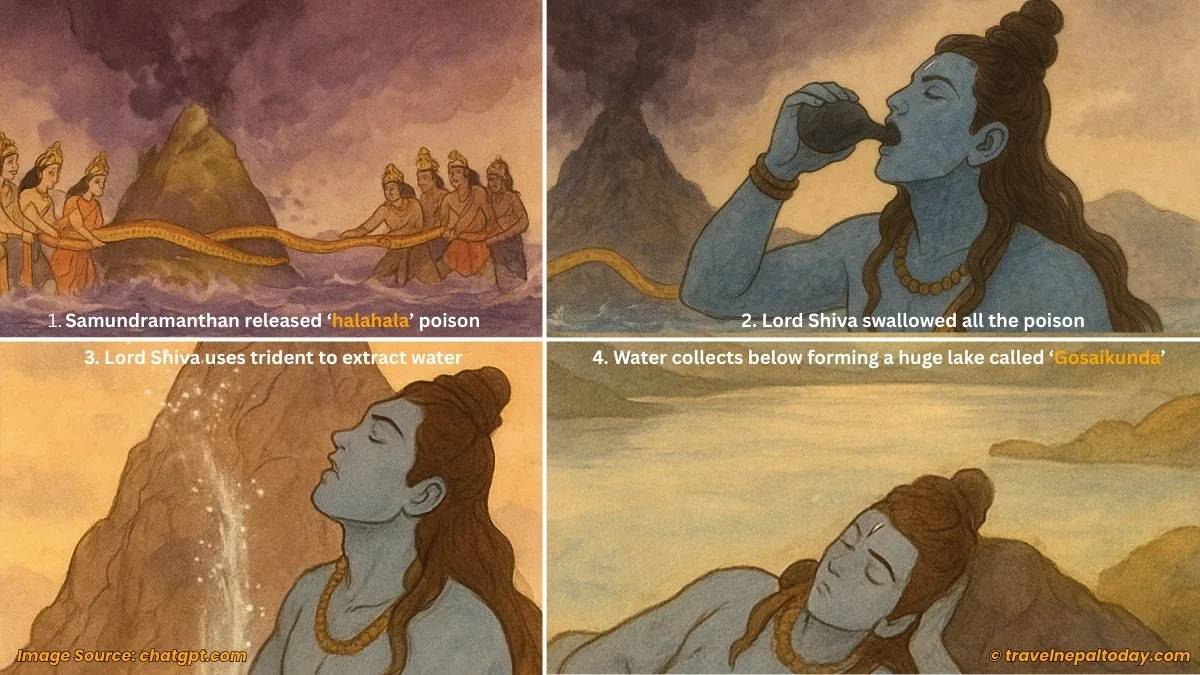
Ekadeshma… the gods and demons teamed up to churn the ocean to extract ‘amrit’ (the nectar of immortality). But before the amrit came out, something deadly showed up!
A poison called ‘halahala’. It was so toxic, it could destroy the entire universe. And when no one knew what to do, Lord Shiva had to step in after everyone prayed for him to come.
Mahadev literally swallowed the poison to save the world. But it didn’t just vanish. It got stuck in his throat and started burning him from the inside. His throat had turned all blue, which is how he got the name Neelkantha (the blue-throated one).
To cool down the fire, Mahadev walked deep into the Himalayas. Alone, thirsty, and burning from within.
How Gosaikunda Lake was formed (in Ghibli style)
As he climbed further up into the mountains, tired and almost fainting, he tried to find water and hit one of the rocky cliffs with his trident. Nothing happened. He walked even further and tried again. This time, water came out!
He drank it. The fire in his throat cooled down. Then, he went to rest. After just a few moments, he looked behind only to surprisingly find a large, blue lake. It is what we are now familiar to as Gosaikunda.
And the exact spot where Shiva hit the mountain with his trident? That place is still there. It’s called Trishul Dhara.
The water from the holy lake flows below towards Bhariabkunda and then to Saraswatikunda. Continuing to flow down, it connects with the Trishuli River system too, which eventually merges with the Ganga in India.
Other Myths That Add Even More Mystery!
There are more mythological stories connected with Gosaikunda Lake:
One local story says Parvati (Gauri) came here to meditate in search of Shiva.
Some people believe that the lake holds divine energy and that Mahadev still rests here in spirit.
In fact, many believe there’s a faint glow of Lord Shiva right in the middle of the lake. And if you look closely enough, you might just see it too.
Janai Purnima: The Peak Season of Gosaikunda Trek
Every year during Janai Purnima (August full moon), thousands of Nepali pilgrims make their way up to Gosaikunda. For most, it’s not just about the trek. It’s about cleansing the soul.
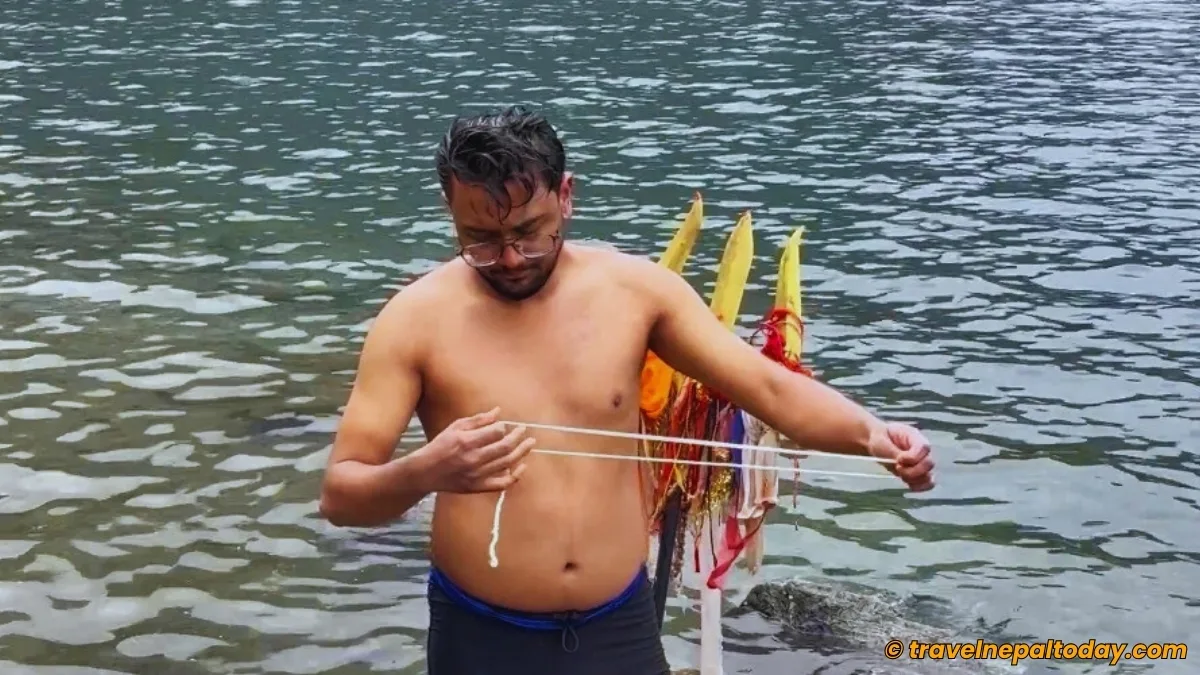
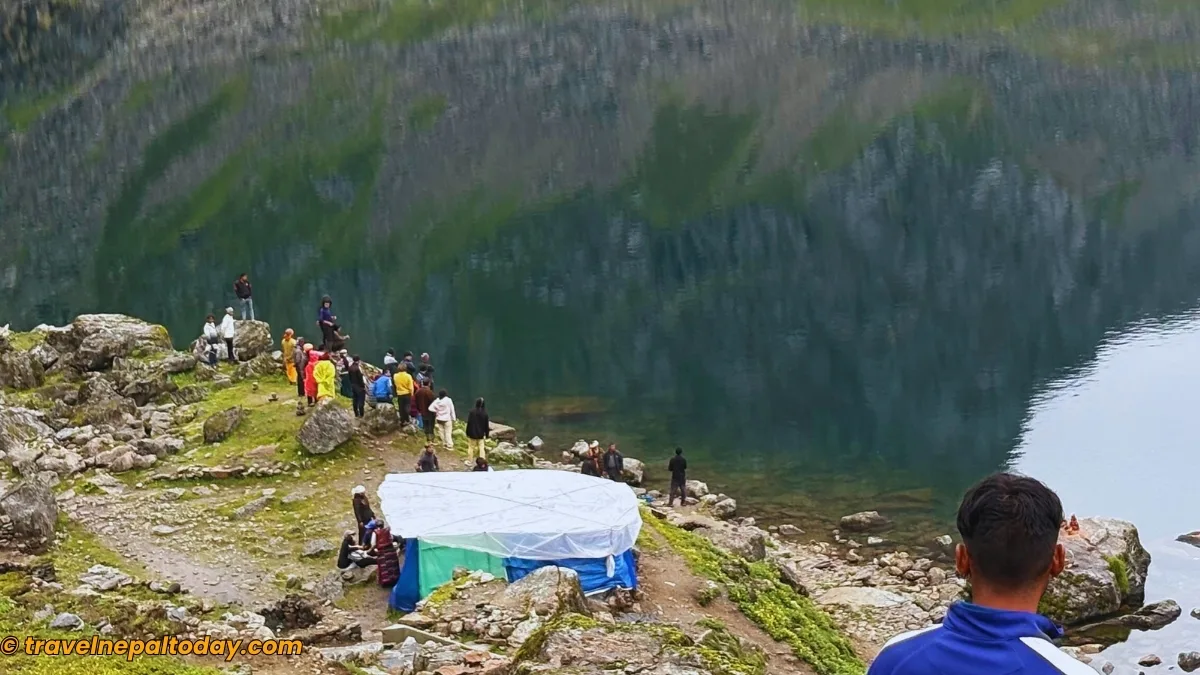
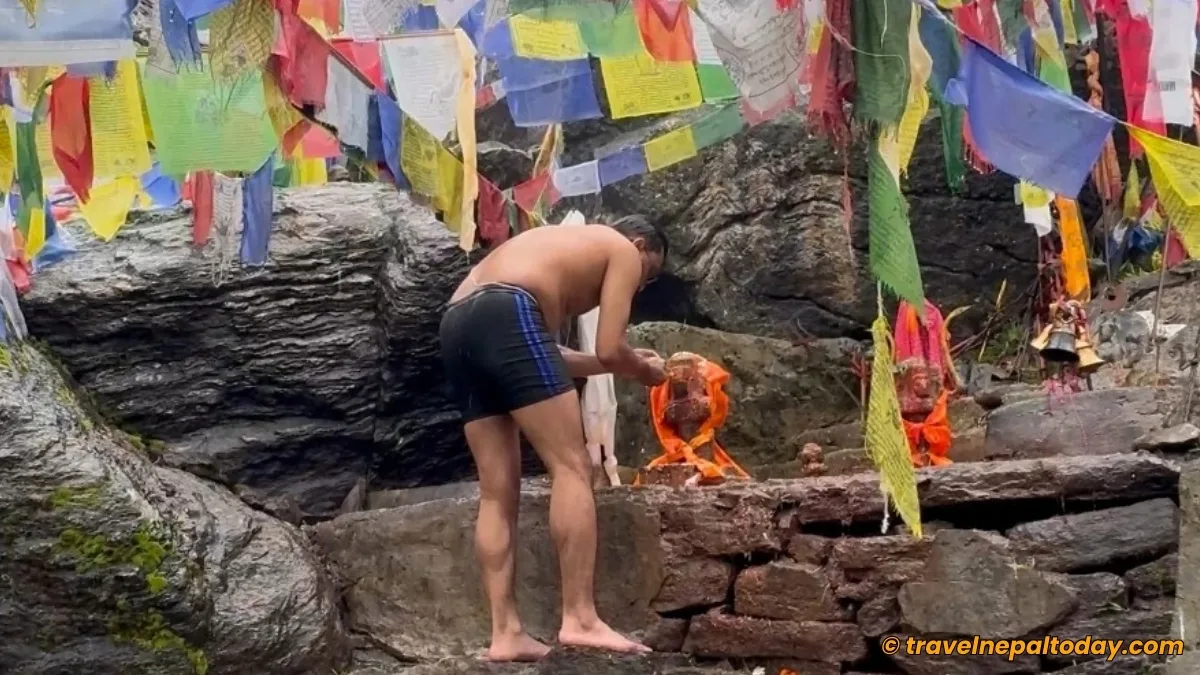
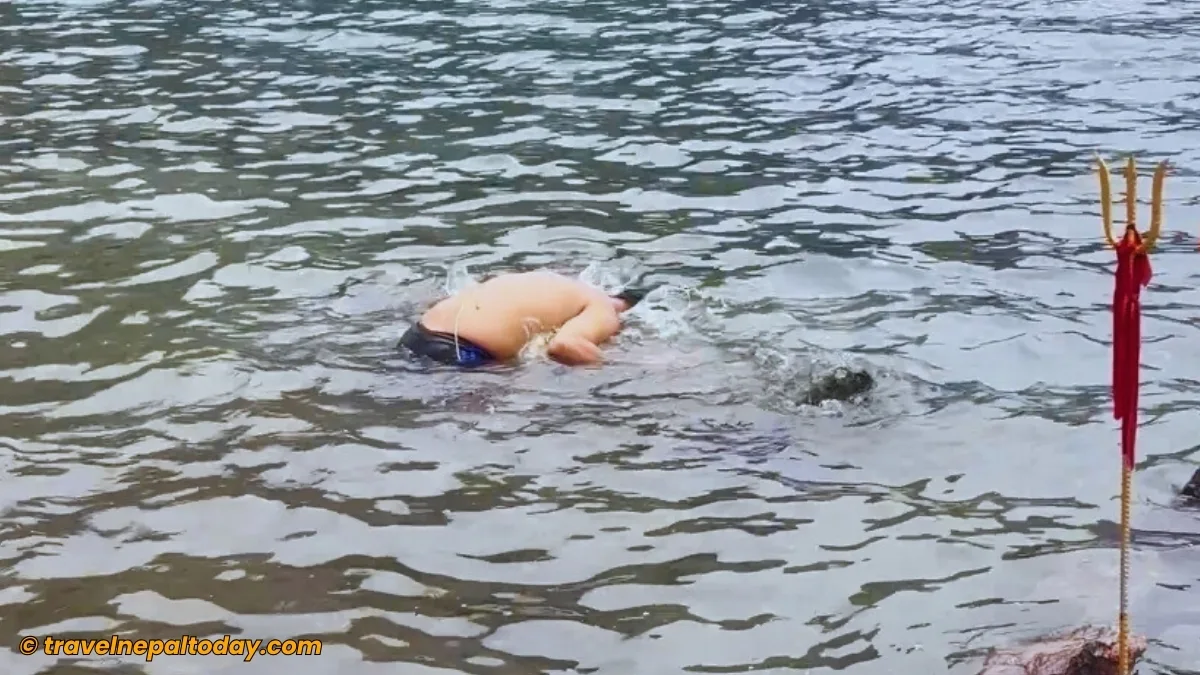
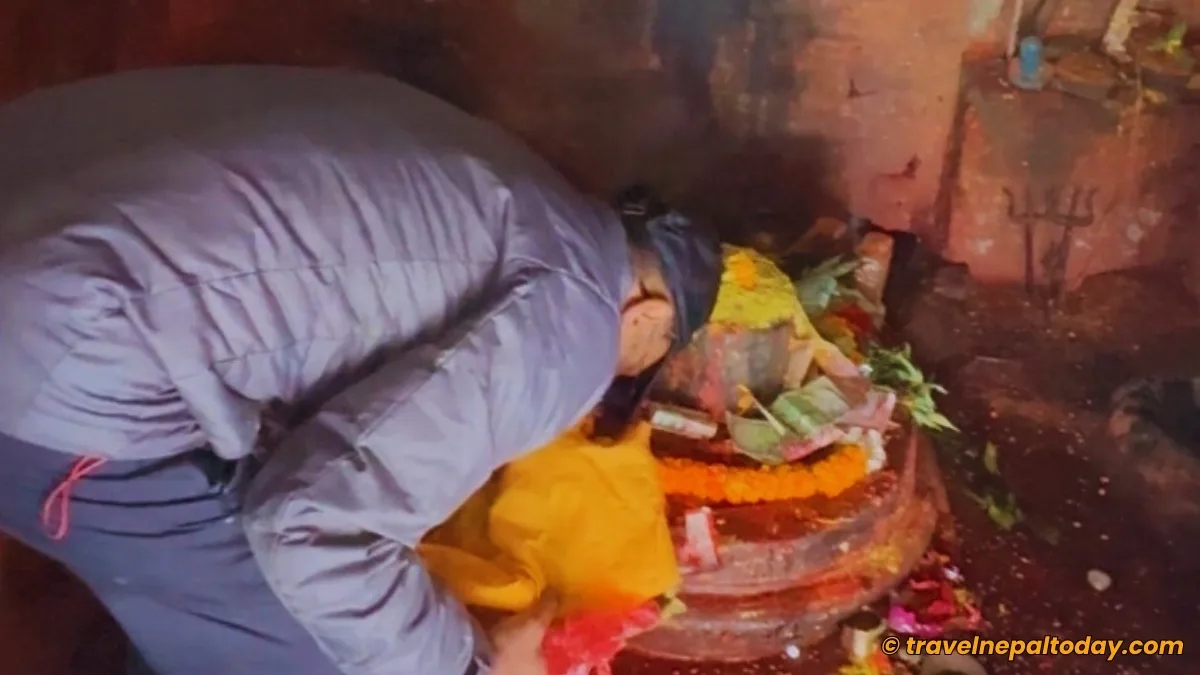
People take a dip in the freezing water, believing it will wash away their sins. Male devotees even change their sacred thread (janai) beside the lake after a bath. In fact, many collect water from Trishul Dhara for powerful rituals. I did it both during my recent visit!
That’s me changing my janai
Interestingly, some people believe this helps their ancestors gain peace in the afterlife.
Moreover, on Gangadashahara, the water from Gosaikunda is taken back down to be used in holy ceremonies.
Sacred to Even Buddhists!
Gosaikunda isn’t just sacred to Hindus. Tibetan Buddhists also see it as a powerful spiritual site. The lake is connected to Avalokiteshvara (Chenrezig), the bodhisattva of compassion.
Tamang communities and other Buddhists believe this is a portal between the spiritual and physical worlds. A place to gain merit, peace, and connection with something beyond this human world!
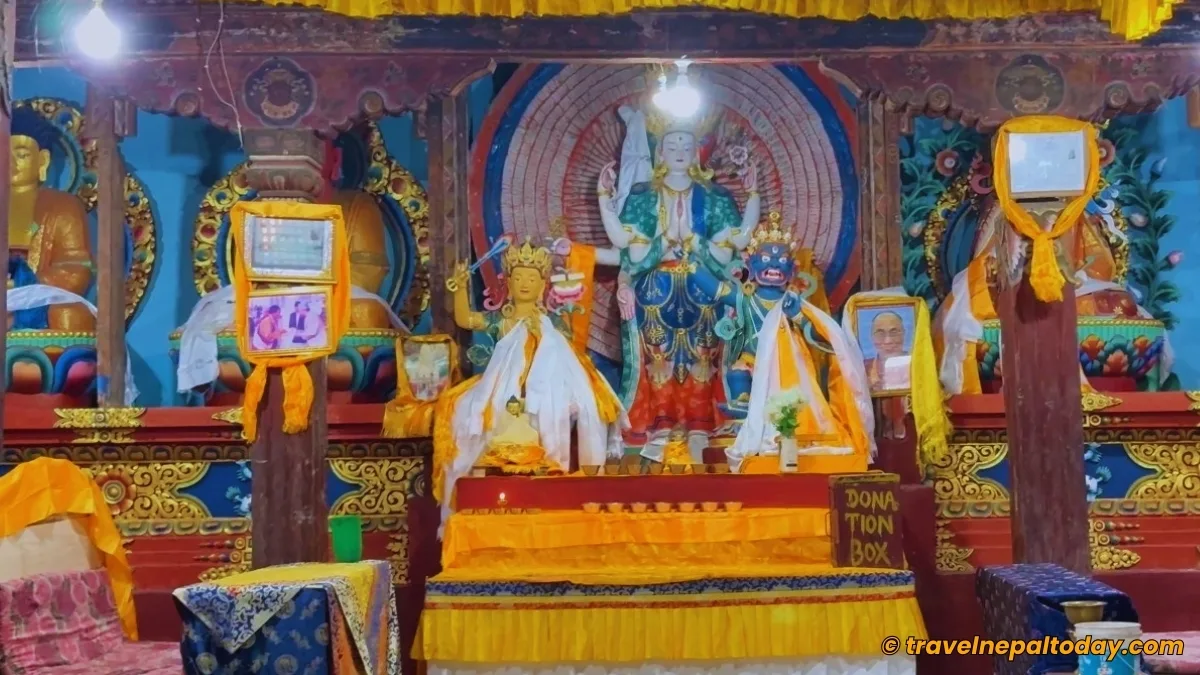
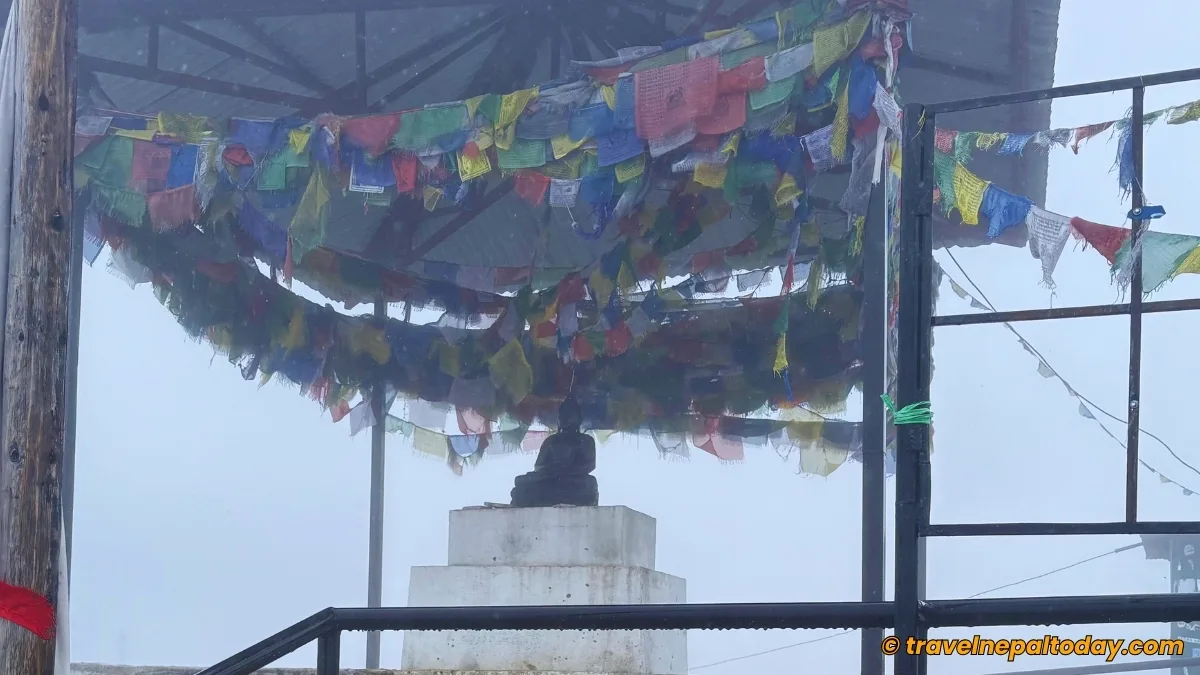
Not to forget there are monasteries all along the trail. The popular one being the Buddha Bihar (aka Buddha Mandir) after crossing Lauribina, where there are less lodges but it’s a significant place as it marks the end of the most difficult uphills.
Since 2007, Gosaikunda has been recognized as a Ramsar wetland too, which means it’s officially protected due to its ecological value.
Well, even scientists agree that the cultural and spiritual significance of the lake goes far beyond just its physical properties. Because once you stand there, surrounded by those peaks, breathing in that silence, you don’t need a book to tell you it’s sacred!
Gosaikunda Trek Itinerary: 3 Nights 4 Days
Honestly, we were here to attempt the Gosaikunda Lake itinerary in just three days with a return to Kathmandu. But the monsoon trek made it a bit challenging, and my trek partner was also a beginner. So, I had to keep in mind a beginner’s trekking capability too.
Having said that, the trek can actually be completed in 3 days if you’re a seasoned trekker. I even met one guy who did it in 2 days. But doing it that way means you won’t get to explore the lake much, and reaching Surya Kunda becomes a bit tough.
So, four days is the perfect duration. And yes, even beginners can do it! To get every piece of information, keep reading below.
Sapche (for EV & private vehicles), Dhunche Bazaar (for Bus)
Total Distance (from Kathmandu)
95 km (on EV and private vehicles), 125 km (on Bus)
Drive Duration
5 to 6 hours (on EV), 7 to 9 hours (on Bus)
To start your Gosaikunda trek, you first need to get to Dhunche. Here are the two best ways to make that happen:
EV that goes to Dhunche
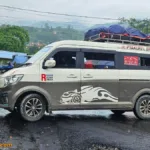
By public vehicle: Both EVs and buses run every single day. We personally chose an electric van, which cost NPR 800 per person. It’s comparatively quicker as it takes the Tokha-Bidur road to reach Nuwakot rather than the Glachi-Nuwakot route used by bus (the latter is useful if you’re traveling from outside Kathmandu). You can catch either of the vehicles from Machhapokhari Chowk. If you’re traveling in a big group, you can even reserve the whole EV!
By private vehicle: If you’re driving, your vehicle can go not just up to Dhunche, but all the way to the official starting point of the Gosaikunda trek, Sapche! The road condition to Dhunche is about 80% paved and 20% minimal off-road, which is totally manageable for most vehicles, so it shouldn’t be a big issue.
First and foremost, you need to reach Dhunche (2,000m) by any reliable means of transportation (as early in the morning as possible).
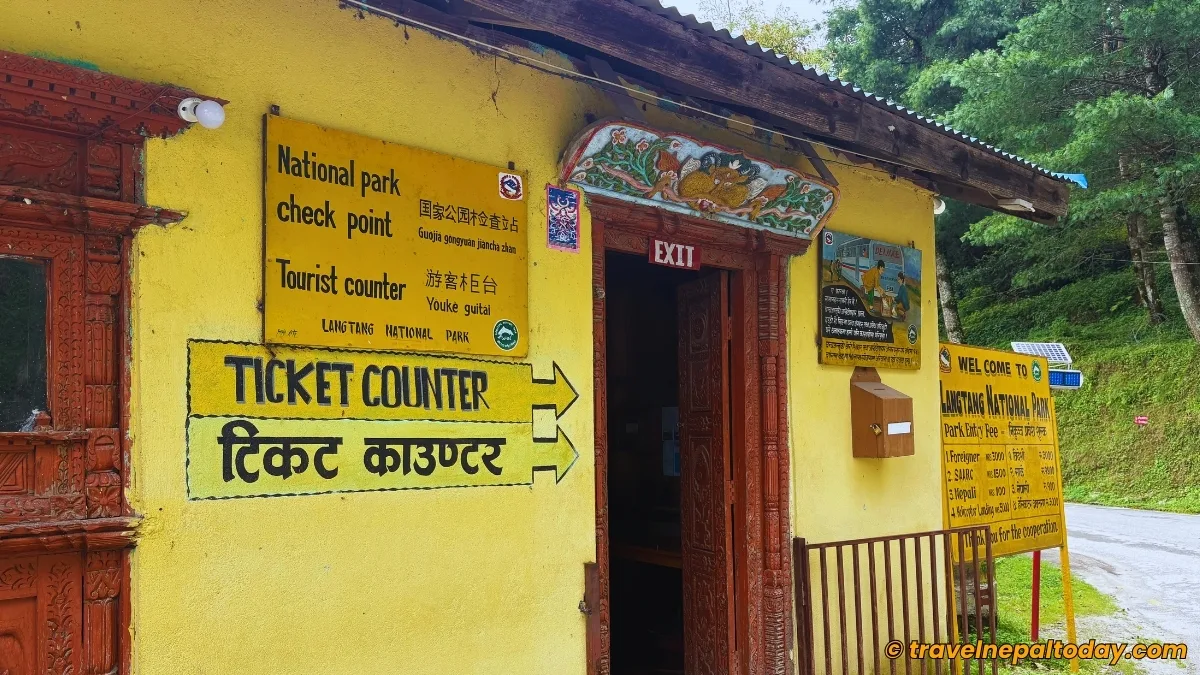
On the way, your vehicle will stop at the Langtang National Park Office, where you’ll need to get your entrance tickets. Army officers will check your bags, and you’ll have to write your names in the visitor registry. It’s an important step, so don’t skip it.
You can grab your lunch in Dhunche before starting the trek.
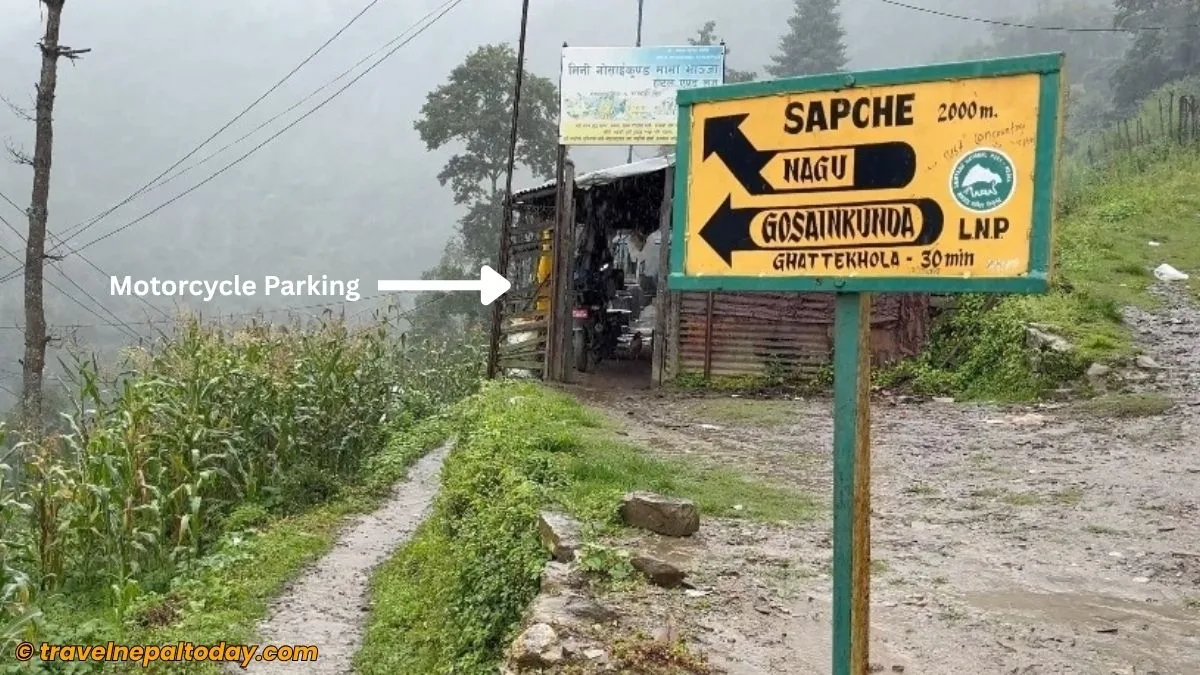
Once you’re there, ask your EV driver to drop you off at Sapche (2,000m). The road has been extended up to that point. This little trick saves you at least 15 to 20 minutes of walking.
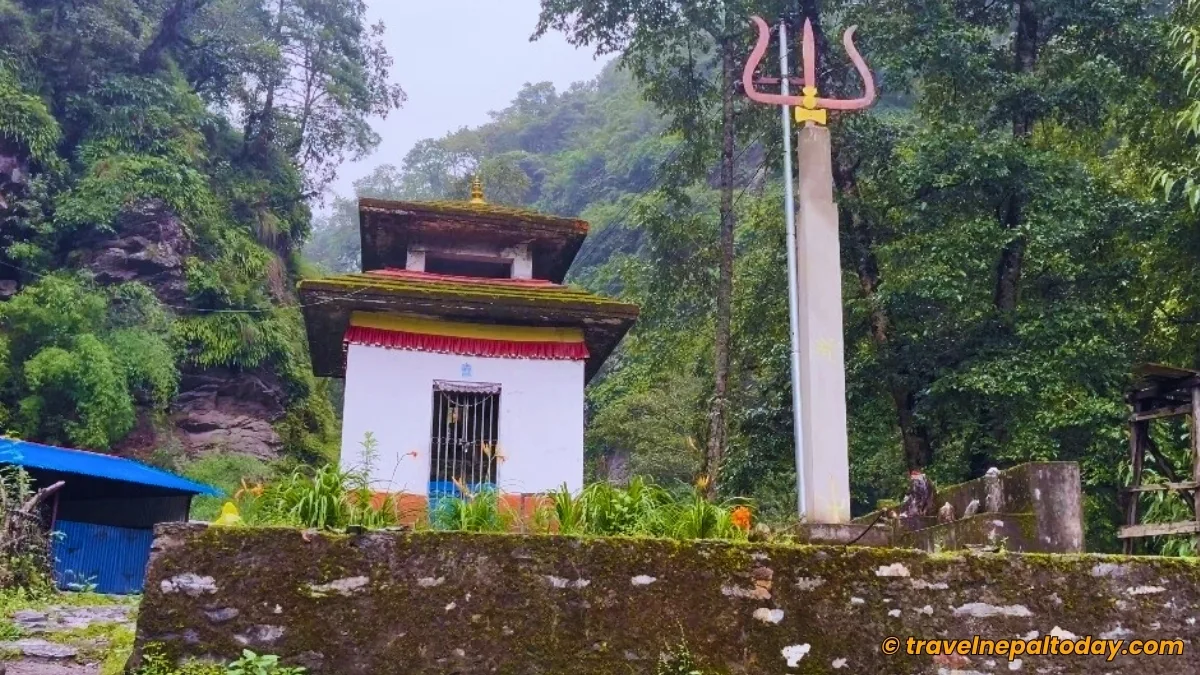
Now, gear up and start the trek. The first stretch up to Ghatte Khola (1,960m) is pretty easy and mostly flat. There’s a Shiva Temple here, along with Buddha shrines. A clear sign that this is a pilgrim’s route.
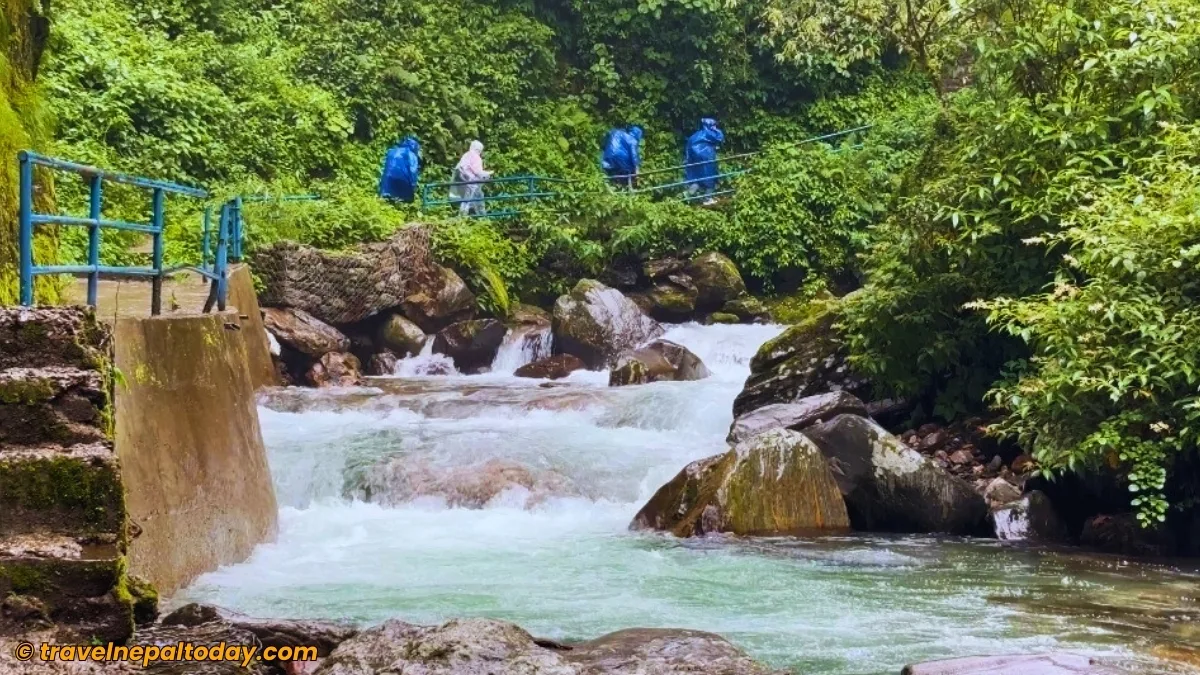
Get your tickets from here!Sapche: The starting point of Gosaikunda trekShiva Temple, Ghatte KholaGhatte Khola: Ascend begins from here!Mini WaterfallPicture taken in Deurali
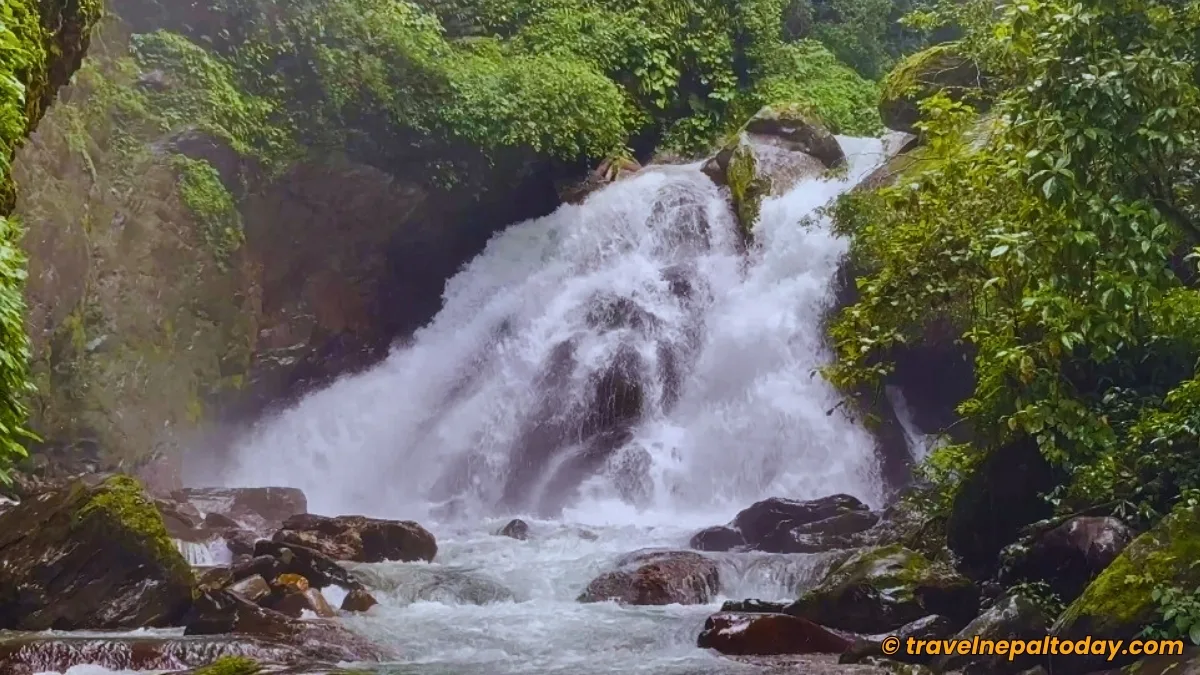
Once the uphill stairs begin and you cross a few suspension bridges with beautiful views of the Gosaikunda River, you’ll come across a diversion. Just a one-minute detour leads you to the spectacular Mini Waterfall (aka Sano Jharana).
After giving your eyes (and feet) a refreshing break here, continue onward:
Khendi (2,300m): About 1.5 hours from Sano Jharana
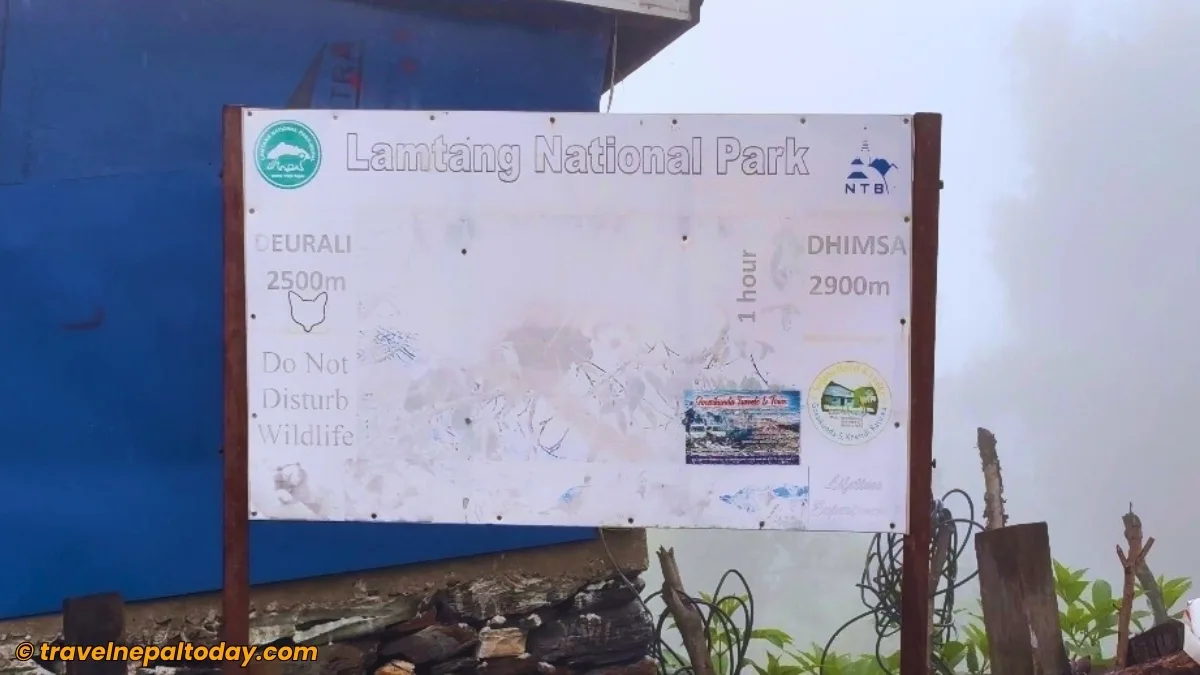
Deurali (2,500m): another 2 hours from Khendi
Dhimsa (2,900m): another 1.5 hours from Deurali
Your pace may vary the timing, though. Some might do it faster, some slower.
Since the trail is entirely uphill, keep yourself hydrated and walk slowly, breathing in and out through your nose. That’s how I paced myself alongside my partner the whole way.
Don’t stress about getting stuck in the dark in case you’re late. There are plenty of hotels along the route, including 3 to 4 in Dhimsa itself.
We stayed at the third one, which turned out to be a great decision. It saved us some money compared to pushing on to Chandanbari that day.
That said, hotels in Chandanbari are generally more comfortable. But expect slightly higher prices!
Day 2: Dhimsa to Gosaikunda and Explore Lakes
Itinerary
Dhimsa > Chandanbari > Dharmadwar > Cholangpati > Polangpati > Lauri Binayak > Buddha Bihar > Ganesh Temple > Saraswati Kunda > Bhairabkunda > Gosaikunda
The second day of the trek is going to be a long one. So, wake up as early as possible (before sunrise), have your breakfast, and start walking early. But remember to keep a slow, steady pace.
The route up to Chandanbari (3,250m) is completely uphill, but with that morning dopamine rush, it’ll feel like an easy 1-hour hike. Once there, be sure to explore Singgompa (also called the Buddha Temple) and climb the view tower if the weather’s clear.
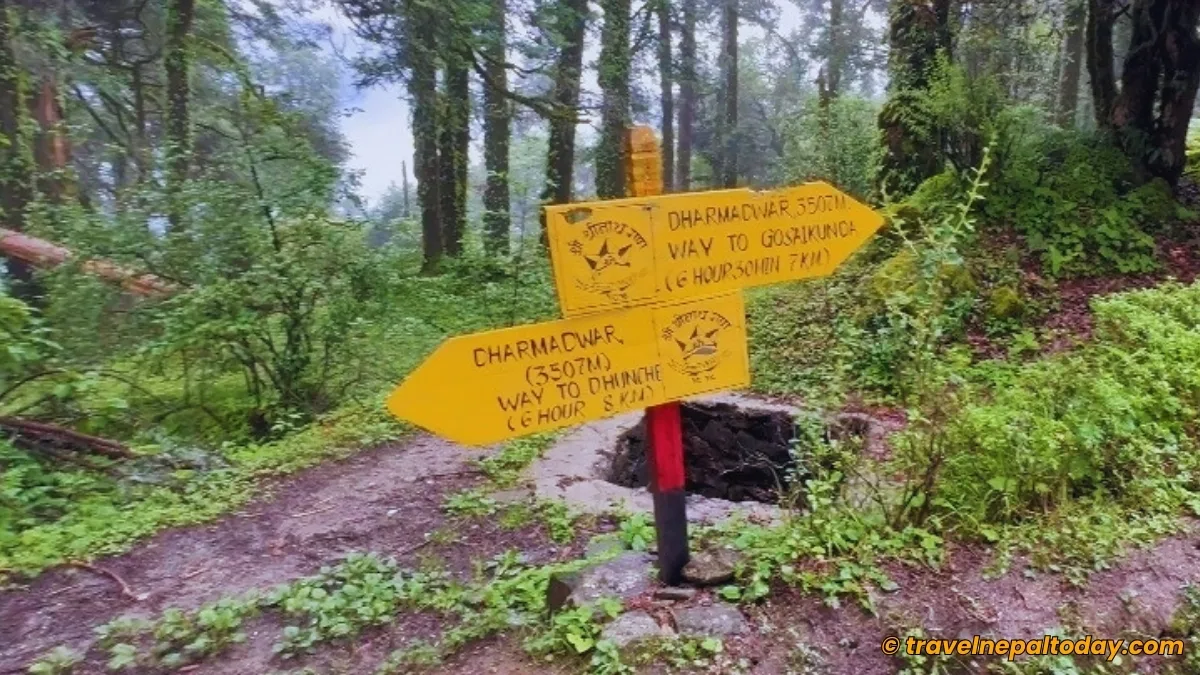
From Chandanbari, continue onwards to Dharmadwar (3,507m), then to Cholangpati (3,584m) over the next two hours. This part is mostly flat.
You could even get glimpses of mountains (mainly Langtang Lirung, Ganesh Himal, Dorje Lakpa, Manaslu, and Himal Chuli) in your Gosaikunda trek in the appropriate season. Since we were here in monsoon, we only got lucky once, but it wasn’t the best view for sure.
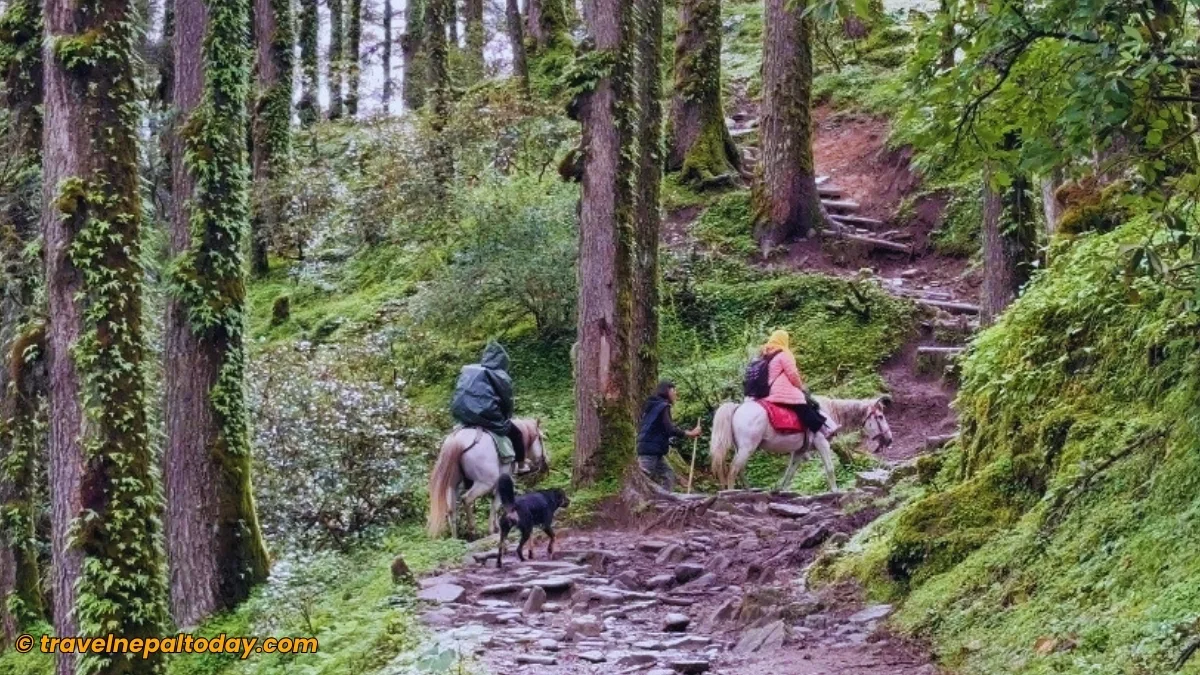
Also, it’s worth noting that those who can’t walk for hours, they can opt for horses and mules. The charge can range from NPR 5,000 to over NPR 10,000, depending on the location you start.
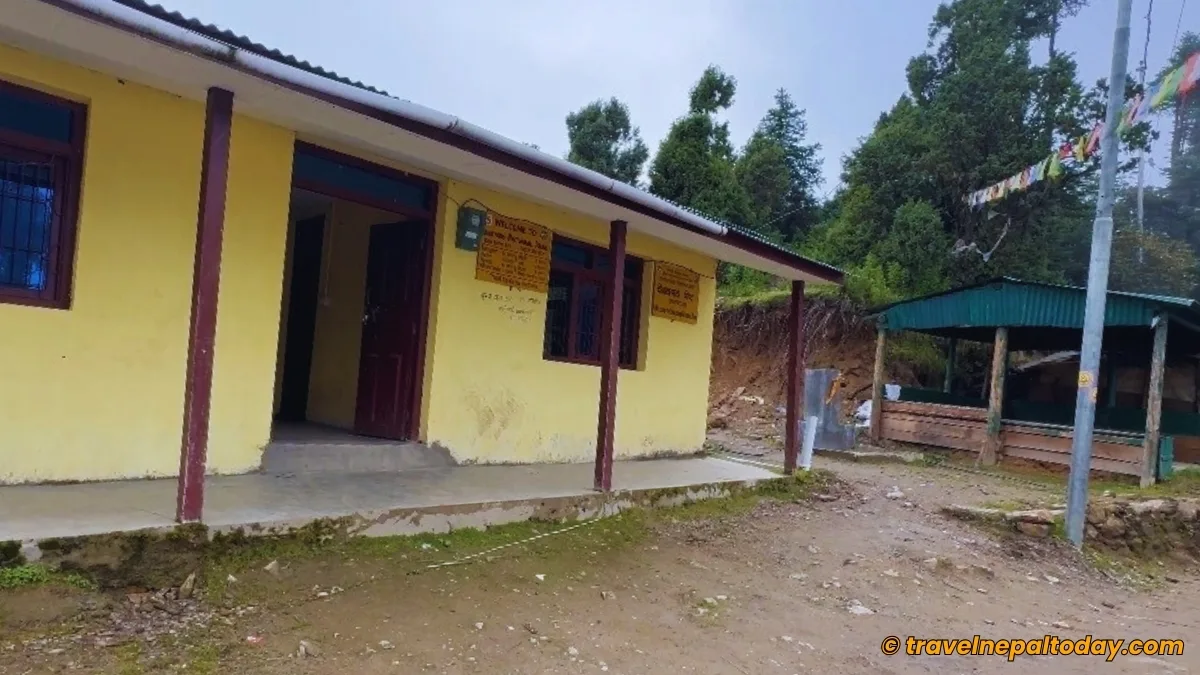
In Cholangpati, you’ll come across the national park check post, where you must show your entrance tickets. This is exactly why I told you not to skip buying permits earlier.
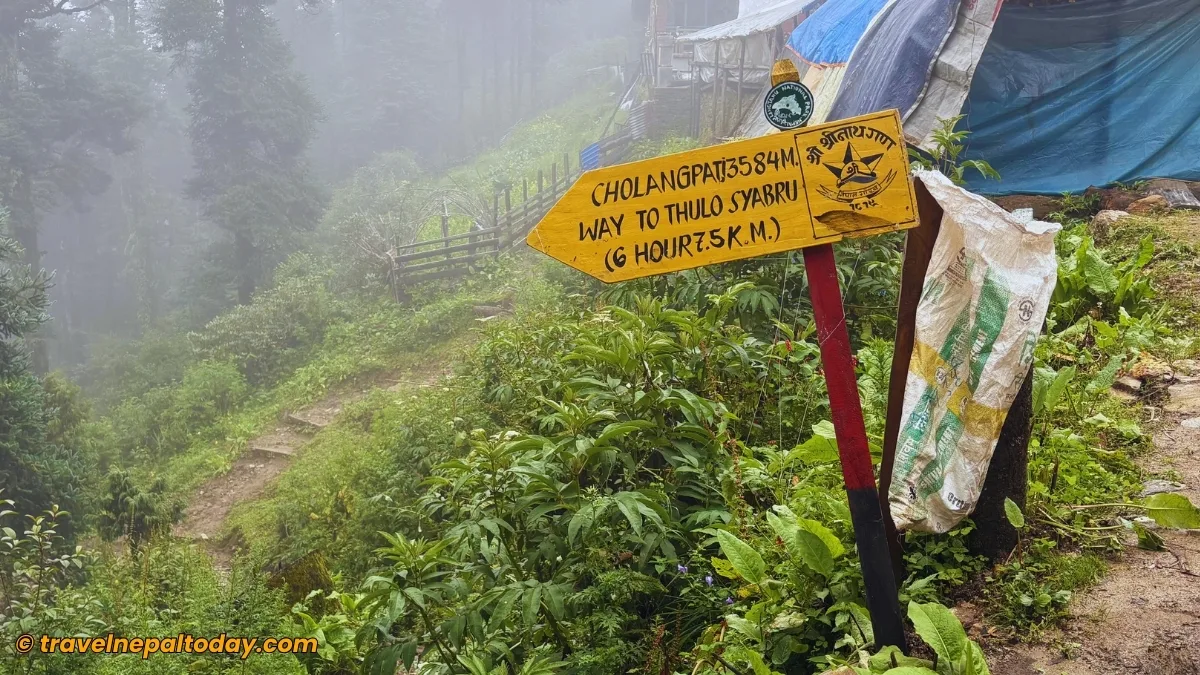
Can’t walk? Ride a horse/muleBuddha Mandir in Singgompa, ChandanbariDharmadwar is between Chandanbari and CholangpatiThis is where you arrive if you start your trek from Thulo SyabruYou have to show your National Park tickets here!Lauribina Hotels
There was a group of jogis who hadn’t gotten their permits and hence weren’t allowed to continue. You definitely don’t want to be stuck like that, right?
Note: If you’re planning to do the Langtang trek after Gosaikunda, Cholangpati is the place to start. You’ll see a board here that takes you to Thulo Syabru.
From here, the real uphill trek begins, so make sure to fill your water bottles here.
Just 10 minutes into this stretch, you’ll reach Polangpati (3,645m). Then you’ll continue up to Lauribina, also known as Lauri Binayak (3,900m), where the trail becomes a complete stairway for the next two hours.
Have some light snacks along the way. I like carrying energy bars and Nepali Chowchow (dry noodles) to keep my energy up. And if you want to stop for lunch, that’s totally fine too.
Note the altitude from here onwards. You’re entering the 4,000m zone, which means the chances of Acute Mountain Sickness (AMS) increase for many trekkers.
If you start feeling symptoms, consider taking medication like Acetazolamide (consult your doctor before doing the trek).
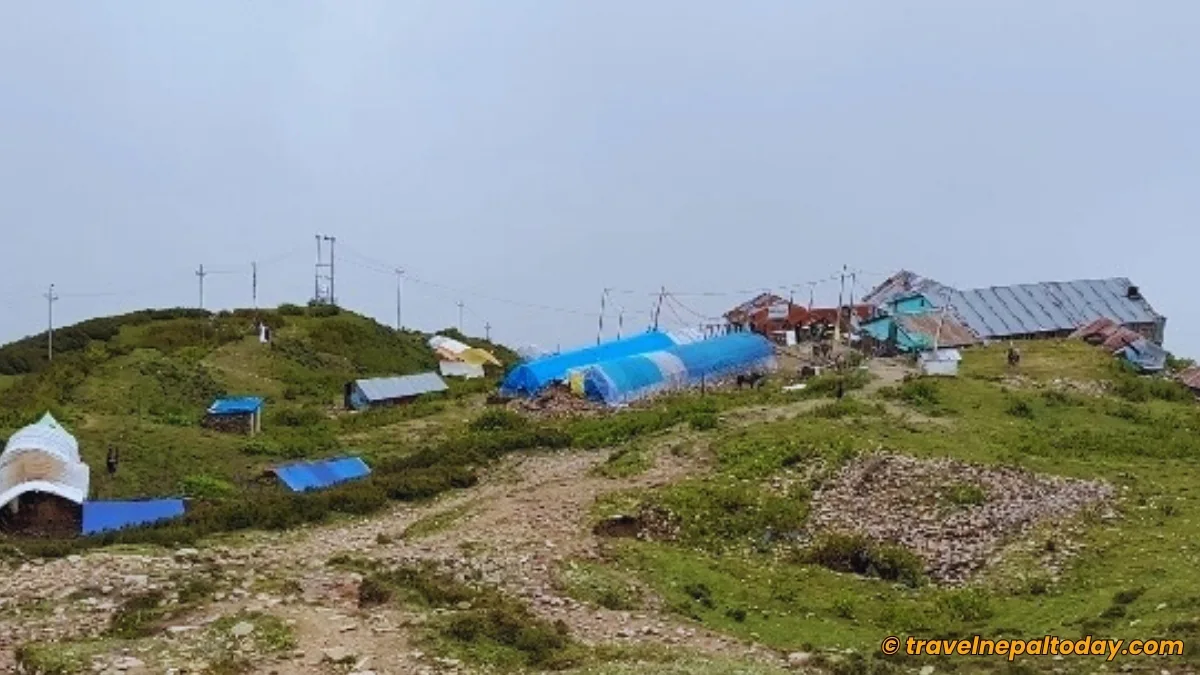
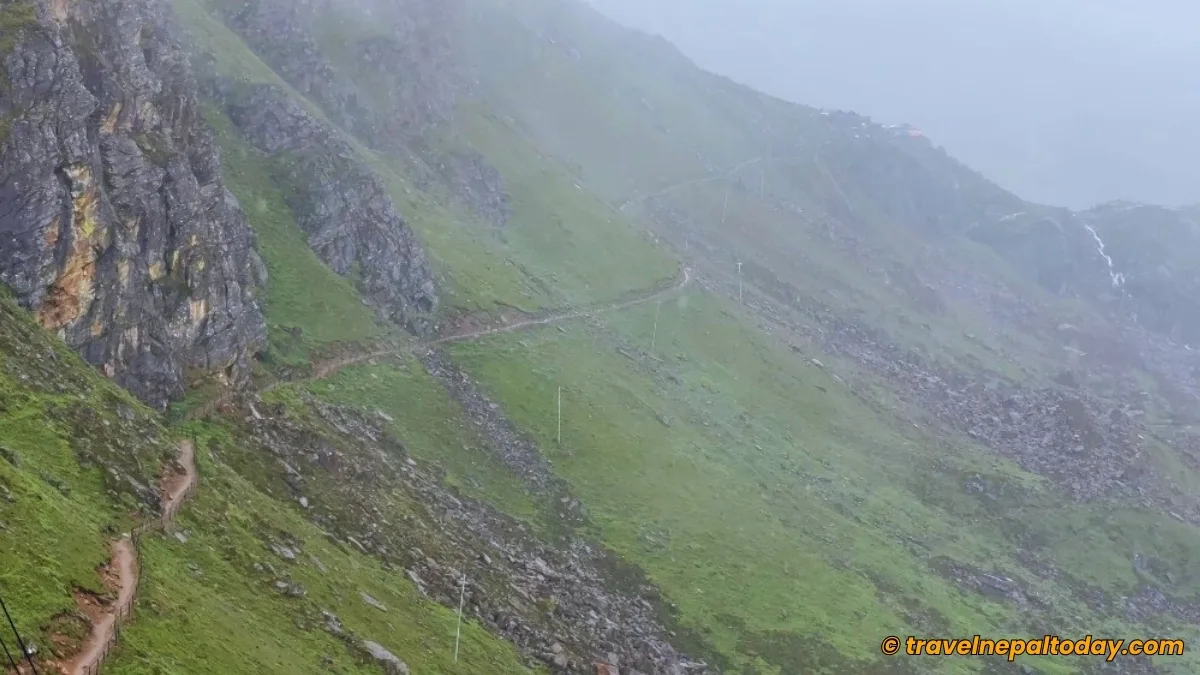
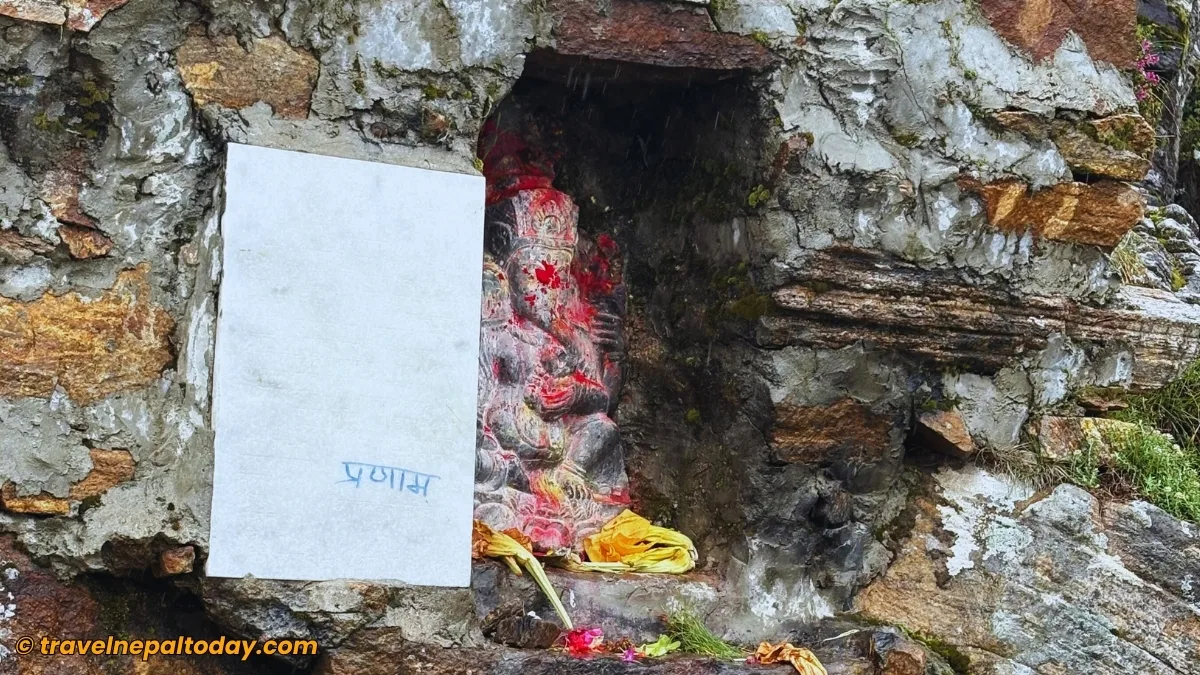
Buddha Mandir: Take a stop here!Trail from Buddha Mandir to Gosaikunda (waterfall and Saraswati Kunda on your right!) Ganesh Temple
From Lauribina, it takes about an hour to reach Buddha Bihar (4,150m). Once you finish this stretch, you’re almost there!
After about another hour’s walk, you’ll reach Ganesh Temple (4,400m), the final uphill section of this trail. From here, you get a glimpse of the small Saraswati Kunda, which we unfortunately missed due to bad weather.
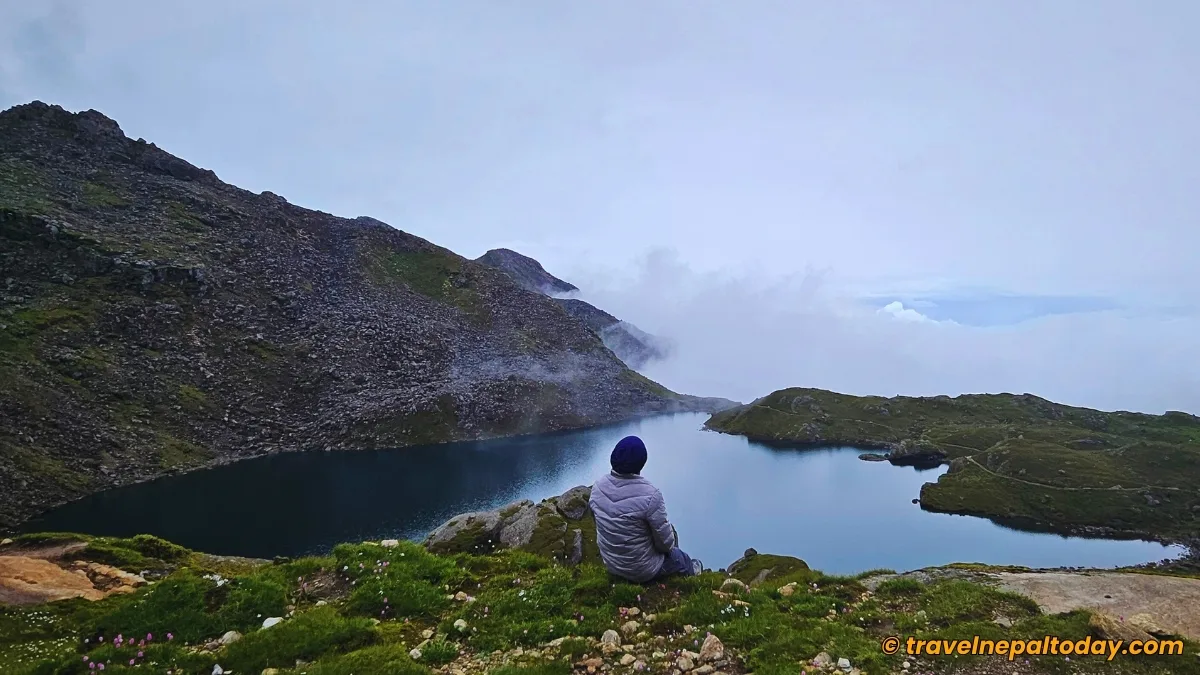
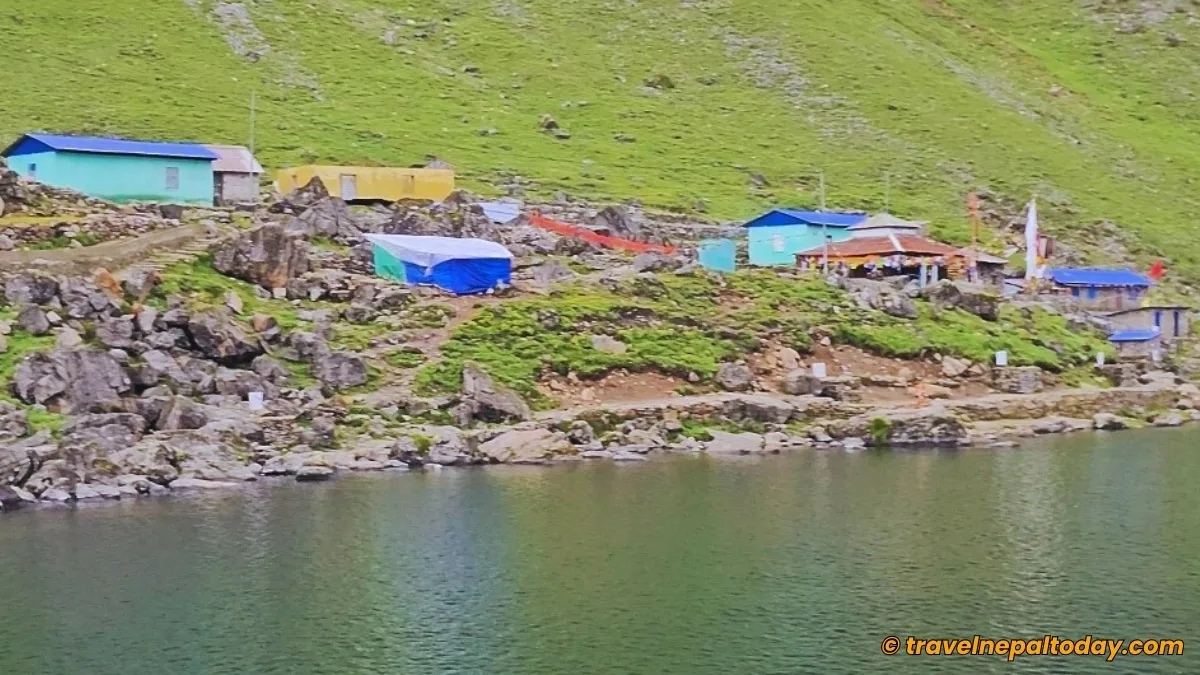
Soon after, you’ll pass Bhairabkunda before reaching the main Gosaikunda Lake (4,380m) about 1.5 hours from Buddha Bihar. Here, you’ll find hotels, but note that their prices are set by the committee (pretty expensive, even Wi-Fi costs NPR 100 to 250 per group).
View of Bhairabkunda from HelipadShiva Mandir surrournded by hotels in Gosaikunda
On this day, it’s better to just roam around the lakes. We had personally planned to circle Gosaikunda Lake but stopped in the middleway.
The highlight was the viewpoint (where the helipad is located), which offers stunning views of both Bhairabkunda and Gosaikunda.
Also, you’ll notice the Trishuls (tridents of Lord Shiva) scattered all around the region. Every spot feels like a little temple dedicated to Bholenath himself.
My Honest Tip:
If you’re only planning to visit Gosaikunda, it’s better to spend Day 2 in Lauribina. The hotels there are more hospitable, less crowded, and cheaper. You can then walk to Gosaikunda early the next morning, take your bath, worship, and return to Lauribina.
Since we planned to visit Suryakunda, staying at Gosaikunda looked a good choice. Actually, we had hoped to visit Suryakunda the same day, but then something unexpected happened…
Gosaikunda Accident 2025: What Really Happened
Bet you’ve heard the heartbreaking news about two pilgrims (Manoj Neupane, 28, and Sujan Dhakal, 26) who tragically passed away while taking the holy dip at Gosaikunda. The accident happened on August 27, 2025. We were actually there ourselves, resting in our hotel when it all unfolded.
We were chatting with the hotel owners when suddenly a didi from a nearby hotel burst in, panicking, and told everyone that someone had drowned in the lake. At first, I thought, “Someone will save him, for sure.”
But just a few minutes later, we got the worse news. Another person had drowned too!
The whole place was shocked, and a big crowd gathered immediately. We went to see what was happening, and it was heartbreaking to witness two sisters desperately pleading with locals to save their brothers.
People gathererd to see the dead bodies
Unfortunately, there was nothing anyone could do. There was no rescue team anywhere nearby, even though so many people take holy dips and swim there regularly.
Locals were confused and tried to help. The same didi had even got a rope ready for a rescue attempt. But sadly, no one among the crowd was a professional swimmer.
Soon enough, the bodies of the two young men surfaced. They were holding onto each other. To us, it looked like they were hugging, which made the scene even more devastating.
What really happened? Only the eyewitnesses can say for sure.
From what we gathered, the two were making videos of their holy dip (like most of us generally do). One of them stepped a little further into the lake, not far, but unaware of the depth, and accidentally slipped!
When the other brother tried to save him, he was pulled under water as well. Even one of their sisters wanted to jump in, but thankfully a priest from the Gosaikunda temple stopped her.
I can’t confirm all the details confidently, but this is what I learned from my personal investigation. The rumors blaming them for making TikToks or recklessly swimming too far are false. This was a terrible accident, a tragic reminder for all of us.
We never really know how deep these lakes are, especially in places we’re unfamiliar with. A study even claims that the risk of hypothermia is significantly heightened when exposed to cold water due to the approximately 20-fold increase in convective heat loss compared to air. And at such a high altitude, the possibility becomes even more.
So, everyone planning to take a holy dip in religious lakes anywhere in the world: please be extremely cautious!
For now, my thoughts are with Manoj and Sujan’s families. May these brothers rest in peace.
Day 3: Gosaikunda to Suryakunda & Back to Deurali
Itinerary
Gosaikunda > Trishul Dhara > Barda Kunda > Nilkantha Kunda > Surya Kunda > Gosaikunda > Deurali
Wake up early and prepare for the final day’s adventure. Carry a few snacks unless you plan to fast until after offering prayers at the temple. From Gosaikunda, the trail to Suryakunda Lake (4,610m) takes you just outside Rasuwa and into Ghyangphedi, Dupcheshwor Rural Municipality, Nuwakot.
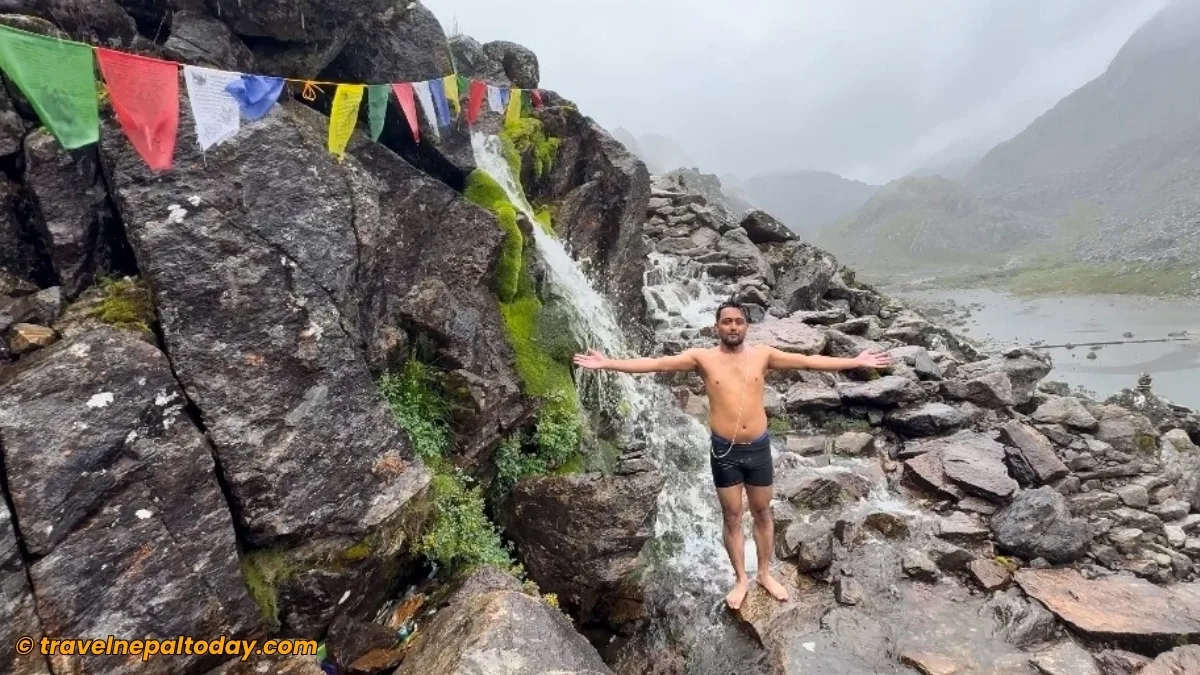
The first uphill stretch brings you to Trishul Dhara (4,400m), believed to be the exact spot where Lord Shiva struck his trident, giving rise to the waters of Gosaikunda below. You’ll pass a small waterfall here before continuing upward.
Barda Kunda, RasuwaNilkantha Kunda, RasuwaSurya Kunda, Nuwakot (not in Rasuwa)
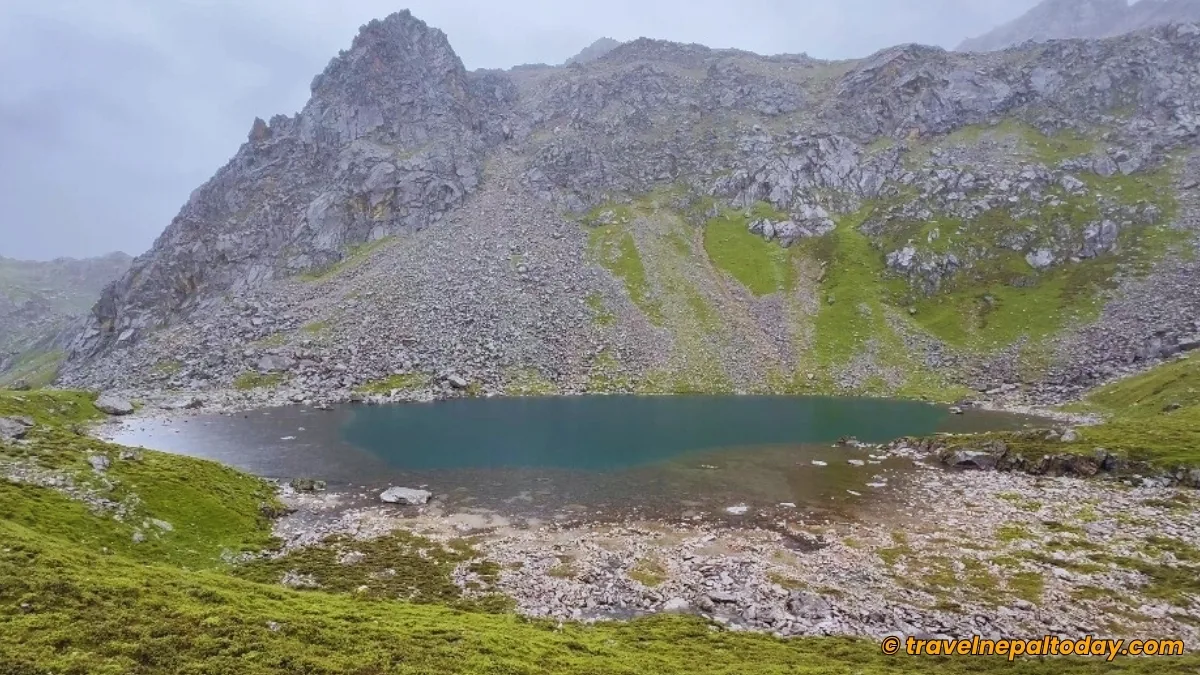
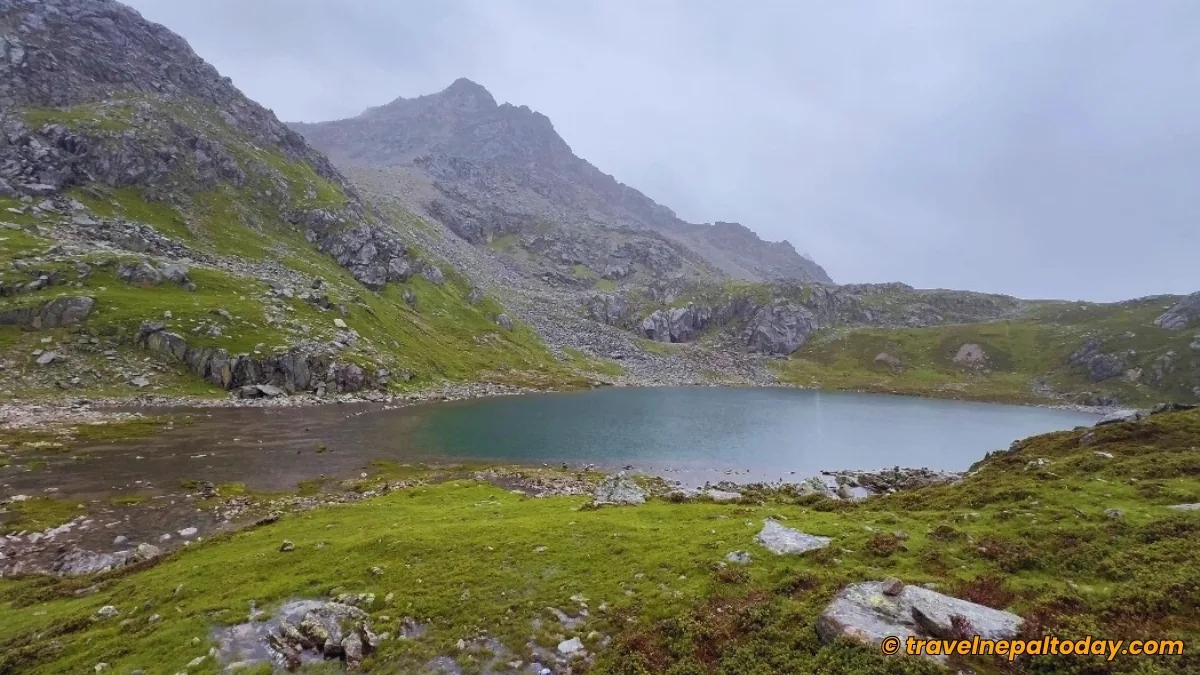
Along the way, you’ll encounter several sacred ponds (kundas), the most prominent being:
Barda Kunda (4,450m): About 30 minutes from Trishul Dhara
Nilkantha Kunda (4,500m): The Next 15 minutes take you here
Suryakunda (4,610m): The highest point in the region is located 1.5 hours from Gosaikunda and is situated in Ghyangphedi, Dupcheshwor, Nuwakot.
If the weather is clear, you’ll enjoy panoramic views and distant glimpses of Aama Kunda, the trail toward Dupcheshwor Mahadev, and possibly Chandra Kunda and Ragat Kunda.
Remember, the Gosaikunda region is said to contain 108 lakes. So, you’ll come across plenty along the way, even if you can’t visit them all.
During our monsoon trek, heavy rain kept us from descending to Suryakunda’s base, so we settled for a short visit to the viewpoint before returning back.
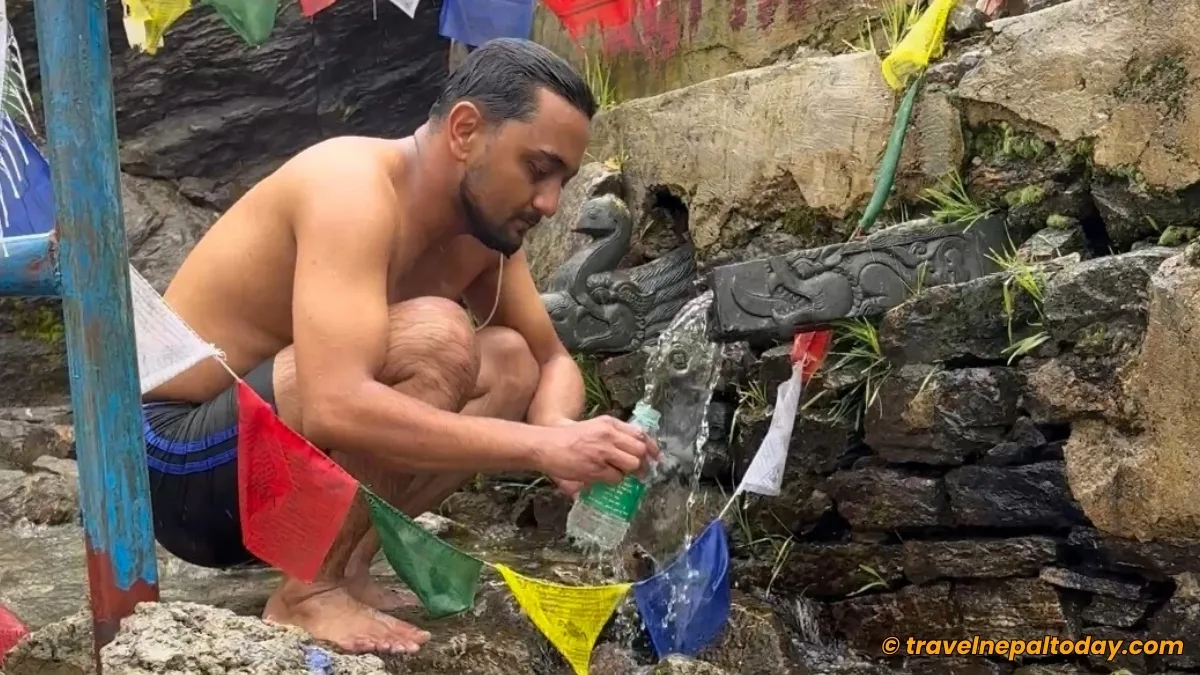
Small waterfall in Trishul DharaThere’s this tap (‘dhara’) from where you can fill the holy water in a bottle to take homeShiva shrines are present right beside Trishul Dhara
On the return to Trishul Dhara, I braved the icy waterfall for a quick bath. And yup, it was enough to leave me shivering! Still, I didn’t hesitate performing ritual offerings (flowers, kesari, and other pooja items) at the Shiva shrines present there.
Note: If you plan to take holy water home, Trishul Dhara is the spot to fill your bottles.
Soon enough, we were back at Gosaikunda Lake. I took a short dip close to shore. The memory of the previous day’s drowning tragedy was fresh in my mind, but I had planned the ritual in advance, so had to do it.
Gosaikunda Lake: Seen from the top (on the way to Suryakunda)My holy dip in GosaikundaHar Har Mahadev!
Nearby, the Gosaikunda Temple has priests who can guide you through all rituals.
If you’re a Brahmin (or of any other caste who wears janai), this is a special place to change it, even if it’s not Janai Purnima. Others may request the priest to tie a doro (protective thread) on their right wrist.
Once rituals are complete, have your lunch, pack up, and start your return hike.
Since it’s mostly downhill, you’ll reach faster. In the right season, you could make it all the way to Dhunche the same day, but in the monsoon, it’s wiser to spend the night somewhere.
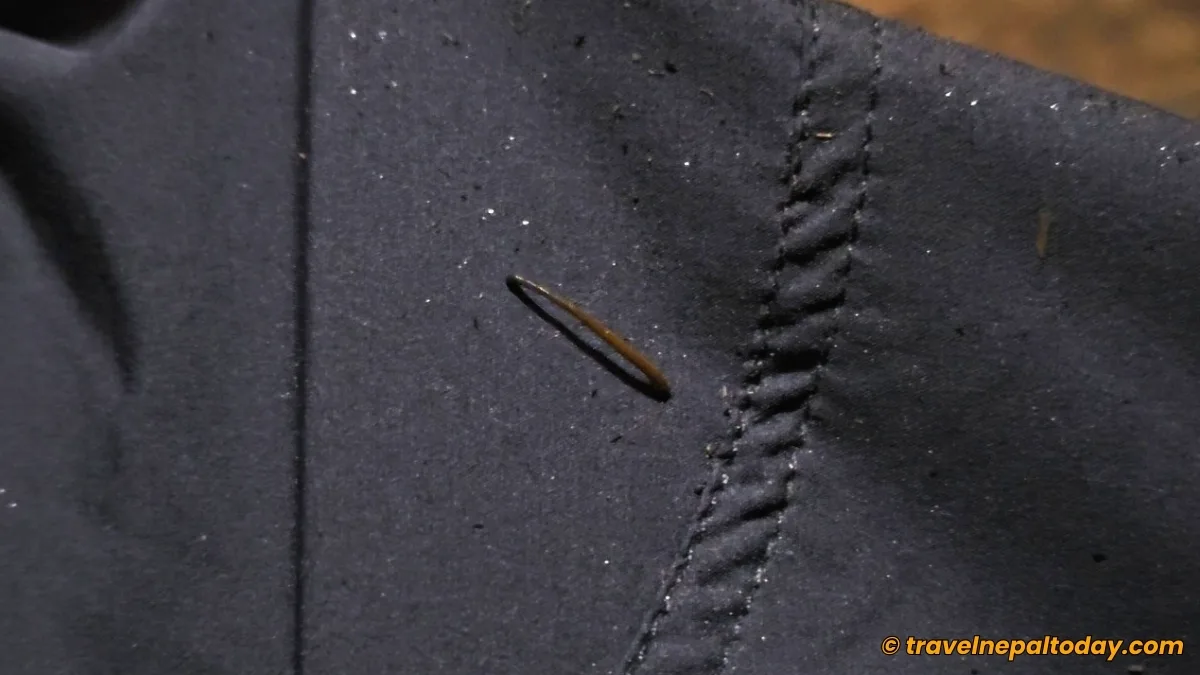
For us, heavy rain, muddy paths, and leeches slowed our progress. So, we stopped at Deurali for the night.
On your way back, don’t miss Chandanbari’s Yak Cheese Factory. You can purchase yak cheese and churpi (dried cheese) as souvenirs!
Day 4: Deurali to Gosaikunda & Back to Kathmandu
Itinerary
Deurali > Dhunche > Kathmandu
Hike Duration
2 to 3 hours
Hike Distance
8 km approx.
Drive Duration
5 to 6 hours (on EV)
Drive Distance
95 km
Altitude Shifts
2500m > 2000m > 1400m
Difficulty Level
Easy
It’s the day of return. The benefit of spending an extra day is that you can wake up a little later than usual.
Once ready, have your breakfast and complete the remaining part of the downhill hike. It should take a total of 2 to 3 hours to reach Sapche, Dhunche.
You could even stop by the waterfall in case you missed it on the first day. I happened to visit it both times. Quite a refreshing part of the entire trip, really!
Once you reach Ghatte Khola, be sure to give the EV driver a call (the same one you came with). This way, you’ll book the seat in advance, and the driver will even come to pick you up after reaching Sapche. You’ll find them as late as 3 PM, so plan accordingly.
The return trip to Kathmandu follows the same route via Tokha. Depending on the charging time in Trishuli, it can take 5 to 6 hours.
Alternative Itineraries For Gosaikunda Lake Trek
Gosaikunda Lake is so popular that trekkers have discovered multiple ways to reach it. If you’re craving a different experience or planning a return visit, consider one of these alternative routes:
Via Dupcheshwor Mahadev (4 days): Bus to Dupcheshwor Mahadev → Another bus to the starting point in Ghyangphedi → Mangengoth → Thadepati → Phedi → Suryakunda → Trishul Dhara → Gosaikunda → Return via the same route or continue to Dhunche
Via Sundarijal (5 days): Drive to Sundarijal → Chisapani → Kutumsang → Mangengoth (and from here, follow the Dupcheshwor route)
Via Thulo Syabru (5 days): Drive to Syabrubesi → Pairo → Thulo Syabru → Phoprang → Mukharka → Cholangpati → Lauribina → Buddha Bihar → Ganesh Mandir → Gosaikunda → Return to Dhunche
Some trekkers go even bigger, completing the Helambu Circuit with Ama Yangri and Panch Pokhari, or combining Langtang Valley with Gosaikunda.
The beauty of trekking in this region is that you can customize your itinerary however you like. Use my trek as inspiration, or mix and match routes. For example, ascending via Dhuncheand descending via Dupcheshwor Mahadev.
We’ll be sharing more unique trail combinations on Travel Nepal Today soon. So stay tuned, and don’t forget to bookmark this site!
Choosing the Best Time For Gosai Kunda Trek
Trust me: there were way bigger leeches than this!
As I mentioned at the very beginning, Janai Purnima is the most significant time to visit Gosaikunda Lake, given its deep religious importance. Even we did our trek around the same time, just a week earlier!
Since Janai Purnima falls in the monsoon season, you’ll have to make peace with leeches, muddy trails, and constant rainfall throughout the journey. For some, that might be a dealbreaker. But honestly, it’s still manageable.
Another challenge is the crowd. Hotels fill up quickly, so you might even have to carry your own tent. On top of that, prices go up compared to other times of the year. And not to forget that because of the weather, we even missed the mountain views!
If views are your priority, the Autumn and Spring seasons are the real winners (just like on any other trek in Nepal). Clear skies, crisp air, and stunning panoramas!
And what about winter? Well, the crowds thin out, but snowy trails can make the trek more demanding, just like my experience on the Panch Pokhari trek (read the story here). Still, seeing the lake surrounded by snow on all four sides is a breathtaking sight.
In the end, it’s your call. Honestly, this is one of those short, moderate treks that can be done in all four seasons. And you’ll still never walk away disappointed!
Budget Breakdown of Gosaikunda Trek (For Nepalese Only)
We completed our Gosaikunda-Suryakunda trek at approximately NPR 7,000 per person (excluding personal expenses like yak cheese and churpi). I’ve put together a breakdown for fellow Nepali trekkers so you can plan your budget accordingly.
Note: For trekkers coming from abroad, costs will naturally be higher due to flights, transport, permits, agency fees, and other factors.
Dhunche EV (round trip)
1600
Langtang Entrance Fee
100
Dhimsa Hotel Expenses (Dinner + Room + Breakfast)
850
Gosaikunda Hotel Expenses (Dinner + Room + Breakfast)
1950
Deurali Hotel Expenses (Dinner + Room + Breakfast)
950
Snacks and others
1800
Total
7,250
In general, over four days, you can expect to spend around NPR 7,500 to 8,000 if you’re trekking on a budget like we did. If you’re willing to spend a bit more, that’s entirely up to you.
But in short, this trek can definitely be completed under NPR 10,000 without compromising the experience.
Book Gosaikunda Trek With Us!
If you’ve read this far, I’m pretty sure you’ve enjoyed the mythology, my personal story, and the tips I’ve shared along the way.
And I wouldn’t be surprised if you’d like us to help arrange your trip. In fact, for anyone wishing to explore any part of Nepal, we’re ready to make it happen at any time. That’s actually the reason Travel Nepal Today was born!
Since we aren’t a registered travel agency but a digital organization promoting this beautiful country, which we truly believe should be recognized as the “Vacation Capital of the World”, we’ve been experimenting with some service models.
Here’s how we can help, especially for our guests outside Nepal:
Curating a perfect travel itinerary from scratch: We provide full information and guidance throughout your trip online. Fee: USD 9.99
Finding you the best travel agency: No additional cost. You only pay the agency directly.
Traveling with us: We offer professional guidance. You handle permits yourself, but we ensure guaranteed hotel bookings, vehicle pick-up/drop-off, and manage most logistics. Price will depend on the number of days and the itinerary type we construct together.
Final Words
My Gosaikunda–Suryakunda Trek was something I’ll remember all my life. It had fun moments, guiding experiences, religious vibes, shivering after those cold baths, and also one dark memory.
Watching those floating bodies was something I never expected, but it happened. It taught me how cruel nature can be and how we should be careful, very careful, with every step in life!
Even though I never met the two, I’ll perhaps remember them whenever someone mentions Gosaikunda. Once again, rest in peace to these brothers.
And to you all, take care when traveling anywhere in the world.
Bhishu Acharya is the founder of Travel Nepal Today. A CSIT graduate with over 6 years of experience in content writing and blogging, Bhishu has worked in the tech, trending news, and travel domains. At TNT, his goal is to provide readers with comprehensive information on every travel destination in Nepal. Bhishu is on a mission to travel to all 77 districts of Nepal, sharing his journey and insights through this website. He aims to help travelers make informed decisions and explore Nepal’s beauty in a more meaningful way. He’s active on social media creating informative and entertaining travel videos under the username ‘safarnamawithvis’.
Bhishu Acharya is the founder of Travel Nepal Today. A CSIT graduate with over 6 years of experience in content writing and blogging, Bhishu has worked in the tech, trending news, and travel domains. At TNT, his goal is to provide readers with comprehensive information on every travel destination in Nepal. Bhishu is on a mission to travel to all 77 districts of Nepal, sharing his journey and insights through this website. He aims to help travelers make informed decisions and explore Nepal’s beauty in a more meaningful way. He's active on social media creating informative and entertaining travel videos under the username 'safarnamawithvis'.