Sauraha, Chitwan, is a hub for wildlife tourism, jungle safaris, and numerous elephant-related activities. If you’ve been to Chitwan National Park, you surely know what I’m talking about!
For those of you seeking to explore this part of Nepal, the idea of an elephant ride has probably crossed your mind at least once.
Well, that was exactly the case for me! Along with my office colleagues, I went on a one-day trip to Chitwan, and the highlight, of course, was the Elephant Safari.
However, there have been plenty of discussions about the pros and cons of the Chitwan Elephant Safari. Today, we’re going to uncover just that!
Key Facts About Elephant Safari in Chitwan
| Location | Sauraha, Ratnanagar, Chitwan, Bagmati Province |
| Duration | 20 minutes / 1 hour |
| Price (for Nepalese) | Rs. 1700 per hour, Rs. 900 for 20 minutes |
| Price (for SAARC nationals) | Rs. 3000 per hour |
| Price (for foreign nationals) | Rs. 4500 per hour |
| Safety | Not included |
| Best Time to Visit | September to May |
Booking Chitwan Elephant Safari With Cost Details
Before we dive into the prices, let me first give you a quick overview of the Elephant Safari booking system in Chitwan.
There are multiple travel agencies that offer this service, and even the hotels you stay in can help you book it. However, if you handle the booking yourself, it will be cheaper since you won’t have to pay any third-party commission.
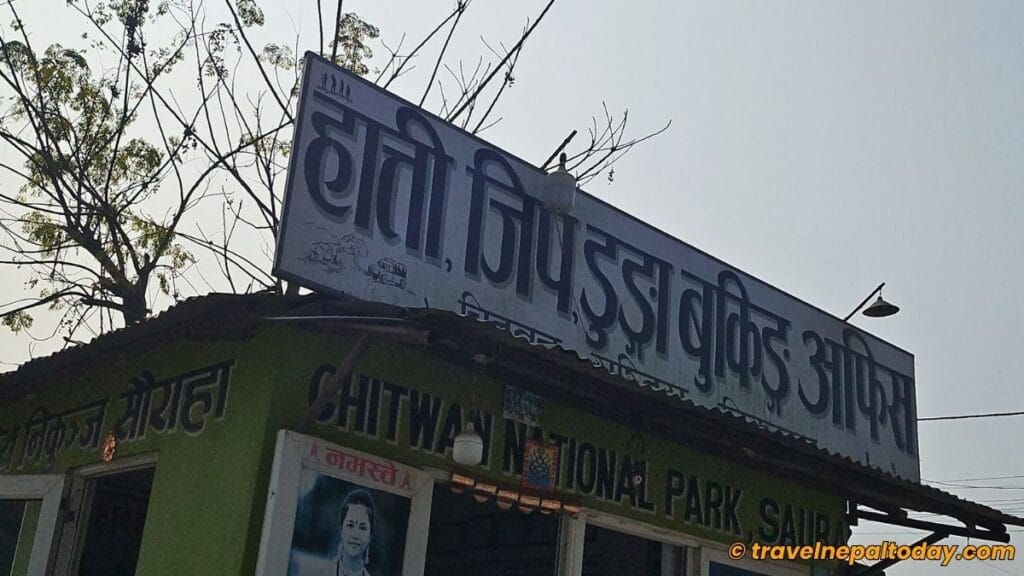
To book directly, head over to the ‘Hatti, Jeep, Dunga Booking Office’ in Ratnanagar, Sauraha. It’s located near Sauraha Sunset Point and serves as the official ticket counter for Chitwan National Park activities.
You’ll have the option to choose between a 20-minute ride (Rs. 900) or a 1-hour ride (Rs. 1700)—both with fixed prices.
However, if you’re a foreign national, the cost will be Rs. 3000 or Rs. 4500, depending on your citizenship. I’ll be sharing a detailed guide on this soon!
Once your booking is complete, you can take an auto-rickshaw to the Elephant Safari Ride Point. Depending on the crowd, you may have to wait in line. Just show your ticket, and your ride will begin!
Sharing My Chitwan Elephant Ride Experience
Since my colleagues and I were in a bit of a hurry, we decided to go for the 20-minute Elephant Safari. Earlier, we had done motorboating in the Narayani River.
We booked the tickets as described above and headed to the Safari Ride Point, where we were greeted by multiple elephants.
My favorite scene? An elephant playing football (soccer)—probably practicing for its next Elephant Polo competition! It was fun to watch, even though I couldn’t kick the ball toward it.
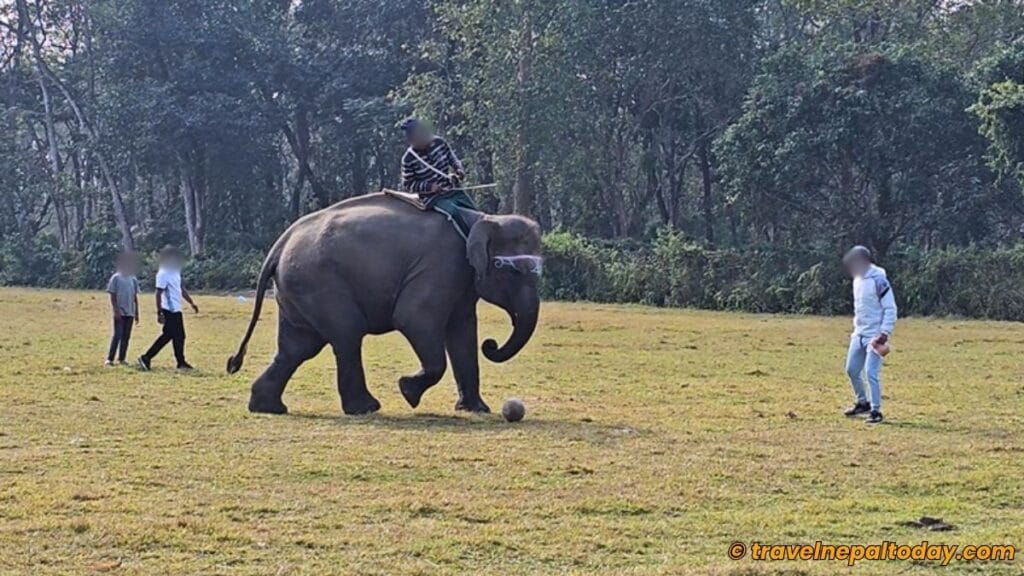
There wasn’t much of a queue, but we still had to wait for our turn as a few people were ahead of us. Also, we were a group of five, and only four people could ride on one elephant.
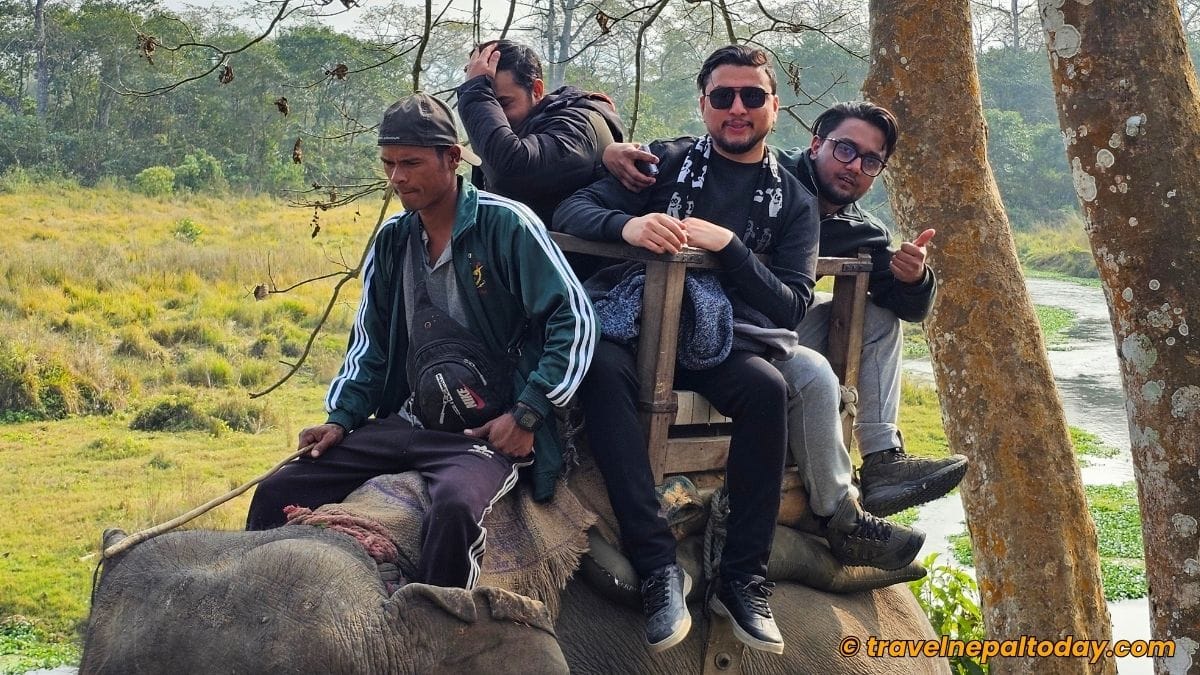
So, we decided to split up—three of us on one elephant and two on another. Hopefully, that reduced the burden on the poor animal.
Now, let me tell you—the ride isn’t as comfortable as you might imagine. You have to squat inside a tight cage, and if you don’t get the front row, you’ll have to settle for the backside, which isn’t exactly fun.
That’s exactly what happened to me—I had to watch the elephant’s poop dropping right in front of me. Sorry for my language, but that’s the truth!
Meanwhile, my friends in the front row seemed to fully enjoy the 20-minute ride. So, my suggestion? Climb onto the elephant first and grab the front seat!
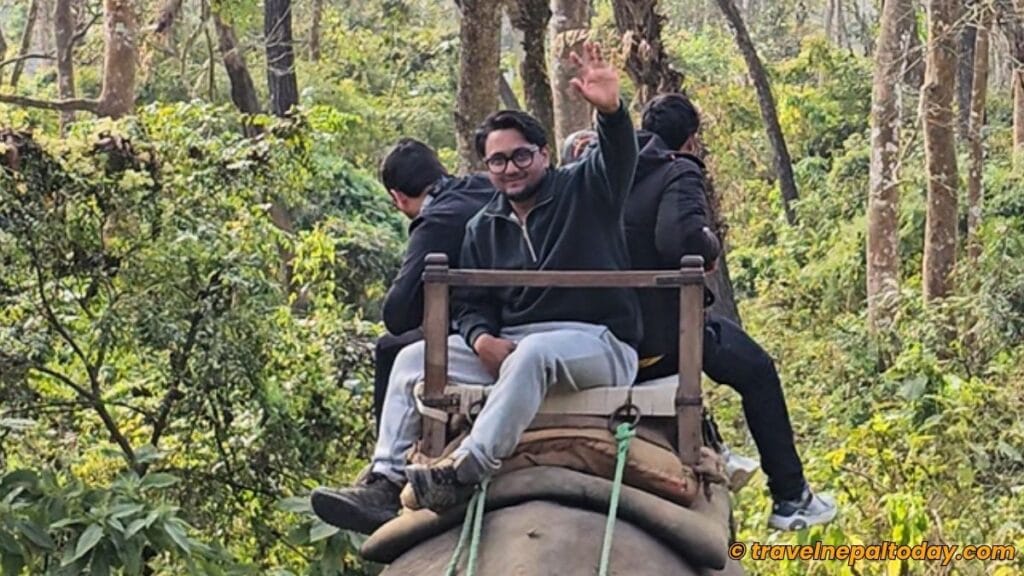
Everything was going fine—we were joking around, laughing, and then suddenly, I caught a glimpse of something disturbing.
The elephant rider (Mahout) was constantly hitting the elephant’s head. In pictures and videos, it might not seem harmful, but seeing it in real life hits differently—it does hurt the animal and your heart too!
Since then, tons of questions have been running through my head.
I even asked the Mahout about it, and he simply said, “That’s how they have been trained.” Apparently, due to recent awareness, Mahouts no longer hit them as hard as before, but do we really know the full story? Probably not.
Coming back to the ride—20 minutes felt way too short. So, if you really want to experience it properly, I’d suggest going for the 1-hour ride.
That way, you can cross a small river, venture deeper into the forest, and have a better chance of spotting wildlife.
But in a 20-minute ride? It’s barely worth it. Really.
Should You Ride an Elephant at Chitwan National Park?
Coming back to my thoughts—Elephant Safari in Chitwan National Park is slowly fading away. In fact, it’s now only popular among local tourists.
By now, you might have guessed why. The criticism has been growing for years, and there might come a day when this activity is completely banned.
However, simply stopping elephant rides won’t be enough to prevent elephant cruelty.
Elephants are wild by nature, and turning them into domestic animals requires a taming process from birth.
Reports from Thailand and Myanmar have exposed the brutal practice of elephant crushing—a harsh method used to break their spirit.
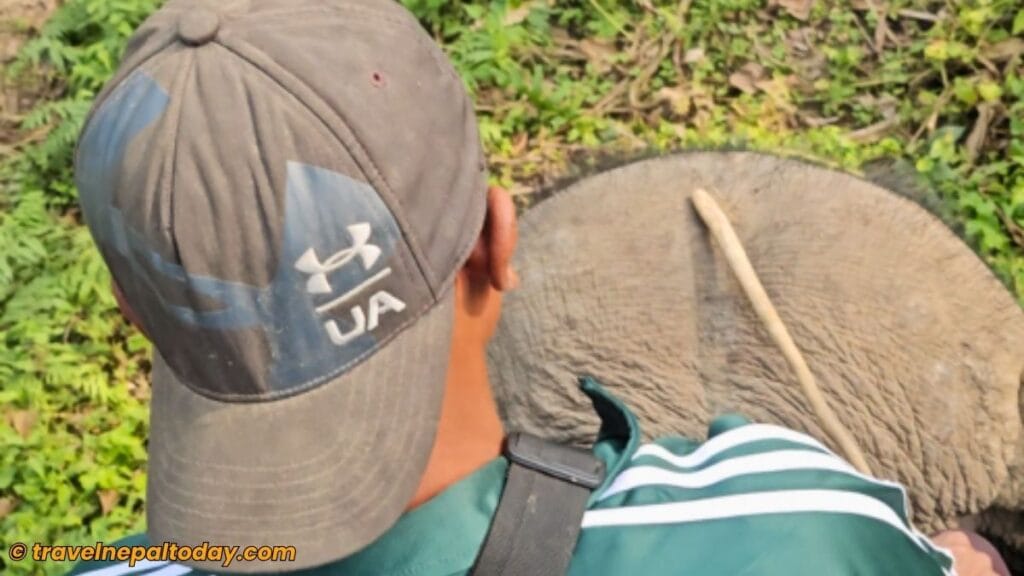
In Nepal, the practice of beating elephants is prohibited, which is why metal hooks and prods are no longer used.
Private companies in Nepal have started prioritizing reward-based training after facing heavy criticism.
However, if you visit Chitwan, you’ll still find some private companies chaining elephants with shackles. Another major concern is the separation of baby elephants from their mothers, which has caught the attention of many tourists.
Despite the concerns, elephant riding has played a role in Nepal’s economy, and I’m hopeful that better alternatives will emerge. With improved techniques, we might see more ethical ways to interact with these magnificent animals.
There’s even more to deep dive into. If you want me to uncover the hidden truths, don’t hesitate to comment below—I’ll be sure to cover it in a separate guide soon.
Until then, I promise not to ride an elephant—for now.
Final Words
So, whether you choose to ride an elephant or not—that’s entirely up to you!
But if you witness any form of elephant cruelty, don’t hesitate to report it either to us or to the nearest department.
Let’s work together to make tourism in Nepal a safe space—not just for humans, but for animals too.
And if anyone reading this is already involved in elephant breeding or training, I’d love to hear your side of the story. The truth deserves to be told.
Until then, for my readers, there are plenty of exciting activities in Sauraha! From canoeing to jeep safaris, and even ethical elephant walking.
Don’t worry! Travel Nepal Today will be covering every single one of these activities—so stay tuned.
Happy travelling to Chitwan!
About The Author