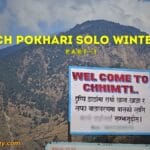
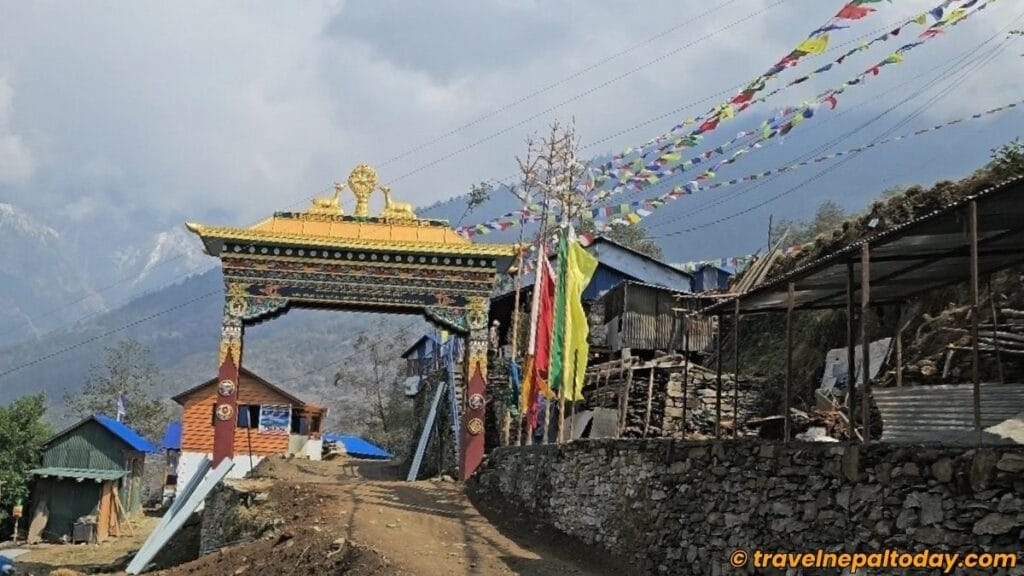
As I stepped forward, the board of “Chimti” and the Panch Pokhari trail map greeted me. I took a right, climbed the stairs, and ended up in another hotel. Realizing my mistake, I turned back, waved at the couple I had met earlier, and they waved back, signaling, “Not that way!” I laughed at my own foolishness and finally continued on the correct path.
The couple had told me there were two roads—one for vehicles and another for trekkers. I kept searching for the latter when I met an old man.
Wanting to be sure of my route, I asked him if I was going the right way. Instead of answering, he sat down and started telling his own stories—stories I wasn’t exactly prepared for. Still, I nodded along, pretending to be an attentive listener.
When I told him I was heading to Panch Pokhari alone, he looked surprised. Then, he mentioned something that made my heart race: it had been snowing all along, and reaching there might be impossible.
My mind spiraled into doubt. Should I have brought crampons? Or should I have not come at all? The questions kept piling up, but I shook them off and continued forward.
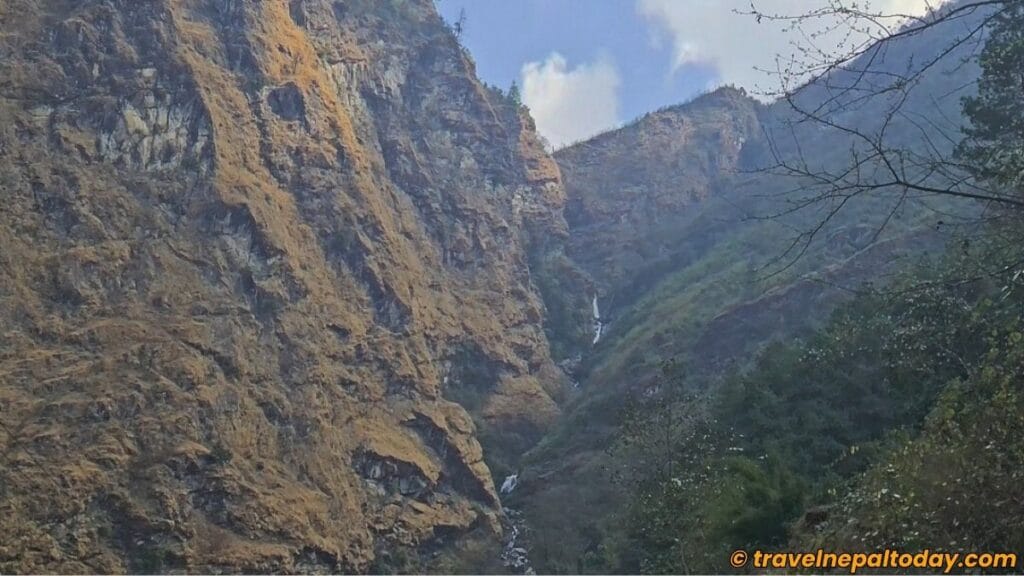
Soon enough, I came across a beautiful waterfall—one that I’m sure would be even more mesmerizing during the monsoon. There was also an artificial waterfall created by attaching a pipe on top of a hill. Why? No clue.
With a mix of excitement and worries, I crossed the first suspension bridge. This was the perfect moment to test my new tripod. It was my only companion that helped me capture my videos.
It wasn’t the best gadget, but it did the job. Since I didn’t want to carry it in my hand all the time, I had to stop, drop my bag, and take it out every time I wanted a stable shot. That’s exactly what I did to take my first video of the trek.
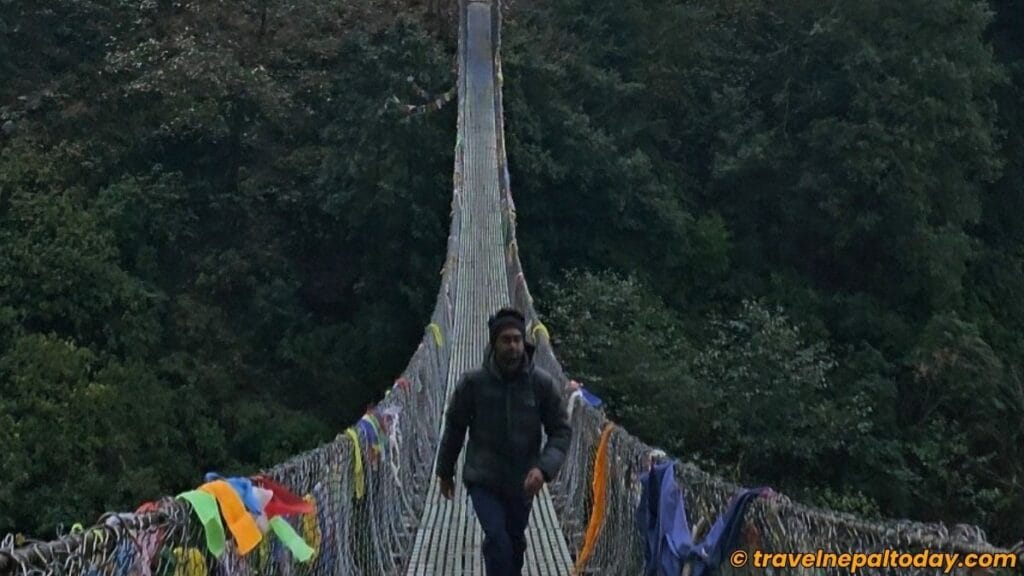
The trail was mostly uphill with only a few flat sections. Along the way, I met another couple trying to catch a bus to Kathmandu. They seemed sure they wouldn’t make it, yet they hurried anyway. I never found out if they made it.
However, they did warn me about the slippery, snowy paths ahead. Every time someone mentioned that, my fear only grew stronger. Mainly because I was alone. If anything happened, I had no one to rely on but myself.
I reached Deurali, where a hotel owner asked me to stop by, but I declined. My target was Nosyam Pati.
As I climbed higher, I met a didi who was returning from Panch Pokhari. I asked her if I could reach Nosyam Pati today, and she was unsure. “If you keep a good pace, you might reach by late evening,” she said. That was all the motivation I needed.
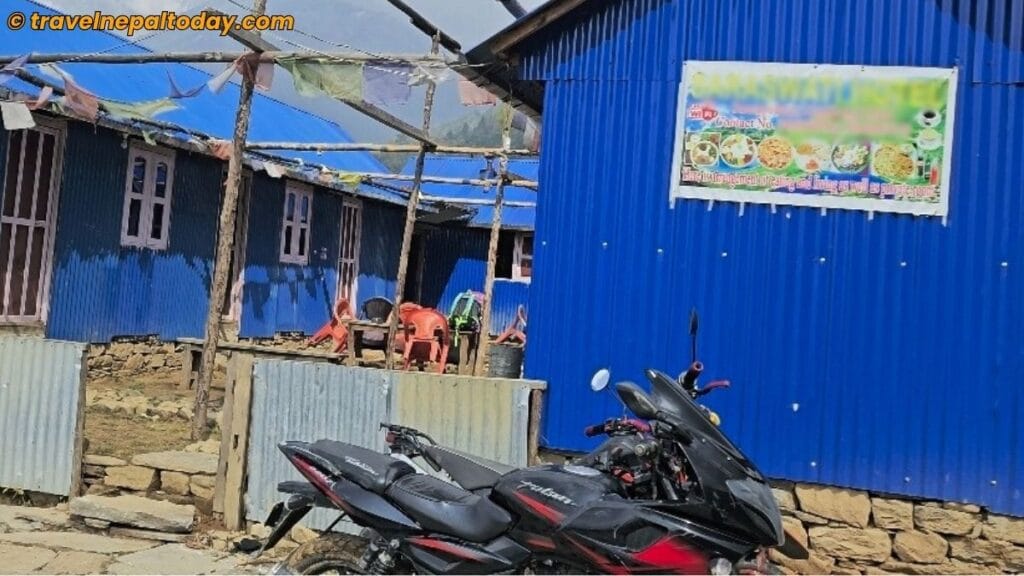
At Dukhang Kharka, I noticed a few motorbikes parked at a hotel. That was surprising since I had only heard of vehicles reaching up to Deurali. Maybe next time, I could cut off 1.5 hours of walking by starting from here. But for now, I had to rely on my feet.
With these thoughts swirling in my head, I kept walking. Since I had no one to talk to, I talked to myself instead.
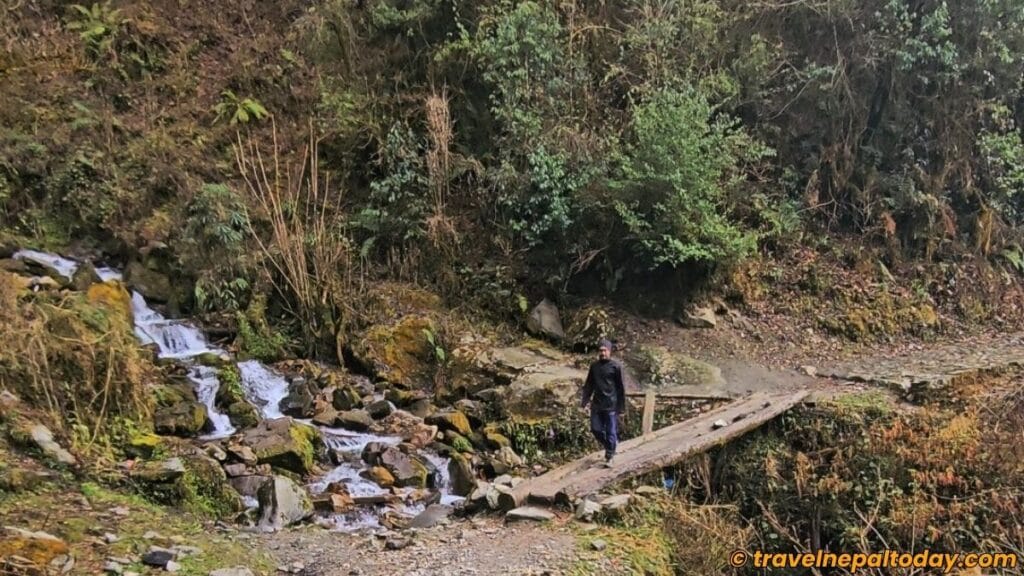
There was a pretty stream and a wooden bridge. Another perfect spot for a video! I took out my tripod again. The footage wasn’t the best, but it was still worth keeping.
A little later, I met a group of locals returning from Panch Pokhari. They regularly go up and down, transporting food supplies to higher-altitude regions. The sheer effort and hardship they endure just to make a living struck me.
We, in the cities, take so much for granted, while these people live in extreme conditions with limited facilities. Yet, I bet they are happier than most city dwellers.
What’s the point of all those luxuries if what you truly seek is peace and a deep connection with nature?
Traveling has given me a habit of understanding different perspectives. Everyone has their own story. While I was there for a solo adventure, others might have overthought my presence.
Some asked, “Why didn’t you come with friends or a partner?” Many assumed I was already married—maybe because I look a bit older than my age. Was it my face? My independent nature? The way I talk? Who knows?
Even I felt different traveling to Panch Pokhari. I had to tap into another version of myself to adapt to this unfamiliar place. Traveling solo was fun, but in a completely different way than when you’re with a group.
The locals told me I wouldn’t reach Nosyam Pati before nightfall. They suggested I stay at Rato Mato instead, a place I hadn’t heard of during my research. The upper regions were experiencing snowfall, and walking alone at night would be risky. I nodded but still hoped to push forward.
From Chhimti onward, there had been zero mobile network, which obviously annoyed me. Both NTC and Ncell were useless here. The couple in Chhimti had warned me about this, saying the only place with a signal was Tuppi Danda and nearby areas.
I checked, and sure enough, I finally had a network! I made a quick call to my mom, letting her know I had started my trek and there might be signal issues the following days. The signal was so bad, though, that she probably only heard half of it.
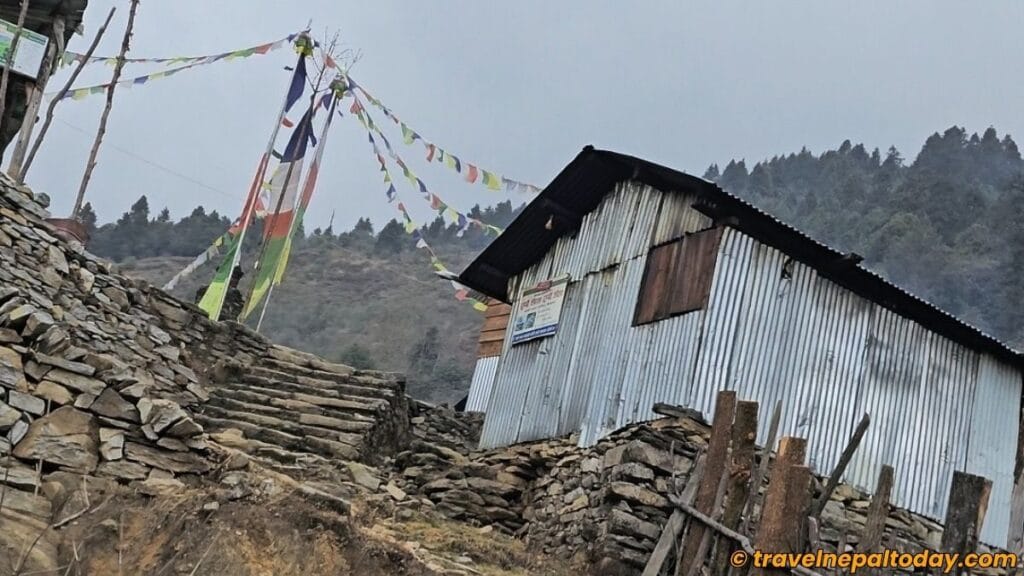
Determined, I continued toward Tuppi Danda. There were several hotels, but most were closed—another reason to worry. What if I found nowhere to stay?
I met another group of locals, and after chatting with them, I was certain that reaching Nosyam Pati was no longer an option. There was no hotel open between Ratomato and Nosyam. While I could have pushed on, I decided against it.
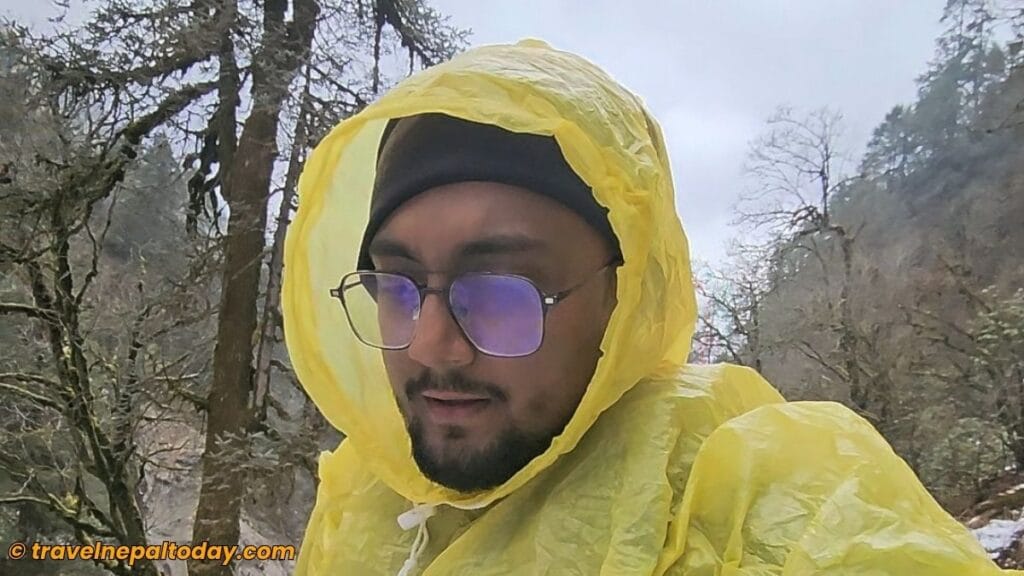
Even the five guys from my bus were nowhere to be seen, and walking alone in the late evening would have been risky, especially since it had already started to sleet just after passing Tuppi Danda. I threw on my raincoat and kept going.
The locals had given me directions to the only open hotel in Ratomato, which I carefully remembered as I walked. I still clung to a tiny hope that I might reach Nosyam Pati, but looking back, I was being overly optimistic.
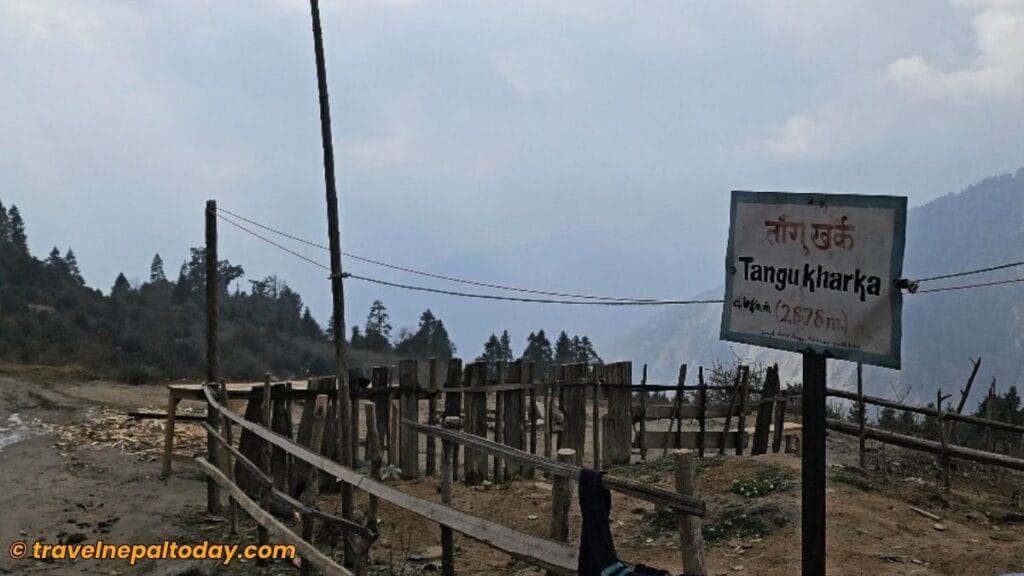
At Tangu Kharka (2,878m), I had already gained nearly 1,000m of elevation from Chhimti. Altitude sickness was something I had to consider, but I was confident since I was used to it.
At one point, I seriously considered turning back. But wouldn’t that be cowardly? I quickly dismissed the thought and pushed on. Then came the worst moment of the trek.
The trail took a steep downhill turn, and a tree had completely blocked the path. I had to crawl along a narrow ledge to get past it. I almost slipped.
My heart pounded. My hands trembled as I grabbed onto the tree for balance. That was the moment I realized—this solo trek was a mistake!
Now, I wasn’t willing to push for Nosyam Pati anymore. Safety first. Carefully, I made my way toward Tangu Khola.
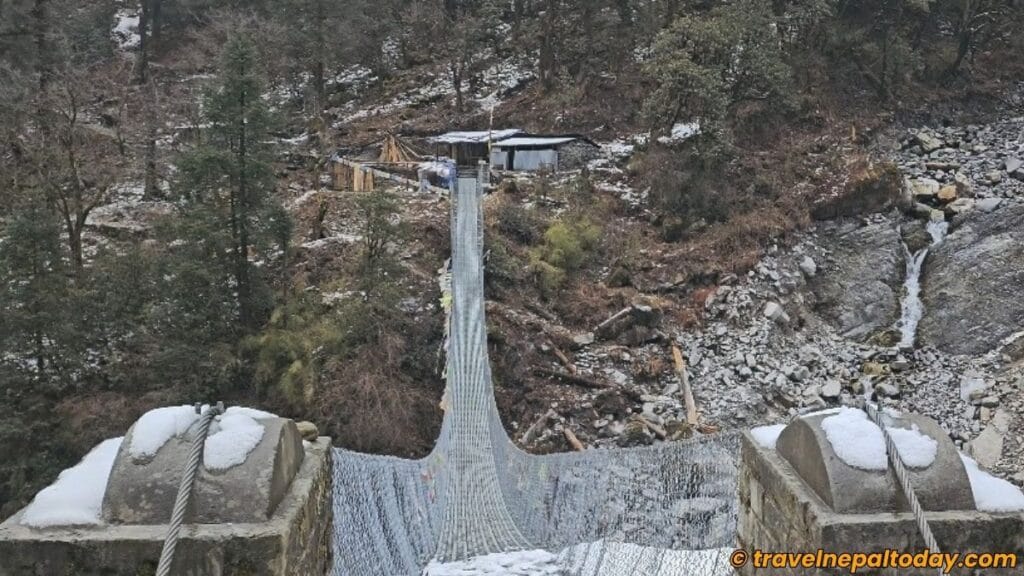
After crossing a suspension bridge, I met another group of locals who had been clearing snow from Panch Pokhari.
They confirmed that the snow was heavily piled up and strongly advised against going any further alone. I finally made up my mind. I would indeed stay in Rato Mato tonight.
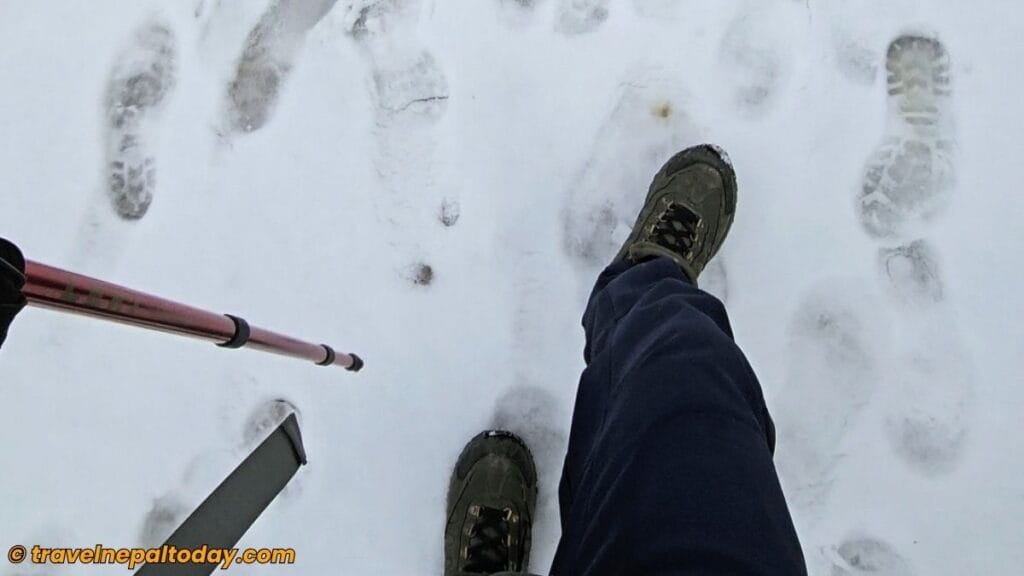
I even asked them to tell the five guys to at least push until Rato Mato so that I’d have some company for tomorrow’s hike. They promised to do so and wished me luck for the journey ahead.
Following their directions, I arrived at the first hotel. “Ko hununcha?” I called out. Silence. I peered through the window. There was a blanket-covered figure inside. I shouted again, “Hello!!” Still no response.
Turns out the door was locked. How foolish could I be? The locals had told me only the first hotel was open, but it looked abandoned.
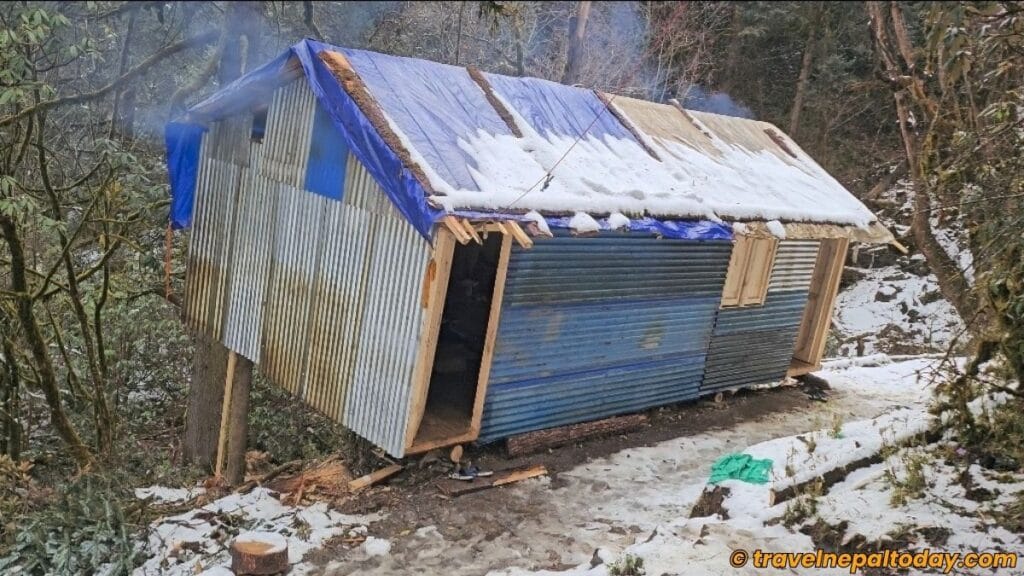
So, I kept moving a little further uphill. Just as I started worrying about where I’d sleep, I heard music playing on a speaker. Finally, a sign of life! I followed the sound and found a man inside.
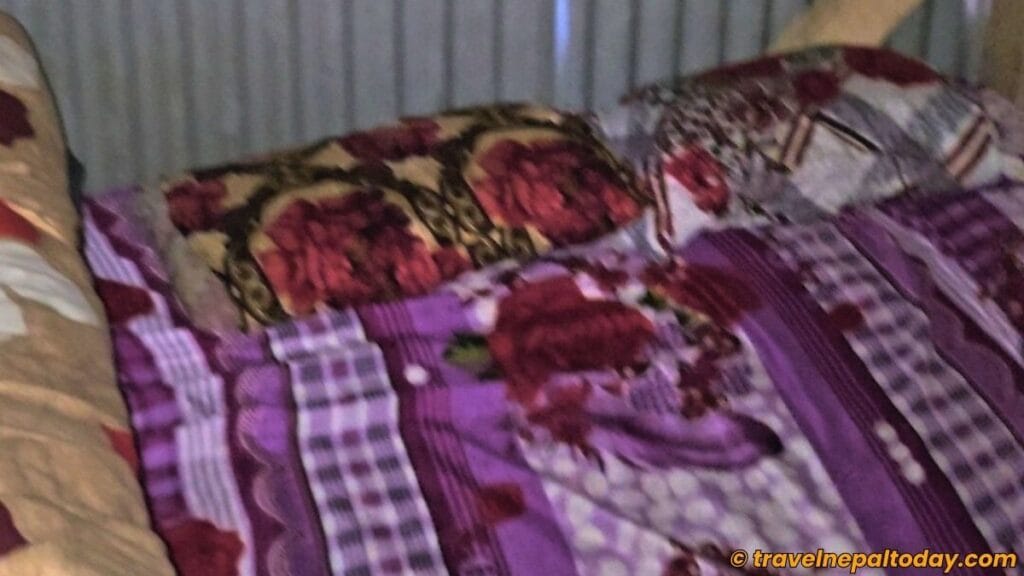
He greeted me warmly and showed me my room. It was just a queen-sized mattress on the floor with a few pillows and blankets. That was the luxury standard for this remote section of the trail. No turning back now; this was my home for the night.
I quickly unpacked, asked for some hot water, freshened up, and changed my clothes. Then, I headed straight to the kitchen, drawn by the comforting warmth of the firewood. A classic trekking routine!
Yet, a question kept nagging me: should I have pushed further? I had reached Rato Mato by 4 PM, which meant a few more hours of walking could have easily gotten me to Nosyam Pati as per my original plan. But I consoled myself—better safe than sorry.
The hotel owner and I chatted for hours. I shared some of my travel stories, and he told me all about Panch Pokhari.
Our main debate? Whether I could reach the lakes and return to the same hotel tomorrow. That way, I could catch the next day’s bus and complete the trek in just two nights and three days—just like I had planned.
We went back and forth on the same topic like two drunk friends repeating themselves. Ironically, neither of us had taken a sip of local raksi (at least, I hadn’t).
We waited for more guests to arrive. When trekkers returning from Panch Pokhari started showing up, they looked disappointed. It seemed the snow had ruined their plans. One even told me, “Maybe it’s better not to go.” But when I asked about the trail, everyone said it was fine (a bunch of liars).
Since almost all returnees were pushing up to Tuppi Danda that day, the owner was a bit disheartened. His hotel had only one guest—ME!
Turns out he also ran a hotel in Deurali and was trying to redirect the returning trekkers there. Apparently, in the off-season, hotels on this trail operate on a turn-by-turn basis.
One hotel owner gets to host a certain number of guests before rotating out. And if the snowfall is too heavy, all of them leave for Chhimti, meaning no one can reach Panch Pokhari unless someone decides to open their hotel.
Arriving early had its perks. I learned a lot about how things worked here. Meanwhile, I soaked in the firewood’s warmth, dried my trekking clothes, and kept the conversation going throughout the evening.
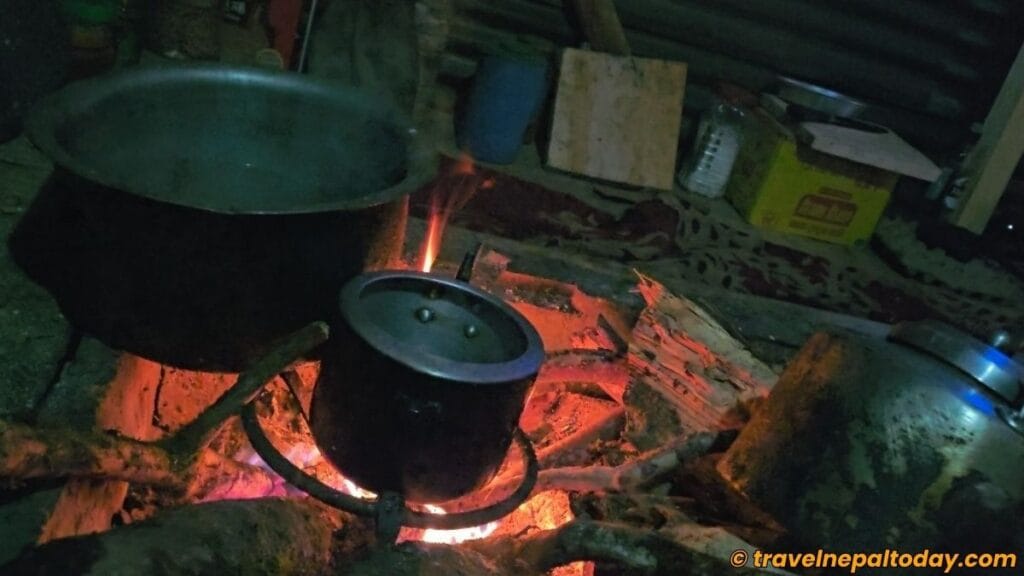
We were eagerly waiting for the five guys. When none of them showed up, the owner decided to cook just for the two of us. But just as the dal bhat with spinach was ready, a local friend of his arrived, followed by three of the five guys along with another hotel owner from Panch Pokhari Viewpoint.
I ate alone, sitting by the firewood. Food during treks is never the tastiest, but I have a trick to make dal bhat feel more enjoyable. And that is to eat it only once a day. That way, your hunger makes even the simplest meal taste good.
If you’re wondering what I eat for lunch, I usually rely on breakfast and later, the snacks I carry. Heavier for my back, lighter on my wallet. And no, I don’t usually starve. I have enough energy to keep going (that’s on most treks).
Talking to the Viewpoint hotel owner made me consider staying at his hotel to enjoy the breathtaking views of the ponds and the Jugal Himal range tomorrow. He even agreed to walk with me, which meant I’d have company and a local guide. Definitely a relief!
Eventually, the remaining three guys arrived, but we still didn’t really click as trekking buddies. At least we agreed to stay at the same hotel tomorrow. They had their dinner while I stayed by the firewood, lost in my own thoughts.
The owner had promised to charge my phone, but turns out the solar-powered inverter had drained its battery. Or maybe he just tricked me into thinking it would work. Who knows? Maybe he was expecting an extra fee. Either way, I wasn’t too bothered—I had my power bank.
As the locals sat down for some raksi, I decided to sleep early. It wasn’t even 8 PM, yet my tired body pulled me into deep sleep almost instantly. It’s crazy how someone who usually overthinks for hours before falling asleep can knock out so quickly after a long trek. Travel really does change you (even if temporarily).
I planned to wake up early, but my mind was still full of questions. Should I try reaching and returning in one day? Stay at the Viewpoint? Or take an extra day to explore the ponds? After all, I had come so far, rushing now would just be a waste.
And with those thoughts swirling in my head, my first day of the trek comes to an end.
About The Author