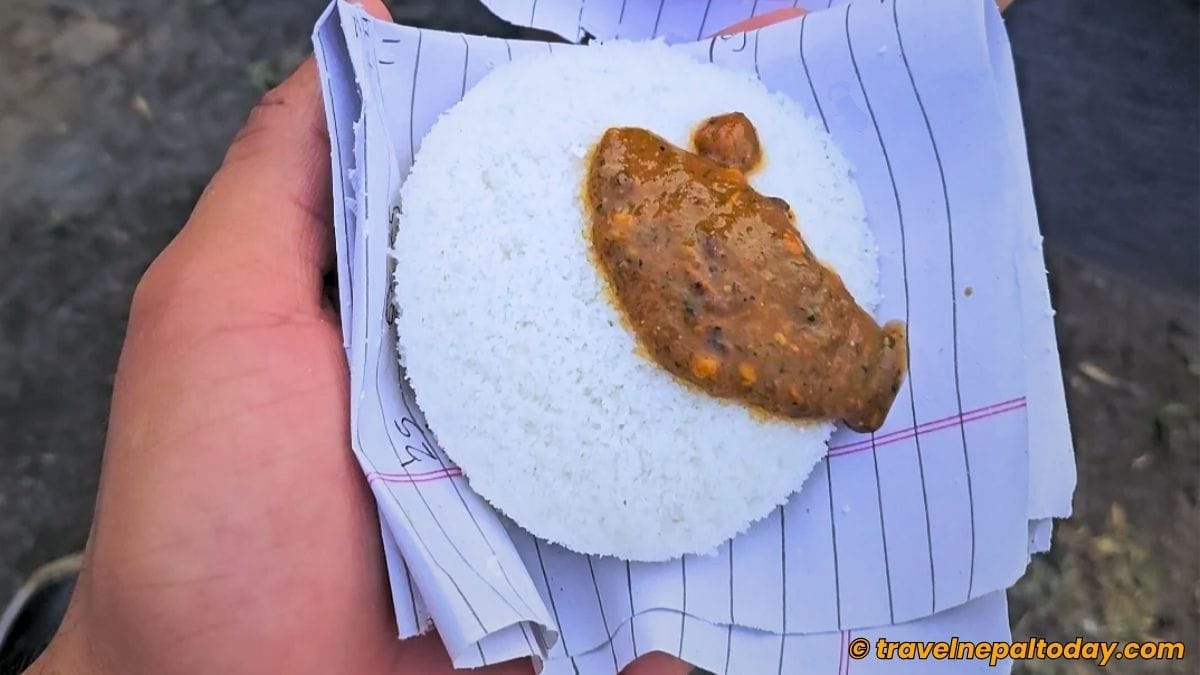
Bhakka in Nepal originates from the eastern Terai region. It’s a type of rice cake typically served with a flavorful pickle on top.
While it closely resembles the Idli from South India, Bhakka boasts its own distinct flavor. And it’s most commonly found on the streets of Morang, Sunsari, and Jhapa districts.
This delicious eastern delicacy is often enjoyed as breakfast, especially during the winter months. You’ll find local Rajbanshi and Tharu women selling Bhakka from street stalls, offering a taste of their heritage.
During my recent trip to Jhapa, I had the opportunity to try Bhakka for the first time in Damak. And I was truly impressed by how spongy and soft it was.
Today, I’ll be sharing my experience along with additional insights that you should know about Bhakka in Nepal.
Did You Know? National Bhakka Day is celebrated on the 29th of Poush (late February) every single year.
Key Facts about Bhakka in Nepal
| Type | Street Food |
| Region | Eastern Terai |
| Cultural Roots | Rajbanshi and Tharu Community |
| Timing | Breakfast |
| Price | Rs. 10 (for small), Rs. 20 (for big) |
| Best Season | Winter |
Where Can I Try Bhakka in Nepal?
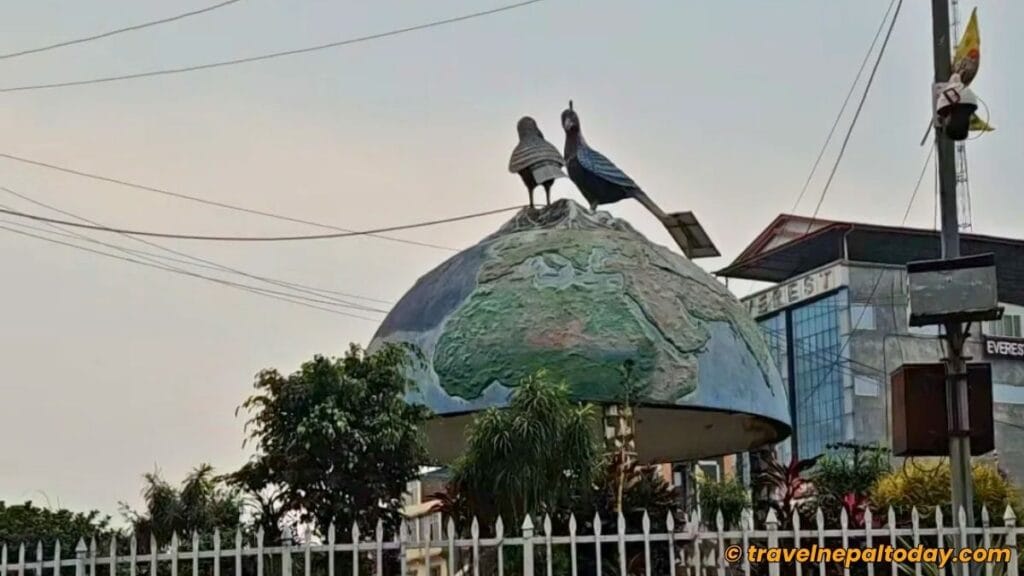
Bhakka is widely found in most Terai districts of the Koshi province. This traditional Rajbanshi food is typically available on winter mornings at street stalls along the footpaths.
However, the popularity of Bhakka has grown immensely in recent years. Today, you can even find dedicated Bhakka restaurants in the major city areas of the hilly region, such as Kathmandu and Pokhara.
It’s worth noting that Bhakka is also enjoyed in West Bengal and Bihar states of India. So, if you’re an Indian reader, you could travel there to taste it.
But for the most authentic taste, the districts of Jhapa, Morang, and Sunsari in Nepal still remain the best options.
How Healthy is Bhakka?
To understand how healthy Bhakka really is, it’s important to first take a look at the ingredients.
For the traditional rice cake, all that’s required is rice flour. Yep, that’s all you need for the classic version of Bhakka found on the streets.
With that, here’s the nutritional composition of Bhakka, as documented in a study conducted by students of Tribhuvan University:
| Nutrition Composition | Percentage |
| Moisture | 36.63 ± 0.470 |
| Crude Fat | 0.14 ± 0.010 |
| Crude Protein | 5.18 ± 0.020 |
| Crude Fiber | 0.18 ± 0.003 |
| Total Ash | 0.28 ± 0.002 |
| Carbohydrate | 57.59 ± 0.490 |
| Total Energy (kcal) | 1,055.74 ± 0.475 |
However, to enhance its flavor, various techniques have been introduced in restaurants. Some versions use a mixture of wheat flour, sugar, cardamom, cinnamon, nutmeg, and butter/oil, among other ingredients.
In fact, an experiment was conducted to explore whether incorporating milk powder into the recipe would be suitable for Bhakka production. The study concluded that this technique can indeed help combat protein-energy malnutrition in Bhakka. (Source)
As you can see, people are experimenting with different ways to add flavor to Bhakka. So, even if you’ve tried the plain version and didn’t enjoy it much, it’s worth trying some of the other variations available at restaurants.
In addition to the ingredients in Bhakka itself, it’s equally important to consider the ingredients used for the chutney/pickle. It’s usually made from tomatoes and chillies, but different variations are found in the Rajbanshi and Tharu communities.
Since the ingredients used in Bhakka are totally safe and nutritious, Bhakka is definitely a healthy breakfast option that provides carbohydrates and fiber. And even protein in some of the variations!
How to Prepare Bhakka Yourself?
Now that you’ve learned about the ingredients in the previous section, culinary enthusiasts are probably excited to try making Bhakka yourself, right?
I mean, if it’s not possible for you to visit Nepal’s eastern Terai, preparing Bhakka at home wouldn’t take much effort.
While I haven’t prepared Bhakka myself yet, I’d love to someday.
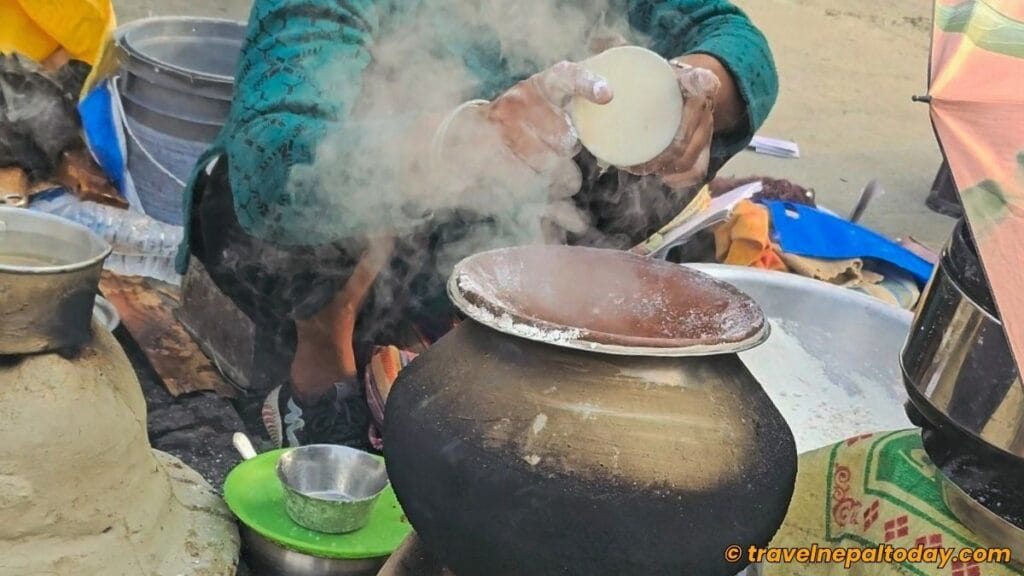
However, I did closely observe the did who was serving us Bhakka in Damak, Jhapa. Based on my observations, I’m going to guide you through preparing this traditional dish yourself.
Here are the step-by-step instructions:
- Prepare the necessary materials, including the right amount of rice flour, a bowl, a sieve, a moist muslin cloth, a pan, and the pre-made chutney.
- Before you begin, sieve the rice flour to ensure it’s smooth and free of lumps.
- Next, pour the flour into the bowl and shape it properly.
- Cover it with a moist muslin cloth.
- Then, place the bowl on top of the pan and turn on the stove.
- Wait about 5 to 10 minutes for the Bhakka to be ready (that’s how quickly ours was cooked).
- The final step is to pour chutney over the hot Bhakka.
Tip: Eat it while it’s hot, or else that delightful sponginess may disappear. The correct method is to break off small pieces of Bhakka and dip them slightly in the chutney.
While the process can vary, and you can always add your own touch to preparing Bhakka. The aforementioned procedure is the traditional method!
I’m actually eager to learn more about this from the Rajbanshi and Tharu people in Nepal. So, if you’d like to share your thoughts or experiences, don’t hesitate to comment below!
Price of Bhakka in Nepal
The cost of Bhakka in Nepal can vary depending on where you are. I tried it at one of the footpath stalls in Damak, Jhapa, and found it to be really affordable!
We paid just Rs. 10 for the small version we ordered, while the larger version cost Rs. 20.
However, keep in mind that the price can be higher in restaurants.
How Does Bhakka Taste? Sharing My Experience
As mentioned at the very beginning, I really loved the sponginess of Bhakka. When I broke it into small pieces, it gave me a similar feeling to breaking a fruit cake.
I really liked the taste too. I wouldn’t say it was absolutely delicious, but it’s definitely a perfect, healthy snack to try in the morning. The more you eat, the better it gets.
Of course, as a Nepali myself, I loved the tomato chutney. It wasn’t too spicy, which was perfect for my taste.
But I do remember telling my brother, who was my food partner for the day, “Bhaat nai khayeko ta ho dallo parera” (Meaning, we were just eating rice in a different form). And honestly, that’s somewhat true!
At such an affordable price, you get to taste a very unique dish. So, it’s definitely worth it, and I highly suggest you try Bhakka when you’re traveling to East Nepal.
Final Words
Well, this is just the first of many food blogs you’ll read here on Travel Nepal Today.
When traveling to Nepal, you’ll definitely want to experience new cuisines, and I’m here to help with whatever I can.
I hope you’ve learned something new about Bhakka in Nepal today. Now, share this article with your travel buddies, and make sure to try this Rajbanshi delicacy.
Happy traveling to eastern Terai!
About The Author