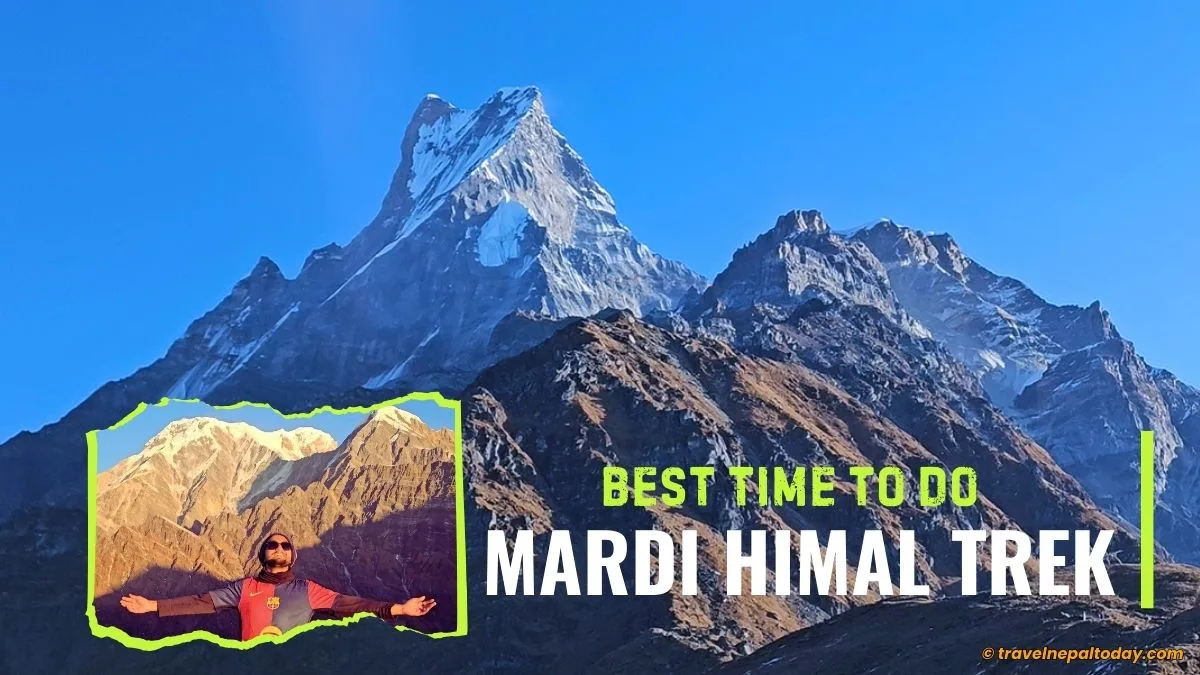
Every month is great for the Mardi Himal Trek. Yes, I genuinely mean that!
But the experience you get changes a lot depending on when you go. Weather, crowd, trail condition, views, cost, even how peaceful the trek feels. It all depends on the month you choose.
I trekked Mardi Himal in December 2024 in 3 days from Pokhara. And I’ll be honest with you: it came with cold mornings, frozen water buckets, and temperatures dropping below the freezing point at night.
However, it also gave me clear skies, a star-filled night sky, a moderate crowd, and stunning views of Annapurna South, Machhapuchhre, Hiunchuli, and the entire Annapurna range. To top it all off, the trek ended with a light snowfall!
Was it uncomfortable at times? A little. Was it difficult? Not really. Was it worth it? Absolutely.
So, was December the best time to visit? For me, yes. Especially when you compare it to how crowded October and November can get.
Early December is perfect if you’re someone who prefers peace, clear views, and a slight chance of snow.
That said, the actual peak seasons are still Mid-March to May and Mid-October to November. These months come with ideal temperatures, stable weather, and crystal-clear mountain views. But…they also come with crowds.
At the end of the day, the best time for Mardi Himal Trek really depends on you. And that’s exactly why I’ve broken everything down below so you can decide what works best for your travel style.
Seasonal Breakdown of Mardi Himal Trek
Nepal officially has six seasons, not four. And understanding this helps a lot when planning treks like Mardi Himal.
Here they are in simple terms:
- Spring (Basanta): Mid-March to Mid-May
- Summer (Grishma): Mid-May to Mid-July
- Monsoon (Barsha): Mid-July to Mid-September
- Autumn (Sharad): Mid-September to Mid-November
- Pre-Winter (Hemanta): Mid-November to Mid-January
- Winter (Shishir): Mid-January to Mid-March
While this gives you a general seasonal idea, keep one thing in mind:
Mardi Himal stays cold throughout the year, especially early mornings and nights. Even during warmer months, once the sun goes down, you’ll feel the chill.
Let’s now go season by season, without overcomplicating things.
Spring [Mid March-May]
Spring is one of the most popular times for Mardi Himal, and for good reason.
- What it feels like: Days are warm, mornings and nights are still cold, but manageable. You can trek comfortably without heavy winter layers during the day.
- Weather & temperature:
- Daytime: 10°C to 20°C
- Night: 0°C to 5°C at higher camps
- Visibility: Very good. Clear mountain views are common.
- Crowd level: Moderate to high, especially from late March onwards.
- Flowers: Rhododendrons bloom beautifully, especially in lower sections like Forest Camp and around Sidhing.
- Rainfall / Snowfall: Occasional rain. Light snowfall possible at higher elevations early in the season.
- Trail condition: Dry and stable. One of the easiest seasons for beginners.
- Risks: Minimal. Just be prepared for sudden weather changes.
- Cost & logistics: Slightly higher than winter, but still reasonable. Lodges and transport are fully operational.
- Recommended for: First-time trekkers, photographers, and anyone who wants a balance of comfort and views.
Summer [Mid May-July]
This season is often misunderstood.
- What it feels like: Warm days, humid lower trails, but surprisingly pleasant weather higher up.
- Weather & temperature:
- Daytime: 15°C to 22°C
- Night: 5°C to 10°C
- Visibility: Decent in early summer. Clouds increase as you move into July.
- Crowd level: Low to moderate.
- Rainfall / Snowfall: Rain starts increasing towards late June. Snowfall is very rare
- Trail condition: Mostly dry until mid-June. After that, some sections can get muddy.
- Risks: Leeches may appear in lower forested areas after rain.
- Cost & logistics: Cheaper than spring and autumn. Easier to find rooms.
- Recommended for: Budget travellers and those who don’t mind occasional rain.
Monsoon [Mid July-September]
I’ll be very straightforward here. This is not the best time for Mardi Himal.
- What it feels like: Wet, cloudy, and unpredictable.
- Weather & temperature: Warm but very humid, frequent rain
- Visibility: Poor. Mountain views are rare.
- Crowd level: Very low.
- Rainfall / Snowfall: Heavy rainfall. No snowfall.
- Trail condition: Muddy, slippery, and uncomfortable.
- Risks: Leeches, Landslides, Flight delays, Poor visibility
- Cost & logistics: Cheap, but savings don’t really justify the experience.
- Recommended for: Only if greenery matters more to you than mountain views.
Autumn [October-Mid November]
This is the classic trekking season in Nepal.
- What it feels like: Stable weather, pleasant days, cold nights.
- Weather & temperature:
- Daytime: 10°C to 18°C
- Night: 0°C to 5°C
- Visibility: Excellent. This is peak mountain-view season.
- Crowd level: High. October and early November are the busiest.
- Rainfall / Snowfall: Very little rain. Snowfall is rare.
- Trail condition: Dry, safe, and well-maintained.
- Risks: Accommodation availability can be an issue due to crowd.
- Cost & logistics: Highest of the year.
- Recommended for: Those who want the easiest and most predictable trekking experience.
Pre-Winter [Late November – December]
This is where things get interesting.
- What it feels like: Cold mornings, crisp air, peaceful trails.
- Weather & temperature:
- Daytime: 5°C to 12°C
- Night: -5°C to 0°C
- Visibility: Excellent on clear days.
- Crowd level: Low to moderate.
- Snowfall: Possible, especially in December and early January.
- Trail condition: Dry, but icy patches can appear after snowfall.
- Risks: Cold nights. Proper layering is essential.
- Cost & logistics: Lower than autumn. Easy to find accommodation.
- Recommended for: Peace lovers, adventure seekers, and those who enjoy winter landscapes.
Winter [January-February]
Winter trekking is underrated.
- What it feels like: Cold, quiet, and raw.
- Weather & temperature:
- Daytime: 5°C to 10°C
- Night: -10°C possible at High Camp
- Visibility: Very clear after snowfall.
- Crowd level: Very low.
- Snowfall: High chance, especially in January and February.
- Trail condition: Snow-covered sections possible. Not ideal for beginners.
- Risks: Extreme cold, trail closures after heavy snowfall.
- Cost & logistics: Cheapest season overall.
- Recommended for: Experienced trekkers and snow lovers.
Note: Mardi Himal Trek permits remain the same throughout the season. So, it doesn’t have much affect in terms of the overall budget.
Season Creep & Climate Change: How It Has Affected Mardi Trek
In simple words, season creep means seasons are no longer behaving the way they used to.
These days:
- Snowfall comes later than expected
- Rain appears in “dry” months
- December sometimes feels like October
- Monsoon rain extends into September
I’ve personally seen clear skies in months that were once considered risky and vice versa. Climate change is real, and that has led to trekking seasons to slowly shift.
So instead of blindly following a calendar, always check recent weather updates before you go. Or else your Mardi Himal Trek shall be more difficult than planned.
Recommended: Zoom Earth’s Precipitation feature lets you see the weather forecast for the coming 2-3 days. So, it’s a great idea to check this out before heading on the Mardi trails.
Mardi Himal Trek Month-by-Month Comparison
To give you a proper idea of how the trail and views change, I’ll be sharing real photos from different months here.
Honestly, my December trek felt like the best approach for me. But don’t just take my word for it. Look at the photos from different local travellers, and decide what fits your expectations.
Note: I’ll keep updating these photos regularly, so stay tuned.
Mardi Himal Trek in March
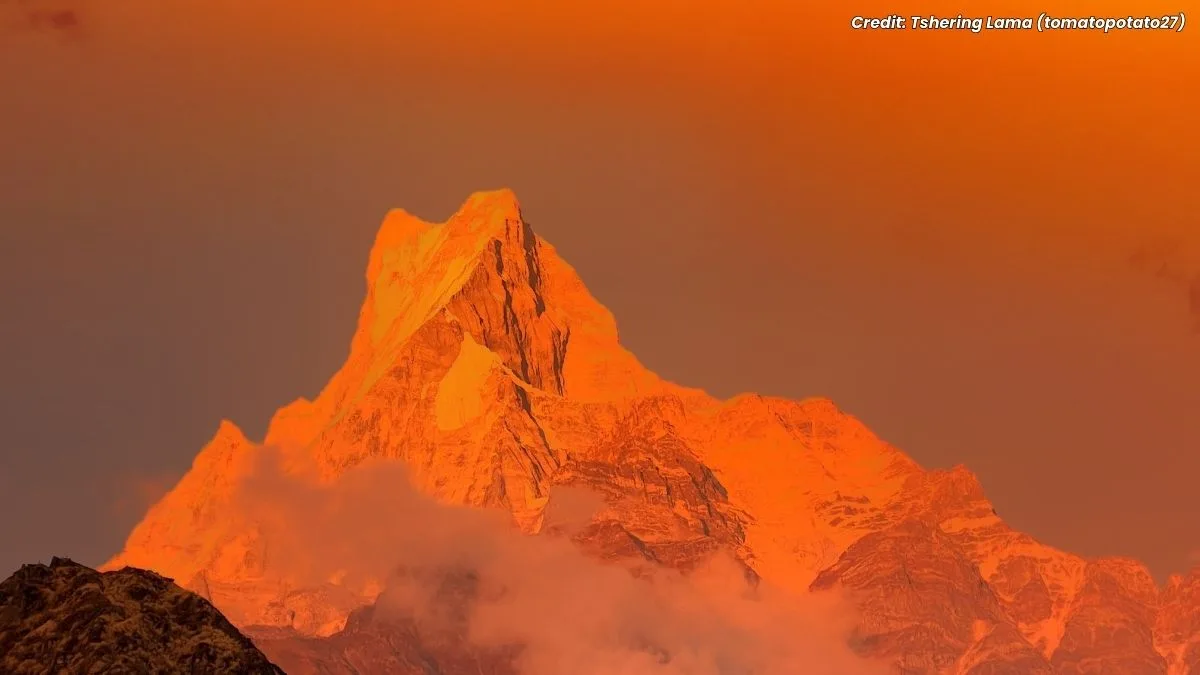
The clouds at Badal Danda were unreal. Rhododendron forests were in full bloom, and the sunrise from Mardi View Point was something I won’t forget. Sunset from High Camp was just as beautiful. Overall, the trek felt easy and smooth, with no major challenges.
Tshering Lama
Mardi Himal Trek in December
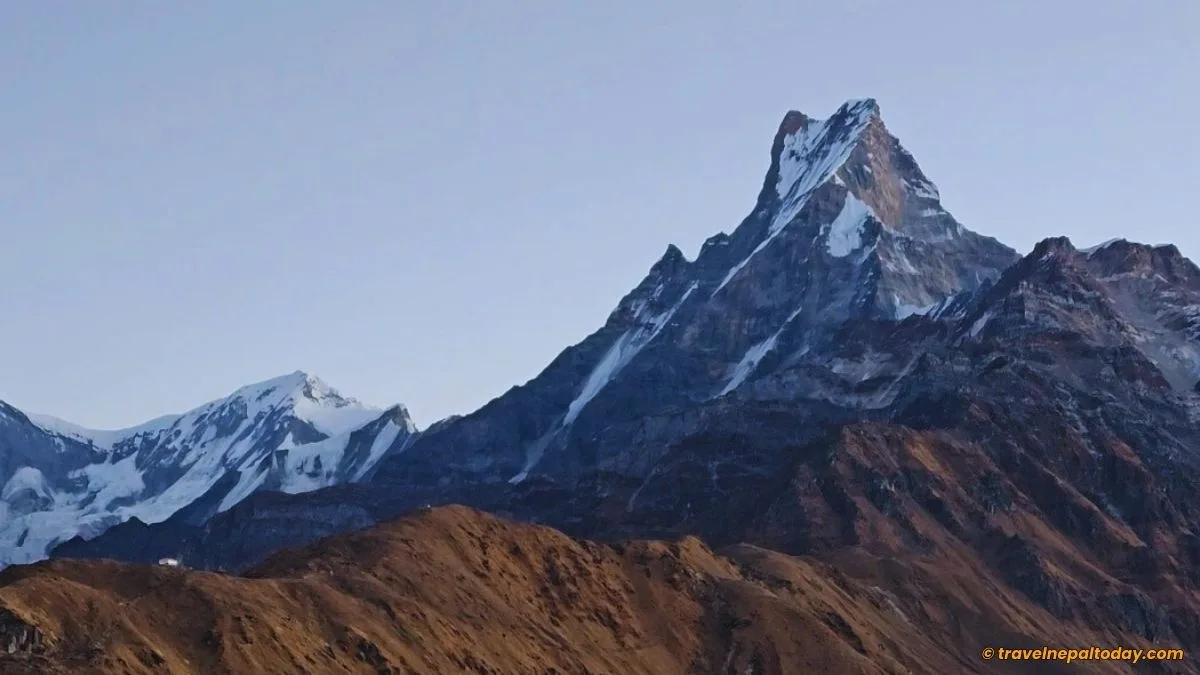
To read my full experience, check out my story I shared in Mardi Himal Trek 5-day trip from Kathmandu.
Bhishu acharya (author)
Most Asked Questions on Best Time For Mardi Himal Trek
Let me answer this quickly, based on what people usually ask:
- Best overall time: October to November
- Best budget time: December to February
- Best for snow: December to February
- Best for flowers: March to April
- Best for fewer crowds: Early December or late February, May to June
- Best for photography: When the weather is clear (usually October to June)
Final Words: Which Time to Choose For Mardi Trekking?
Here’s my honest recommendation:
- Avoid the monsoon unless greenery is your only goal. Leeches and no mountain views aren’t worth it.
- March to April is excellent for the weather and views.
- May and June are underrated but workable if you watch the weather.
- October to November is the easiest and most scenic, but crowded (so, finding accommodations can be an issue)
- December to February is perfect for snowfall experiences and peaceful trekking, especially for adventure seekers.
No matter when you go, plan properly, pack smart, and stay flexible. If you’re still confused, drop a comment below. I’ll personally help you decide.
Happy travelling to Kaski!
About The Author