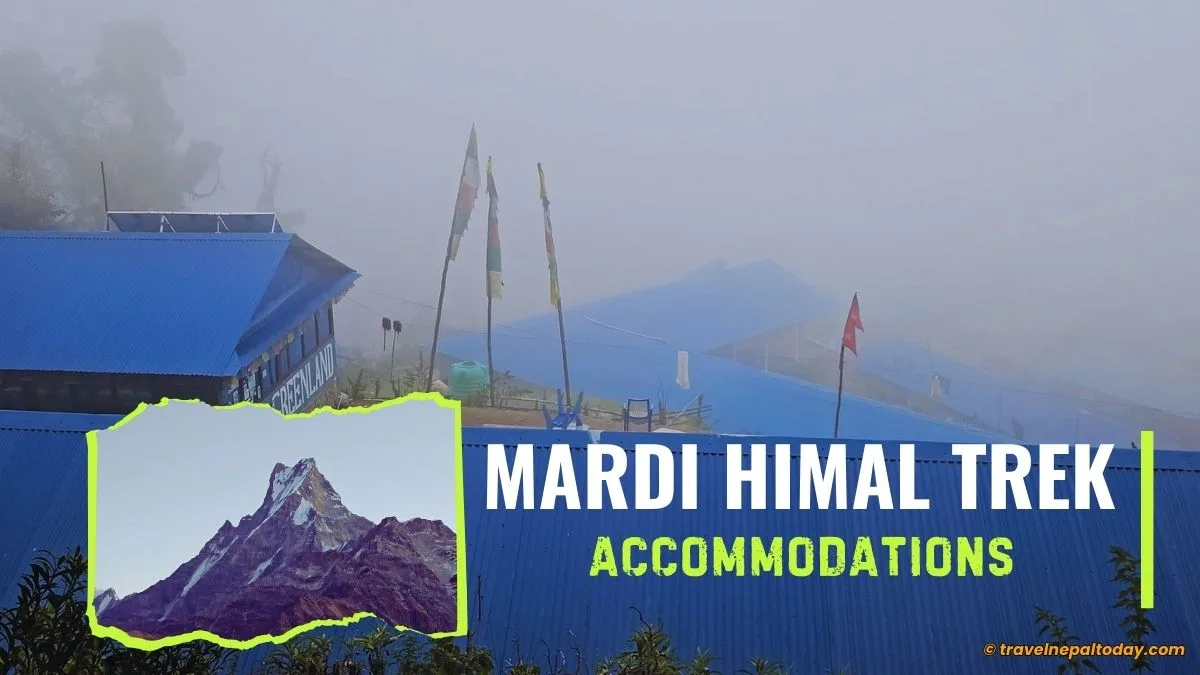
Worried about accommodation on the Mardi Himal Trek? If your itinerary is fixed but you’re still unsure about where you’ll be staying along the trail, this guide is written exactly for that reason.
Just like most treks in Nepal, accommodations in Mardi Himal route are in basic mountain lodges. These are simple teahouses, but most of them are well-managed and provide proper bedding and blankets wherever accommodation is available.
One important thing to note is that stays are only available up to High Camp. At the Mardi Himal Viewpoint, you’ll find a few tea shops, but they are meant only for short breaks and refreshments, not for overnight stays.
And if you’re thinking about camping above High Camp, that’s a different story. You’ll need special permits and must arrange your own tents and logistics.
Getting prior permission from NTNC (National Trust for Nature Conservation) is essential. Moreover, foreign trekkers are required to trek with at least one licensed guide in such cases.
That said, very few trekkers choose this option. Because the risks are high, and rescue support is extremely limited in the upper sections.
That’s why I personally suggest choosing the safest and most practical option, which is to spend your final night at High Camp and hike to the viewpoint and base camp early the next morning (before dawn).
Based on my own research and personal visits to the Mardi Himal Trail, I’ll be listing all the available lodges and accommodation options ahead. All you need to do is keep reading…
Mardi Himal Trek Accommodation Type: Where to Stay?
Where you stay on the Mardi Himal Trek completely depends on the itinerary you choose. Accommodation along the trail is in local mountain lodges with basic amenities.
And and these are available at Pittam Deurali, Sidhing, First Camp, Forest Camp (Kokar), Rest Camp, Kamkiku, Low Camp, Mid Camp, Badal Danda, Upper Badal Danda, and High Camp.
As you gain altitude, the facilities become more basic and the costs gradually increase. So, staying at lower elevations is generally lighter on your budget, except for High Camp, where everyone needs to stay for proper acclimatization.
Because of this, High Camp is usually the busiest stop in every season. Pre-booking your stay here is always a smart idea, especially during peak trekking months. Otherwise, it adds to the difficulty of this Mardi Himal Trek.
Now, the real question is: where should you stay? As I’ve mentioned earlier, it entirely depends on your itinerary.
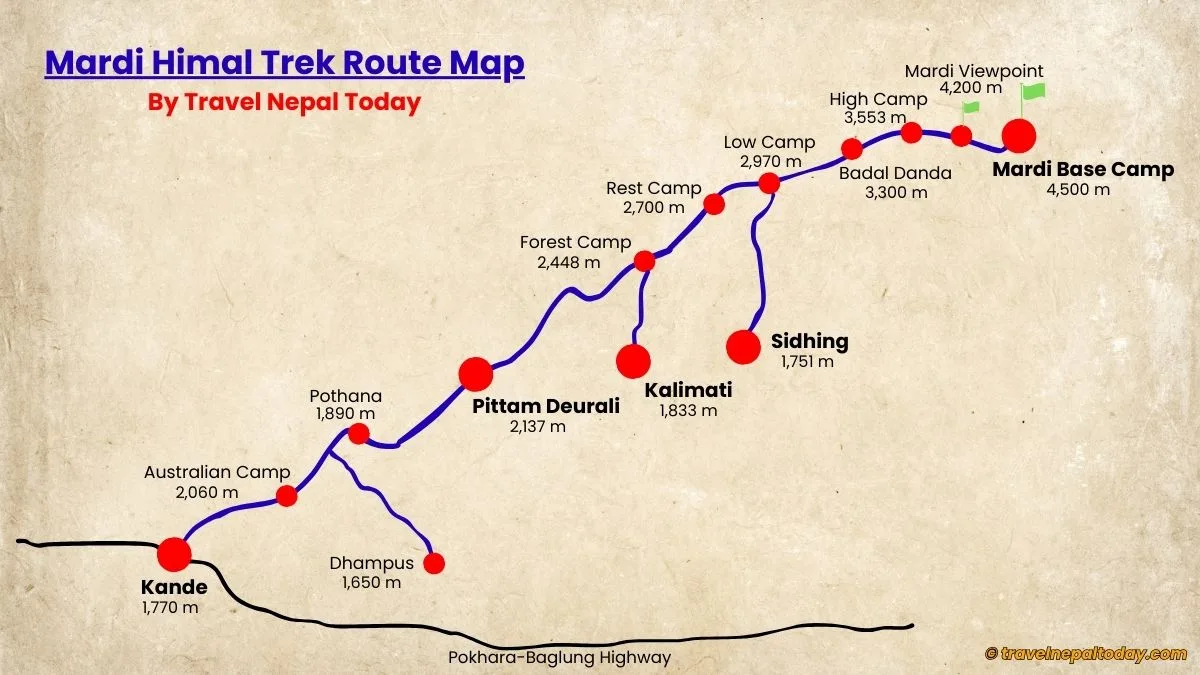
Sharing from my own personal experience, I stayed only at Rest Camp and High Camp, as I completed my Mardi Himal Trek in 5 days from Kathmandu (which translates to 3 trekking days from Pokhara).
Since I usually recommend a 4-day trek from Pokhara or a 6-day trek from Kathmandu, choosing this itinerary means you’ll need to spend one night at Low Camp during the return journey.
However, if you’re opting for a longer 7-day or 8-day itinerary, you can also include overnight stays at places like Australian Camp or Dhampus, making the trek more relaxed and scenic.
One more thing not to forget is that you’ll need to spend at least two nights in Pokhara as part of your Mardi Himal Trek. Personally, I stayed in one of the local hotels in Prithvi Chowk on the first day and at a budget hotel in Lakeside after completing the trek.
For those who haven’t explored Pokhara properly, Lakeside is the ideal place to stay, even on the first day.
In fact, a great travel tip is to book the same hotel before and after the trek. This way, you can safely leave some of your belongings in their cloakroom.
Facilities Available in Mardi Himal Stays
If you’re trekking in Nepal for the first time, you’ll need to prepare your mind a little. The accommodations in Mardi Himal are absolutely basic.
That said, you get to experience the local village vibe and that mountain air the moment you leave the road. It hits different. It feels like this is how life is supposed to be lived.
And while observing the Gurung people’s lifestyle(who are the main community along the Mardi trail), you’ll naturally start appreciating everything this life has given you.
Honestly, the warmth, love, and generous hospitality from these locals is something Nepal is truly proud of.
But no matter the love and welcoming nature of the people, one thing that most treks in Nepal, including Mardi Himal, lack is proper amenities. There’s no luxury stay available once you move past Pokhara.
Yes, some stays are better than others (simple local lodges versus relatively better mountain lodges), but overall, the experience is still basic lodging.
Here’s a quick look at the facilities you should realistically expect along the trail:
Room Type: Private or Sharing?
Yes, private rooms are available, especially for foreign trekkers. Even for Nepalese, you can usually choose private ones up to High Camp itself!
However, during peak seasons, things can take a turn. This mainly happens in the crowded autumn and spring months. When the number of trekkers is high, lodges (especially at High Camp) may ask you to stay on a sharing basis.
This situation mostly affects Nepalese trekkers, as lodge owners try to ensure that international guests do not feel uncomfortable.
The good news is that the number of lodges along the Mardi Himal trail is increasing every year. So, this issue should slowly reduce and disappear completely in the near future. Hoping so.

In-Room Equipments
The room equipment in most Mardi Himal accommodations usually comes with just basic bedding and a few pieces of furniture.
Even then, only the better lodges offer these. Not the smaller local ones.
Few single beds (2-4), a table, sometimes a hanger. That’s it. Don’t expect much beyond that. Even having those few pieces of furniture is a luxury in such remote areas.
Honestly, I wouldn’t complain, and neither should you.
All of the items you see are carried by pack animals and porters. Who knows how many got injured along the way? So, let’s just be grateful for what’s available, okay?
Bedding and Blankets
Specifically talking about beds, private rooms usually have two. Joint beds are less common. So, if you’re a couple, you’ll need to push the beds together.
Except during peak season, blankets (both fiber and woolen) are available abundantly. So, I don’t see the necessity of a sleeping bag. Still, my tip is to contact the lodges beforehand (or check with the trekking agency you’re travelling with).
Extra blankets are also provided whenever needed. If you’re trekking in the off-season, you’re lucky because blankets are abundantly available. But during a crowded season, you might need to pay extra for a second or even third blanket.
And how clean are these? Honestly, not the cleanest.
If time permits, lodge operators dry them in the sun, but they are not fully washed. So, just be aware of that. The same goes for bedsheets.
That’s why trekkers who prefer absolute hygiene carry sleeping bags. I personally carry a shawl or scarf to place over pillows. It’s super helpful!
Toilet Facilities: Squat or Western?

Mardi Himal Trek mainly features squat toilets.
Western-style toilets are available in some lower regions, but they tend to be a little unhygienic (from my pov). Ladies can agree with me here.
Interestingly, research from the National Taipei University of Technology even supports this. It claims that squatting positions reduce the duration of defecation and the number of strained bowel movements.
Honestly, in the context of Nepal, I feel that all public toilets should be squat-style.
Western or sitting toilets are designed more for comfort, which is fine at home, where hygiene is easier to manage, but not really practical on remote trekking trails.
Drinking Water: How Safe?
Moving on from toilet talks, the CONCERN about drinking water is very real. Mineral water is available up to Badal Danda, but it’s expensive.
And let’s be honest, you’re not going to feel comfortable carrying tons of plastic bottles on your Mardi trek, right?
Carrying a water bottle on any trek in Nepal is a must.
But the quality of the water? Honestly, it’s not something I’d brag about. The drinking water along the Mardi trek depends entirely on the pipeline brought all the way down from the lower areas. There’s no major river nearby.
This is why lodges charge a small fee per litre to fill your bottles. Thankfully, the fee ensures the water is boiled, which kills most bacteria.
During the cold season, especially from Upper Badal Danda up to High Camp, the pipes may freeze, and the water supply can get cut off. In such cases, lodges rely on rainwater or melted snow.
Yes, really! But again, they boil it before serving, which makes it safe enough.
Still, if you want to be 100% sure, I suggest carrying purifying tablets/pills or a bottle with a built-in filter. It’s a small investment that can save you from unnecessary stomach troubles.
Food and Dining: Only Dal Bhat?

No, Mardi Himal accommodations aren’t limited to just Dal Bhat. Yes, it’s the most common choice because it’s filling, carb-rich, and comes with vegetables that help maintain energy levels during the trek.
However, if you prefer different tastes, you can opt for other menu items as well.
For breakfast, options include bread, eggs, vegetables, Tibetan bread, or chapati. Honey and jams are also readily available. You may even try garlic soup or noodles.
Other popular menu items over Dal Bhat include fried noodles, chowmein, spaghetti, fried rice, etc.
Meat items are unavailable in higher regions, from Low Camp to Sidhing. Even if they are available, I still suggest going vegetarian for 2–3 days. You might be surprised by how much better your body feels at high altitude!
Of course, chicken and fish are good sources of protein, but consuming them at high altitude can surprisingly make you sick.
Since farm animals aren’t available in these Himalayan regions, meat has to be carried all the way up, and lodges don’t have proper storage facilities to keep them fresh.
More than that, many of you might not know that consuming non-veg food at high altitude can cause flatulence and other digestive issues. If you want to dive deeper, I highly suggest checking out Aditya Shankar’s article, which explains it neatly.
You’ll also find snacks and packaged items at different lodges. Beers and energy drinks are available in some places, too.
Travel Tip: Always check the expiry date before purchasing any packaged item!
For Warmth: Fireplace Available?

The mountain lodges in Mardi Himal are indeed equipped with heaters inside the common dining hall. Even if you’re staying in absolute local lodges along the trail, they usually light a fire to keep guests warm.
But do note that these heaters use firewood. So, during your stay in High Camp, the fireplace might not warm the room as effectively as you’d expect. That’s because fires generally burn more slowly at high altitude due to less oxygen.
One problem I personally encountered was with drinking water. Lodges rely on these fireplaces to heat kettles, and when the fire isn’t big enough, it can take a serious amount of time.
Even in our case, the water didn’t heat properly, and we had to make do with whatever warmth it had.
Remember why I told you to carry purifying tablets or drops? This is one of the reasons.
Finding hot water can especially be a problem in the morning because heating it over a fire takes time. You simply can’t delay your 3 AM hike to the viewpoint, or you might miss that breathtaking sunrise.
In some lower regions, up to Forest Camp, lodges have started adding heaters in private rooms too. This has been a great addition, and if such facilities expand to High Camp, trekking will become much more comfortable.
Caution: Be mindful not to keep heaters on all night. Carbon monoxide levels can build up, which can be dangerous (or even fatal).
Check-in / Check-out Flexibility
The standard 12:00 PM checkout applies in most Nepali hotels. But guess what? Lodge owners are usually quite generous with checkouts in most trekking regions of Nepal, and Mardi Himal is no exception.
Actually, you don’t need much checkout flexibility. In the lower sections, you’ll be trekking early anyway. The only time it might matter is on your last day getting to Mardi Base Camp, which can take longer than expected.
Still, lodge owners rarely charge extra fees. They understand that reaching and returning may take time, and they offer this flexibility from their heart.
However, nobody should take advantage of this. Lodge staff will be preparing breakfast, and eating it late in the day doesn’t make much sense. So, for their sake at least, I personally suggest returning promptly.
As for check-in flexibility, even if the lodge is crowded and you arrive a bit late, they won’t ask you to leave. Even if all rooms are booked, they’ll usually find a way to accommodate you.
For Nepali trekkers, this shouldn’t be an issue. You can adjust in the dining area if needed, and if possible, be considerate to international guests. They’re here for a proper experience, and we shouldn’t forget our culture. Athithi dewa vawo, right?
See, dear international readers, everyone along the trail is here to help make your stay comfortable. So, thumbs up to that!
Electricity and Charging Services

Nepal ranks #112 in the world for electricity production (source: The Global Economy).
This clearly shows where our country stands. So, don’t expect full electricity access when you’re trekking in Mardi Himal.
While the Nepal Electricity Authority (NEA) is working to expand power, we have no idea how long it will take to reach the high-altitude regions.
That doesn’t mean there’s no electricity at all. Solar energy is being used in most sections.
Transmission lines have reached Pittam Deurali and Sidhing, but these aren’t the spots where most trekkers stay.
So, if you want to charge your devices, you’ll have to rely on solar chargers (connected directly to the main line). And even then, it’s usually on a shared basis, meaning only during late evening or early morning when the solar battery is fully charged.
Keep in mind, lodge staff may cut the charging facility at random times (when the battery is low or they need it to light up the lodge). That’s why carrying a power bank is an absolute must for the Mardi Himal Trek.
Wi-Fi and Mobile Network Availability
You’d be surprised to know that Wi-Fi and mobile network are available up to High Camp on the Mardi Himal Trek.
Wi-Fi isn’t available throughout the trail. It’s only offered in the top lodges at the main stops.
Mobile network can also be spotty, especially during nights and early mornings. The real connectivity issues usually start beyond High Camp.
Do note that if you’re paying for rooms separately, Wi-Fi charges may apply. But if you’re on a package system, you usually get Wi-Fi included for free. More about this later.
Hot Shower Facility
Honestly, you’ll be on the trail for just 2–3 days, so I personally skip showers.
Sure, a hot shower would be soothing, but at those cold temperatures, drying yourself safely can be tricky. And I don’t want to take risks.
If you really want a hot shower, this facility is available only in the lower regions. High Camp and other upper sections don’t offer it as of now.
Laundry: Cleaning Facility or Self-Clean?
The same goes for laundry. It’s much better to pack extra clean clothes rather than planning to wash them along the trail. You won’t really get time for that too.
Even if you absolutely need it, there’s no proper laundry facility in any Mardi Himal accommodation. You’ll have to clean your clothes yourself!
Noise Levels and Privacy
Sound sleep is absolutely necessary when trekking. If you don’t sleep well, it can hinder your body’s acclimatization process.
Noisy places are a big no-no!
One important part of trekking culture is to sleep early and avoid disturbing others.
Trekking destinations aren’t meant for partying, and this is something mainly beginner Nepali trekkers need to keep in mind.
If you’re in a group, be mindful of your noise. Dining areas can get busy and loud when overcrowded. But besides that, unnecessary disturbance can affect everyone’s experience.
Lodge staff are usually aware of this and make sure guests don’t make too much noise. So, that’s a plus point!
And talking about privacy, it’s honestly a concern in certain situations. For example, couples trekking during peak season may have to share accommodation with others, meaning you’ll need to adjust to strangers, which can impact your privacy.
Medical or First Aid Access
One thing to be wary of when trekking in this part of the Annapurna region is that you won’t find a proper medical centre along the trail.
So, in case you sprain your ankle or feel unwell due to altitude sickness, it’s the locals who step in to help. Porters and pack animals are used to carry you all the way down to the nearest health station, usually in the main village of Sidhing or Pothana.
For more serious injuries or sickness, the only possible rescue is via helicopter. Don’t worry! You won’t have to arrange it yourself. The locals are incredibly helpful and will make sure everything is taken care of.
You see, this is where travel insurance is handy. And I highly recommend being insured before visiting Nepal.
Note that I don’t mean the lodges aren’t equipped at all. They do carry basic medications and first aid.
Still, it’s always better to carry your own essential medicines. You can check out the Mardi Himal packing list guide for more details on what to bring.
Pet-Friendliness
Trekking with your furry friend is surely an underrated adventure.
I lost my dearest dog, Ben, and every time I’m on a trek, I regret not having him experience all these beautiful destinations I’ve been to. So, if you’re even thinking about doing a trek with your pet, definitely try once!
However, accommodations on the Mardi Himal Trek aren’t exactly ready for pets yet. Even strays around rely on the ground to sleep. So, facilities for pets are almost non-existent.
If you can carry a bed for your pet and provide a temporary home yourself, it might be possible.
But do remember, taking pets on treks can be extremely risky, and you must take full responsibility for their safety.
So, while I’d love to see your pictures and videos with pets on treks, please do it only if they’re well-trained and adaptable to high-altitude regions.
We’ll surely have a separate guide on trekking with pets sometime later. So stay tuned!
Mardi Himal Accommodation Cost [Package vs Room-Only]
Mardi Himal accommodation cost really depends on how you’ve booked your trek.
For those going via registered trekking agencies, their total cost usually includes your accommodation and three meals a day.
If you’re trekking with a local guide you hired yourself, they’ll arrange everything for you. You just have to cover their salary and expenses on the trek.
For individual trekkers (including Nepalese), you basically have two options:
- Pay For Service Option: A room costs around NPR 500 to 800, usually shared among room members. This doesn’t include extra facilities like meals, hot water, charging, or Wi-Fi. You pay separately for each of these services.
- Package Option: A package costs about NPR 1,200 to 2,000 and includes the room plus services like meals (dinner and breakfast), hot water, Wi-Fi, and charging.
Honestly, choosing the package system is the best bet. You’re not only making your trek convenient but also supporting local lodge owners.
They rely on trekkers to spend some money and eat Dal Bhat (mainly Nepalese), which they prepare for themselves too. The more people eat it, the better it is for them. And this way, extra food is also not wasted.
Yes, it’s worth remembering that the locals have come to provide service and earn a living in a remote, high-altitude area. Hats off to them!
Recommended reading: Mardi Himal Trek Budget Guide
List of Hotels in Mardi Himal Trek by Location
Now, let’s talk about the mountain lodges in Mardi Himal. The number of lodges is slowly increasing as the popularity of the Mardi Himal trek grows each season.
To help you (and also support the lodge owners), I’ll be listing every hotel I found during my own research and visit.
Just to be clear: This isn’t a promotional post. It’s a genuine effort to help trekkers. I’m open to exploring Mardi Himal again, and once I do, I’ll update this article with the actual best lodges for you.
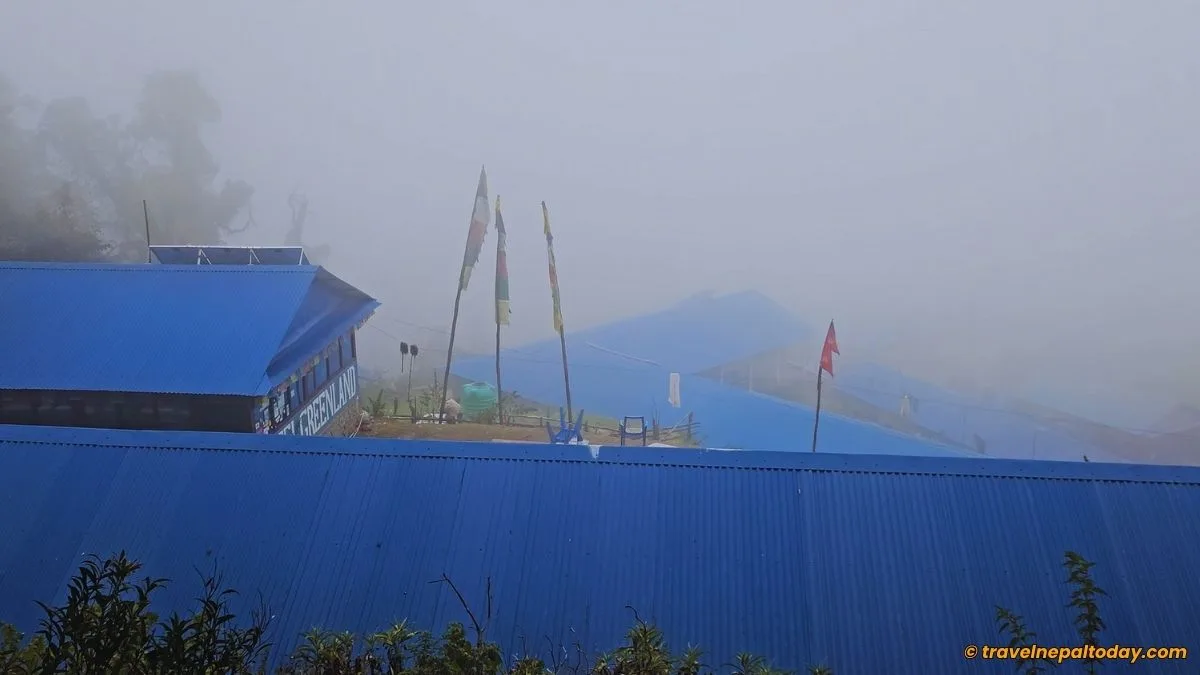
Forest Camp
- Hotel Mardi Gate & Restaurant
- Hotel Mangolian & Restaurant
- Hotel Rhythm Guest House & Restaurant
- Hotel Kokar
- Hotel Forest Camp & Restaurant
- Old Mardi Guest House
- Hotel Jungle Embassy
- Hotel Mardi Junction
- Hotel Greenland and Restaurant
- Hotel Sunrise Guest House & Restaurant
- Greenland Forest Camp
Rest Camp & Kamkiku
- Hotel Golden View
- Hotel Rest Camp and Restaurant
- Hotel Mountain Gallery
- Hotel Mardi Thakali & Restaurant
Low Camp
- Hotel Moonlight and Restaurant
- Hotel Humal
- Grace Guesthouse and Restaurant
- Low Camp Guest House & Restaurant
- Hotel Machhapuchhre Samjhana
- Hotel Dreamland and Restaurant
- Viewpoint Guest House and Restaurant
Middle Camp & Badal Danda
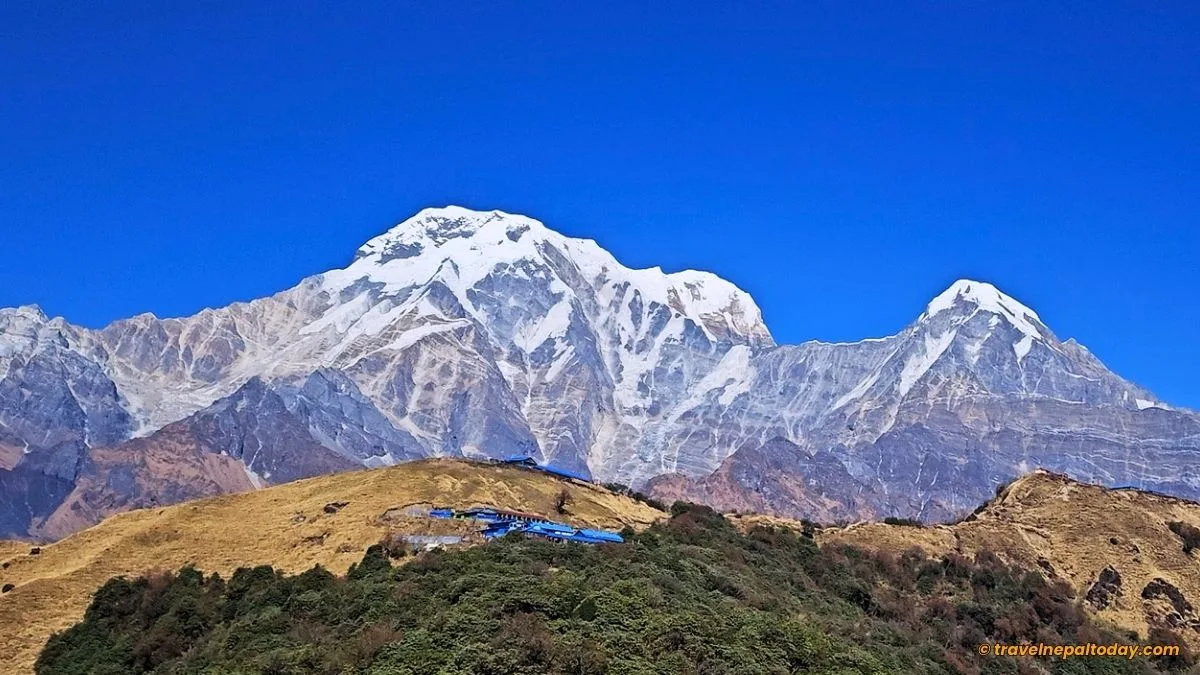
- Hotel Twin Peak Middle Camp
- Hotel Yak and Restaurant Guest House
- Hotel Munal & Restaurant
- Lucky View Guest House & Restaurant
- Hotel 360
- Hotel Himalayan Majesty
- Hotel Glacier View
High Camp

- Hotel Double View
- Hotel Excellent View
- The Himalayan Nest
- Hotel Mardi Peak
- Hotel Fishtail
- High Camp Guest House & Restaurant
- Hotel Namaste
- Hotel Peaceful
- Hotel Trekkers Paradise
- Hotel Magic Mountain
- Heaven View Guesthouse & Restaurant
- Hotel Mardi Bar
- Hotel Snowland & SPA
Other Lodges Along the Trail
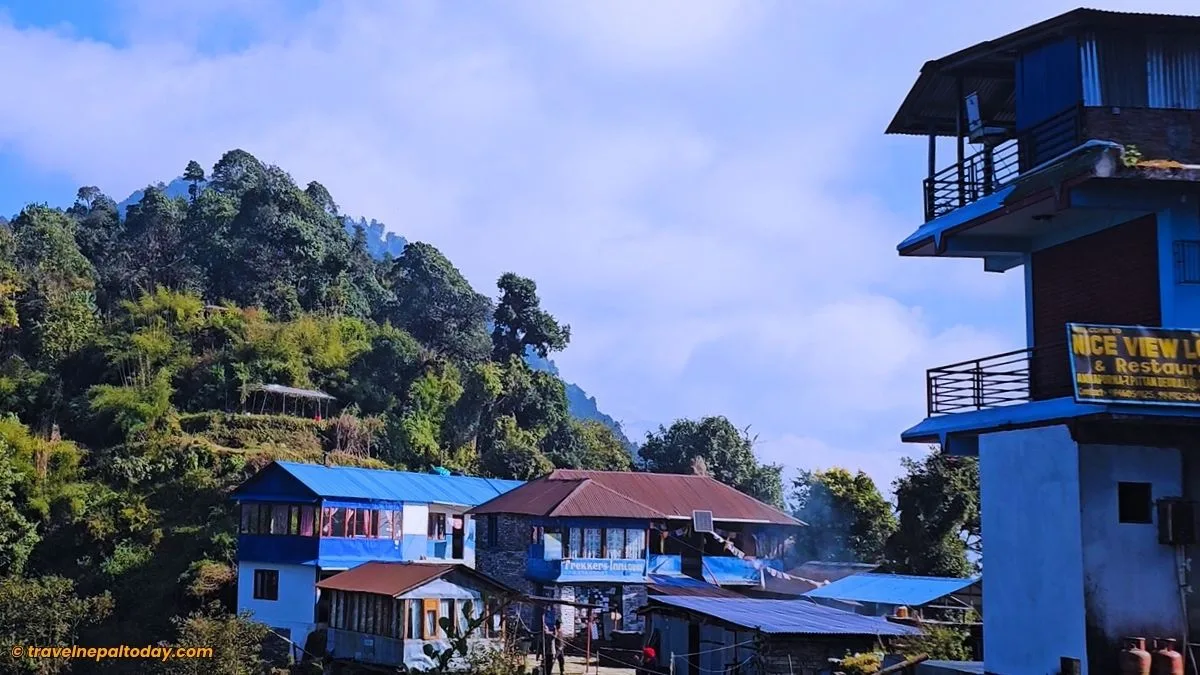
These are the lodges located at the starting points and other spots where you might have to stay if you end up arriving late:
- Double Forest Guest House & Restaurant, Pittam Deurali
- New Pittam Deurali Guest House and Restaurant, Pittam Deurali
- Hotel 360 Deurali & Restaurant, Pittam Deurali
- Trekkers Inn Lodge & Restaurant, Pittam Deurali
- Hotel SuperTop View, Pitam Deurali
- Hotel New Laliguransh Guest House and Restaurant, Pittam Deurali
- Hotel Mardi Station & Restaurant, Pittam Deurali
- Hotel Chiya Kaka, Sidhing
- Stone Gallery Inn, Sidhing
- Gautam Cottage & Restaurant, Sidhing
- Green Hill Guest House & Restaurant, Sidhing
- Fishtail View Guest House & Restaurant, Sidhing
- Mardi Himal Eco Village Hotel & Restaurant, Kalimati
Note: Dhampus Village has plenty of good hotels and local resorts. We’ll cover them in a separate, detailed guide.

Teahouse Culture in Mardi Trek: Tips for Best Experience
No matter where you stay, there are certain things you need to do to respect the locals, lodge owners, and fellow trekkers.
I’ve already highlighted some of these throughout the article, but here are some detailed tips & tricks to enhance your stay and everyone else’s experience:
- I know you love exploring, but be sure to eat where you’re staying. Lodges offer cheap rooms, but food is how they earn their living.
- A food menu is usually available, but stick to Dal Bhat as far as possible. It’s easy to make, nutritious, and filling.
- Don’t just stay inside your room. Head to the dining area and socialize with fellow trekkers or the locals. Even Nepali trekkers are super friendly!
- Feeling cold? Don’t force lodge owners to overburn the firewood. Conserve it.
- Dinner is served early because people in the mountains sleep early. Follow the local schedule. Good sleep helps your body acclimatize to the high altitude, so sleep early.
- Respect other trekkers’ privacy. Lodges aren’t luxurious, and you may bump into people frequently. Even if you’re friends, let them still have their space.
- Don’t bargain too much with lodge owners. They already offer the best price possible. This mostly applies to Nepali trekkers.
- Avoid online payments. Stick with cash.
- Don’t hesitate to share resources, especially during peak season when overcrowding is normal.
- Avoid using speakers along the trail or in hotel rooms. Loud noise disturbs everyone.
- Carry cards or other board games for passing the time, and invite others to join in.
- Want to learn some Nepali words?
Start with: Namaste (hello), Sanchai hununcha? (are you fine?), Dhanyabad (thank you), Mitho cha (it’s tasty), Timro naam k ho? (what’s your name?). I might write a separate guide for this later. - If staying with locals, respect their family customs. This is a great way to learn about Gurung culture.
- Don’t place your legs or dirty clothes in the fireplace. While some hotels allow it, most locals find it disturbing, as the same spot is used for cooking.
- Be mindful of lights and charging. Don’t leave them on unnecessarily, as it impacts battery availability.
- Bring your own toiletries (tissues, towels, soap sheets, and other essentials). Don’t expect them to be available in Mardi Himal accommodations or along the trail.
- Carry a power bank. Your phone may drain quickly in high-altitude conditions.
- Help other trekkers if they show signs of trouble or altitude sickness.
- Drinking water may cost extra. So, always ask before refilling your bottle.
- When charging your devices, wait for your turn. Don’t unplug others’ devices without permission.
- Many trekkers leave bags unattended and rooms unlocked. Respect that trust. Don’t take advantage and try stealing things.
- For guides and porters, tip around 10% of your budget for the Mardi Himal Trek. Tipping is a standard practice in Nepal.
- Accommodations have dustbins. Use them. Don’t litter along the trail. Carry trash bags if applicable.
Bonus Tip: Gear to Make Your Mardi Stay Comfortable
Packing certain items for your Mardi Himal stay can make your experience much more comfortable.
I’ve already mentioned some of them earlier in the article. But if you’ve read this far, here’s a bonus list of things you should consider carrying:
Final Words
Accommodations in Mardi Himal are plenty. You don’t have to camp or carry heavy gear, as the lodges offer reliable services.
Although the facilities are basic, we hope that the facilities become more modern soon so that all travellers get a comfortable experience.
But let’s be honest, trekkers. We all love local stays, where we get to connect with nature and people more than in luxurious hotels, right? That’s the real beauty of trekking.
Maybe it doesn’t apply to everyone. What about you? Do you prefer luxurious stays even in the mountains, or are you comfortable embracing the charm and challenge of local lodges? I’d love to hear your thoughts in the comments.
Happy travelling to Kaski!
What to read next? Transportation Guide for Mardi Himal Trek
About The Author