
Central Zoo Nepal has always been one of the go-to places for parents to take their children on a tour and for schools to take students on excursions. It has become a tradition that has been passed down for quite a long time.
The last time I went there was more than a decade ago, even before the 2015 earthquake. And honestly, even today, there haven’t been many significant changes.
I remembered quite a lot from the past, as I had already visited the place four or five times since childhood. I still recall that very old time when a lion was there. Yes, after its death, a substitution hasn’t been found.
The main reason behind it is that the Central Zoo of Nepal does not meet the international standard for keeping a lion!
My visit this time, however, was different. It was the first time an adult version of me was stepping into Jawalakhel Zoo.
Honestly, I thought there wouldn’t be much of a crowd. But I was wrong. The popularity of Central Zoo Nepal is still alive, and it will perhaps remain in the future.
But the bigger question is. Should zoos like this one really exist? To find out the answer, you need to read this article till the end!
Key Facts About Central Zoo Nepal
| Location | Jawalakhel, Lalitpur, Bagmati Province |
| Area | 6 hectares |
| No. of species | 105 |
| No. of animals | 969 |
| Opening Hours | 10:00 AM to 05:00 PM |
| Ticket Price | NPR 250 to NPR 1000 (check below) |
| Best Time to Visit | All seasons |
Ticket Price of Central Zoo (and How to Buy)
The ticket price of Central Zoo in Jawalakhel, Lalitpur varies depending on your nationality, age, and employment. Let me clarify with the exact prices below:
| Adult | NPR 250 |
| Student | NPR 150 |
| Children (up to 12 years) | NPR 100 |
| Elderly Citizen (70 years and above) | NPR 100 |
| SAARC Adult | NPR 1000 |
| SAARC Children | NPR 500 |
| Non-SAARC Adult | NPR 2000 |
| Non-SAARC Children | NPR 1000 |
You can purchase tickets either offline or online.
Since we visited the Central Zoo Nepal on a Saturday, it was very crowded. For me, it was actually surprising as I thought barely anyone would go these days!
Getting tickets offline meant we had to stand in a queue under the scorching summer heat. But then my eyes fell upon a QR code, and that’s when it clicked.
I could pay the ticket price online, and there was no need to wait!
So, all I did was scan the QR, fill in the details, and make the payment. It was super easy through a digital wallet, which I bet everybody uses these days.
Once the payment is done, you can simply download the ticket and show it at the entrance. They should let you in. Super easy.
Turns out you can even get your tickets directly from the official website of the National Trust for Nature Conservation. All you have to do is:

- Create a free account (verify it using your email address).
- Come back to the ‘Buy’ page.
- Select your Ticket Entry Date.
- Choose the number of tickets you need. For example, if you need two adult tickets, press the ‘250 Adult’ button twice.
- The item will be added to the cart on the right. Once verified, hit Buy.
- Choose the payment gateway > Proceed > Proceed.
- Fill in the required digital wallet information provided (basically, log in), and you’ll get your tickets to download.
List of Animals in Central Zoo Nepal
During our visit to Central Zoo, we got to see quite a lot of animals. We made sure to visit each cage to ensure we saw the mammals, birds, reptiles, amphibians, fish, everything!
I’m pretty sure we covered everything there was. The highlight being the Royal Bengal Tiger, of course! But that’s not all.
What we learned was that some animals, like the Senegal Parrot, African Ostrich, Sloth Bear, Wild Boar, and others, had an increased lifespan in captivity compared to the wild. Well, at least that’s what was written on the boards kept outside their cages.
Turns out we were able to see 59 different species (possibly more, but some of the data was lost, we’ll update it soon). That’s nearly 57% of the 105 species claimed.
I’m going to list them out below:
| Animal | Scientific Name | Region | Avg. Weight | Dietary Class | Life Span |
| Guinea Pig | Cavia aperea | South America | 400 – 600 gm | Herbivores | 3-5 years |
| Five-striped Palm Squirrel | Funambulus pennantii | Asia | 147 gm approx. | Omnivores | 5 years |
| White Mice | Mus musculus | Most part of the world | 200 to 250 gm | Herbivores | 2 years |
| Indian Crested Porcupine | Hystrix indica | Asia | 11 to 18 kg | Herbivores (but chews bones) | 12 to 15 years |
| Budgerigar | Melopsittacus undulatus | All over the world | 30 to 40 gm | Herbivores and Insectivores | 7 to 9 years |
| Golden Jackal | Canis aureus | Southern Europe, Middle East, Central Asia, and South Asia | 10 to 15 kg | Omnivores | 10 to 15 years |
| White Pelican | Pelecanus onocrotalus | South Asia, Africa, and Europe | 3.5 to 13.6 kg | Piscivores | 25 to 30 years |
| Black Kite | Milvus migrans | Europe, South Asia, Africa, and Australia | 730 gm | Carnivores and Scavengers | 26 years approx. |
| Black-headed Ibis | Threskiornis aethiopica | Asia | 1 to 1.5 kg | Omnivores | 20 years approx. |
| Rose-Ringed Parakeet | Psittacula krameri | Indian Subcontinent | 95 to 140 gm | Herbivores | 7 to 8 years |
| Alexandrine Parakeet | Psittacula eupatria | Indian Subcontinent | 260 gm | Herbivores | 70 to 80 years |
| Blue and Yellow Macaw | Ara ararauna | Central America | 1 to 1.5 kg | Herbivores and Geophagous | 50 years approx. |
| Sulphur-crested Cokatoo | Cacatua galerita | Australia | 1 kg approx. | Herbivores | 40 to 60 years |
| Silver Pheasant | Lophura nycthemera | Southeast Asia and Indochina | 2.5 to 5 kg | Omnivores | 9 to 10 years |
| Ring-Necked Pheasant | Phasianus colchicus | Asia, Europe, Central America, New Zealand | 0.5 to 3 kg | Herbivores and Insectivores | 11 to 18 years |
| Common Hill Myna (Talking Myna) | Gracula religiosa | Southeast Asia | 142 to 269 gm | Herbivores and Insectivores | 25 years approx. |
| Peach Faced Love Bird | Agapornis roseicollis | Southern Africa | 46 to 63 gm | Herbivores | 10 to 15 years |
| Senegal Parrot | Poicephalus senegalus | Africa | 120 to 120 gm | Herbivores | 25 to 30 years |
| Oriental Pied Hornbill | Anthracoceros albirostris | Southeast Asia | 600 to 1050 gm | Omnivores | 35 years approx. |
| Common Peafowl | Pavo cristatus | Indian Subcontinent | 2.4 to 8 kg | Omnivores | 8 to 9 years |
| Kalij Pheasant | Laphura leucomelanos | South Asia | 500 to 1300 gm | Herbivores and Insectivores | 10 to 15 years |
| Barn Owl | Tyto alba | Worldwide | 430 to 620 gm | Carnivores | 60 to 65 years |
| Silver Pheasant | Laphura nycthemera | South Asia | 1 to 2 kgs | Omnivores | 9 to 10 years |
| Fan Tail Pigeon | Columba livia domestica | Worldwide | 369 gm approx. | Herbivores | 10 to 20 years |
| Indian Pond Heron | Anser anser | Europe and Asia | 230 to 276 gm | Herbivores | 15 to 20 years |
| Sarus Crane | Grus antigone | South-East Asia and Australia | 35 to 40 kg | Omnivores | 42 years |
| Ruddy Shelduck | Tadorna ferruginea | Northwest Africa, Southeast Europe, Central Asia, and Southeast Asia | 1.3 kg approx. | Omnivores | 8 to 9 years |
| Brown Fish Owl | Ketupa zeylonensis | Southeast Asia and Indochina | 0.5 to 3 kg | Piscivores | 30 years approx. |
| Emu | Dromaius novaehollandiae | Australia (except Tasmania) | 32 to 37 kg | Omnivores | 15 to 20 years |
| African Ostrich | Struthio camelus | Africa | 90 to 130 kg | Omnivores | 40 to 50 years |
| Common Leopard | Panther pardus | Southeast Asia. Indochina, and Africa | 30 to 80 kg | Carnivores | 15 to 20 years |
| Jungle Cat | Felis chaus | Indian Subcontinent, East Asia, and North Africa | 4 to 6 kg | Carnivores | 15 years approx. |
| Common Palm Civet | Paradoxurus hermaphroditus | Southeast Asia and Indochina | 3 to 5 kg | Omnivores | 10 to 12 years |
| Scaly-breasted Munia | Lonchura punctulata | Asia | 14 gm approx. | Herbivores and Insectivores | 7 to 9 years |
| Large Indian Civet | Viverra zibetha | Southeast Asia | 3.4 to 9.2 kg | Omnivores | 15 to 20 years |
| Himalayan Palm Civet | Paguma larvata | Southeast Asia | 3 to 6 kg | Omnivores | 15 to 16 years |
| Sloth Bear | Melursus ursinus | Indian Subcontinent | 55 to 145 kg | Omnivores | 40 years approx. |
| Himalayan Black Bear | Ursus thibetanus | Asia | 125 to 200 kg | Omnivores | 25 to 30 years |
| Patas Monkey | Erythrocebus patas | Central Africa | 7 to 12 kg | Omnivores | 15 to 20 years |
| Wild Water Buffalo | Bubalus arnee | South Asia | 800 to 1200 kg | Herbivores | 20 to 25 years |
| Vervet Monkey | Chlorocebus aethiops | Southern and Eastern Africa | 3.4 to 8 kg | Omnivores | 30 years approx. |
| Royal Bengal Tiger | Panthera tigris | South Asia | 100 to 300 kg | Carnivores | 20 to 25 years |
| Greater One-Horned Rhinoceros | Rhinoceros unicornis | Indian Subcontinent | 2000 kg approx. | Herbivores | 40 to 50 years |
| Wild Boar | Sus scrofa cristatus | Worldwide | 75 to 100 kg | Omnivores | 10 to 30 years |
| Blue Bull | Boselaphus tragocamelus | Indian Subcontinent | 120 to 240 kg | Herbivores | 20 to 30 years |
| Four-Horned Antelope | Tetracerus quadricornis | Indian Subcontinent | 17 to 22 kg | Herbivores | 10 years approx. |
| Hog Deer | Axis porcinus | Southeast Asia | 36 to 50 kg | Herbivores | 10 to 20 years |
| Himalayan Goral | Naemorhedus goral | Indian Subcontinent | 35 to 42 kg | Herbivores | 14 to 15 years |
| Sambar Deer | Rusa unicolor | Southeast Asia and Indochina | 225 to 320 kg | Herbivores | 20 years approx. |
| Barking Deer | Muntiacus vaginalis | Southeast Asia and Indochina | 15 to 25 kg | Herbivores | 15 to 19 years |
| Black Buck | Antelope cervicapra | Indian Subcontinent | 30 to 45 kg | Herbivores | 12 to 15 years |
| Spotted Deer | Axis axis | Indian Subcontinent | 45 to 85 kg | Herbivores | 12 to 18 years |
| Gharial | Gavialis gangeticus | Indian Subcontinent | 160 kg approx. | Carnivores | 40 to 60 years |
| Rhesus Monkey | Macaca mulatta | Southeast Asia and Indochina | 5.3 to 7.7 kg | Omnivores | 30 years approx. |
| Sucker Mouth | Hypostomus plecostomus | South America | 0.5 to 5 kg | Detritivores | 10 to 15 years |
| Red-eared Slider Turtle | Trachemys scripta elegans | North America | 0.7 to 1.4 kg | Omnivores | 40 to 50 years |
| Burmese Python | Python bivitttatus | Southeast Asia and Indochina | 35 to 90 kg | Carnivores | 20 to 25 years |
| Common Hippopotamus | Hippopotamus amphibius | Africa | 1300 to 4500 kg | Herbivores | 40 to 50 years |
| Asian Elephant | Elephas maximus | Southeast Asia | 2700 to 6000 kg | Herbivore | 48 to 60 years |
| *The list will be updated with more animals soon. In case you wish to learn more about them, feel free to drop a comment below. | |||||
Things to Do in Central Zoo Nepal
A trip to the Central Zoo in Jawalakhel was a nostalgic one for me. It instantly took me back to my school days.
But this time, I was here for the actual information. What we mainly did was observe as many animals as possible, because that’s the whole reason you come here.
Along the way, however, there were more surprises! We visited both the Wildlife Display Center and the Field Marshal Sir John Chapple Education Center. In fact, we even tried pedal boating in the central pond!
You see, Central Zoo Nepal has more to offer than just animals. Here’s a breakdown of things you can do inside:
Observe Animals [Of Course!]
This is what you literally come for. There are 43+ species of mammals, 9+ different reptiles, 14+ fishes, and 80+ birds. In fact, as many as 15 local endangered species are preserved here.
The most crowded spot is the Tiger’s den, close to which are rhinos and a hippo too. Even other cages of elephants, bears (and popular fauna) get crowded on holidays.
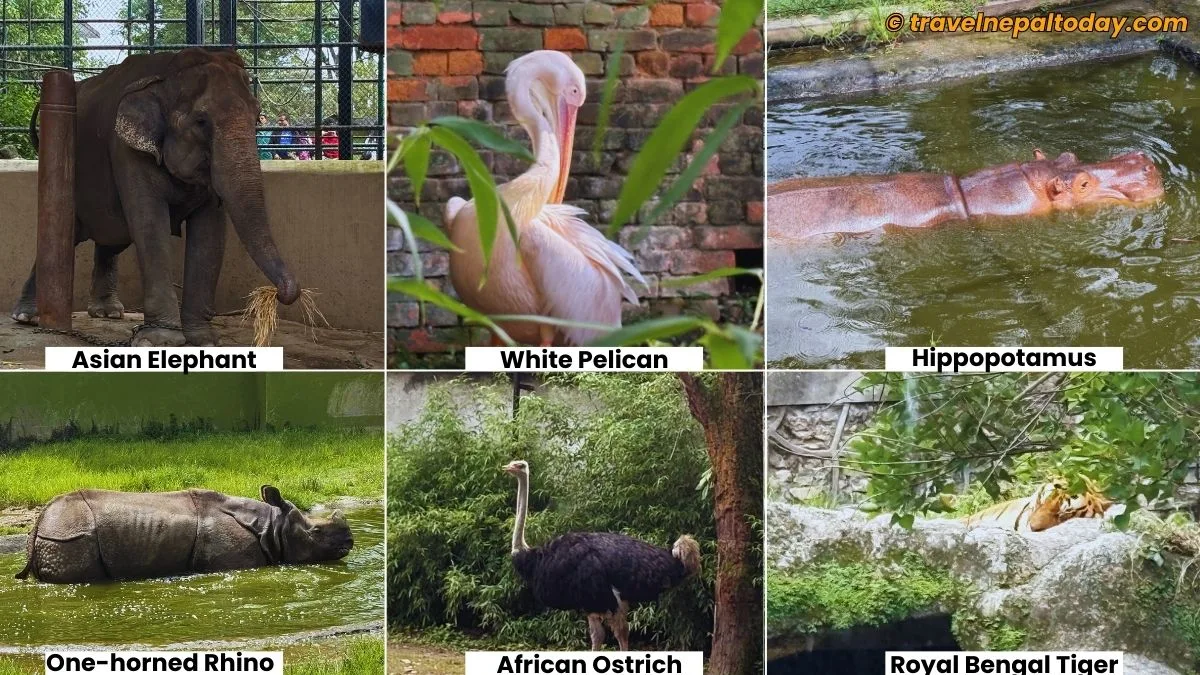
The ones that fascinated me were:
- White Pelican, who was left without a cage. It felt like I was in an open zoo.
- Blue and Yellow Macaw, perhaps the most beautiful parrots I’ve ever seen (even the Cockatoo was amazing!).
- Close encounters with Leopards, though their smell was disgusting. The same was true with Jackals.
- Himalayan Black Bear that was continuously dancing. Perhaps the smell of people was making him mad?
- We only got a glimpse of one tiger (we’re unsure where the other one went). And even that one was sleeping. So, not very fascinating!
- Rhinos and the only Hippo looked amazing as well.
- One Hog Deer was so huge. I had never imagined it to be like that.
- Within a month, I came in contact with the Spotted Deer (another one was in Simara Park, Bara during my Madhesh Pradesh ride).
There were more such incidents, of course. And maybe if you haven’t visited Central Zoo Nepal, it’s time to go!
Become a Part of Wildlife Conservation & Environmental Protection
More than one million visitors explore Central Zoo Nepal annually. You’re not just visiting an animal park. You’re actually stepping into one of Nepal’s key hubs for conservation education, wildlife rescue, and environmental awareness.
Central Zoo serves as Nepal’s only ex-situ conservation facility. It plays a vital role in housing threatened species, supporting wildlife rescue, rehabilitation, veterinary care, and conservation research.
The zoo’s ambitious “Friends of Zoo” (FOZ) program links over 200 schools in the Kathmandu Valley and engages nearly 5,000 students.
These young volunteers take part in hands-on activities like bird identification, waste management, educational competitions, night tours, cleanup camps, and even animal feeding.
Through FOZ, Central Zoo actively supports environmental clubs such as eco-clubs and green force clubs. Their students organize rallies, street dramas, folk song competitions, wall magazines, and more!
Every year, the zoo rescues hundreds of animals that are injured, orphaned, or caught in human-wildlife conflicts. After medical care, many are released back into protected areas. Those unable to survive in the wild remain under caring supervision at the zoo.
Pedal Boating or Motorboating in Central Pond
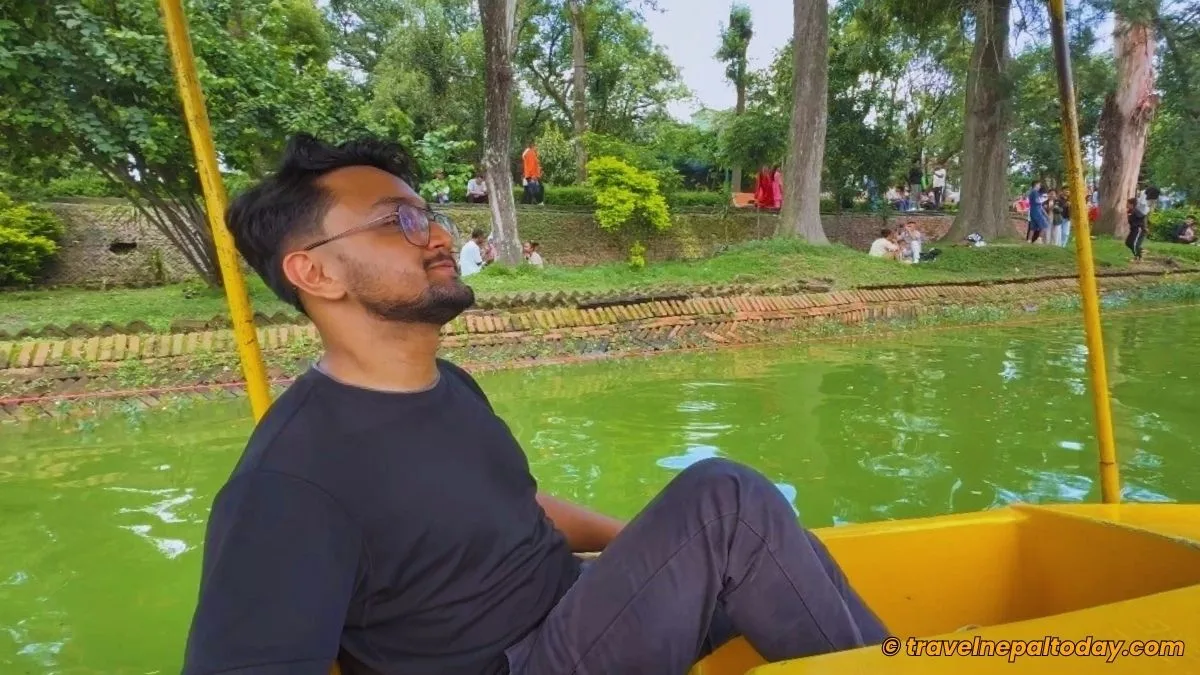
When I was a kid, I always wanted to try boating here in the zoo, and I don’t even know why. It’s not that I had never been boating before, but something about that day made my inner child want to go out there and take a round.
On weekends, the pond gets crowded, and the same happened with us. We literally had to wait for about half an hour for our turn.
Depending on your group size, you’ll be given a private pedal boat. You can also opt for motorboating if you want a cheaper option. But sadly, rowboats are no longer available!
Do note that a motorboat rider will be operating the motorboats, so you don’t get a reserved service on this one.
Here’s the updated ticket price for pedal boating and motorboating in Central Zoo Nepal:
| Boat Type | No. of seats | Type | Ticket Price |
| Pedalboat | 2 | Reserve, One round | NPR 255 per boat |
| 4 | NPR 380 per boat | ||
| 6 | NPR 440 per boat | ||
| 2 | Reserve, One round, FOZ member | NPR 205 per boat | |
| 4 | NPR 305 per boat | ||
| 6 | NPR 350 per boat | ||
| Motorboat | 10-15 | One round | NPR 65 per person |
| Two round | NPR 120 per person | ||
| Children up to 12 years of age, one round | NPR 55 per person | ||
| Children up to 12 years of age, two rounds | NPR 100 per person |
There are different boat types, too. My favorites were the swan and dragon boats. But since we didn’t have enough members, we got a simple boat for two.
To operate it, all you have to do is pedal. There’s also a tiller that lets you change direction.
You’re not allowed to boat in the middle of the pond, just around it. My suggestion is to go as slow as possible to fully enjoy the ride.
Our experience was okayish. It fulfilled my inner child’s wish, but honestly, the price felt overpriced for just one short round.
Visit Wildlife Display Center
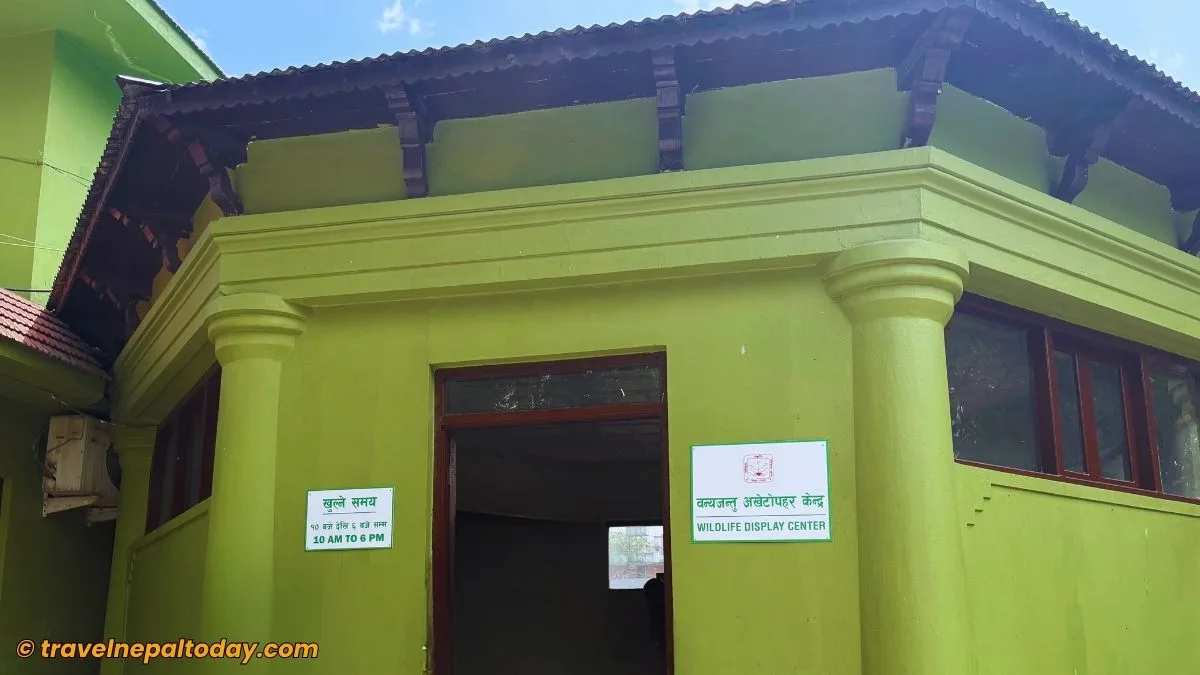
This is a small museum-like section that displays statues and models of the significant animals that were brought to the zoo in different years. You’ll find preserved specimens, murals, and educational exhibits of them.
Some of the notable ones included the python and the black panther. There were many more, but unfortunately for me, I forgot to take a picture. It’s a quick but interesting stop if you’re into wildlife history.
Take Your Kids to the Children’s Park
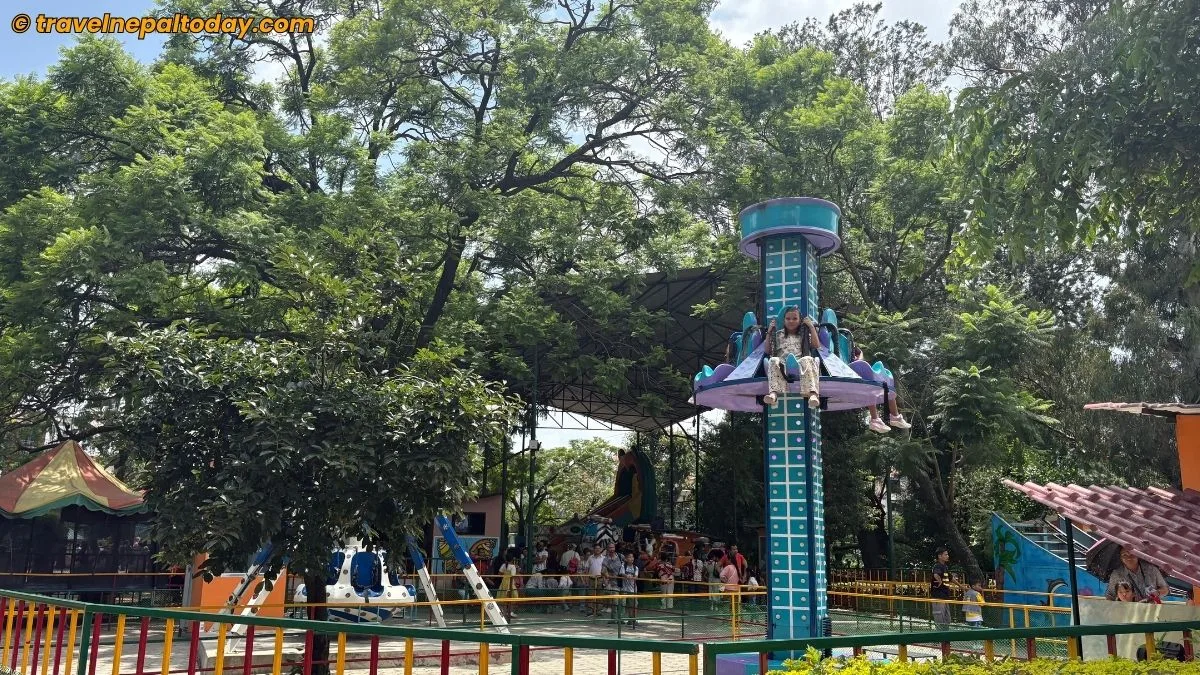
We didn’t enter this section since it’s meant for kids (and we were not with any). The Children’s Park here is like a mini fun park with swings, slides, seesaws, and more games.
The thing is, Central Zoo Nepal is optimized for kids. It’s a place where children learn about animals and their behavior. This is also one of the biggest reasons schools in Kathmandu have been bringing students here for decades (even I was here at least thrice)!
New photo booths have also been installed all around the place. So, don’t forget to take your kids there. You, as guardian,s can also take funny pictures together!
For Mothers: Infant Feeding Center is Also Available!
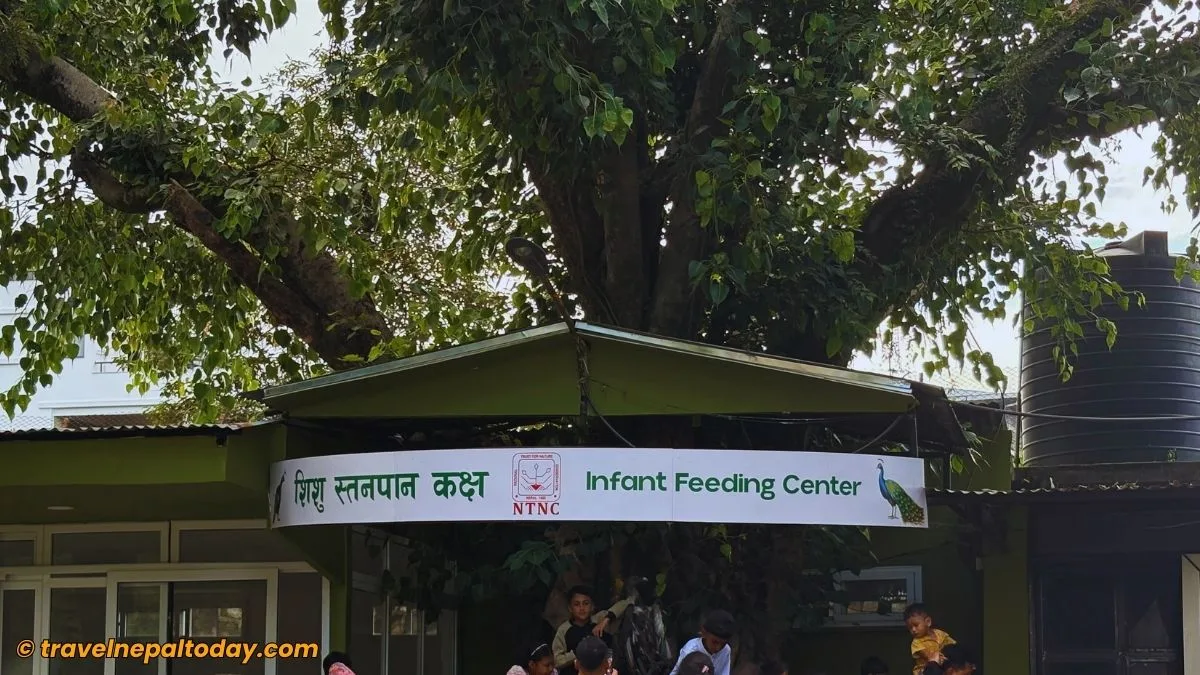
This booth here was honestly surprising because I hadn’t seen it a decade back. Turns out it’s a new facility for mothers to feed their infants inside the zoo.
Don’t get confused! It’s not meant for baby animals, nor is it a place where you get to feed infant animals. Even I was in a dilemma when I first read it.
The facility is for human mums and their infants. It’s definitely a great addition since most visitors bring children here.
Though personally, I’ve always wondered why infants are brought to zoos. They won’t really remember or learn much.
Even look at me! During my three-time visits to the zoo in childhood and early teenage days, I remember very little. And now, at 25, I’m visiting here to finally learn (or should I say relearn?).
Field Marshal Sir John Chapple Education Center [Useless?]
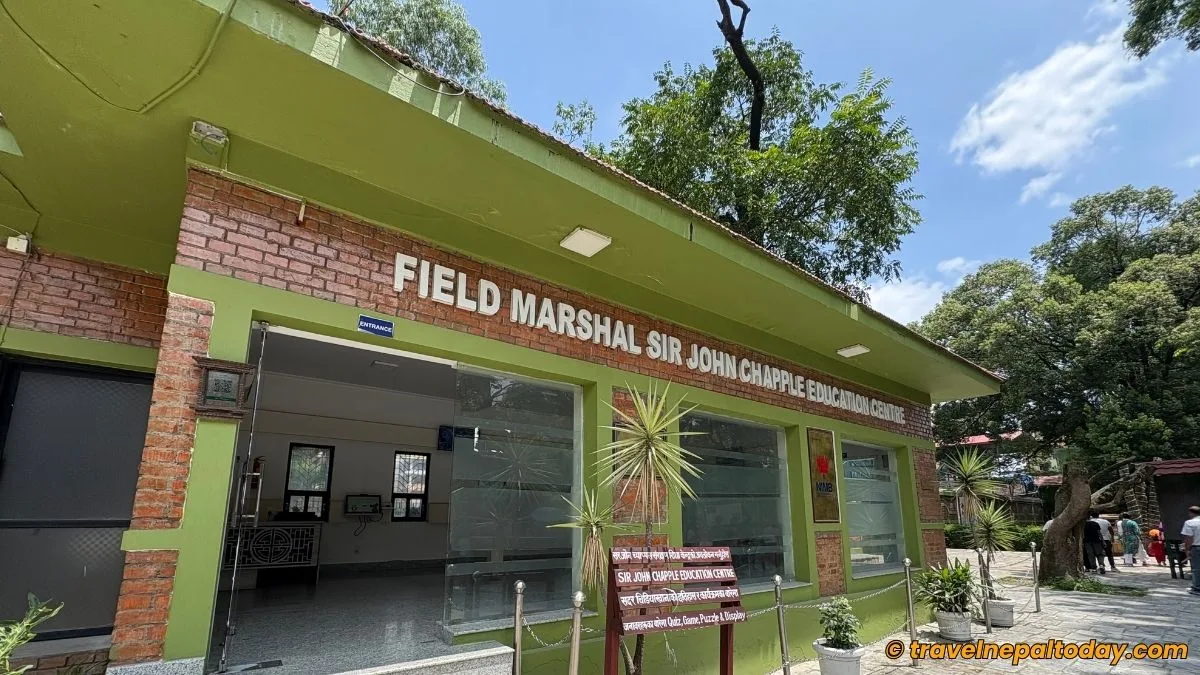
We went here, and honestly, nothing much was happening. There were no children trying to play the quiz game it’s meant to serve.
What did happen was that we appeared on the CCTV screen. Amusingly, a gorilla appeared and danced in front of us. If there were kids, they would have enjoyed it for sure. But the interactive machines featuring educational games weren’t working at all.
If the zoo wants this section to be meaningful, proper maintenance and repairs are needed. Otherwise, it just feels like a wasted stop!
For Snacks: There’s an In-House Restaurant
Good news for foodies! You don’t need to exit the zoo for food.
Many families bring a picnic inside. But if you don’t want to carry dry snacks, you can still buy fruit juices, candies, and other packaged food here. Prices are slightly overpriced, as expected.
Just be sure not to feed the animals. I saw some people doing so with a monkey that had come out of its cage.
It’s strictly prohibited, and for good reasons. Wild animals can get attracted to the food you’re giving, which could put you and other people at risk. So, just don’t!
Should Zoos Be Banned? Here’s My Answer!
Some say zoos are bad. They cage animals, make them lazy, and strip away their natural instincts.
Others argue that zoos are good. They conserve wildlife, educate children, and rescue species that would otherwise vanish.
So, who’s right?
While animal rights activists often call for zoos to shut down, the majority of people still don’t want them to completely close. Why?
Is it just for entertainment, or are modern zoos actually up to something bigger that people trust?
When we look at certain zoos across the world, they’re not just about caging animals for display. They’ve turned into centers of research, education, and species protection. This makes us rethink: maybe zoos are actually important for every country, including Nepal.
So, should zoos continue, or should we move on with only national parks and wildlife reserves? I’ll answer that. Keep reading!
The Pros and Cons of Zoos
Zoos have both pros and cons. Have a look for yourself:
| Pros | Cons |
| Provide education for children and adults about wildlife. | Many animals live in unnatural, confined spaces. |
| Play a role in conservation and breeding endangered species. | Risk of animals developing psychological issues (stereotypic behaviors). A similar one that we saw with the Himalayan Black Bear who seemed desperate to get out. |
| Rescue injured or trafficked animals. | Entertainment often outweighs genuine conservation in poorly managed zoos. |
| Offer safe spaces for research and scientific study. | National parks and reserves can sometimes serve the same purpose (that too without cages!) |
| Boost local economies and employment. | Staff safety risks are often overlooked. |
What Different Polls Suggest
Public opinion about zoos is divided, but not evenly.
Different polls conducted around the world show that while people agree conditions in zoos need improvement, most still don’t support a full ban.
Check out these polls for yourself:
| Poll | Support Zoos | Want Zoos Banned (completely or partially) |
| YouGov (2023) | 61% oppose total ban | 24% want a complete ban, 52% support phasing out large animals |
| Opinion Matters / Born Free (2023) | 76% support phasing out large species in zoos | |
| Forsa (VdZ-commissioned) in 2020 | 12% say they do not favor having zoos | 82% favor zoos |
| Angus Reid (May 2018) | 21% allow captivity | 47% say aquatic mammals’ captivity should be banned |
Most people don’t want zoos banned outright. But they do want better ones!
What to Learn From the ‘Best Zoos in the World’
While polls show that many people remain skeptical about zoos with growing debates around banning them, the reality is that zoos can be maintained at world-class standards if they focus on conservation, education, and ethical animal care.
Some of the best zoos in the world are showing what true wildlife protection looks like, and there are lessons here for all zoos, including Central Zoo Nepal:
- San Diego Zoo (USA): It is a pioneer in global conservation breeding programs. It has played a key role in saving the California condor from extinction and is one of the few zoos to successfully breed giant pandas in captivity. Its nonprofit arm, San Diego Zoo Wildlife Alliance, funds over 200 conservation projects worldwide.
- Singapore Zoo: Following the “open concept” zoo, it revolutionized animal enclosures by removing cages and replacing them with naturalistic barriers like moats, rivers, and lush vegetation. Visitors see animals in habitats that mimic the wild, setting a standard for humane enclosures globally.
- Chester Zoo (UK): A leader in large-scale conservation, it supports more than 80 international field projects, including many that tackle illegal wildlife trade. This zoo also integrates immersive educational spaces, ensuring every visit becomes a lesson in biodiversity.
These examples show that zoos don’t have to be “animal prisons.” When managed with vision and responsibility, they become living conservation hubs.
For Nepal’s Central Zoo (which already plays a role in education and rescue efforts), the goal should be to take inspiration from these revolutionary models.
In the Context of Nepal…
The Central Zoo of Nepal traces its history back to Juddha Shumsher Jung Bahadur Rana, who first established it in the 1930s as a private menagerie (captivity for exhibition).
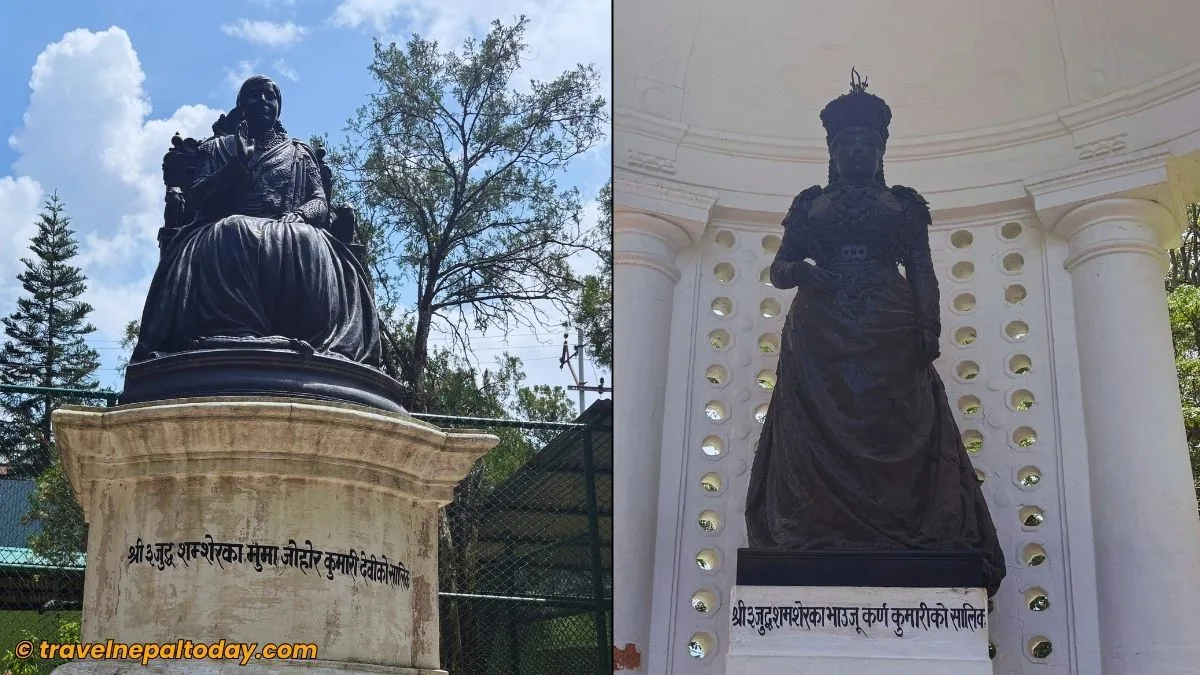
Later, his sister-in-law, Karna Kumari Devi, played an important role in expanding the zoo’s collection. Her statue still stands proudly on the premises, along with Juddha’s mother, Johar Kumari Devi’s. (Source)
At first, it was more about recreation. Today, the zoo says it’s working on conservation, education, and animal rescue, as mentioned earlier.
But when I visited, the condition wasn’t really good enough. Many animals looked tired and psychologically drained.
In fact, most of the animals were sleeping. Birds in small cages looked stripped of their freedom.
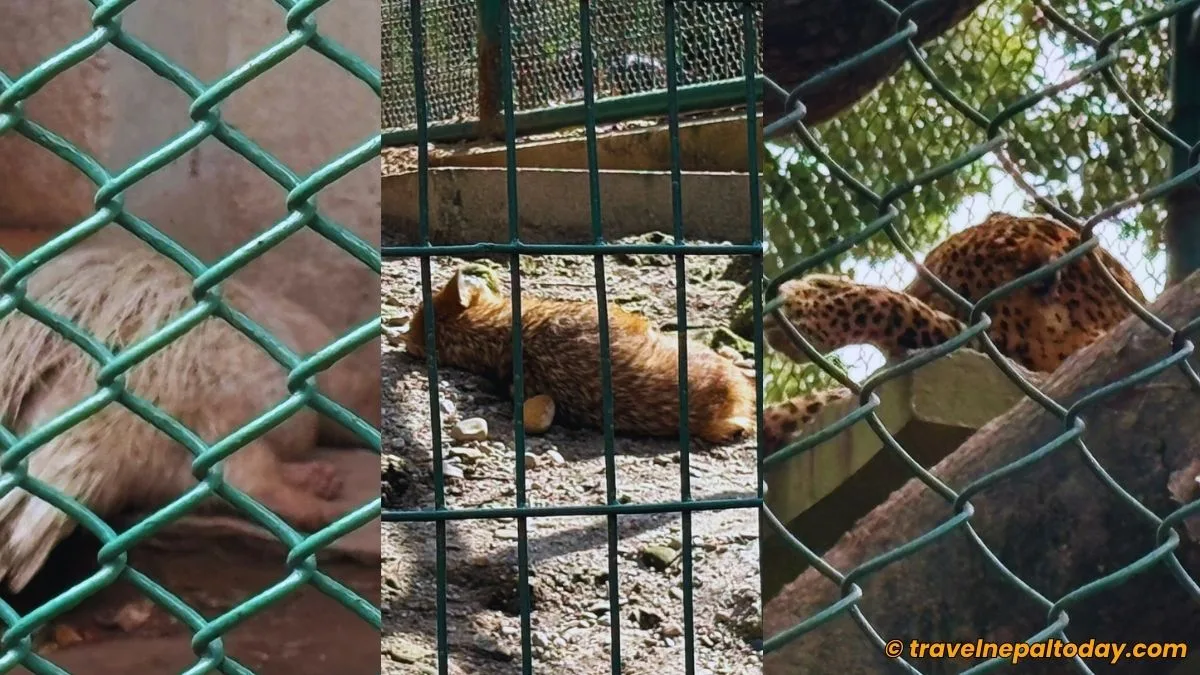
Who is to blame? The government? Maybe… Yes!
The ticket prices alone definitely cannot cover staff salaries, feed animals, and improve living conditions.
Without government support, the zoo suffers, and ultimately, so do the animals! While I’m currently unsure about the exact funding it receives, all I’ve heard is that it’s just too low.
Do keep in mind that the staff, however, seem to be quite devoted to their jobs. In fact, there’s a family that has dedicated itself to animal care for three generations! Seriously, their love and bond with these animals is so deep that we visitors won’t fully understand.
Yet, challenges persist. Security concerns have escalated in recent years, especially after a red panda that had previously survived two theft attempts died.
Looking into the future, Nepal is exploring new models beyond traditional zoos.
Proposals for open zoos and safari-style zoological parks have emerged, such as one in Tanahun (Bhanu Zoological Park spanning 425 hectares), one in Suryabinayak, and another in Bardiya National Park.
These concepts could transform how Nepalis and international visitors engage with wildlife, providing more space, natural habitats, and educational experiences.
My Verdict
First and foremost, I believe caging any animal is the wrong approach. That even includes those aquatic animals that were once brought for exhibition in Nepal for a brief period.
Open zoos or zoological parks are the way forward. Smaller ones, like the 6 hectares of Central Zoo, are not enough!
Tanahun’s 425 hectares is a far more realistic plan, to be honest. Bardiya’s plan looks even better, where animals can live in natural habitats while people can still observe and learn.
So, maybe zoos like Central Zoo, in confined spaces, should eventually be phased out or repurposed as temporary rescue and rehabilitation centers, where animals can recover and people can still visit and learn.
I’m not saying NTNC is doing nothing. They’ve been important in conservation, and the staff works hard.
But clearly, government funding isn’t enough. And not everyone loves to go to zoos like before. Even the crowds we saw were only because it was a Saturday.
To sum up: Nepal’s Central Zoo has done its part, but it’s time to step up. We need bigger zoological parks that give animals real space, protect their dignity, and still serve as classrooms for the next generation.
Bonus Tip: Things to Carry
Now that you’ve decided to visit Central Zoo, here are some products I suggest carrying to make your travel much more hassle-free:
| Item | Where to Get | |
| Amazon | Daraz | |
| Picnic Set (for those interested in picnics) | Wicker Picnic Basket with Picnic Mat | Baagmati Red Plastic Picnic Basket |
| Telephoto lens | APEXEL 36x Telephoto Lens | 12X Universal Zoom Telephoto Lens For Mobile Phone |
| Sunscreen | EltaMD UV Clear Face Sunscreen SPF 46 | Mamaearth Mineral Based Sunscreen 50Ml |
| Hat | Classic Dad Hat Cotton Adjustable | Trekking Hat With Clip |
| Comfortable Walking Shoe | Columbia Men’s Crestwood Hiking Boots / Columbia Women’s Newton Ridge Plus Waterproof Amped Hiking Boot | QIFENG Flex Pro Hiking Shoes for Men / QIFENG Zhjlut Hiking Sneakers for Women |
Final Words
This was a long one, but I hope landing on this page wasn’t a waste of time. And if you read it all, kudos to you!
I still don’t understand why people take infants to the zoo. Honestly, they don’t get to learn anything.
Even among school kids, only a few actually gain knowledge about animals during their visit. Most of them seem more focused on entertainment rather than learning (at least that’s the case with most Nepalese kids).
I have a big problem with the education system in Nepal itself. A zoo should be a strong platform for practical-based learning, which is very scarce in Nepal. But sadly, it hasn’t been developed to its fullest potential yet.
Improvement is what we really need. Even for me, it took a decade after my last visit to truly think about the zoo’s purpose. This time, I wanted to make the best use of the place. As Nepalese, we often don’t think this way.
But let’s leave my story aside and talk about yours. What do you think Nepal’s zoological plans should be? Let me know in the comments below!
And don’t forget to share this article with your friends and family so they are aware of all these things before planning a visit to Central Zoo Nepal.
Happy traveling to Lalitpur!
P.S. I’ve also written about why elephant safaris should be stopped. You can check it out in my article on the Chitwan Elephant Safari!
About The Author