
Sindhuli Gadhi ghumera herda… Sindhuli Gadhi ghumera herda… Suntali mai… katti ma ramro durbara… Maryo ni maya le maryo!
Of course, I had to start this blog by singing a song to you. And don’t lie to me! Even you were murmuring this while searching for it on the web, weren’t you?
There’s a reason why this historic site holds such deep popularity among Nepalese, from youths to elderly adults. Everyone has heard of it, and I’m pretty sure most of you want to see what the hype is all about.
While the drive to Sindhuli is a beauty in itself, there’s something even more captivating about the fort that sits on top of the legendary hill!
Upon visiting, you’ll be taken back to a time when Prithvi Narayan Shah was expanding his territory. Precisely, when the Gorkhalis stood tall to defend against the British!
And you’ll get to learn all of this on your trip to Sindhuli Gadhi. Through this article, I hope you’ll be even more intrigued to explore the War Museum, Sano Gadhi, Thulo Gadhi, and other scattered gems spread across the area.
Before we get started, promise me this: you’ll read till the very end… while still murmuring Sindhuli Gadhi ghumera herda…
Key Facts About Sindhuli Gadhi
| Location | Kamalamai, Sindhuli, Bagmati Province |
| Altitude | 1450m |
| Mode of Transportation | Private / Public Vehicle + Hike |
| Distance (from Kathmandu) | 135 km |
| Distance (from Janakpur) | 93 km |
| Distance (from Dhulikhel) | 105 km |
| Opening Time | 7 AM – 5 PM (summer), 8 AM – 4 PM (winter) |
| Museum Ticket Price | NPR 50 per person |
| Parking Price | NPR 10 for 2-wheeler, NPR 30 for 4-wheeler |
| Best Time to Visit | All seasons |
The Famous Road of Sindhuli: How to Reach Here?
Personally speaking, I visited Sindhuli Gadhi during my Madhesh Pradesh ride that went all the way up to Janakpur. On the return, we had to spend a night in Khaniyakharka after finding out that Sindhuli Gadhi gets closed after 5 PM.
But for those of you coming from Kathmandu, the total distance is about 135 kilometers, and you’ll need to follow the BP Highway to get here. The route goes like this:
Dhulikhel > Bhakunde Besi > Mangaltar > Nepalthok > Mulkot > Khurkot > Bhimeshwor > Sindhuli Gadhi
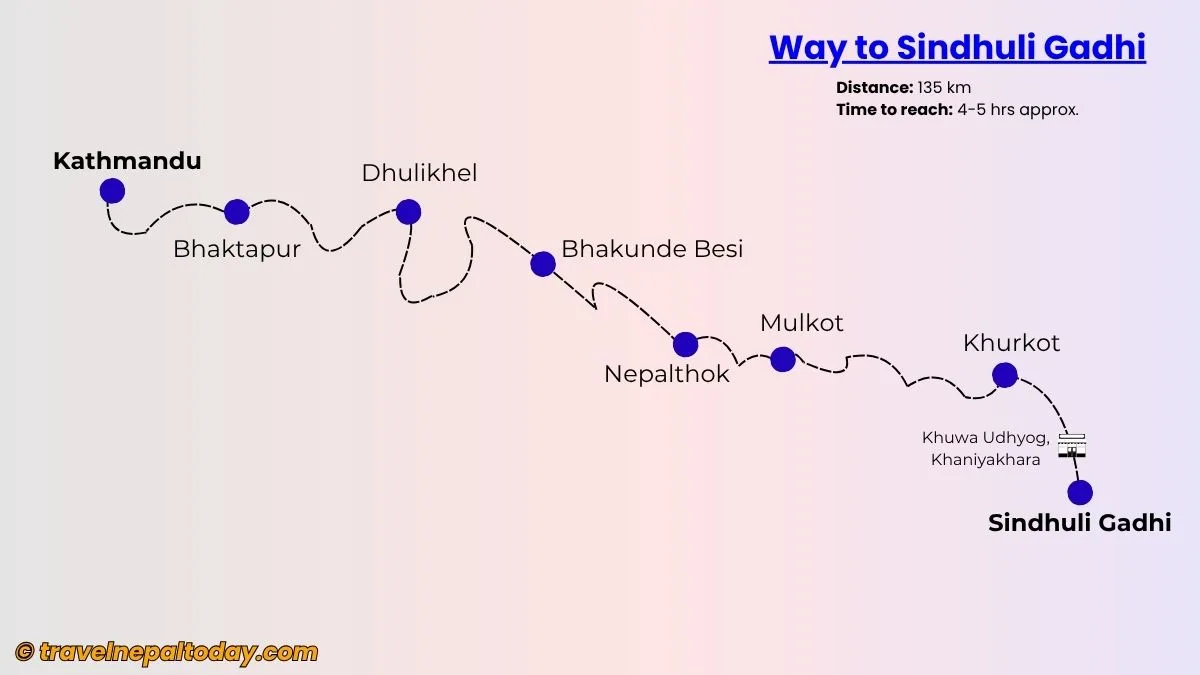
You’re probably wondering about the road condition, especially after last year’s flood that swept away an 8-kilometer section. To be specific, 34 kilometers on the third section from Khurkot to Nepalthok, and 50 kilometers on the fourth section from Nepalthok to Dhulikhel were damaged.
Even after a year, the road still hasn’t been restored to its original condition, and it might take longer, although reconstruction work has already begun. There’s definitely a route available, but the stretch from Roshi to Nepalthok (about 25 kilometers) is still quite rough and broken.
Also, in 2025, floods and landslides are continuing in this region, and they’re expected to create more issues. So, I wouldn’t recommend planning monsoon rides in July, August, or September.
But if you’re planning your trip after the monsoon, the off-road sections become more manageable, and it’s not too difficult for riders.
For those coming from Janakpur or anywhere from the eastern region, here’s your route:
First, reach Bardibas > Bhiman > Madhi Bazaar > Selfie Danda > Sindhuli Gadhi
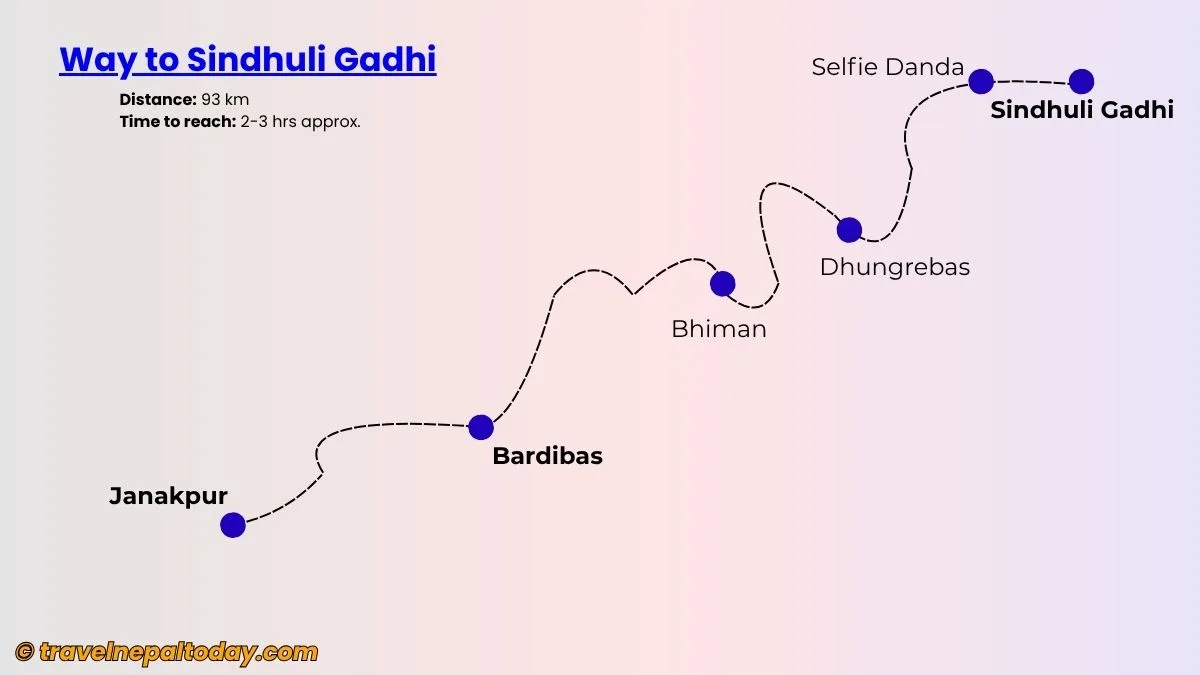
Most of this route lies in the Terai belt, so the roads are mostly paved up to Sindhuli Gadhi, unless certain sections are under construction for lane expansion to support international trade routes.
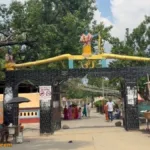
You’ll eventually reach Ratnachura, where you’ll see a big gate leading to Sindhuli Gadhi. Just follow that route, and after a short 2 km ride, you’ll arrive at the parking spot.
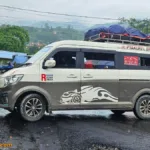
And those planning to visit Sindhuli Gadhi on a public vehicle, you can hop on to any Hiace or bus that heads to Bardibas/Janakpur or the one that uses the BP Highway.
Get off at the entrance gate and see if there are local tuk-tuks (you have to be lucky to find one). Otherwise, you’ll have to walk all the way up, which shouldn’t take more than half an hour.
Why Sindhuli Gadhi Matters: A Look Back in History
Many people only know about Sindhuli Gadhi from the nostalgic song that I sang in the very beginning of this blog. It’s “Suntalimai” by Krishna Bikram Thapa.
Needless to say, the song gained even more hype among youngsters when Nitesh Jung Kunwar brought it back into the limelight a few years back.
And who can forget Dhurmus’s unforgettable line, “Sindhuli Gadhi, let’s go buddy, she’s the bomb! Kanchi she’s the bomb!” in one of the episodes of Meri Bassai.
However, there’s so much more about Sindhuli Gadhi that every Nepali should know.
The fort became even more prominent after the inauguration of the War Museum in 2021. And seriously, it has now become a mini-hub for local and foreign tourists who are eager to learn about the legendary Gorkhali soldiers.
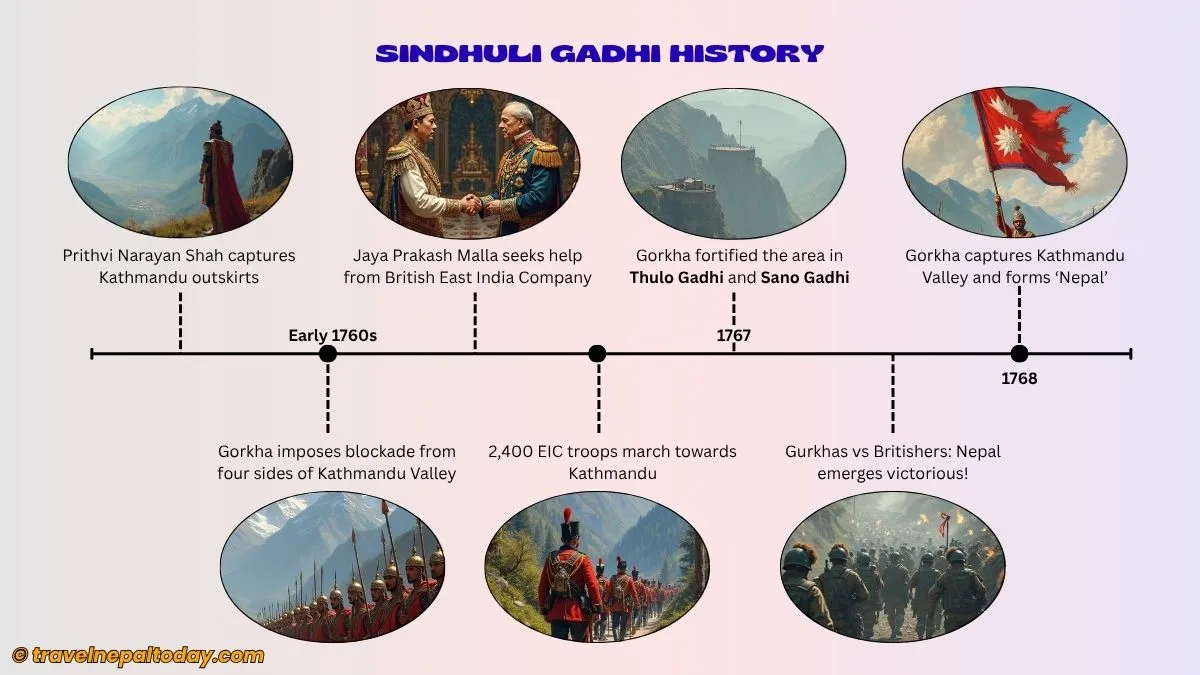
Let’s journey back to 1767, when these soldiers led by Prithvi Narayan Shah had to face off against the Britishers during his conquest to capture Kathmandu.
- By the early 1760s, Prithvi Narayan Shah had already conquered Nuwakot, Makwanpur, and Dhulikhel. Shah’s dream to capture Kathmandu Valley was now very close.
- After encircling the valley, he imposed a strict economic blockade to isolate the three kingdoms ruled by the Mallas at that time.
- Unable to handle the pressure, Kathmandu’s King Jaya Prakash Malla turned to the East India Company for military support.
- And in August 1767, the EIC dispatched around 2,400 troops under Captain George Kinloch to march through Sindhuli towards Kathmandu.
- The Gorkhalis had already fortified the area using two strategically located forts: the Large and Small Forts of Sindhuli Gadhi.
- Soon enough, the British troops entered into Gorkha-controlled territory.
- As they reached Pauwa Gadhi, the hidden Gorkhali units attacked simultaneously from the front and rear.
- Caught off guard in the rugged terrain, the British forces suffered heavy losses. Kinloch and roughly 800 survivors fled, abandoning most of their arms and ammunition.
- The Gorkhali army captured those weapons and later reused them in their other campaigns.
- The victory at Sindhuli Gadhi gave Prithvi Narayan Shah the upper hand to continue his unification campaign with renewed force.
The Battle of Sindhuli became a legendary moment in Nepali history, demonstrating that even well-equipped colonial forces could be outmatched by the strategic planning of the Gorkhas. Their effective use of terrain and guerrilla tactics played a crucial role!
Following this victory, Shah focused back on the Valley, slowly tightening the blockade. And within a few years, all three kingdoms of Kathmandu (1768), Patan (1768), and Bhaktapur (1769) fell under Gorkha control, which was later named ‘Nepal’.
[Main sources: Personal visit to Sindhuli Gadhi War Museum, source 1, source 2]
Main Attractions of Sindhuli Gadhi
Just riding the great road of Sindhuli isn’t the only highlight. After reading the history, you now likely want to learn more about the places within the Sindhuli Gadhi complex, right? Well, here they are:
Start With Siddha Baba Temple
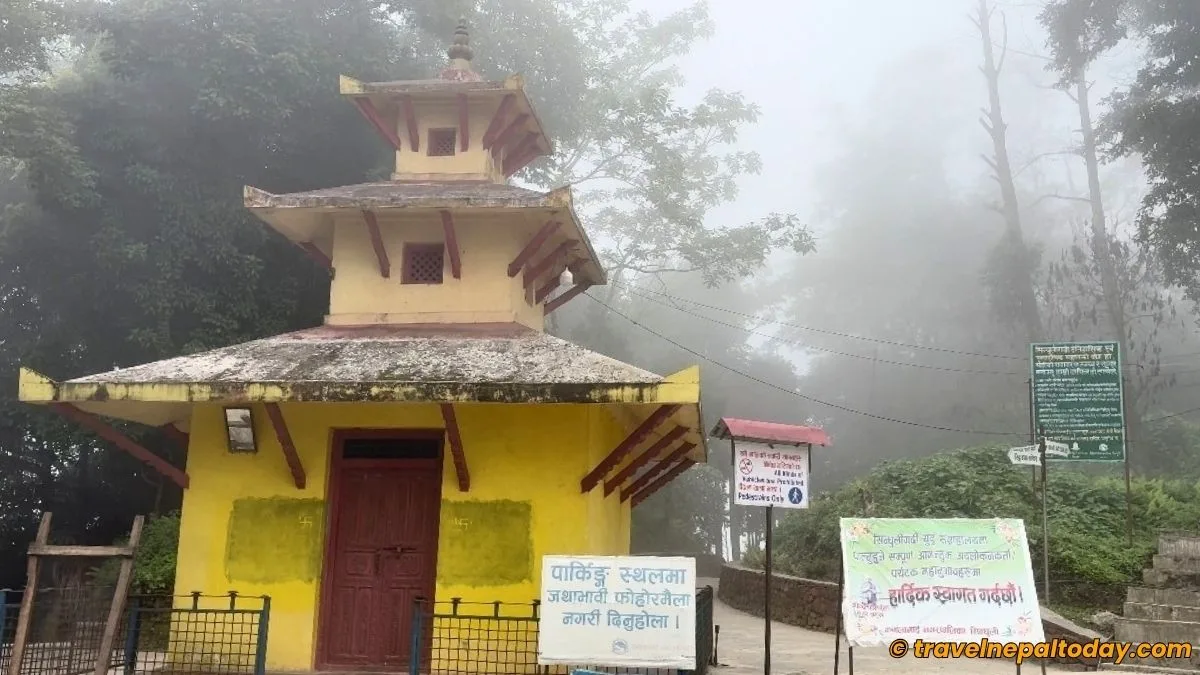
As soon as you reach the parking area, you’re supposed to pay an entry fee of NPR 50 for the visit to the Sindhuli Gadhi Durbar Complex. Vehicle parking is also charged NPR 10.
And as you start the walk, you’ll first see the Siddha Baba Temple. This was the same spot where the Gorkhali soldiers celebrated their victory over the British.
Of course, there was a different temple back then, and this one is a renovated version. But it still marks the exact location, leaving you to wonder how history has come this far.
Climb the Watchpoint of Small Fort
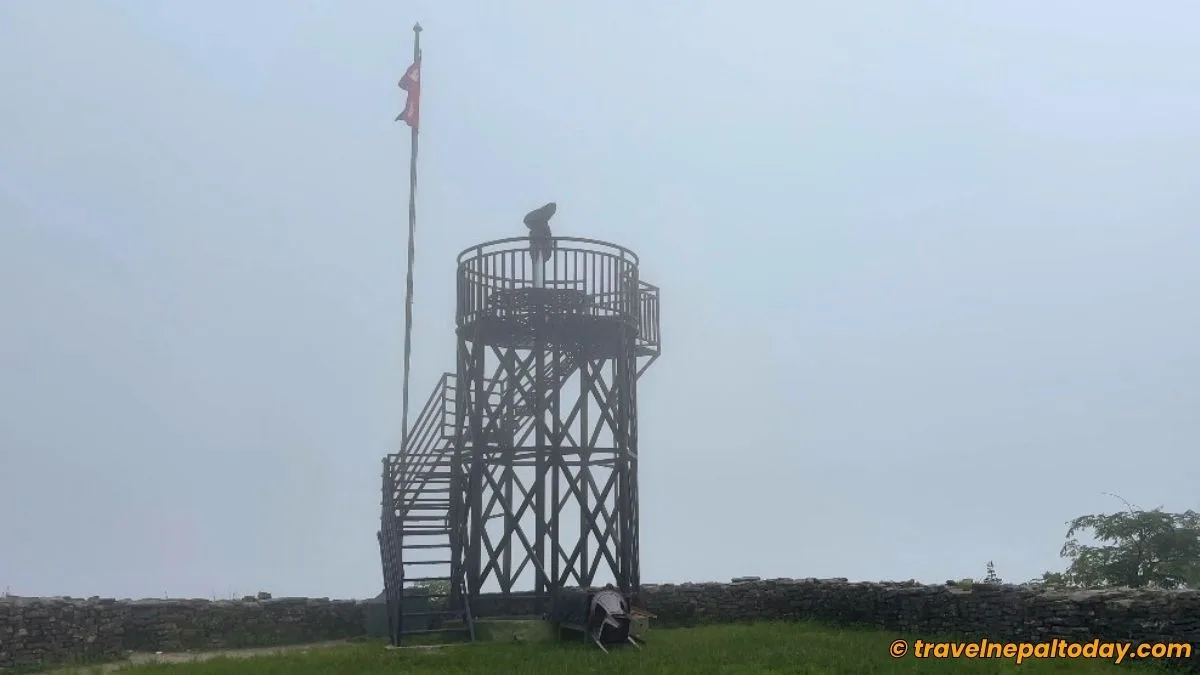
Now a short uphill climb takes you to the Small Fortress (Sano Gadhi). It served as a watchpoint and outpost to monitor enemy movements from a distance. Its elevated position allowed the Gorkhalis to spot incoming British troops early, giving them a tactical advantage.
A tower is still there, and a pair of binoculars is placed so you can observe the terrain and understand how the Gorkhalis used this tower within their strategies.
When we visited, Sindhuli Gadhi was completely covered in fog, so we decided not to climb the tower. We were pretty sure there wouldn’t be much to see.
However, if you’re here in good weather, make sure to climb the tower and enjoy the wonderful landscape!
The Old Court and Prison of Sindhuli
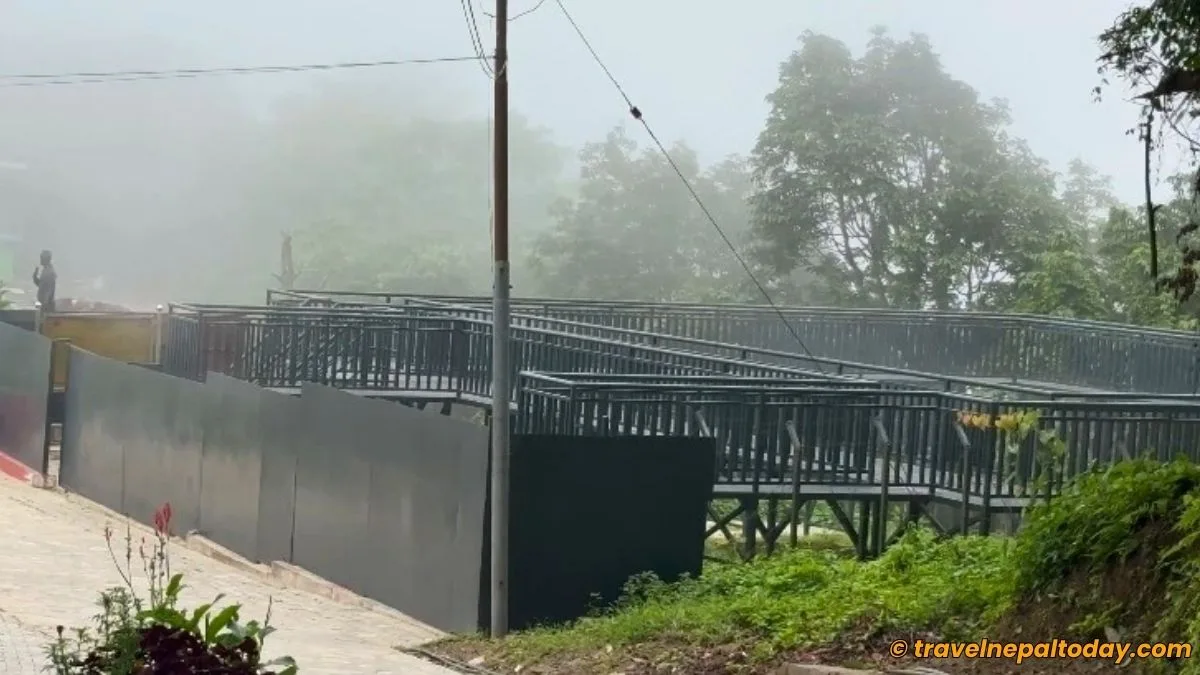
The next step is to head towards the big fort (Thulo Gadhi). But just as you move ahead, you’ll come across a major landmark inside the complex.
There’s a small open area that looks like a prison. And it turns out, this was the exact spot where Sindhuli’s prison and court were located until 2019 BS (1962 AD).
From the time Nepal was unified, this site served as the headquarters of Sindhuli District. Later, the prison, army housing, and police stations were all shifted to Sindhulimadi, the new headquarters.
Right outside the complex, you’ll also find the statue of the late folk singer Bikram Thapa.
And the complex also features a swing that kids can enjoy. Or maybe even you? Just like I did!
Explore the Sindhuli Gadhi War Museum
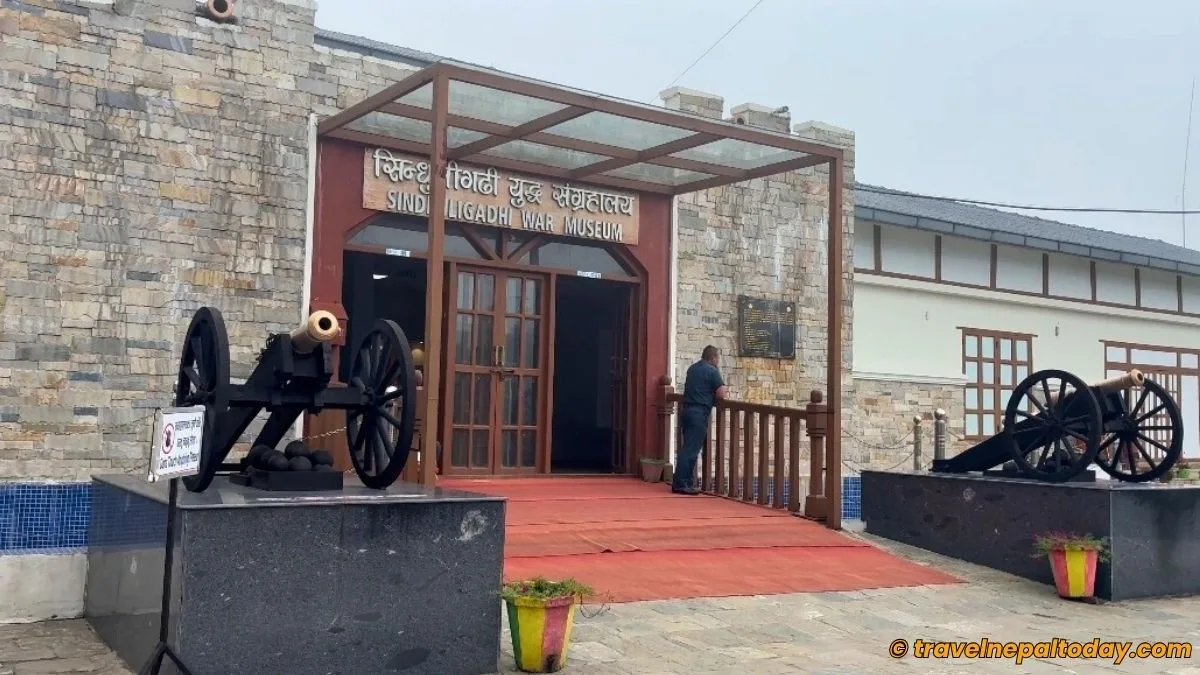
Soon enough, you’ll reach the main museum, which was inaugurated in 2021, as mentioned earlier.
Your eyes will immediately fall upon the names of the major figures of The Sindhuli Battle, like Kaji Banshraj Pandey, Khajanchi Bir Bhadra Upadhyaya, Shree Harsha Panta, Shikari Sardar Bangshu Gurung, and more. Some more names are carved on the pillars too!
You’ll find two cannons right at the entrance of the museum, which is guarded at all times. And right beside the museum, there’s even a small bakery!
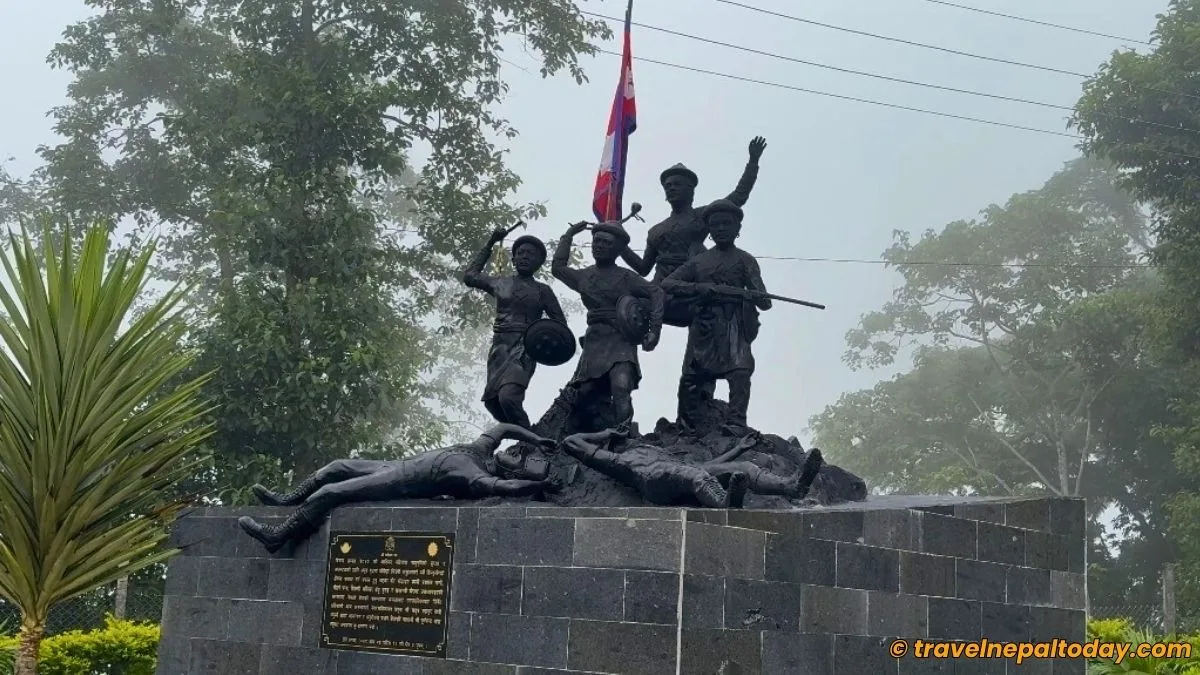
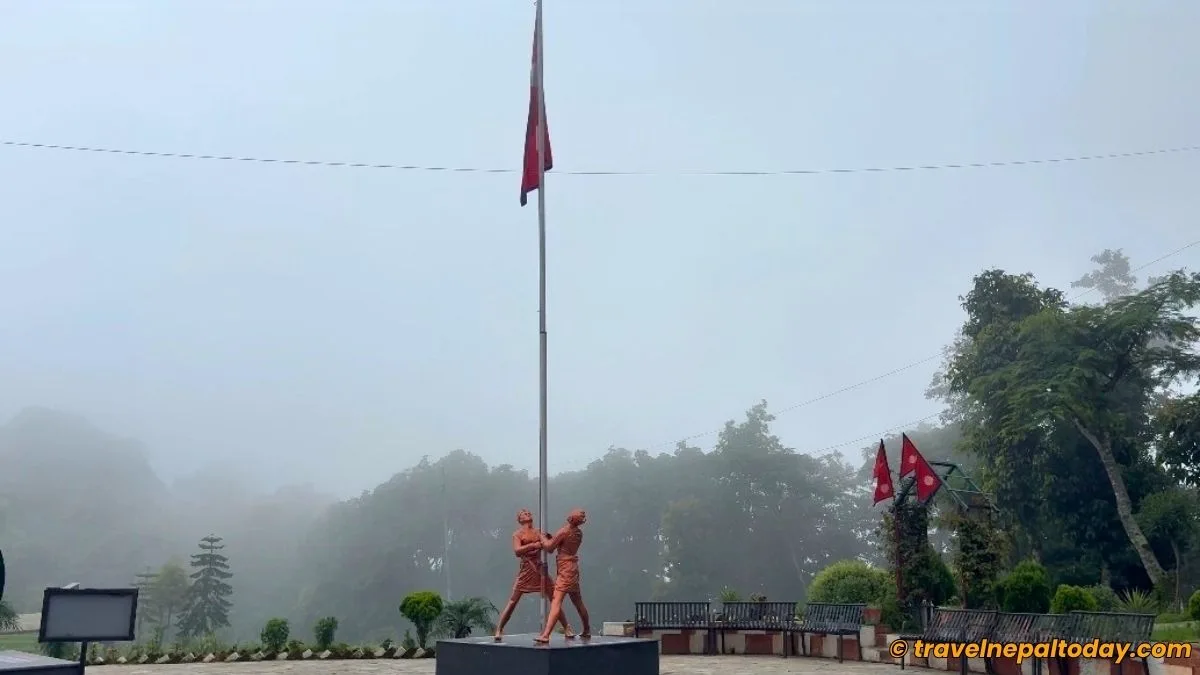
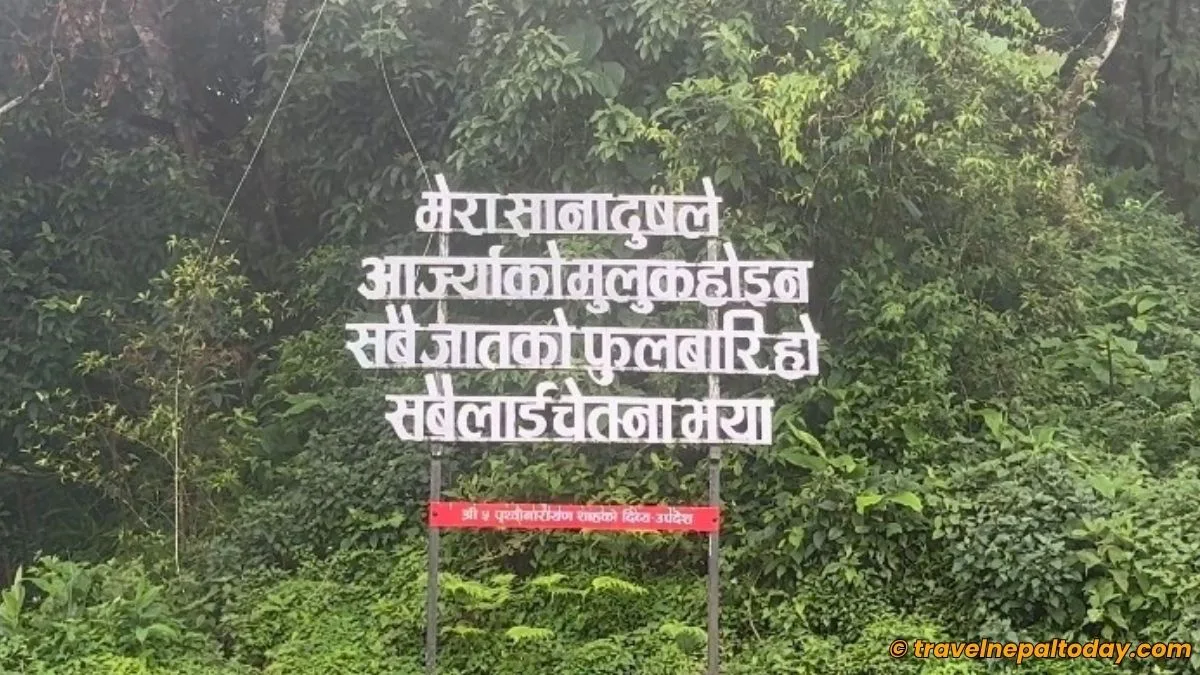
The complex also includes multiple other statues, which include the troops from the battle, two soldiers carrying the national flag of Nepal, and the main man, Prithvi Narayan Shah himself. His famous Divya Upadesh is also inscribed in the background.
There’s even a ‘Smarak Park’ within the premises that features a pillar containing historical details of Sindhuli Gadhi.
Until now, we only explored the outer section of the war museum. To enter the actual museum, you have to hand over your ticket to the guard. Note that photography is not allowed inside.
Inside, you’ll find the complete collection of Prithvi Narayan Shah’s teachings, along with original artifacts from the Sindhuli battle, like actual weapons, utensils, musical instruments, a map of Greater Nepal, detailed models of the Sindhuli area, and more!
Thulo Gadhi (Large Fortress)
Now comes the main and long staircase that takes you all the way to the big ground of Thulo Gadhi. This was built back during the 1960s and was used to control and monitor the entry point to Kathmandu Valley, along with the trade route to Tibet.
While this fort was meant to be the place where the Gorkhalis would face the British, that never happened! The fort was rather used to support the troops stationed at Pauwagadhi and Dhungre Bhanjyang with logistics and fire support.
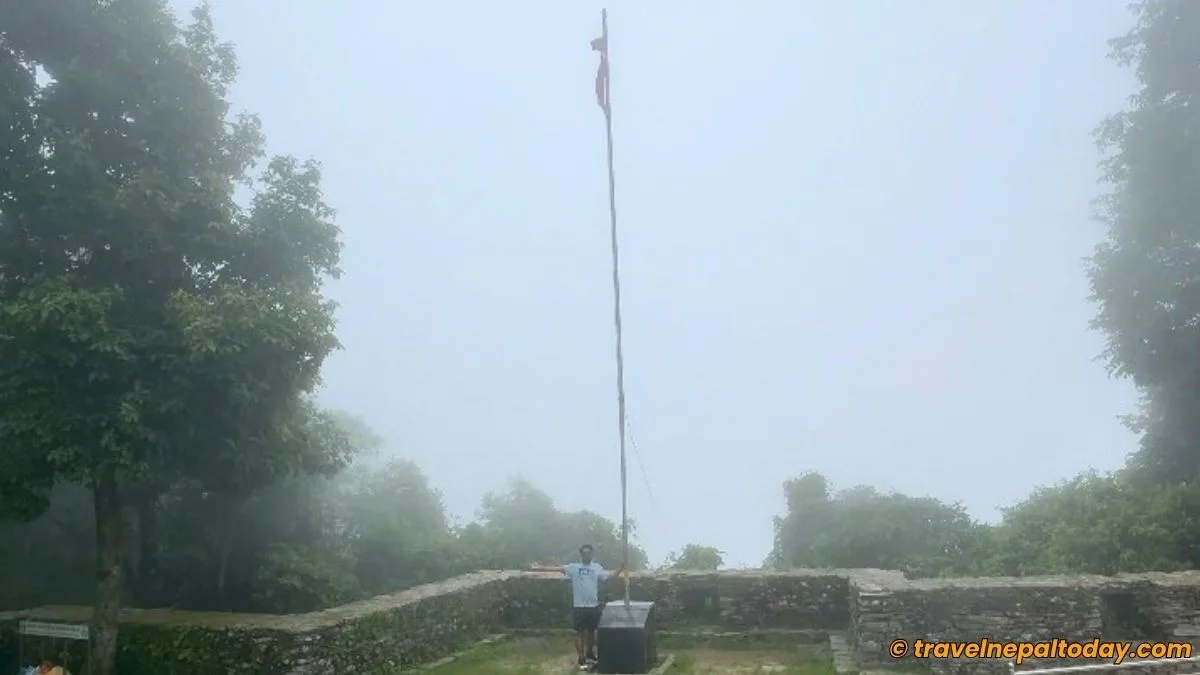
Currently, a tall national flag has been placed. And when I was holding the flagpole, it was truly a proud moment to call myself a Nepali.
Besides that, you’ll also spot a huge pit, where water was most likely stored for the troops. The entire structure shows that Thulo Gadhi was built using ancient defense strategies. You’ll know once you get there yourself!
More Things to Do in Sindhuli
Sindhuli is surely more than just the fort and museum. There are countless other things you can do and places you can visit. I’d love to share every corner of this wonderful and historic district.
However, during my recent visit, I could only cover the parts that fell along my route to Kathmandu. And if you’re planning to visit Sindhuli Gadhi, I really think you shouldn’t miss out on these gems as well:
Seti Devi Mandir in Mulkot
Located somewhere between Mulkot and Khurkot, this entire hill (locally called Ritthe Bhir) is covered with mirrors placed by many riders who pass through this route.
There’s a saying that when the road was constructed, the actual temple of Seti Devi got destroyed, and that led to plenty of accidents on this exact spot. To prevent such things from happening again, a temple was rebuilt by the roadside.
Don’t know about the mirrors though. But as per this Reddit conversation, when a shaman (dhami in Nepali) sought help from the goddess, she apparently instructed to “keep mirrors.”
Perhaps she meant convex mirrors so drivers could see vehicles from the other side. But people here misunderstood it as literal mirrors, and you can see the result today!
Ee wrong number hein! Dhami ne firki leli! :p
Stop By the Popular Selfie Danda aka Gadhi Danda
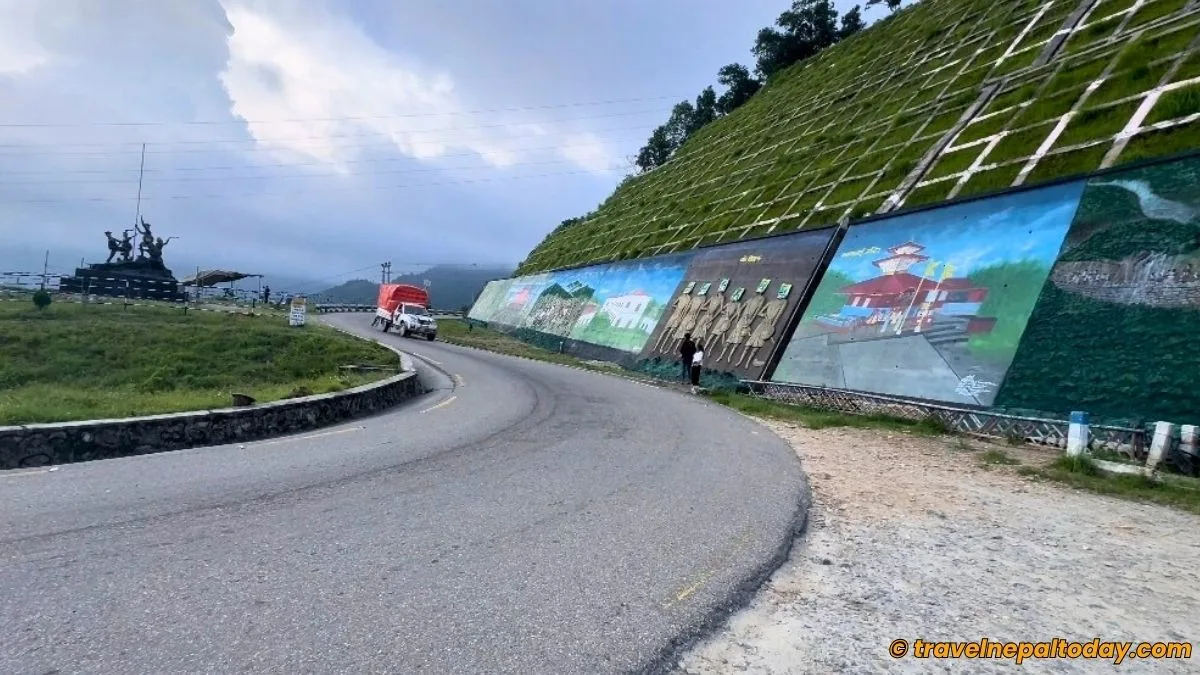
Just about 3 km downhill from the Sindhuli Gadhi gate is the Selfie Danda as called by locals, but officially known as Gadhi Danda.
It’s one of the major attractions along the BP Highway and a favorite riding spot not just for the locals in Sindhuli but also for visitors from Mahottari and the nearby Terai region.
But note that this hilltop isn’t just for taking selfies and creating TikToks. It’s a site that features statues and wall paintings showcasing the bravery and legacy of Sindhuli Gadhi.
During our return ride from Janakpur, Selfie Danda acted as a rest point only, as we wanted to reach Sindhuli Gadhi as fast as possible. Maybe we should have returned and explored this hill more? No worries! Next time for sure!
Nonetheless, the efforts from Kamalamai Municipality to promote historical tourism in Gadhi Danda are quite appreciable. This seems to be the perfect way to attract people to at least give a visit to Sindhuli Gadhi.
Try Khuwa in Khaniyakharka
During our visit, we stayed in Khaniyakharka, which was just about 3 km ahead of Sindhuli Gadhi. There are a few more hotels in Sindhuli Gadhi and Selfie Danda that you can opt for too.
I’ll soon update this article with the best resorts in the area, so keep this page bookmarked!
What’s special about Khaniyakharka is the Sindhuligadhi Khuwa Udyog. We went to taste the ‘khuwa’, or as most say ‘kurauni’, and got to learn quite a lot from the owner himself.
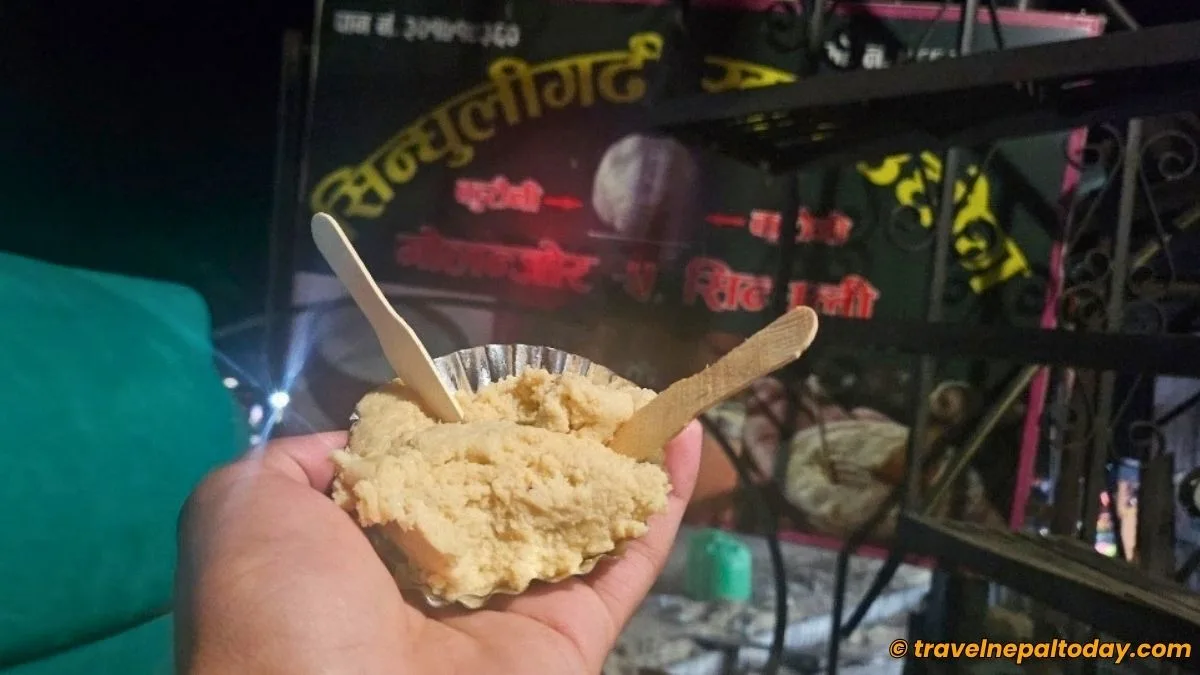
He shared his story on how he came back home to start his own business and sell this cultural product to the top hotels in Kathmandu as well.
And most importantly, we got to learn how refined the process is. I’d love to cover this in a separate guide for sure (just let me know in the comments if you’d like to hear more!).
And let me tell you: the khuwa made from pure buffalo milk here was TOO GOOD! It costs NPR 100 per gram, and I definitely had to get some souvenir (koseli) back home.
You’ll also find Malda mangoes around the area, very popular in the Terai region during the summer season.
Note: They’ve set up the wrong location on Google Maps. So, make sure to ask the locals in case you miss the board. It’s a small shop and you have to climb up the ladder to reach here.
Expected Budget For This Trip
A one-night stay in Sindhuli Gadhi will cost differently based on your spending habits. For those planning a budget trip, the visit should be doable within NPR 1,500 to 2,000 per person.
Here’s the expenditure for the two of us, which should give you a clear idea of where your money will mainly go:
| Hotel | 2200 |
| Petrol | 1000 approx. |
| Parking | 10 |
| War Musuem Entrance Ticket | 100 |
| Khuwa Tasting | 100 |
| Khuwa as koseli | 500 |
| Extra (snacks and drinks) | 500 |
| Total | NPR 4410 = NPR 2205 per person |
Final Words
That was my visit to Sindhuli Gadhi, and I hope I was able to share some knowledge about this historic place.
It’s a must-go if you’re a Nepali. And even if you’re a foreigner reading this blog, I’m sure you’re intrigued to visit this historic side of the country.
You don’t have to make a designated plan to Sindhuli. It automatically fits perfectly as a side trip if you’re visiting any part of the eastern region, just like I did with Janakpur and other areas of Madhesh Province.
I’ve shared each of the stories here on Travel Nepal Today. Hopefully, you’ll explore these pieces of writing as well.
And if you loved this article, don’t forget to share it with your friends and make your plan to Sindhuli Gadhi right away!
Even if you’re not planning to add this as a side trip, it could be a perfect weekend getaway spot. Just be sure of the BP Highway conditions, though!
Happy travelling to Sindhuli!
About The Author