

Annapurna First Base Camp, widely known as North ABC, is a relatively easy-to-trek destination with surreal landscapes. My favorite spot here was the beautiful Panchakunda Lake, sitting right in the middle of some of the tallest mountains in the world.
This trek is perfect for those looking for their first trekking experience, as it’s short, with relatively fewer challenges yet mesmerizing mountain sights.
We went on this journey in the month of May (just as spring was ending and the pre-monsoon was approaching). Despite the unpredictable weather, we were able to witness exactly what we had come for!
In this article, I’m not just going to share my experiences of this trek but also guide you through every aspect of it. You’ll get to know the vehicle details, expected budget, and information on each place that I learned during my own short trip.
We completed this journey within just three days from Kathmandu. But let’s be honest—that’s too little time for many of us. So, depending on your time availability, feel free to explore the two different itineraries of this North ABC Trek.
Key Facts About Annapurna First Base Camp (North ABC) Trek
| Region | Narchyang, Myagdi District, Annapurna Conservation Area, Gandaki Province |
| Max. Altitude | 4,190m (Annapurna I Base Camp) |
| Trip Duration | 3 or 4 days |
| Trek Duration | 2 or 3 days |
| Trek Difficulty | Easy to Moderate |
| Network Availability | Up to Gurase Danda |
| Charging Availability | Solar Charging available at night |
| Best Time to Visit | October to Early December |
| Permits & Fees | For Nepalese: Free Entry |
| For Tourists: Annapurna Conservation Area Permit and TIMS Card (there’s no check post for inspection currently) |
Annapurna I Base Camp Route Map
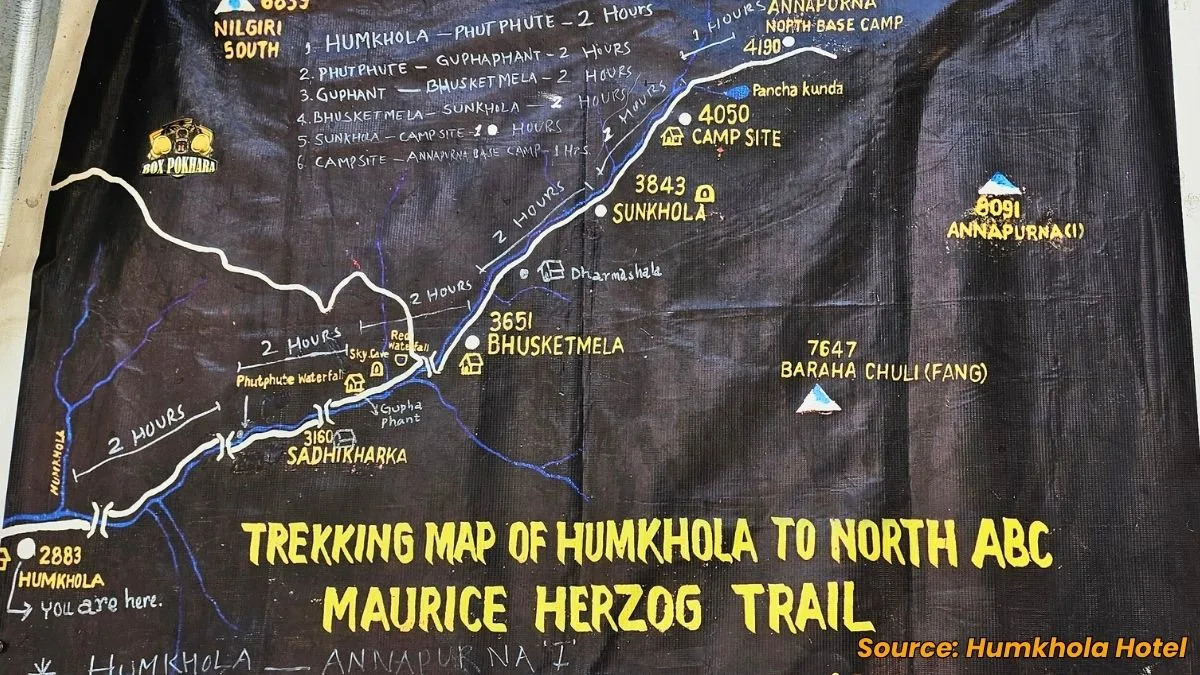
What You Need to Know About the Maurice Herzog Trail
Heard of Maurice Herzog? Well, he was the leader of the 1950 French Annapurna expedition team that summited Annapurna I (8,091 m).
In fact, the team was the first ever to summit an eight-thousander. Their story is nothing short of a drama—from failing to summit Dhaulagiri to facing controversies claiming they hadn’t even summited Annapurna I itself.
Despite everything, Herzog’s heroics have led to this North ABC trail being named after him.
Most of us are perhaps only aware of the southern ABC trail because it has been the most accessible route for many years. But getting to the main ABC (which lies along the Maurice Herzog Trail) used to be quite the challenge.
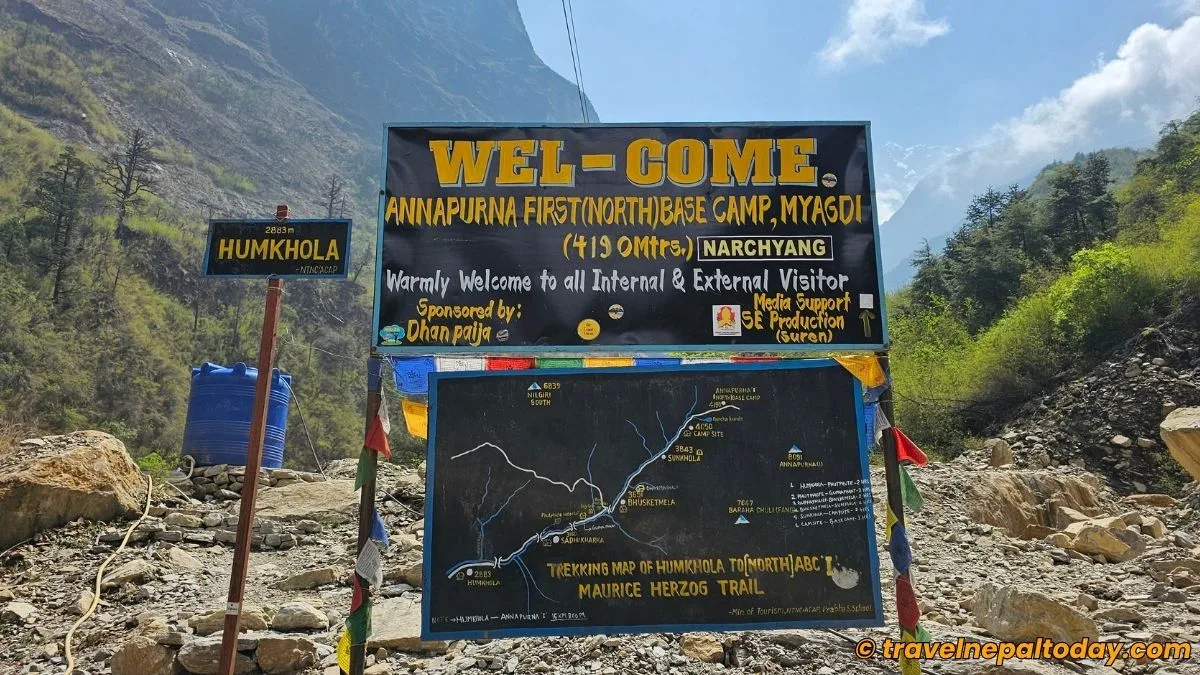
There are now jeep services that reach up to Humkhola, and the trail is constantly being maintained to make it even easier.
And it’s not just about walking for two days and reaching the final destination. There are multiple attractions along the trail that make this trip even more worthwhile:
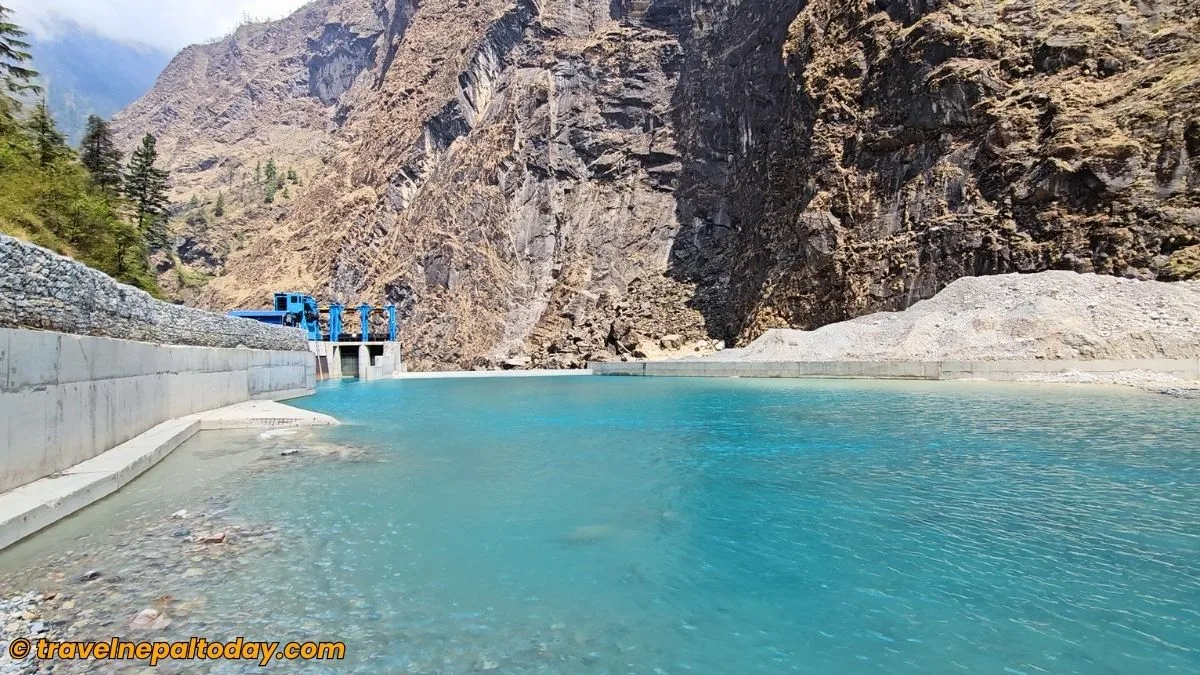
- Humkhola Dam: A part of the Nilgiri II Hydropower Project, this dam has led to road construction up to the point, making it easier for travelers like you and me to complete the trek in fewer days.
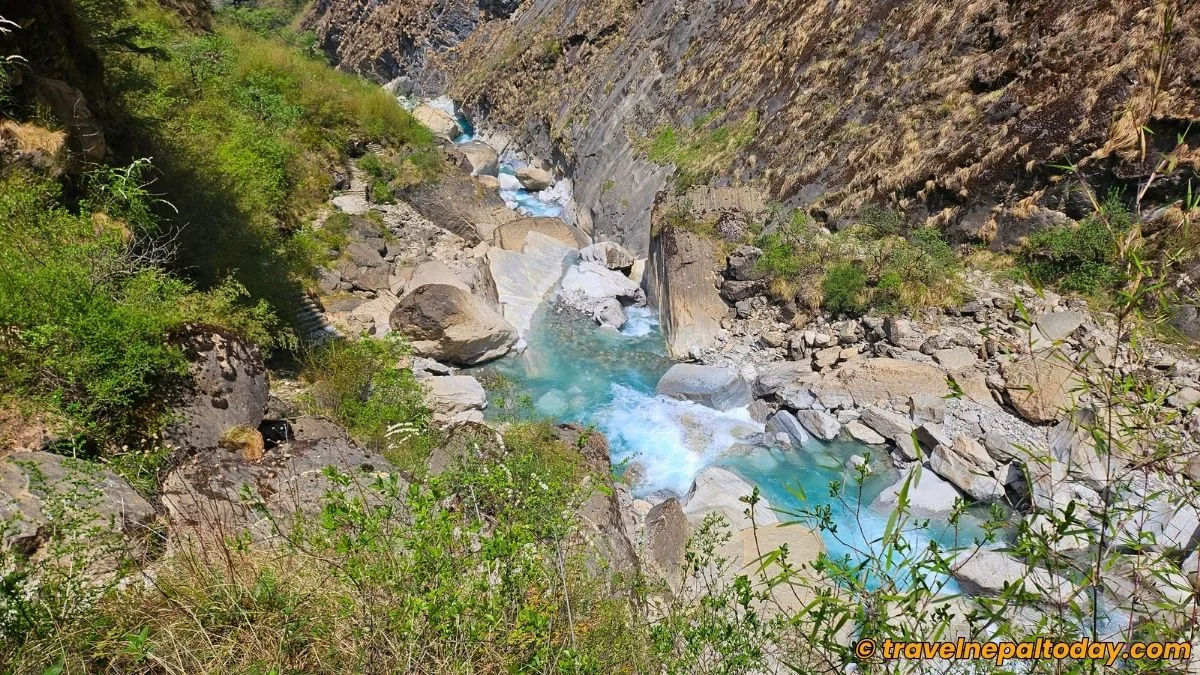
- Nilgiri River: Throughout your hiking period, you’ll be accompanied by this river, which flows from the confluence of Panchakunda Lake and the melting snow from Nilgiri and Nilgiri South.
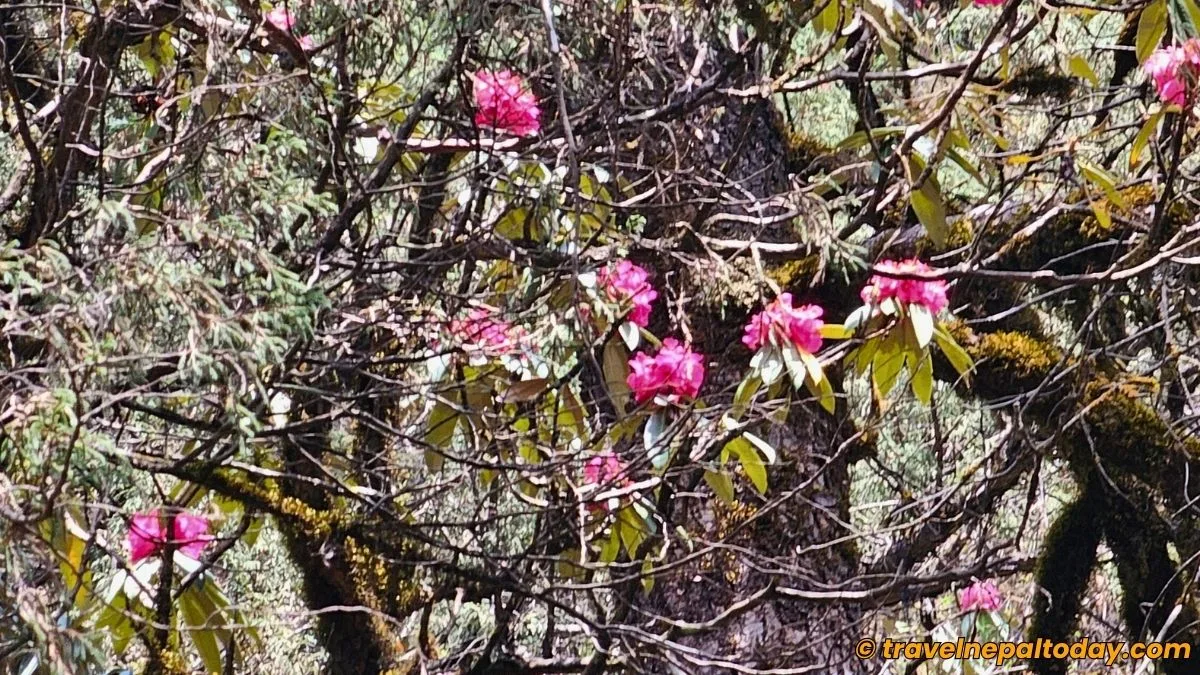
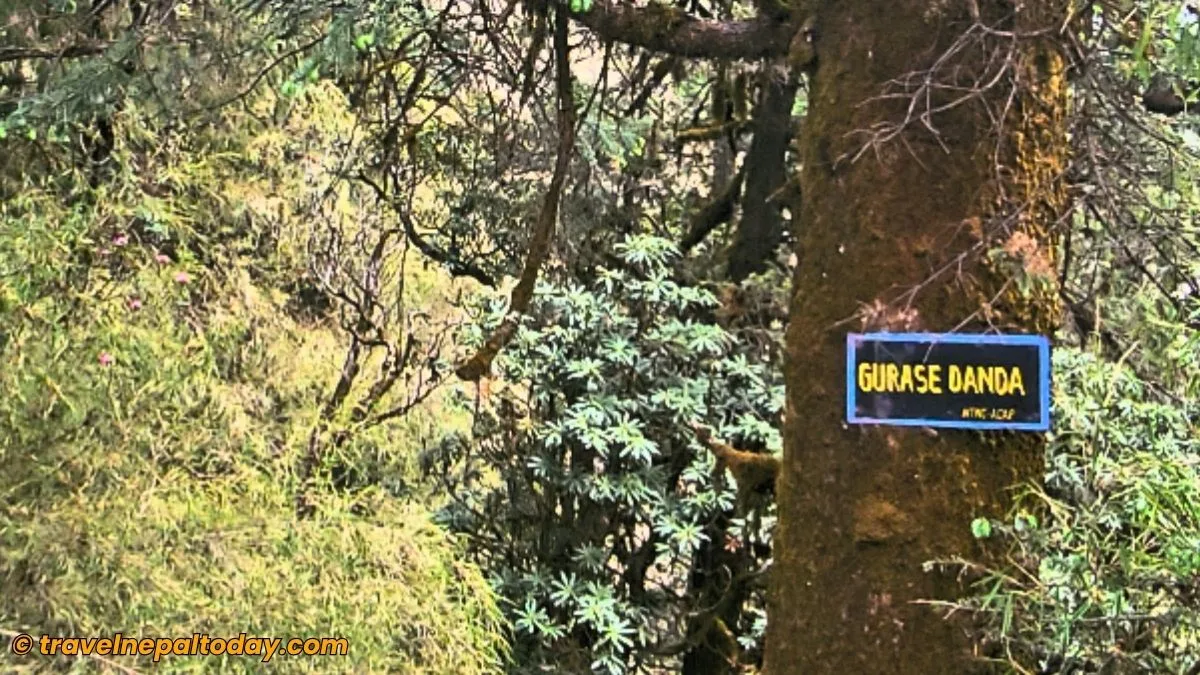
- Gurase Danda: If you’re doing this trek in the spring season, this spot presents you with blooming rhododendrons. However, in our case (May), we were a bit late, and only a few flowers remained.
- Phutphute Waterfall: A very beautiful waterfall located about halfway to the top. The natural architecture, resembling a half-faced man (some say it even resembles a lion’s face), makes it particularly interesting.
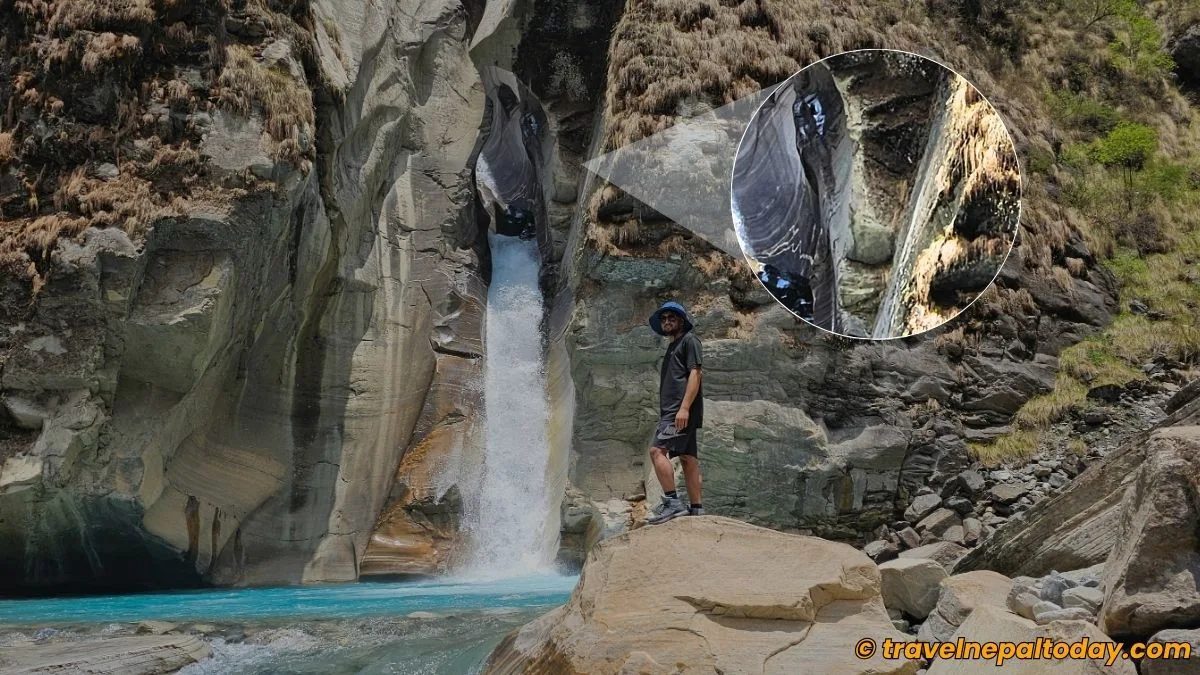
- Sadhi Kharka: ‘Sadhi’ means ‘half’ in the local language, and ‘kharka’ stands for pastureland. This indicates that the point serves as the halfway mark to reach Annapurna I Base Camp.
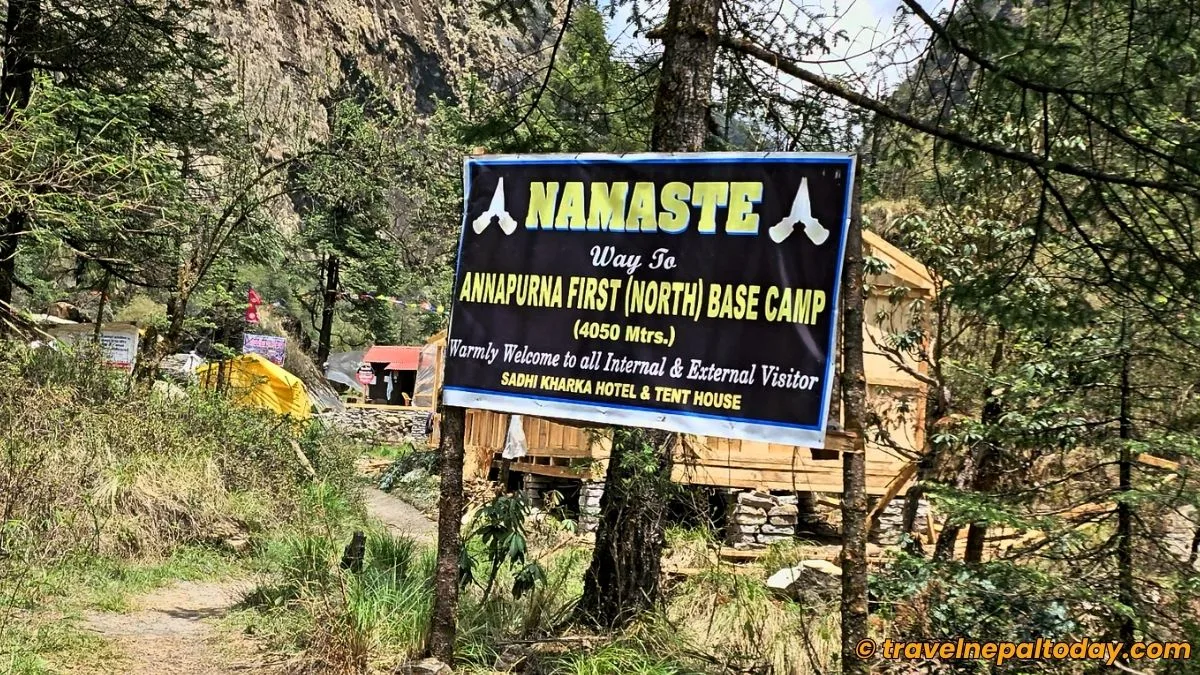
- Pancha Waterfall: While we didn’t get to see the best of this waterfall, you must be here after the monsoon season to witness it in its full glory. It’s named for the five downstreams that come together to form a single majestic fall.
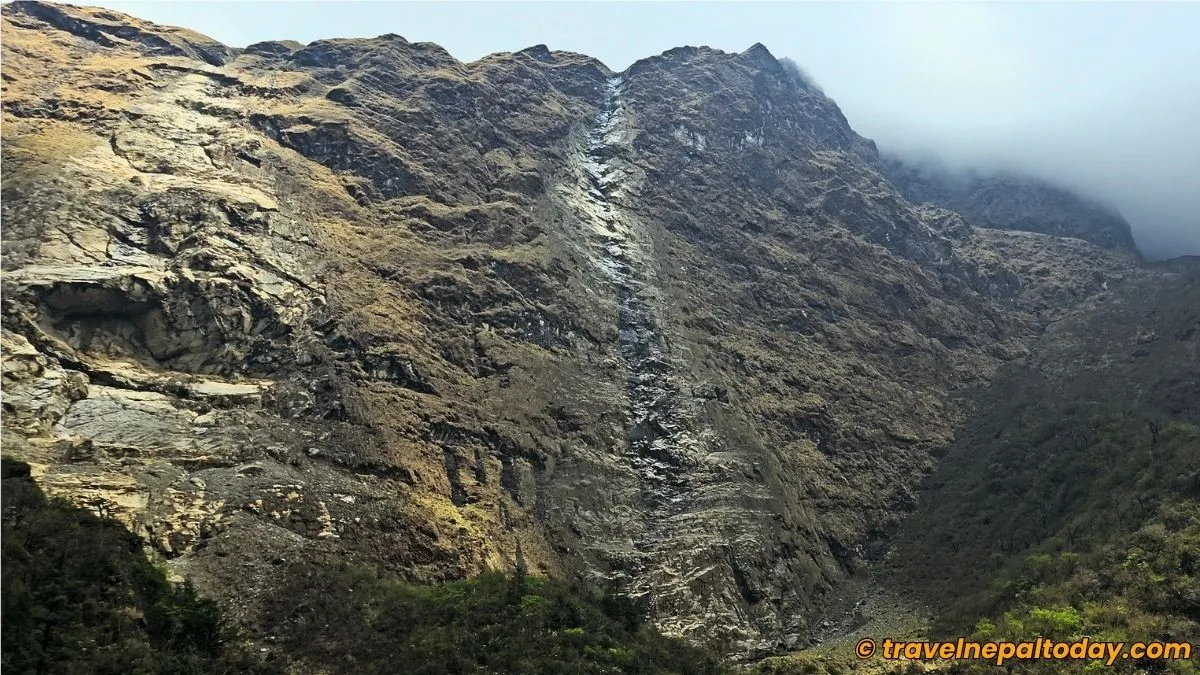
- Gupha Phat: ‘Gupha’ refers to the caves seen along the route, and ‘phat’ again stands for pastureland.
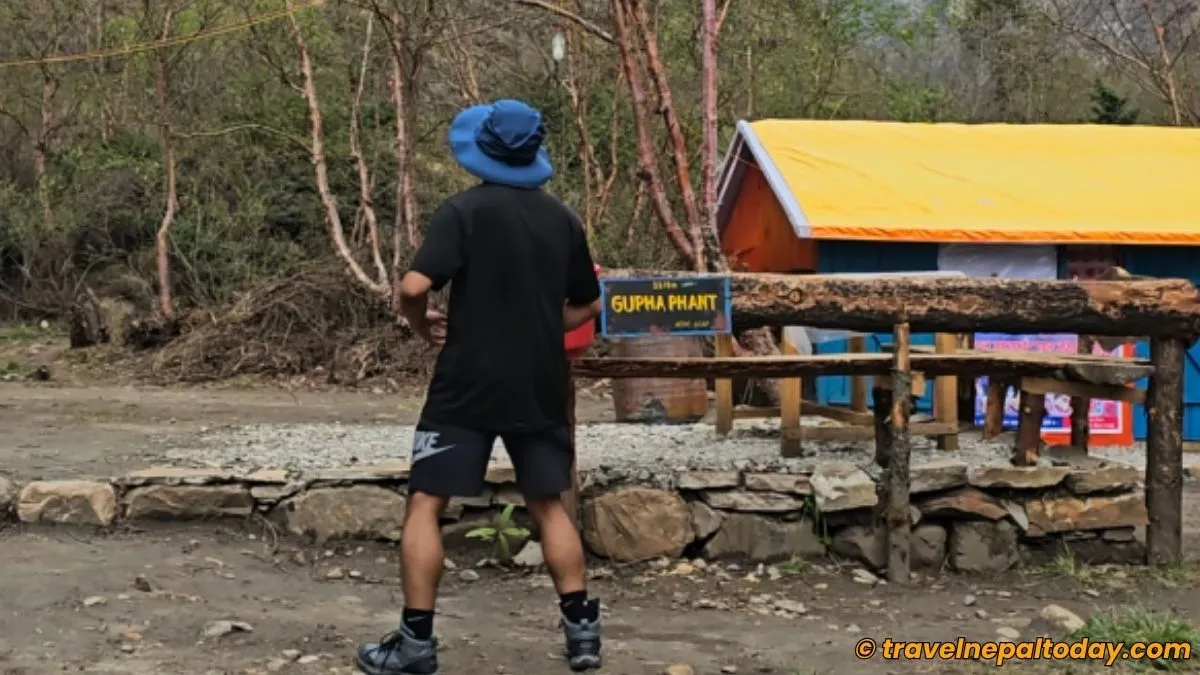
- Sky Caves: Once you reach this landmark, make sure to look upward at the hills. They hold massive caves that seem almost impossible to reach. We’re only meant to admire this surreal natural phenomenon from afar.
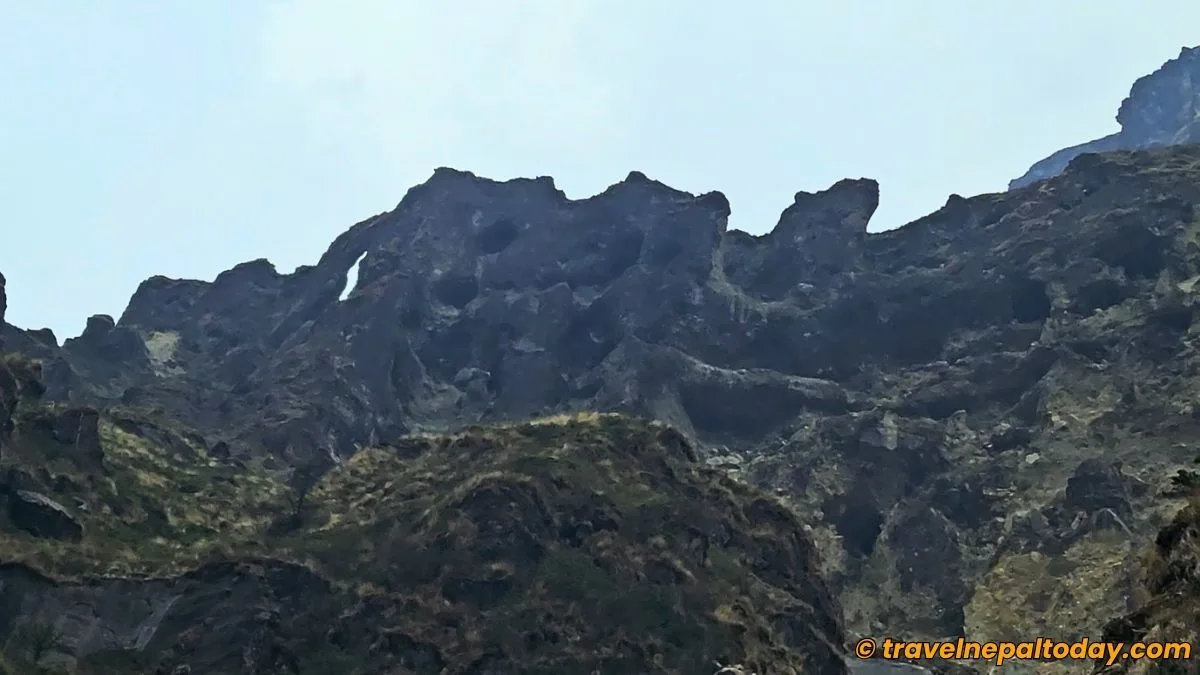
- Red Waterfall: Another waterfall we couldn’t see due to the lack of water. But if you’re trekking during or after the monsoon, you’d get to see a red-colored waterfall (perhaps due to the presence of soil or mud).
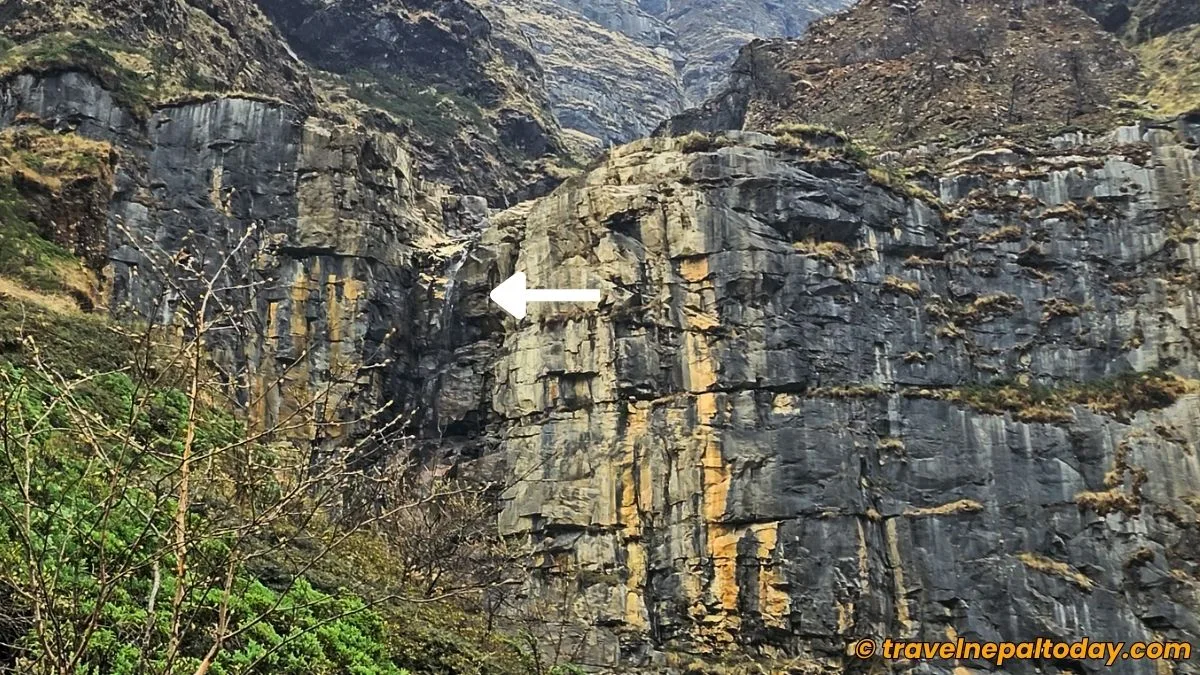
- Bhusket Mela: ‘Bhusket’ is a special type of tree found in this region of the trail, often used as firewood by hotel owners. And ‘Mela’ again refers to pastureland (don’t confuse it with ‘fair’). Many believe there used to be a gathering here in the past, but that’s actually a common misconception!
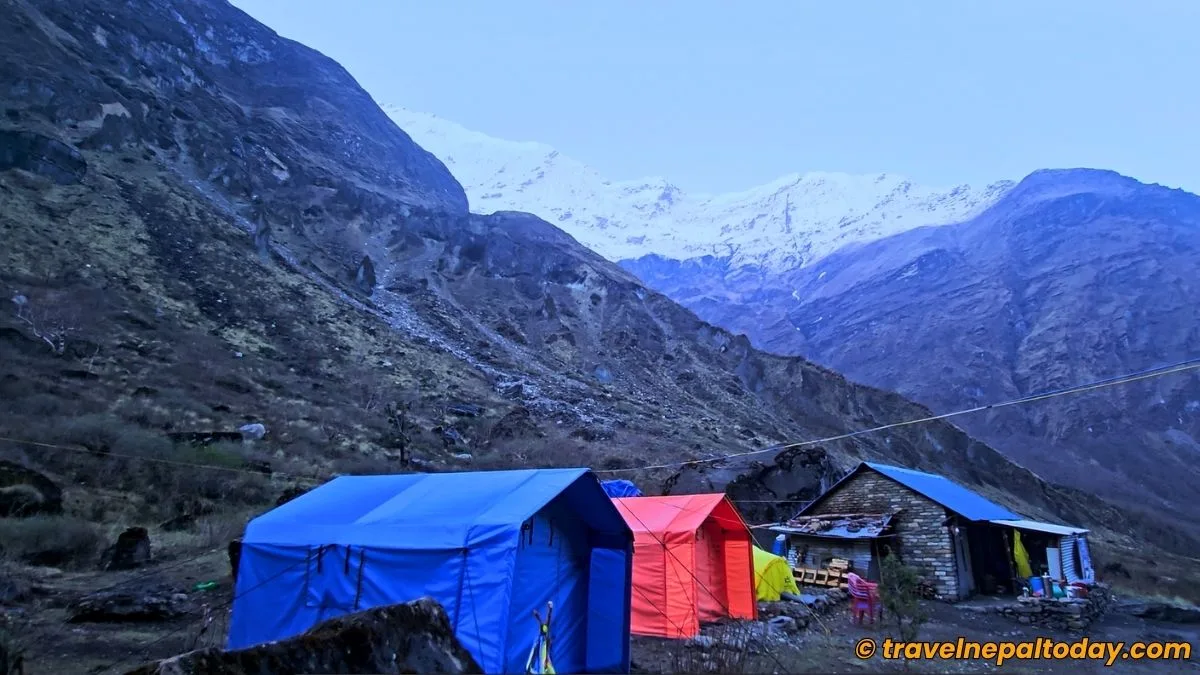
- Sun Khola: You’ll have to cross this stream flowing right through the trail. Although it used to be a challenge in the past, it’s now pretty easy. In fact, with the backdrop of Mt. Nilgiri and Tilicho Peak, this is one picturesque spot on the trail.
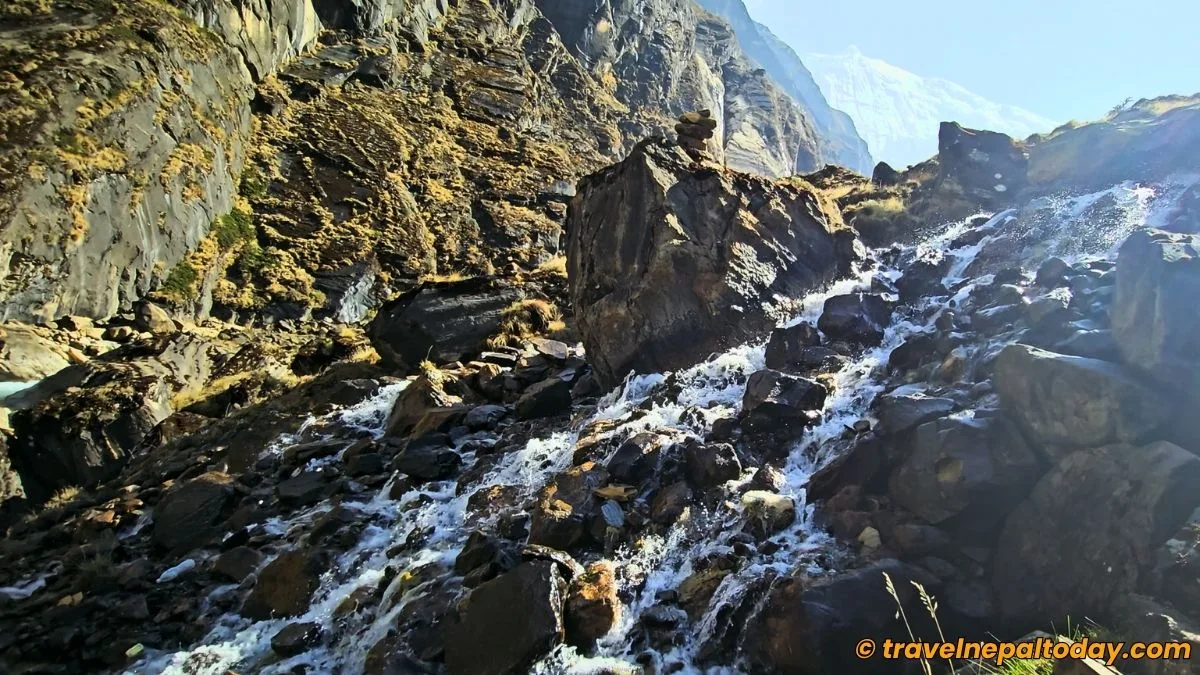
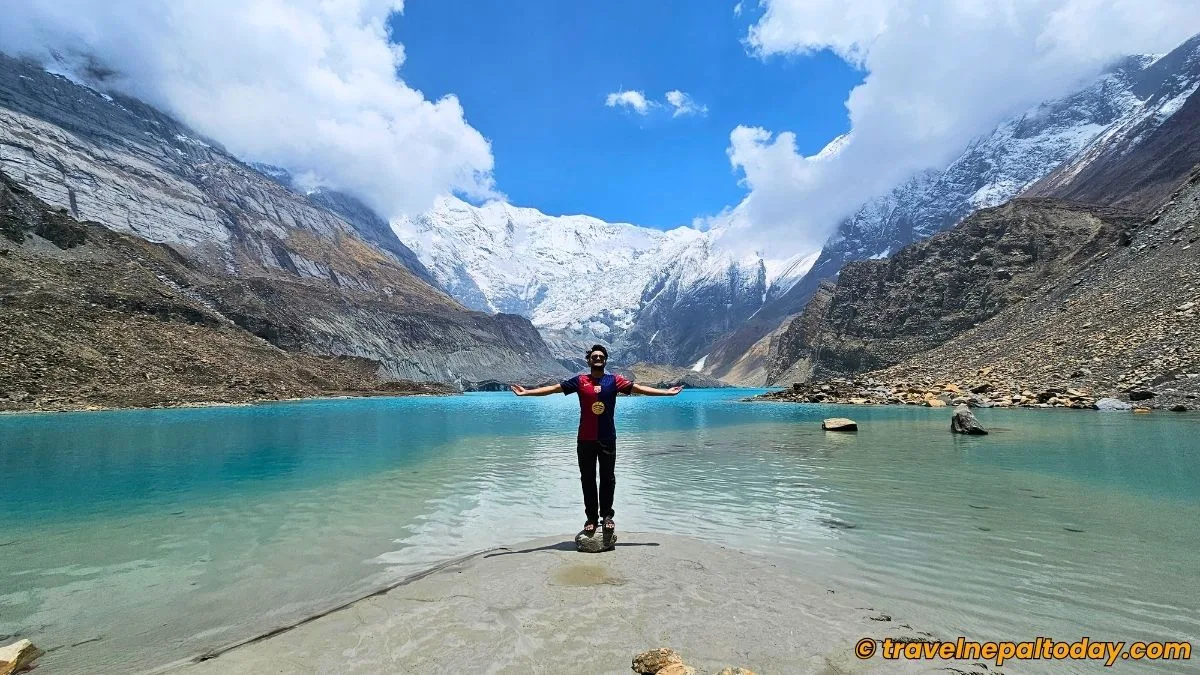
- Panchakunda Lake (aka Diki Cho Lake): Named after the five lakes that existed here in the past and were said to form a shape of a snake, the structure has changed over time. Now, it has become one large lake.
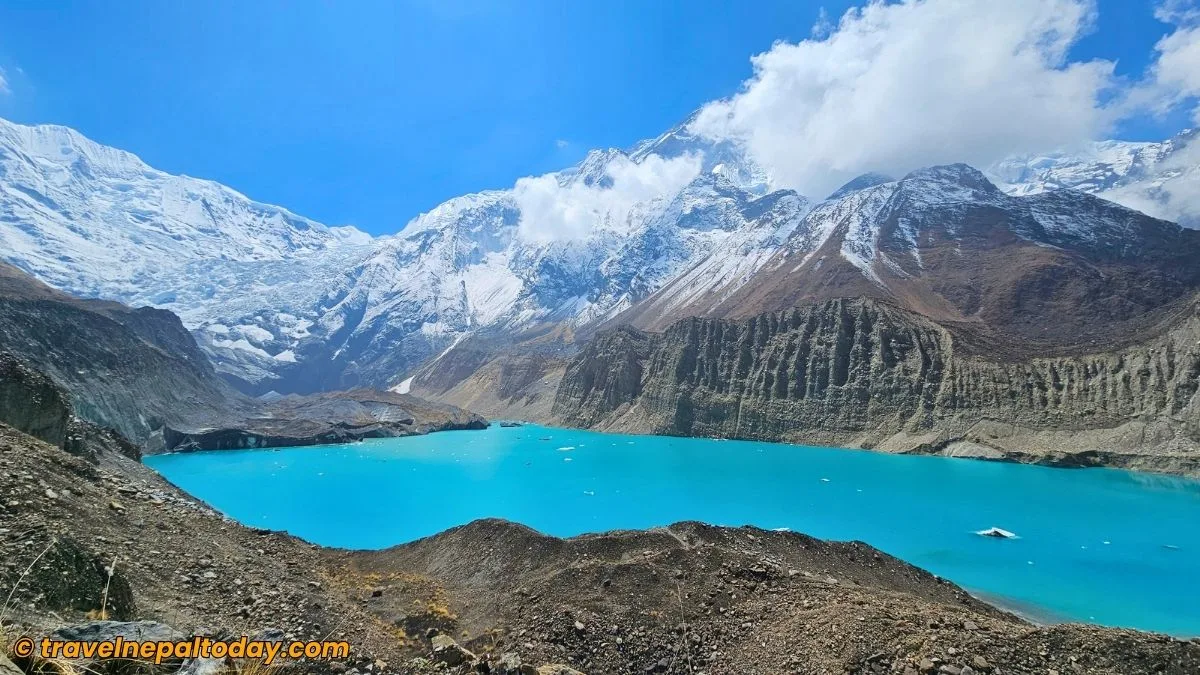
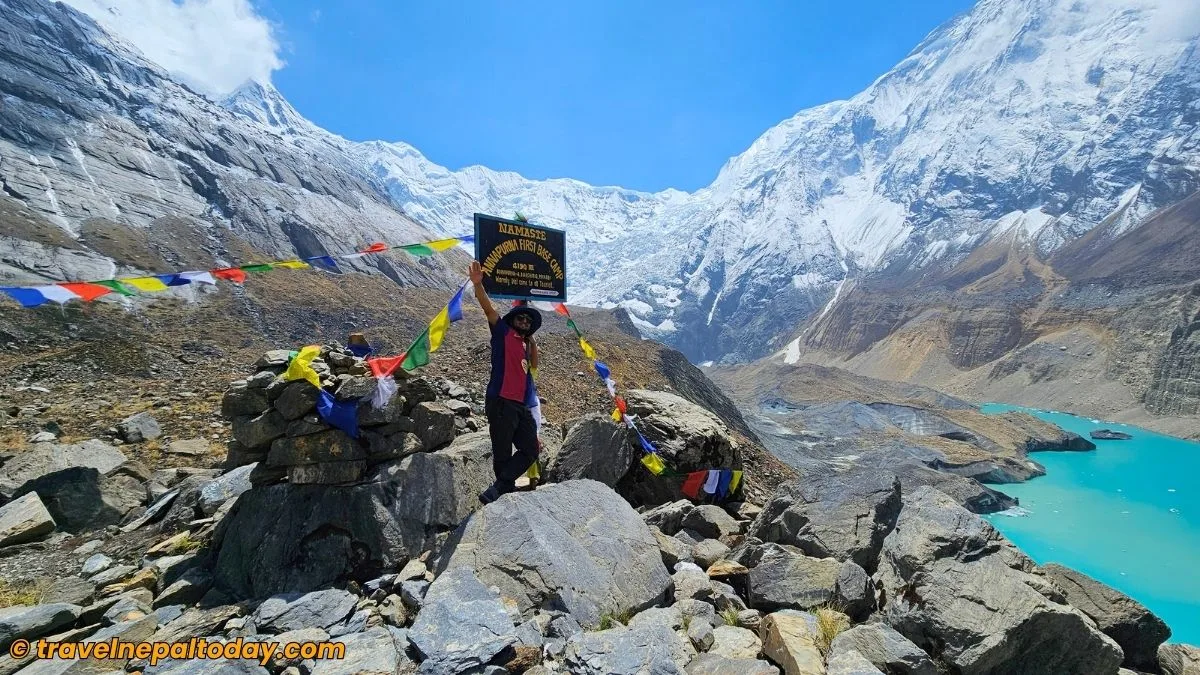
- Annapurna First Base Camp: The highest point and the final destination of the trail, located at 4,190 m. You won’t typically find campers here: only a little farther ahead during the summit season. We didn’t get to experience that part, so for us, this served as just the perfect viewpoint for Panchakunda Lake.
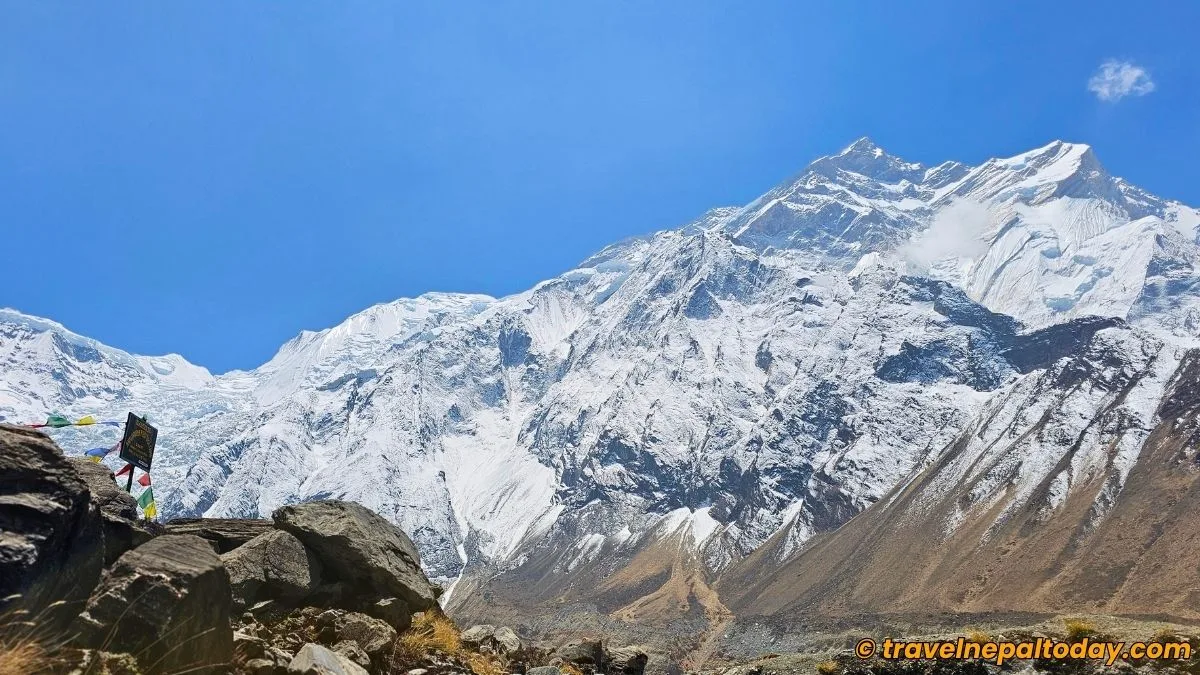
- Mountains seen from the top: Mt. Nilgiri, Tilicho Peak, Annapurna I, and its range
3-Day Short North ABC Itinerary For Seasoned Trekkers
Personally speaking, it was just me and a friend on this trek. The two of us have prior trekking experience, and we can easily walk the whole day.
For that reason, it only took us two trekking days. But since we’re from Kathmandu, we had to spend an additional night to reach Tatopani and another day to return home.
Based on our experience, the North ABC Trek can be completed within three nights and four days. Let’s not count the nights; it’s basically three full days!
Honestly, if you think you’re someone who can walk, this is the exact itinerary you need.
Note: If you’re planning to go on a private vehicle, both two-wheelers and four-wheelers can reach up to Humkhola.
Day 0: Catch Night Bus From Kathmandu to Bhurung Tatopani
| Drive Duration | 13 hours approx. |
| Altitude Shifts | 1400m > 822m > 836m > 1190m |
| Difficulty Level | Moderate |
| Accommodation Type | Night Bus |
| Bus Service Provider | Multiple available that goes to Mustang (take one from Gongabu Bus Park) |
| Bus Fare | Varies depending on bus service provider (our cost Rs. 1500) |
| Bus Timing | 5:30 PM |
| Bus Route | Kathmandu > Pokhara > Beni > Bhurung Tatopani |
To save time, it’s best to hop onto a night bus heading towards Mustang and get off at Bhurung Tatopani. Just make sure to inform the bus service provider and pay the fare only up to your destination.
In our case, we got the tickets from Gongabu New Bus Park, which cost us Rs. 1,500 per person. It was a reasonable amount compared to some of the newer Mustang buses, and the seats were comfortable enough.
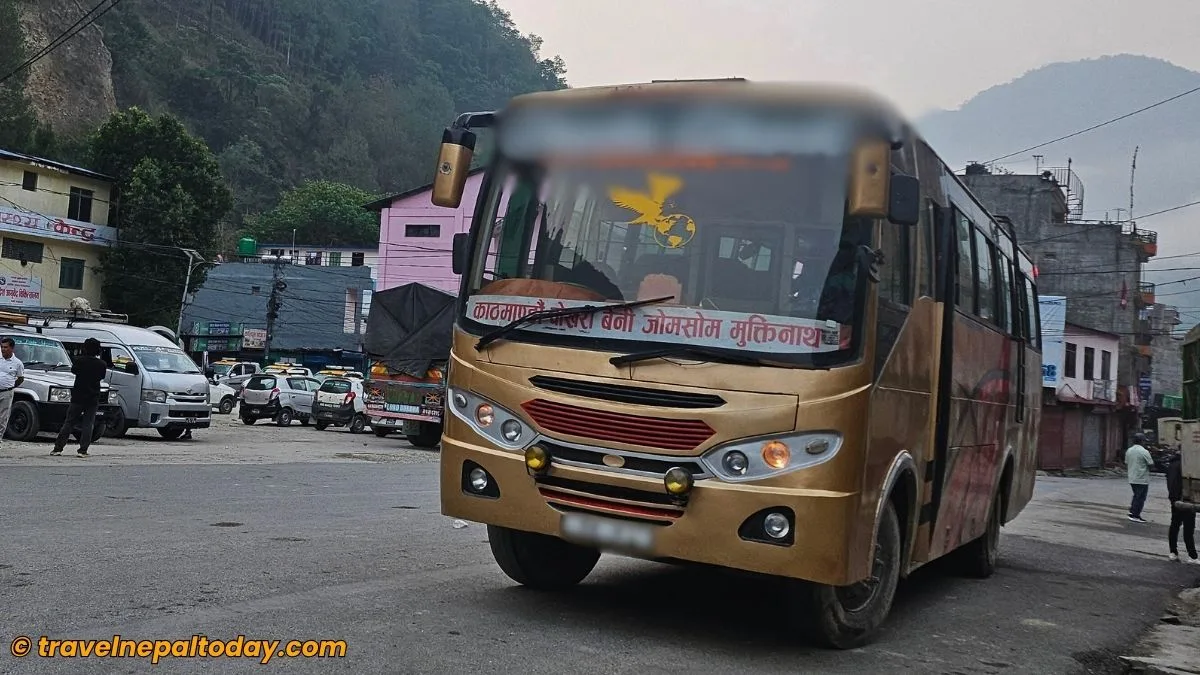
Definitely not a luxury bus, but decisions like these can certainly help budget travelers. However, if you’re someone looking for more comfort (after all, you’ll be spending the night inside the bus), consider opting for a more reliable service.
As mentioned above, it takes about 13 hours to reach Bhurung Tatopani (around 6:30 AM the next day, or possibly later).
Note: There’s another Tatopani near Beni, so don’t get confused. Just board the bus heading to Mustang, and you should be good to go.
Day 1: Jeep Ride to Humkhola & Hike to Bhusket Mela
| Drive Duration | 1.5 hours approx. |
| Jeep Service Provider | On a private basis (jeep committee) |
| Jeep Fare | Rs. 8000 (can be slightly higher for international tourists) |
| Hike Duration | 5 to 6 hours |
| Altitude Shifts | 1190m > 2883m > 3133m > 3651m |
| Elevation Gain | 2461m |
| Difficulty Level | Easy |
| Accommodation Type | Tent Hotel |
| Online Jeep Booking | Fill up this form |
Once you get off the bus in Bhurung Tatopani (1,190m), you might be a bit baffled about what to do next. If you’re lucky, one or two jeeps might be available right there. Otherwise, you’ll need help from the nearby checkpost or hotel.
The next challenge? If you’re on a solo trek or in a small group (and didn’t find others on the bus), you’ll have to pay the entire amount of Rs. 8,000 upfront.
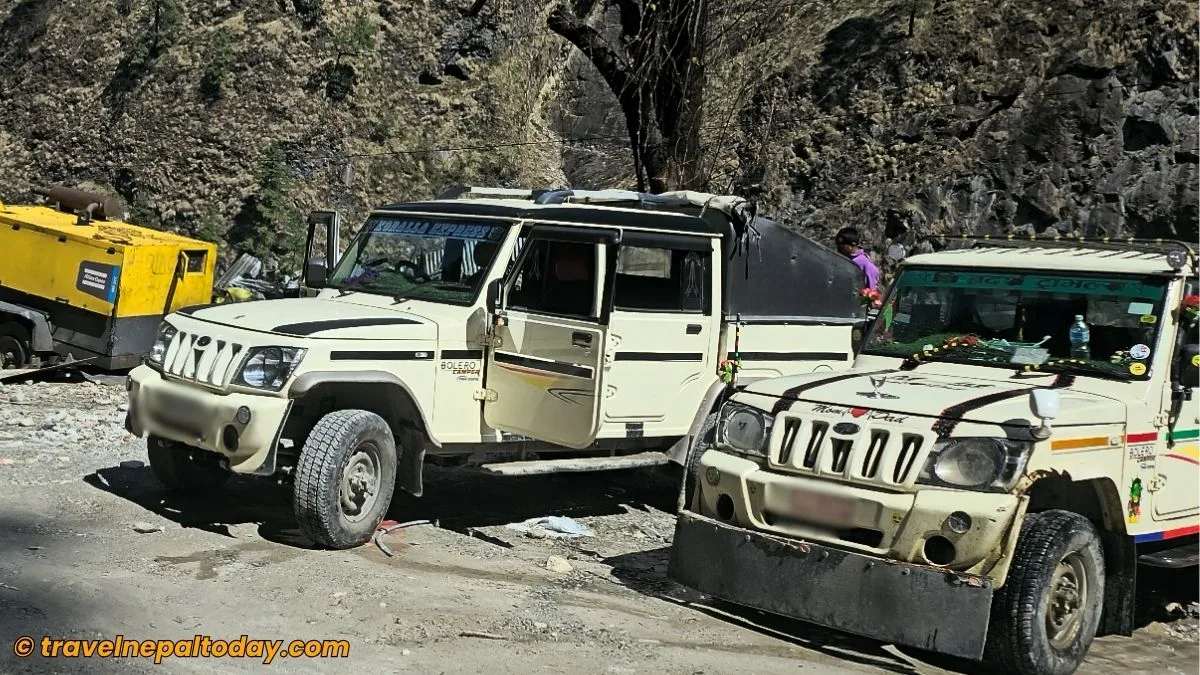
The jeep ride takes about 1.5 to 2 hours. You’ve probably seen the footage online. The road is narrow, and the landscape is all rocky. So, the ride is going to be an adventure in itself!
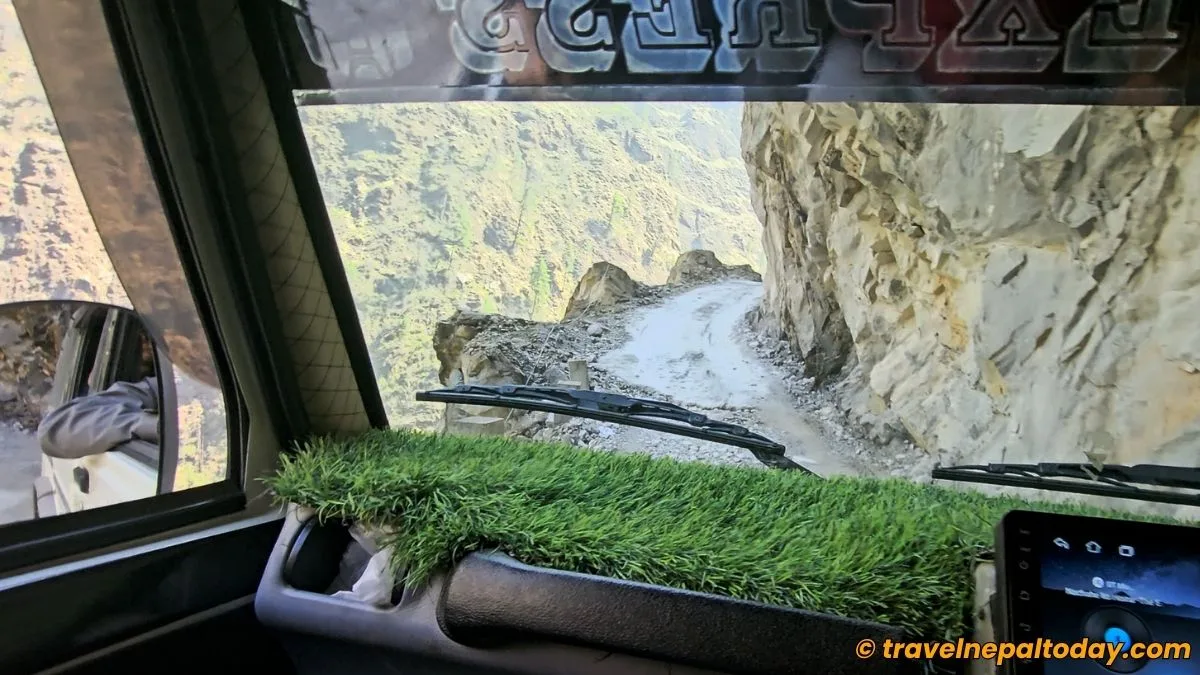
Just sit back, take your pills if needed (Devomine recommended), and enjoy the mesmerizing views of Mt. Nilgiri while the jeep bumps along. If you’re traveling during or after monsoon, be sure to visit Narcyang Waterfall too (we skipped it as the water had dried up in spring).
The jeep stops at Humkhola (2,883m), near a hotel. You can rearrange your backpack, grab some breakfast, and finally start your hike.
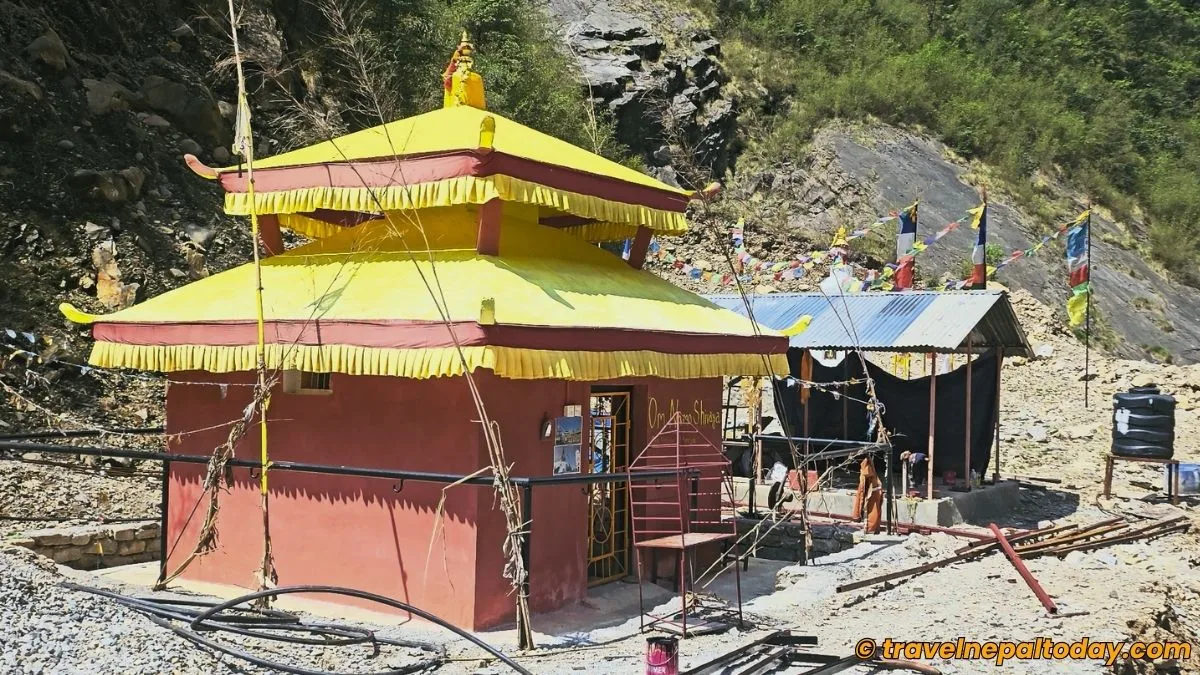
Do explore the dam nearby, and for my religious readers, there’s also a Shiva temple.
The trail starts with a slight uphill hike, and within 1.5 hours, you’ll reach Gurase Dada, which is the final point where mobile network will be available. So, give your loved ones a quick call and let them know.
After a downhill stretch followed by a short uphill, you’ll reach the popular Phutphute Waterfall (3,133m). There’s a teahouse here where you can stop for light snacks or tea. Don’t forget to take tons of photos and videos from the viewpoint!
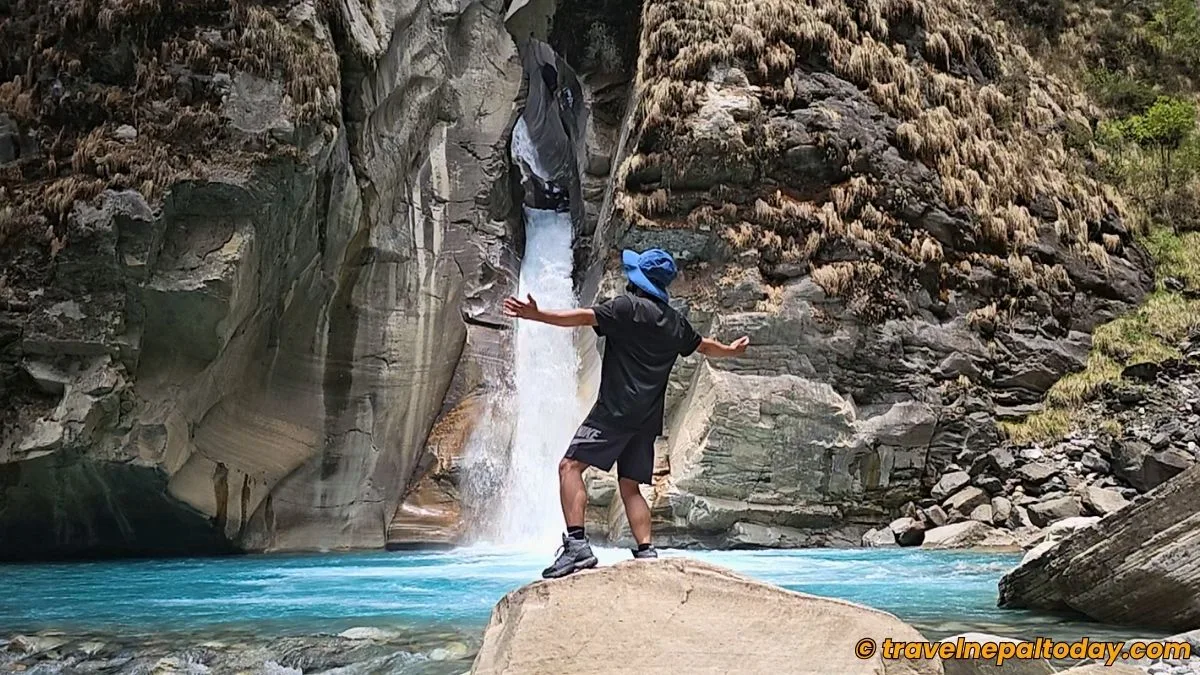
Once you’ve soaked it all in, head to the waterfall. Sadly, taking a dip here is restricted as it’s a part of the drinking water source for the entire region. We were excited to get in too, but we were denied by the teahouse owners when asked if it was possible.
A 20-minute hike takes you to Sadhi Kharka (3,160m), where there’s a tent hotel service. One more hour of uphill hiking leads to Gupha Phat (3,379m), passing via the Pancha Waterfall.
Push another 2 hours to reach Bhusket Mela (3,651m), passing attractions like Sky Cave and Red Waterfall. There’s only one hotel service here with tents: the next available accommodation is directly at Panchakunda Lake.
We had reached Bhusket Mela by 3 PM but decided not to continue due to continuous rain and hail. Plus, we had to be cautious about elevation gain to avoid altitude sickness.
So, we took a nap inside our tent while waiting for the other group from our shared jeep, who, by the way, were incredibly slow.
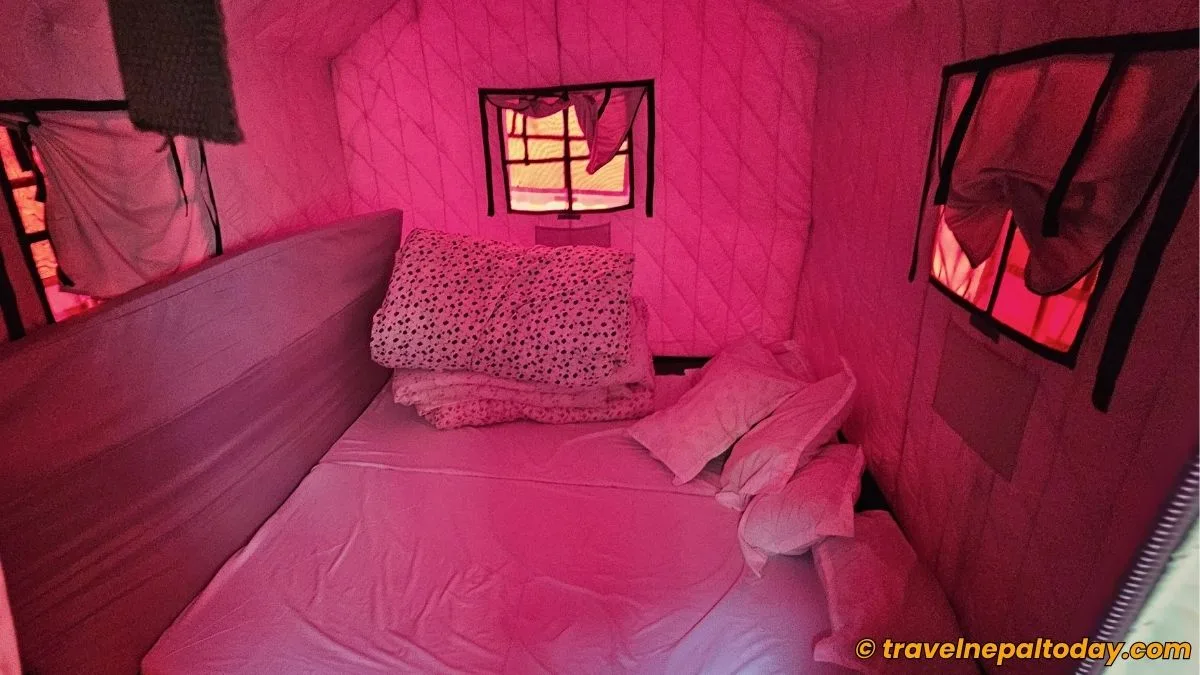
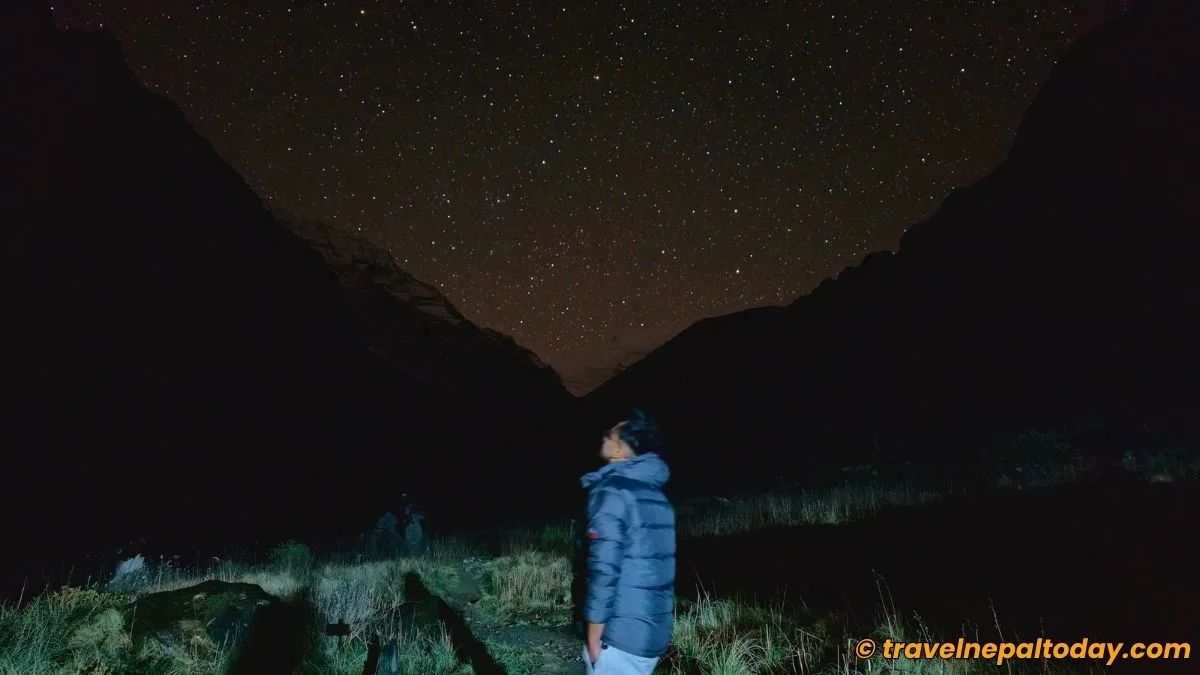
At night, don’t forget to stargaze if the sky is clear. It was one of my favorite moments of the trip!
Honestly, the services were a bit expensive, but considering how hard it is to transport food up here, it’s still totally worth it. In fact, the dal bhat we had for dinner was probably tastier than what we’ve had in many restaurants in Kathmandu.
Day 2: Bhusket Mela to North ABC via Panchakunda Lake & Tatopani Return
| Hike Duration | 7 to 9 hours |
| Drive Duration | 2 hours approx. |
| Altitude Shifts | 3651m > 4050m > 4190m > 2883m > 1190m |
| Elevation Gain | 539m |
| Difficulty Level | Easy to Moderate |
| Accommodation Type | Inn |
Wake up early, take a peek at Mt. Nilgiri and Tilicho peak, have a quick breakfast, and start your hike. We started at 7:30 AM and were able to reach Panchakunda Lake by 9:30 AM (even though the map showed 4 hours).
We stopped a lot for photos and videos along the way, but that early morning energy mixed with the breathtaking mountain views really worked wonders. Even if you walk slowly, three hours is the maximum, from my experience.
Along the trail, you’ll pass the abandoned Dharmashala (used before Bhusket Mela had hotels) and Sun Khola (3843m).
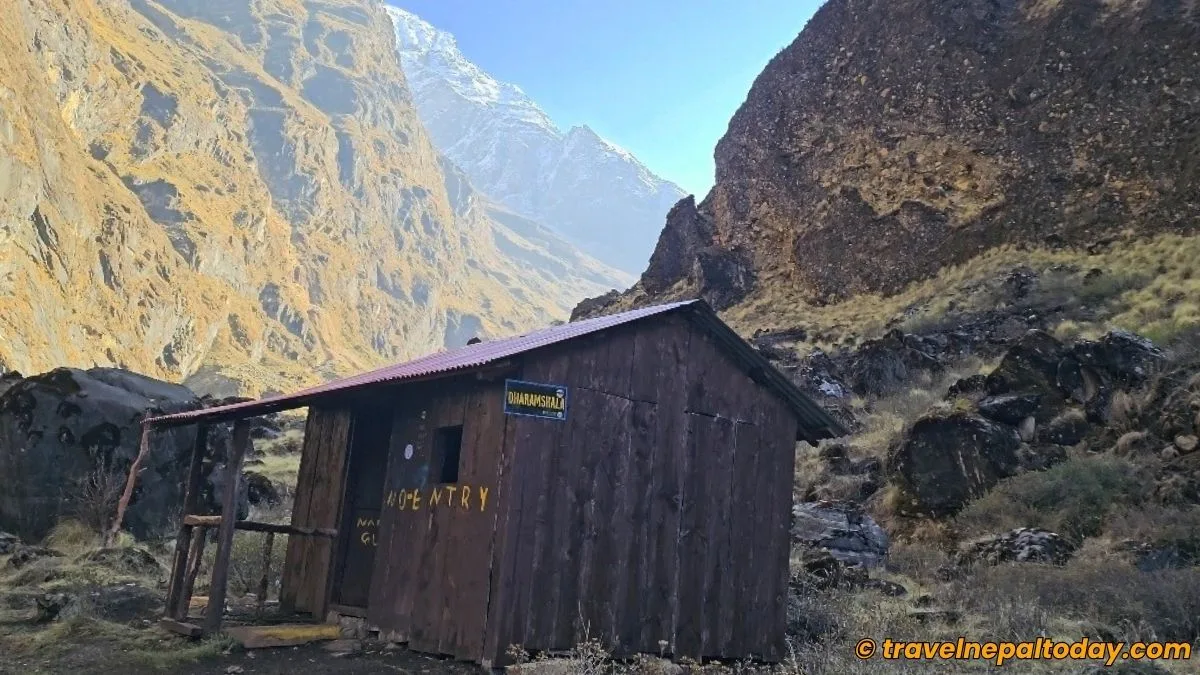
Once you reach the camp site at Panchakunda Lake (4050m), make sure to meet Hira Ram dai, the hotel owner.
He was incredibly kind to us, and even though we didn’t stay the night, he went out of his way to help us during our return. Please mention our site ‘TNT’ or show him our photos: he’ll recognize us for sure!
In fact, every detail you’re reading here about Panchakunda Lake was possible thanks to Hira Ram dai.
As they say, “aicho ko paicho tirna parcha”, we genuinely want to help dai get more visitors. So if you’re planning an overnight stay, skip Bhusket Mela and go straight to Panchakunda Lake, but only if you’re confident about the altitude.
Important: In autumn and winter, staying the first night at Panchakunda is not recommended without proper acclimatization.
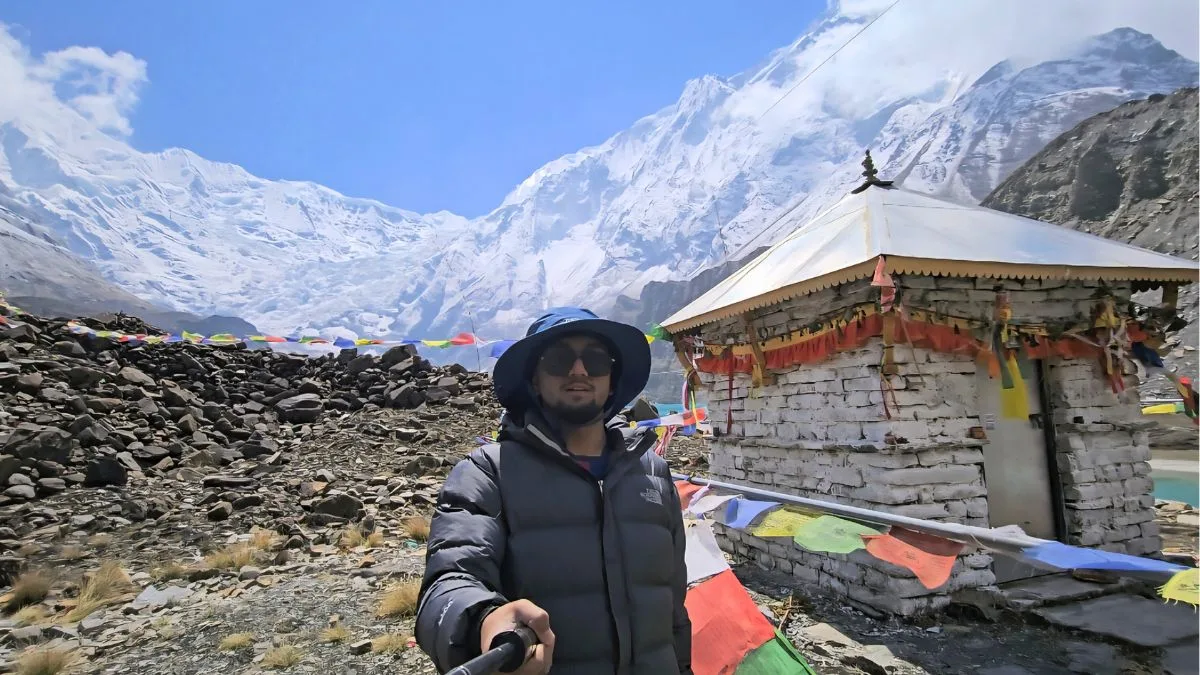
After relaxing at the lake, continue your hike to Annapurna First Base Camp (4190m). It should take about 30 minutes. But the trail is rocky, so tread carefully. Don’t miss the Shiva temple located on the way!
Try to reach North ABC early, as afternoon weather can be unpredictable. On the way back, stop at the middle of the lake (dry pasture) for photos.
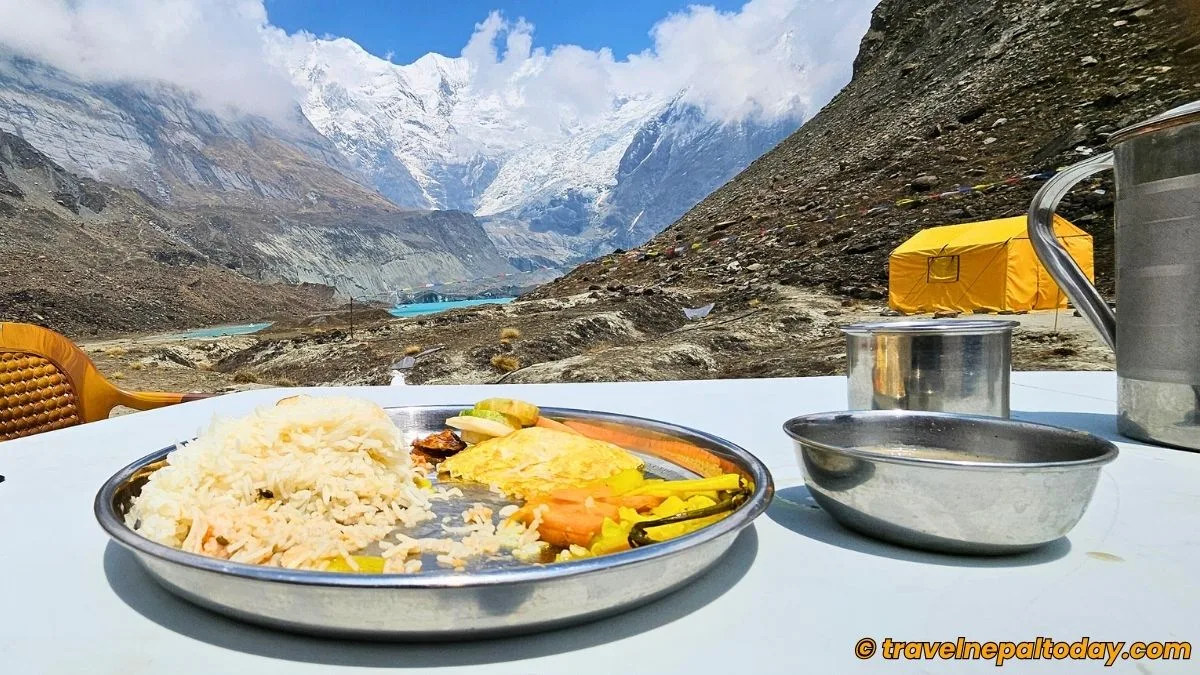
Have your lunch back at the campsite. Yes, the prices might feel high, but the taste is incredible. And with the views of the lake and the Annapurna range, you’ll know it’s worth every rupee.
Our original plan was to stay the night and return with the same team. But by 1:30 PM, they were nowhere to be found. Also, nobody else had reached North ABC the previous day. We were just two people, and if we waited, it felt like we’d have to spend an extra day.
So, considering the longer daylight hours, we made a spontaneous decision to complete the return trek on the same day.
That said, for most travelers, we highly recommend staying the night at Panchakunda Lake and following the 4-day trek plan.
It took us about 4 to 4.5 hours to reach Humkhola from Panchakunda Lake. For other trekkers, it may take 5 to 7 hours, depending on pace and rest.
When you reach Gurase Danda, contact the same jeep driver who dropped you off. They’ll be expecting you to do the return trip with them as well.
The jeep ride from Humkhola to Tatopani should again take about 2 hours. It might be slightly slower in the evening, especially if it’s getting dark (you’ve seen the road)!
Once you’re in Tatopani, choose any hotel you prefer. There are plenty of options available to spend a warm, comfortable night.
Day 3: Enjoy Hot Springs Before Returning to Kathmandu
| Drive Duration | 12 to 13 hours approx. |
| Transportation Method (to avoid night bus) | Tatopani to Beni Bazar Jeep > Beni to Pokhara Bus > Pokhara to Kathmandu Hiace |
| Altitude Shifts | 1190m > 830m > 822m > 1400m |
| Difficulty Level | Easy |
Our trip isn’t over just yet. And honestly, this part is something many travelers skip, but it’s absolutely worth it!
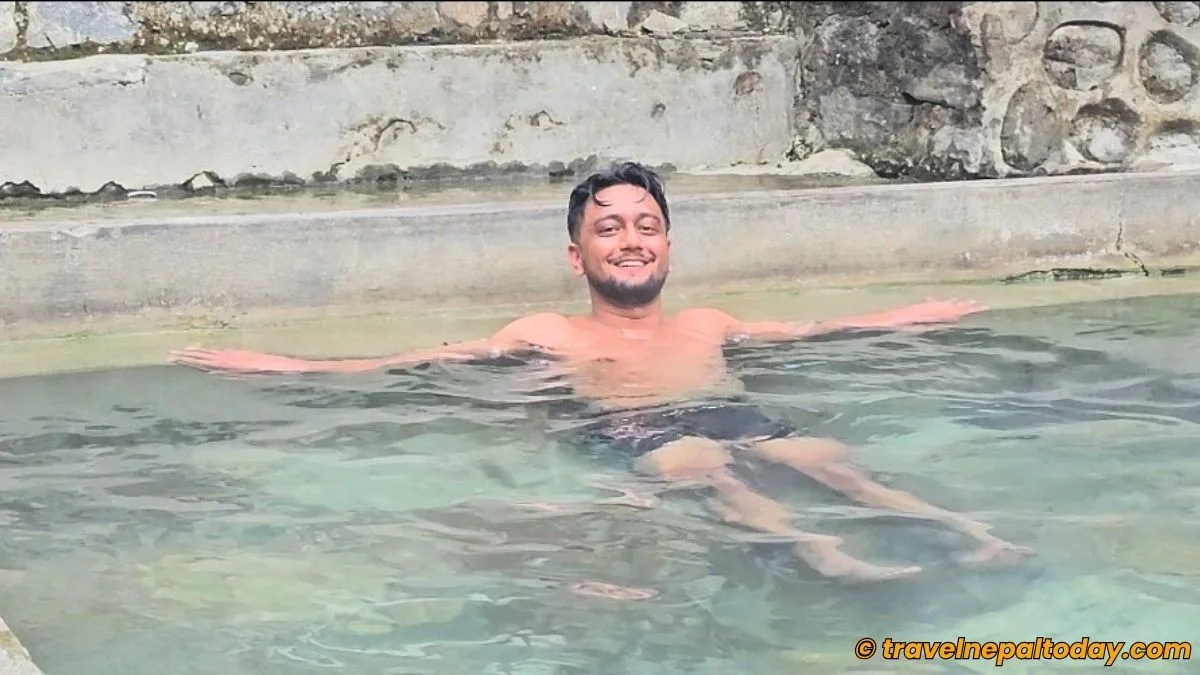
Since you’re already at Bhurung Tatopani, taking a dip in the natural hot springs here is a must-do activity.
The entry fee is just Rs. 50 per person, and let me tell you, the healing waters feel like magic after days of trekking. It’s hard to put the experience into words: you’ll feel refreshed, recharged, and ready for the road ahead.
Now, lend me your ears! Here’s where planning smart can save your time.
If you want to take it slow and rest, you’ll need to wait until 2 PM or later to catch a night bus to Kathmandu. This is fine if you’re not in a rush.
But if you want to get back home by tonight, don’t waste a second. Pack your bags and follow this route:
- Jeep to Beni Bazar: There are plenty of jeeps heading to Beni, and they charge around Rs. 400 per person (only Rs. 100 more than the bus). Since buses might be infrequent and slower, jeeps are the better choice.
- Beni to Pokhara: Once you reach Beni, catch a bus to Pokhara. These buses are frequent and usually don’t require long waiting.
- Hiace from Pokhara to Kathmandu: When you arrive in Pokhara, head to Prithvi Chowk and get a Hiace to Kathmandu. They are faster and more comfortable than regular buses.
4-Day North ABC Trek For Beginners! [Recommended]
If you’ve been reading along, you already know why I’m recommending this slightly longer itinerary.
It’s not just beginner-friendly, but also perfect for anyone who wants to truly connect with nature and learn more about the region along the way.
We were able to complete the trek in just three days only because there were just the two of us, we walked pretty fast, and luckily, we managed to capture and learn everything in a short time. So, the quicker version is mostly for those experienced or time-crunched travelers who wish to complete the trek fast.
But if you have time, trust me—spending two nights in Narchyang makes the journey far more enriching. You get to soak in the experience without rushing, and the whole trip feels much more fulfilling.
Let me walk you through this recommended 4-day itinerary in simple steps.
Day 0: Catch Night Bus From Kathmandu to Bhurung Tatopani
| Drive Duration | 13 hours approx. |
| Altitude Shifts | 1400m > 822m > 836m > 1190m |
| Difficulty Level | Moderate |
| Accommodation Type | Night Bus |
| Bus Service Provider | Multiple available that goes to Mustang (take one from Gongabu Bus Park) |
| Bus Fare | Varies depending on bus service provider (our cost Rs. 1500) |
| Bus Timing | 5:30 PM |
| Bus Route | Kathmandu > Pokhara > Beni > Bhurung Tatopani |
This part remains the same as the 3-day itinerary: you hop onto a night bus heading towards Mustang and get off at Bhurung Tatopani (1190m).
Since you’ll be spending over 12 hours on the road, make sure to pack all your essentials: warm clothes (if winter), snacks, a power bank, and maybe even a neck pillow.
The bus still makes plenty of stops along the way, so you don’t need to stress too much!
Day 1: Jeep Ride to Humkhola & Hike to Sadhi Kharka
| Drive Duration | 1.5 hours approx. |
| Jeep Service Provider | On a private basis (jeep committee) |
| Jeep Fare | Rs. 8000 (slightly higher for international tourists) |
| Hike Duration | 3 to 4 hours |
| Altitude Shifts | 1190m > 2883m > 3133m > 3160m |
| Elevation Gain | 1970m |
| Difficulty Level | Easy |
| Accommodation Type | Tent Hotel |
Since you’ll be spending two nights in Narchyang, there’s no need to rush towards Bhusket Mela this day.
Once you get off at Bhurung Tatopani (1190m), take your time to enjoy a hearty breakfast. Jeeps will be available there itself.
After the roughly 2-hour drive to Humkhola (2883m), start your hike and aim for Sadhi Kharka (3160m), where you’ll find a tent house similar to the one in Bhusket Mela.
If you want to push forward, you can continue to Gupha Phat (3379m), about a 1 to 1.5-hour uphill climb from Sadhi Kharka.
Don’t forget to spend some time at the beautiful Phutphute Waterfall (3133m) along the way. But please avoid taking a dip, as the locals rely on this water source and might feel upset.
Day 2: Hike From Sadhi Kharka to Panchakunda Lake
| Hike Duration | 5 to 6 hours |
| Altitude Shifts | 3160m > 3379m > 3651m > 3843m > 4050m |
| Elevation Gain | 890m |
| Difficulty Level | Easy |
| Accommodation Type | Tent Hotel |
Since it’s not worth rushing to Annapurna First Base Camp today, better to start the day slow. Wake up, enjoy a relaxed breakfast, and begin your hike at your own pace.
The uphill climb to Gupha Phat via Pancha Waterfall should take less than an hour with that refreshing morning energy.
Before you know it, you’ll pass Sky Cave and the Red Waterfall too, eventually reaching Bhusket Mela (3651m) within two hours. This is a great spot to stop for lunch.
From there, continue your hike slowly towards Sun Khola (3843m), passing the abandoned Dharmashala on the way.
In the next three to four hours, you’ll arrive at Panchakunda Lake (4050m), where you’ll spend the night in a tent. Here, you’ll meet Hira Ram dai, whose hospitality will undoubtedly take your experience to the next level!
Day 3: Early Morning Hike to North ABC & Tatopani Return
| Hike Duration | 7 to 8 hours |
| Drive Duration | 2 hours approx. |
| Altitude Shifts | 4050m > 4190m > 2883m > 1190m |
| Elevation Gain | 140m |
| Difficulty Level | Easy to Moderate |
| Accommodation Type | Inn |
Wake up early today, pack some snacks, and head towards Annapurna I Base Camp (4190m).
The hike should take no more than 30 minutes, and if you’re early enough, you’ll be greeted with the golden sunrise glowing over the Annapurna range, with Annapurna I standing tall right in front of you.
After soaking in the sunrise and enjoying the views over Panchakunda Lake, head back to the campsite. Have your breakfast, pack your belongings, and begin the downhill hike.
It should take around 5 to 6 hours to reach Humkhola. Once you arrive at Gurase Danda, don’t forget to contact the jeep driver.
If you’re coordinating with us, we’ll make sure the driver gets there before you do, so you can simply hop in and return to Tatopani by late afternoon or early evening.
In case you’re early and lucky, you might be able to catch the night bus to Kathmandu. But if not, don’t let that stress you out.
Just enjoy the evening with your loved ones. You’ll have plenty of time to relax in the hot springs until 9 PM. You may spend the night at a comfortable hotel of your choice at Tatopani itself, or reach Pokhara to enjoy the nightlife there.
Day 4: Tatopani to Pokhara by Bus & Pokhara to Kathmandu on Hiace
| Drive Duration | 12 to 13 hours approx. |
| Transportation Method (to avoid night bus) | Tatopani to Pokhara Bus > Pokhara to Kathmandu Hiace |
| Altitude Shifts | 1190m > 830m > 822m > 1400m |
| Difficulty Level | Easy |
If you don’t want to wake up early and wish to take time to return home, that’s fine as well. You’ll have enough time to catch the night bus to Kathmandu. Meanwhile, you get the chance to visit Narchyang Waterfall (which we missed out on our trip).
Otherwise, we’re going to follow the multi-transport approach to reach Kathmandu early. So, after breakfast, catch a bus to Pokhara, which should be available at around 8 AM.
Upon reaching Prithvi Chowk in Pokhara, you’ll find plenty of Hiace heading back to Kathmandu. Hop onto any one of them to reach Kathmandu by evening.
Best Time to Visit Annapurna First Base Camp

As mentioned earlier, we did this trek in May (late spring). And based on our experience, this season offers the following:
- Unpredictable weather! It can rain with hail in the afternoon and sometimes, even snow.
- Longer days, so you can walk for longer hours and potentially complete the trek quicker.
- Usually clear skies in the morning, offering great mountain views (though still a bit unpredictable).
- Not enough rainfall, which means some waterfalls may dry up (like Pancha Waterfall and Red Waterfall did for us).
- Spring blooms, especially rhododendrons, more vibrant during early to mid-spring.
- Warmer climate, making the trek feel easier compared to colder seasons.
Despite being a great time for the North ABC Trek, spring still comes with its weather challenges.
And after my experience on the Mohare Danda–Poon Hill trek, I wouldn’t recommend going during cloudy days at all. Because what’s the point of trekking that high and missing out on the views, right?
In fact, even Hira Ram dai confirmed that autumn (October to November, up to early December) is the best time for Annapurna First Base Camp. The skies are clearer, views are guaranteed, and even the waterfalls flow with more force since it’s right after the monsoon.
That said, dai also warned us that the risk of altitude sickness increases during this season. So, it’s best not to head straight to the campsite on the first day.
Thankfully, both the 3-day and 4-day itineraries I’ve shared already factor that in.
Seasons to avoid? Definitely peak monsoon and winter.
Monsoon brings landslide risks and winter brings extreme cold and heavy snowfall, which might block the trail completely.
Required Budget For North ABC Trek
With just the two of us in the group, we managed to complete the North Annapurna Base Camp Trek in 3 nights and 4 days, spending under Rs. 10,500 per person. Here’s a breakdown of our expenses to give you a general idea:
| Bus to Bhurung Tatopani | 1500 |
| Breakfast Tatopani | 135 |
| Jeep to Humkhola | 1325 |
| Bhusket Mela Hotel (Stay + Dinner + Snacks) | 2100 |
| Lunch at Panchakunda Lake (Egg Thali Set) | 900 |
| Return Jeep to Humkhola | 1000 |
| Hot Springs | 50 |
| Tatopani Hotel (Stay + Dinner) | 1100 |
| Jeep to Beni | 400 |
| Bus to Pokhara | 350 |
| Hiace to Kathmandu | 780 |
| Extra | 450 |
| Total | NPR 10,100 |
Note that we were on a budget and got lucky in many situations. For example, on our return, we managed to find a jeep at a reasonable cost, thanks to Hira Ram dai, who called a jeep that was heading back empty.
Otherwise, our budget would’ve easily crossed the Rs. 12,000 mark or more.
Keeping these factors in mind, I’d say you can complete the North ABC Trek within Rs. 11,000 to 15,000, depending on the number of days and your travel decisions.
Final Words
I genuinely hope this article gave you everything you need to know about the North ABC Trek.
If you still have any questions or confusion, feel free to leave a comment below! We’re here to help.
And hey, if you found this guide useful, don’t keep it to yourself. Share it with your travel buddies. The planning part is already taken care of!
Oh, and one last thing. Don’t skip Bhurung Tatopani’s Hot Springs. A lot of travelers miss out on it… but you won’t, right?
Happy travelling to Myagdi!
About The Author
I hope this will help us 🤞 And let me appreciate you for this beautiful article “Thank you so much. “😇
Glad you found this post helpful, Ashri! Keep reading and supporting Travel Nepal Today!
are trekking gears necessary for this trek, and do I have to pre book inn in panchaa kanda lake or is it vise to carry a tent for emergency in case if the inn is all booked please let me know it would be huge help!!! we are going on november by the way. Thank you
Yes, general trekking gear is essential for this trek. Make sure to wear broken-in trekking boots, and bring trekking poles to help during downhill sections (though they aren’t strictly mandatory). Don’t forget to wear a windbreaker and carry a warm down jacket. You won’t need crampons or micro-spikes for this route.
Regarding accommodations and logistics, setting up your own camp will likely cost you extra. Also, remember to get your Annapurna Conservation Area Permit (ACAP) beforehand—you can apply online via NTNC ePermit or visit the Pokhara ACAP office in person.
You won’t find direct contact numbers to pre-book lodges or tea houses at Pancha Kunda Lake. Since November is peak trekking season with heavy crowds, going with a reliable tour operator is your best bet to secure accommodations and transport. You can also fill out our trip planning form, and we’d be happy to help you arrange jeep services, accommodations, and other logistics!