
Kayaking in Phewa Lake has become one of the most trending activities in Pokhara.
The last time I was involved in any water activity here was in March 2024. My friends and I had almost gone for it before ending up doing a short boat ride.
Kayaks and stand-up paddleboards were both seen in limited numbers and seemed likely to overtake the rowboats. A year later, in April 2025, it had actually happened!
There were more kayaks and stand-up paddleboards (SUPs) than rowboats when I went on the adventure myself. And without a doubt, this adventure has now become a must-do activity when you’re in Pokhara.
As viral as it is on social media, the information regarding it is still very limited. But with this article, I really hope I’m able to answer all your doubts related to kayaking in Pokhara.
Note: Kayaking in the Seti River is also an adventure you should definitely try. However, in this article, we are solely focusing on Phewa Lake.
Key Facts About Kayaking in Pokhara
| Location | Phewa Lake, Pokhara, Kaski District, Gandaki Province |
| Duration | 1 hour |
| Price | NPR 500 (a little higher for international tourists, around $10) |
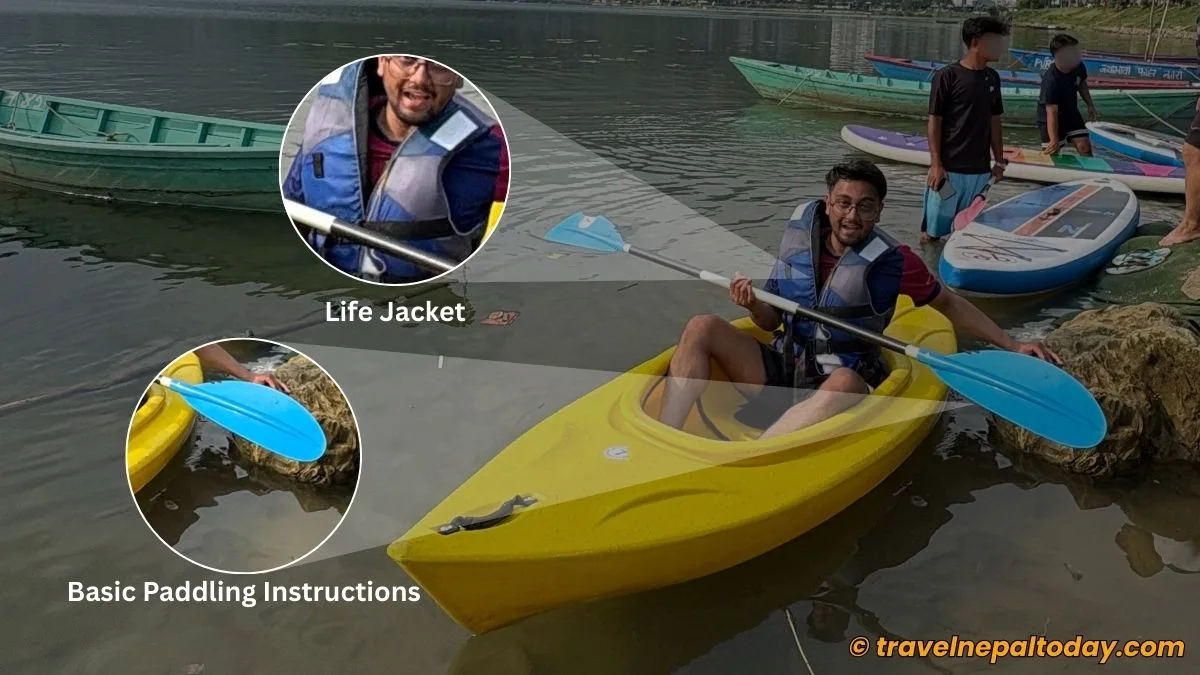
| Safety | Life jacket is provided with basic instructions but there won’t be any guide |
| Best Time | All seasons (when weather is clear) |
Booking Your Kayak in Phewa Lake
Considering the growing popularity of kayaking in Pokhara, there are now multiple private operators in Lakeside. And the number is likely increasing rapidly.
Look out for the stores that have ‘Kayaking’ mentioned in their services list. Get inside and they’ll take care of the rest.
Well, even that might not be necessary! If you get closer to the boating counters near Hallan Chowk or Barahighaat Ground, you’ll be approached by multiple agents. That’s how easy it has become to book a kayak in Pokhara.
I personally chose Fewa Water Sports, which was located near the Phewa Lake View Point. It was easily accessible, and I didn’t think twice.
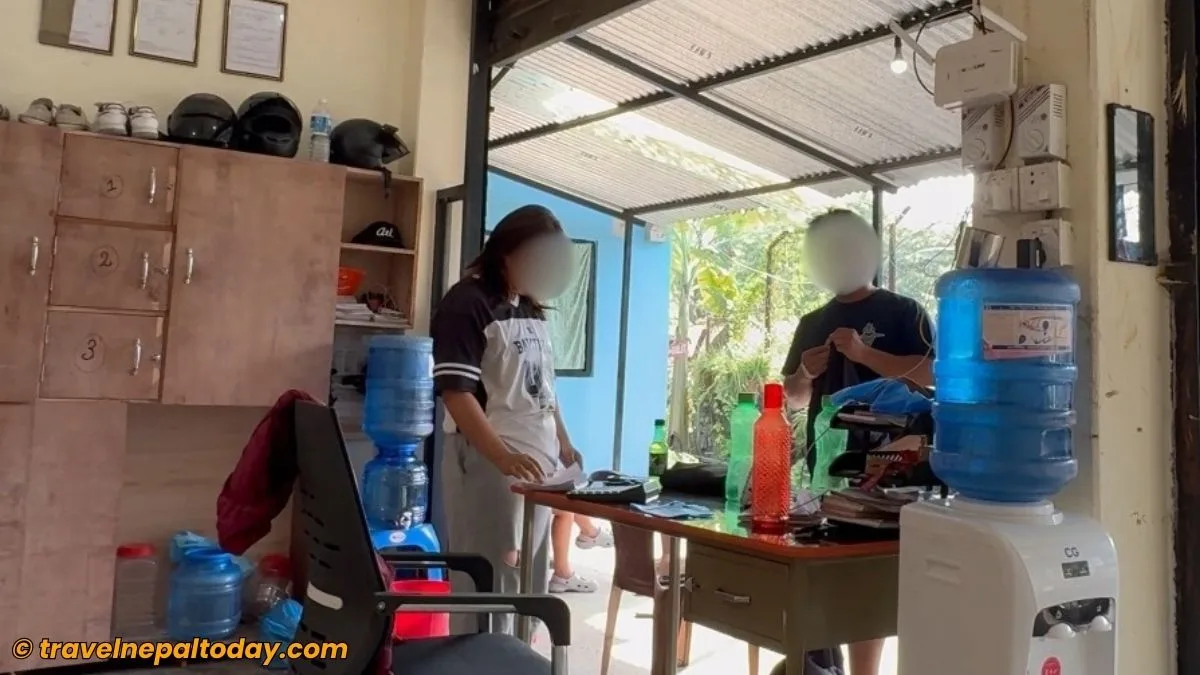
Another thing you could do is check out the providers on social media pages and contact them directly.
Once you’re at the booking counter, all you have to do is fill out the consent form and pay the full amount upfront. Then, wait for your turn.
Remember: if there’s a crowd, your turn could take hours or even be scheduled for the next day.
My tip is to book your kayak as early as possible. Since they adopt a first-come, first-serve policy, you have to stay ahead of everybody else.
For couples: Some operators even provide tandem kayaks. We’ll have a different guide on this very soon!
How Much Does Kayaking in Lakeside Cost?
Don’t worry! Kayaking in Phewa Lake won’t cost you big bucks at all.
I personally paid NPR 500 for a one-hour ride. But since it took me a bit longer to return, my time extended slightly. Yet, the didi there didn’t charge me extra.
I’m not going to lie. I’ve seen posts on social media claiming to offer it for even less. Since private operators are competing with each other, you might find a cheaper ride if you do a bit of research.
The real question lies with international tourists. After seeing all those kayaks and SUPs, I know you’d want to try it yourself.
However, the prices haven’t been clearly revealed yet. Private operators do seem to tie up with travel agencies and offer services accordingly.
It should cost less than $10 for sure, which is definitely not a big headache. So, don’t worry about the price. Just go for the adventure!
How Safe is Kayaking in Pokhara?
Kayaking has proven to be a safe adventure in Phewa Lake. But there are twists.
It’s Beginner-Friendly!
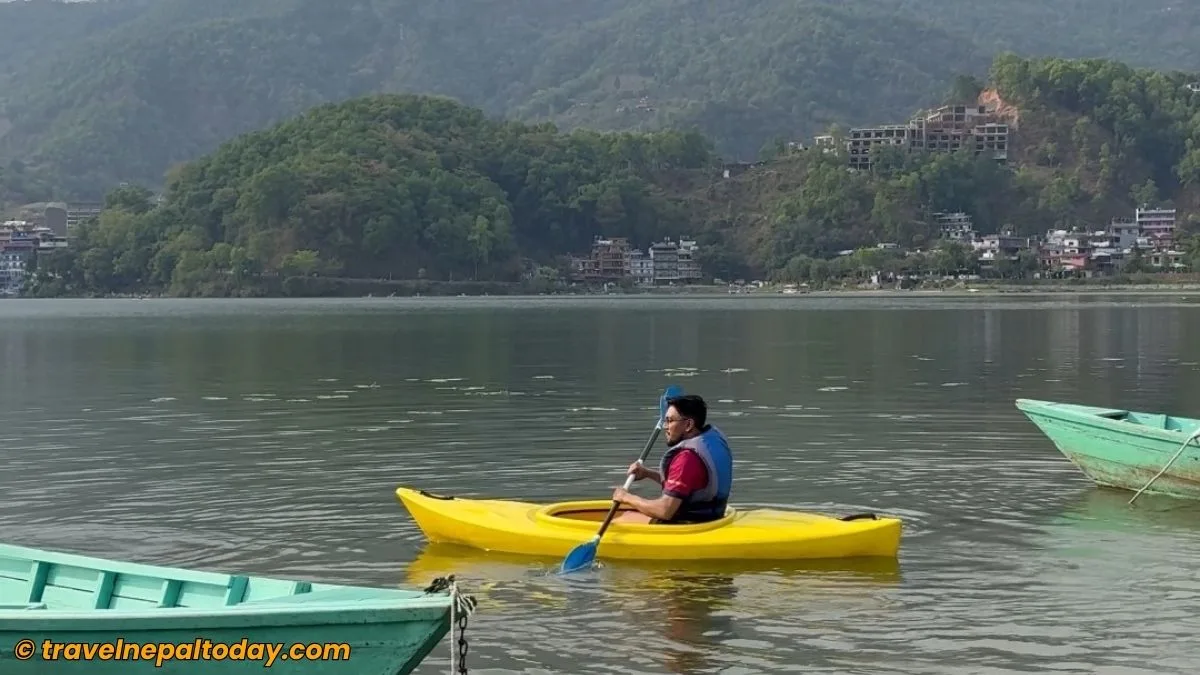
For beginners and those who do not know how to swim, you don’t even need a guide! Also, you can learn to paddle in just a few minutes.
Even children can indulge themselves if they’re confident enough and accompanied by a guardian. But they don’t allow stand-up pedals for kids, considering it’s less safe than kayaks.
You’re provided with a life jacket for emergencies (no helmet), but I’ve seen confident swimmers skip them entirely.
But that doesn’t mean you should imitate them. Safety is absolutely essential, and all the necessary precautions must be taken. Both by you and the service provider.
Kayak Operators Watch, But Don’t React?
As I glided through the Phewa Lake, there was no safety crew to be seen.
While I learned quickly and was able to enjoy the ride fully, there still remained that ‘security worry’, preventing me from going far. Mainly because I was doing this adventure all alone.
Generally, it’s the service provider who should be responsible in case of accidents, or at least they should follow all the required precautions beforehand. But the story is a bit different.
Don’t you think these private boat operators aren’t bothering much about their guests’ safety? Activities and adventures shouldn’t just be about business, really. I’m still waiting for a good service provider in Pokhara to overturn this.
Here’s what I experienced:
- They do provide you with a consent form to sign before taking the payment. However, not much information is in there.
- You’ll have to remove your shoes and socks, and wear the sandals they give you.
- After waiting for your turn, they call you and teach you the basics. These include how to sit in the kayak and how to use the paddle. Basically, it’s just a do-it-yourself kind of instruction. Not satisfying, definitely.
- You’ll be provided with a life jacket. Be sure to ask the operator to tighten it properly.
- Although they had promised to provide a pouch for my phone and accessories, they didn’t. Turns out they were only providing it for those in paddleboards.
- Also, the kayak looked a bit dirty, after all, it’s used by many, and the water gets in quite easily. It’s pretty clear the kayaks aren’t checked after each use.
One thing I noticed about Fewa Water Sports is that the didi I mentioned earlier personally comes out to check if something’s gone wrong, but only when your time runs out. A business-driven concern that counts as a safety check, perhaps?
Safe Yet Unpredictable!
While kayaking and even stand-up paddling are safe activities, accidents can still happen.
What if the kayak turns over and you can’t swim? One might say others in the area will help.
But what if you take the kayak a little further away from the crowds and the same thing happens? There would be no other option than to wait until you’re seen by someone.
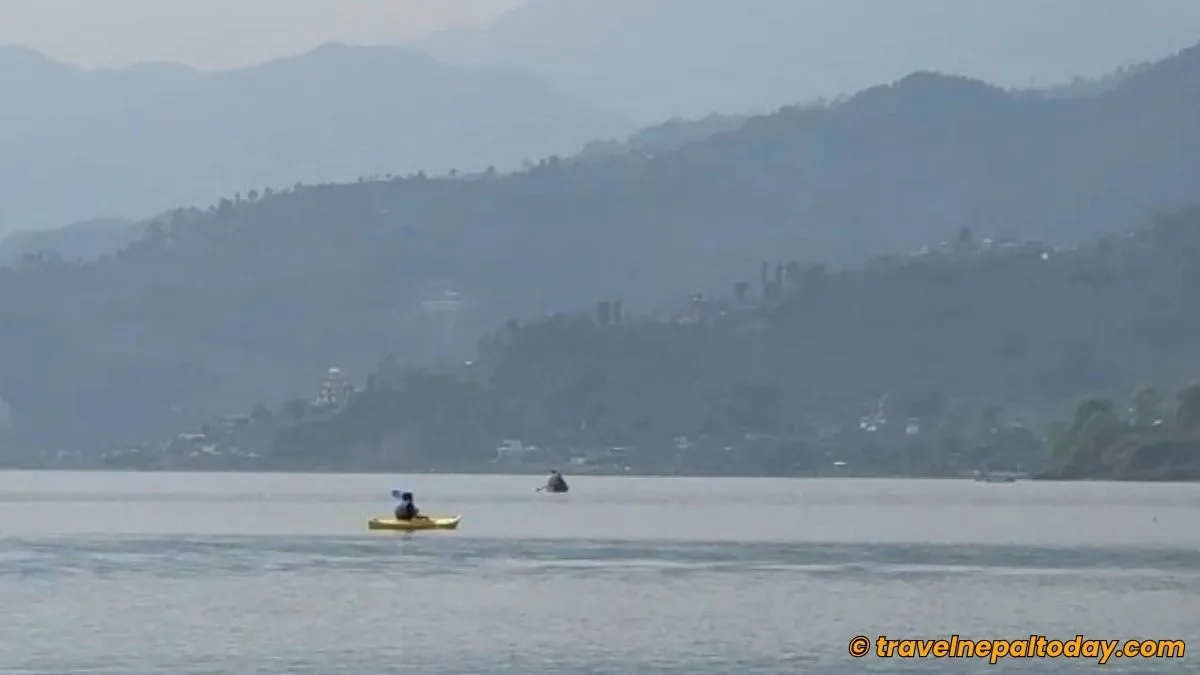
A similar incident happened very recently, when eight people were stranded in Phewa Lake. Thanks to the rescuers who were able to save them.
But here’s a crazy stat: 286 people have already lost their lives in Phewa Lake due to boat-related accidents. Most of them probably had boat operators for the basic safety. Now take this: In a kayak, you’ll be all alone…
Caution: Avoid kayaking if the weather looks bad. The best time is during sunset, but only when the skies are clear. Since Phewa Lake is known for sudden weather changes (especially in the late afternoon), be very cautious!
From my point of view, the service provider must remain active, no matter where we go, or at least provide a communication medium that lets us contact them.
These are just my suggestions. And I’m pretty sure there are plenty of other ways to make it even safer. Hoping to see changes the next time I’ll be doing this activity.
Kayaking + Swimming in Phewa Lake: Is It Safe to Dip In?
For me, swimming in Phewa Lake is a big NO! If you’ve been to Phewa Lake even once, you know exactly why.
The water clearly looks contaminated. In fact, while kayaking, I came across plenty of litter—beer cans, noodle packets, chocolate wrappers, and more. It’s honestly disappointing!
I get that some parts of Phewa Lake might be cleaner than others. But with the amount of daily activity happening here, it’s definitely no longer one of the pristine lakes of Nepal.
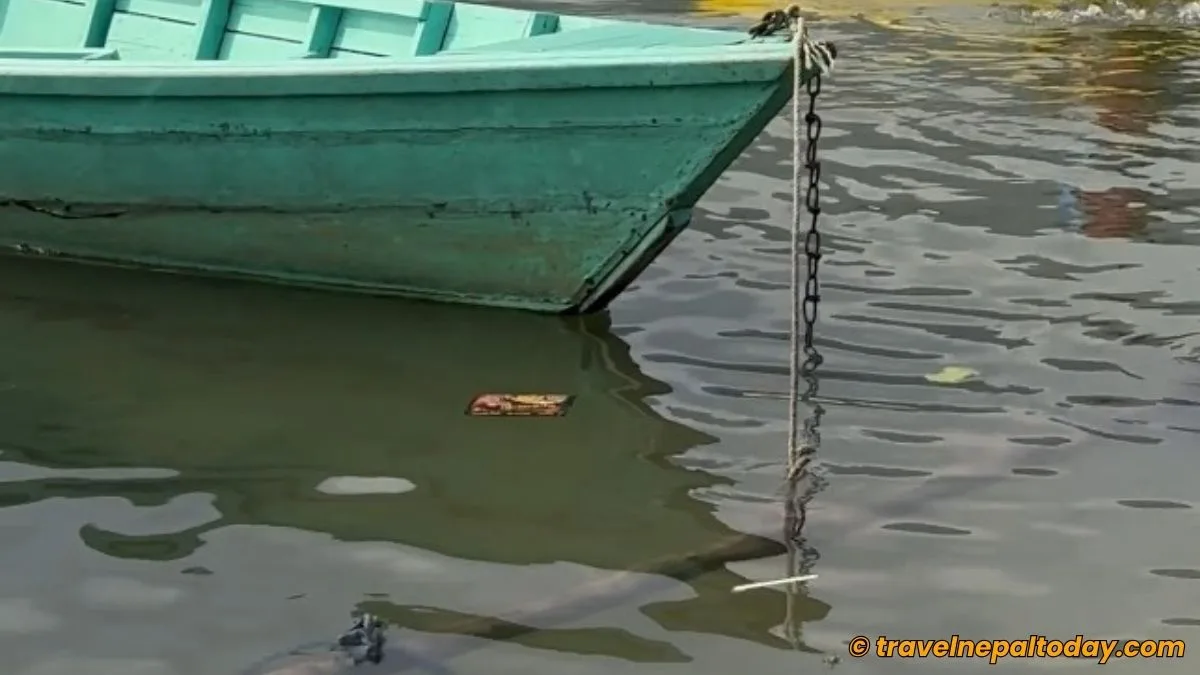
And it’s not just making things up. According to a 2022 Water Quality Evaluation Report of Phewa Lake published by the Journal of Nepal Chemical Society, there’s a presence of both organic and inorganic waste, fluctuating pH levels, and acidification.
This clearly proves that Phewa Lake isn’t clean or safe enough for recreational activities like swimming.
I seriously don’t get how people are okay taking a plunge in such a polluted water body. Even when I went rafting and got a bit wet, my skin started to itch.
While some local groups do organize cleanup events at Phewa Lake, let’s be real. Phewa Lake is far from something that a one-day cleaning can fix. There needs to be a consistent effort from the government, which our sarkar never bothers with (and we all know that!).
How to Kayak: A Beginner’s Guide From My Experience
Don’t stress about whether the service providers give the best instructions! I’ve got you covered on exactly what it’s like to kayak for the first time.
Memorize these instructions, and you should be good to go:
- Before you even begin, make sure to wear moisture-wicking clothes (a wetsuit is preferred since you’re going to get fully or partially wet).
- Wear the life vest provided by the operator. Ensure that it’s air-tight yet breathable.
- Place your mobile phone inside the dry bag (pouch) provided. They didn’t give it to me though (only for SUPs).
- Now, get into the board very carefully.
- Your sitting position should be comfortable, with knees set apart, back upright, and shoulders relaxed. Remember: these are just guidelines; just be comfortable!
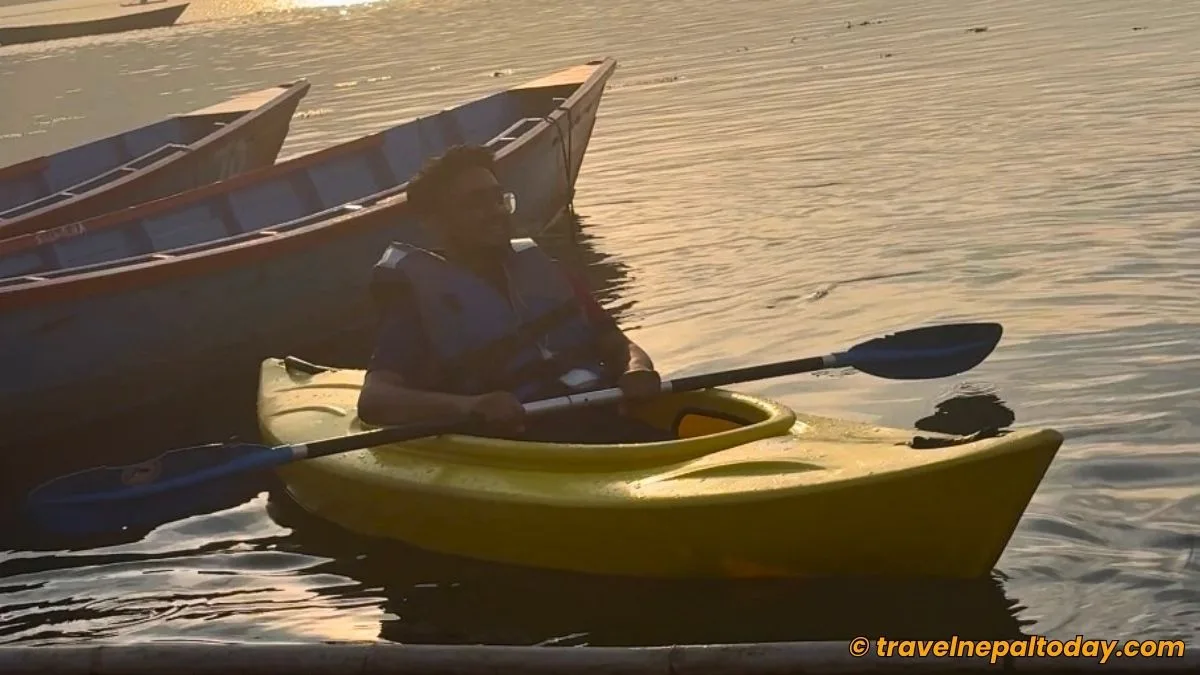
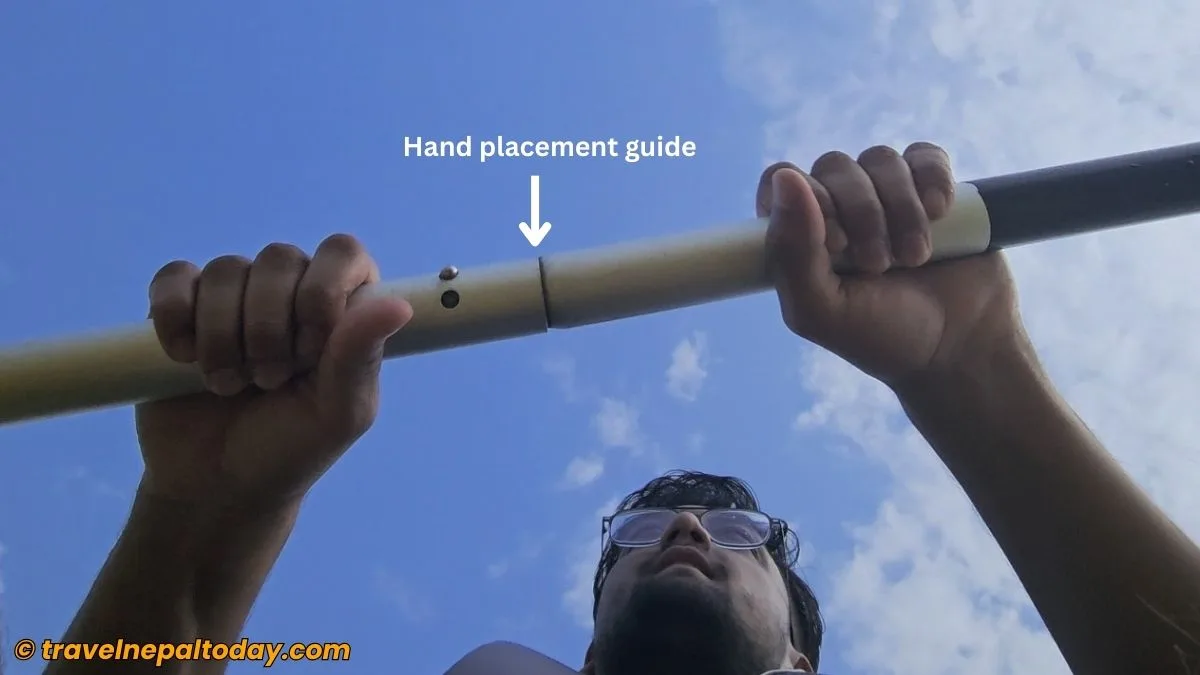
- Hold on to the paddle next (you’ll find a center mark to guide your hand placement).
- Now, start learning the basics before going too far. It took me no more than 5 minutes, considering my prior white-water rafting experience. The learning curve is different for everyone, so follow these instructions wisely:
- Forward Stroke: Twist your torso and lower the paddle blade into Phewa Lake while leaning slightly forward. Propel it through the water with force (push the pedal towards the back).
- Practice the forward stroke in both directions with different hand positions. This makes the kayak move forward. Remember: alternate strokes, left then right.
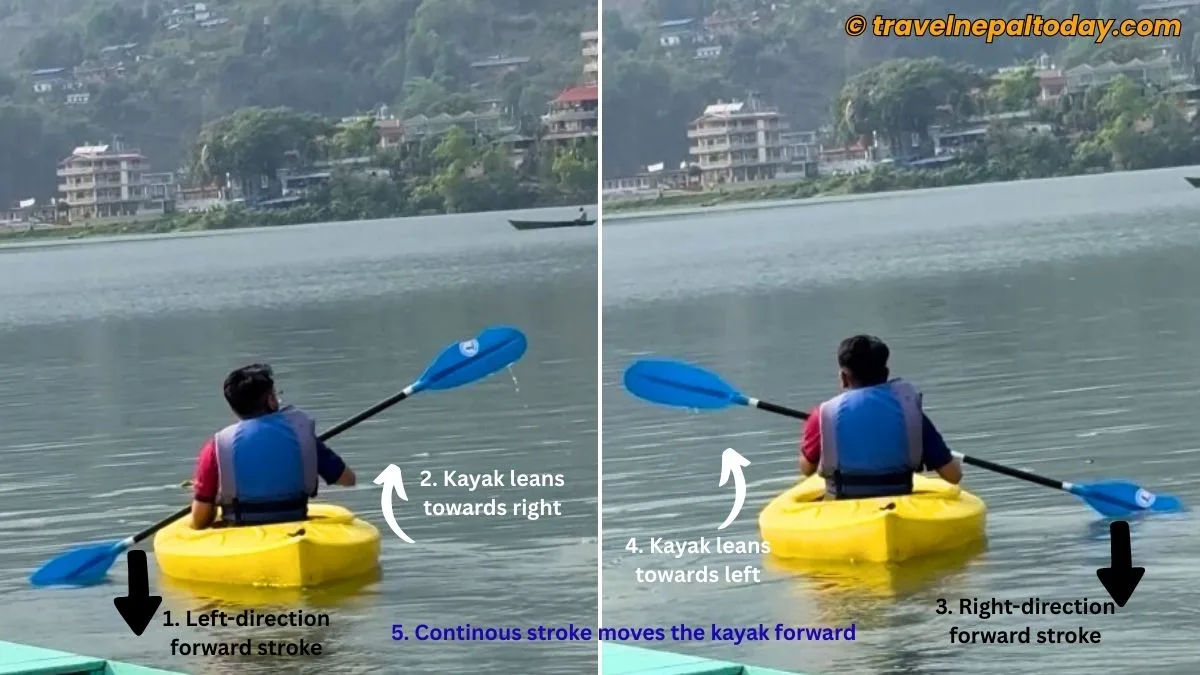
- But what happens if you keep paddling on just one side? The kayak will begin moving in an arc. You’ll end up circling in the same place!
- Backward Stroke: Do the exact opposite of the forward stroke (push the pedal forwards from the back). Instead of pulling forward, push the water from behind toward the front. This will move the kayak backwards (though some of you might feel dizzy doing this!).
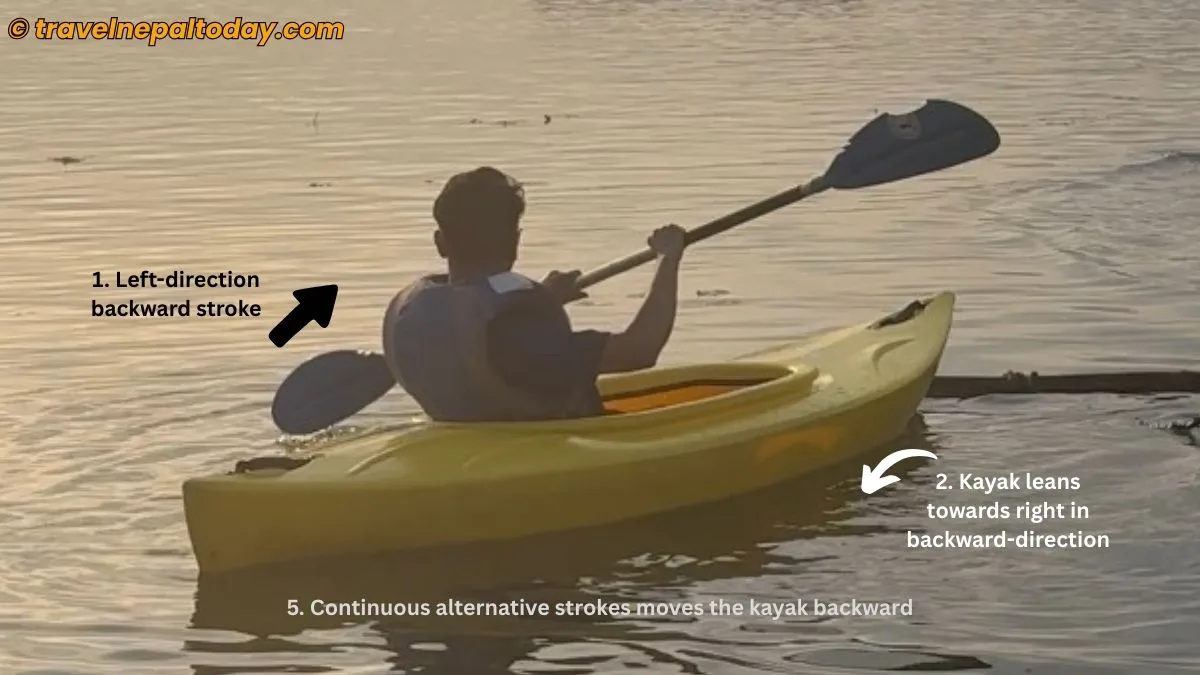
- Repeat the steps above until you’re fully confident before your actual adventure starts.
- During your journey, stay seated in the same position to avoid accidental falls. And don’t panic! Stay close to your group as much as possible.
When you return, be sure to hand over the paddle to the operator before getting out of the kayak.
Kayak vs SUPs: Which is Better?
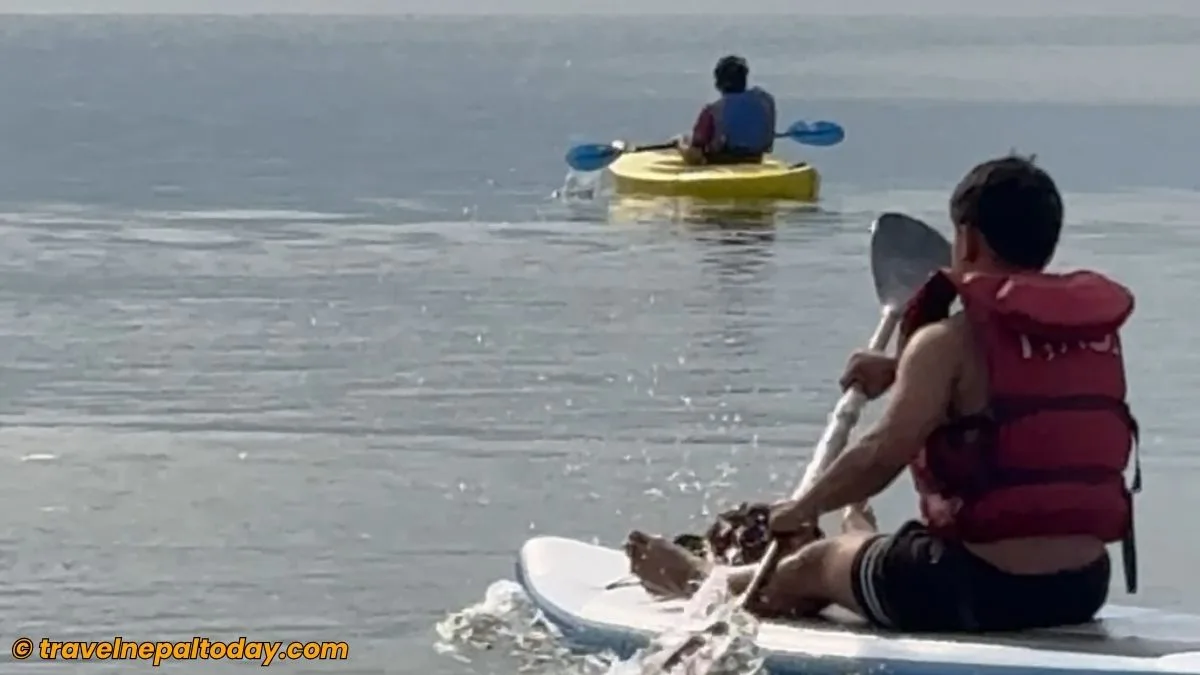
Honestly speaking, I was there for stand-up paddling. But it turns out that once the form has been filled, nothing can be changed.
It was my first time, and accidentally ending up in a kayak turned out to be a good choice. Now, based on what I’ve experienced, I’m much more aware of the things to consider the next time I go for stand-up paddling.
Deciding which is better is quite tricky for me until I try the other one. But as we all see it, stand-up paddling seems more fun and flexible than kayaking. However, kayaking is definitely a lot safer than stand-up paddling.
| Kayaking | Stand-up paddling (SUPs) |
| You don’t fall off easily. | The chances of falling are higher. |
| You’re not provided with a pouch to waterproof your gadgets. | A pouch is provided to keep your gadgets safe, but if the paddleboard falls over, they can still get wet. |
| Less flexibility, as you have to crouch and stay mostly in the same position. | Very flexible—you can either stand up or sit, just like in a kayak. |
| Jumping off and getting back in is very difficult for those who love swimming. | Jumping off and getting back in is comparatively easier. |
| Easier to carry snacks and drinks. | There’s a higher chance that snacks and drinks will end up in the lake (so, not recommended!). |
So, which one would you choose? Let me know in the comments below!
Final Words
I hope you’ve gathered all the necessary information about kayaking and heard about my honest experiences.
While I did enjoy exploring the lake on my own, I know it would have been much better with some company. I’ll definitely be doing this adventure again when I visit Pokhara.
Lastly, if you have any questions about kayaking, feel free to reach out. I’m happy to help!
Happy traveling to Kaski!
About The Author