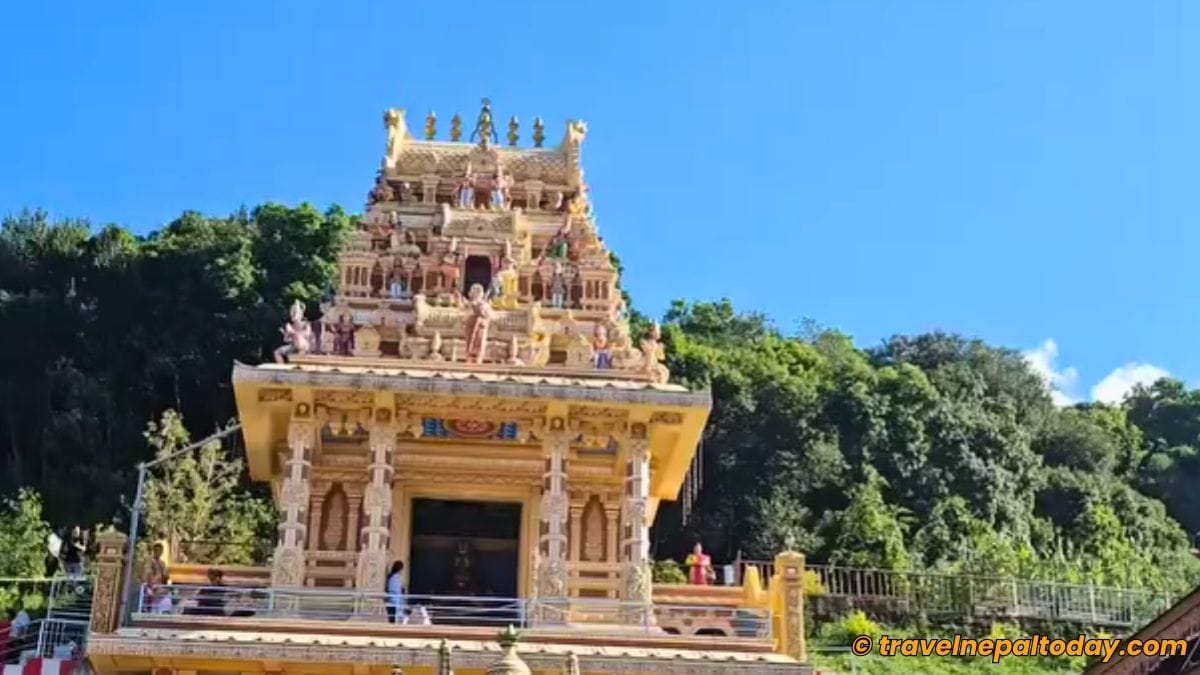
Architecturally, Shree Panchamahalaxmi Temple is undoubtedly one of the most beautiful temples near Kathmandu.
Its intricate design, stunning statues, Ramanuj Temple, Sheesh Mahal, and the mystical Hayagrib Cave make it a must-visit destination for everyone.
You can easily combine this trip with your visit to Nagarkot or Sankhu, as the temple is conveniently located in Changunarayan, Bhaktapur, right between the two major landmarks.
Without further ado, let’s dive into the details!
Key Facts About Shree Panchamahalaxmi Temple
| Location | Changunarayan, Bhaktapur, Bagmati Province |
| Mode of Transportation | Private vehicle (Public Vehicle + Walking) |
| Distance (from Jorpati) | 14 km approx. |
| Time to Reach | 30 minutes approx. |
| Best Season | All Months |
How to Reach Shree Panchamahalaxmi Temple?
There are multiple ways to reach Shree Panchamahalaxmi Temple. Let’s break them down one by one.
Via Sankhu-Telkot Road
This is the shortest route to Shree Panchamahalaxmi Temple for those coming from the Kathmandu district.
If you’re from Jorpati or nearby areas, I highly recommend taking this route—even when visiting Nagarkot. It offers a short yet scenic riding experience.
To get there, take a right from Sankhu Bus Park, which connects to the Telkot-Chaayabasti Road. Cross the Telkot Bridge, continue onwards to Telkot, and you’ll find Shree Panchamahalaxmi Temple along the way.
Caution: When I attempted to return via this route, the Telkot Bridge was under construction, forcing me to take an alternative path. So, be prepared for such possible obstacles!
Via Bhaktapur-Chaayabasti Road
For those of you in Bhaktapur district, there’s no need to take the Sankhu road, as the original Nagarkot route is much shorter. However, keep in mind that the road conditions haven’t improved yet.
Your goal is to first reach Telkot. From there, take the Chaayabasti Road. But be careful, as many people mistakenly take the Changunarayan route instead. Keep this in mind!
Once you’re on the right path, you’ll reach Shree Panchamahalaxmi Temple within 5 to 10 minutes.
Reaching Panchamahalaxmi Temple After Nagarkot Trip
I bet most of you will combine your visit to Panchamahalaxmi Temple with a trip to Nagarkot—just like I did!
To make the most of your journey, explore all of Nagarkot’s top attractions before heading toward Changunarayan. These include Kattike Bhanjyang, Nagarkot Geodetic View Tower, Ratnachundeshwor Mahadev Pokhari Temple, Bojinee Dam, Buddha Peace Park, Rani Jhula, Muhan Pokhari, Nagarkot Waterfall, Tudi Jharana, and Sallaghari Picnic Spot.
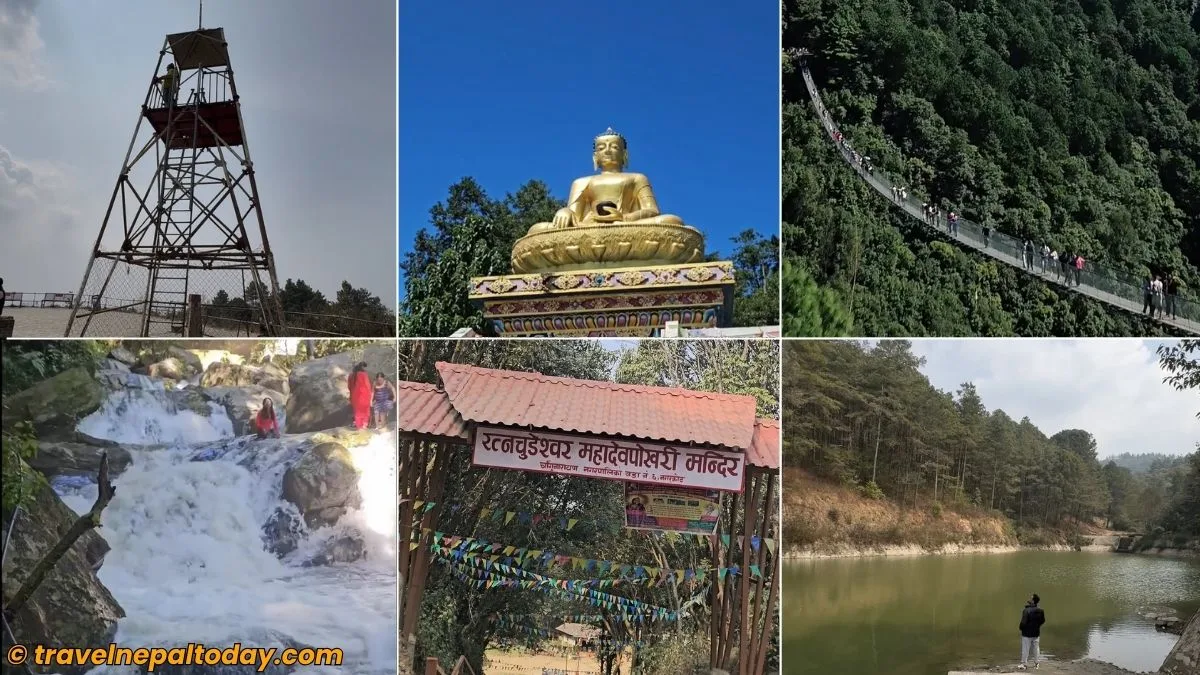
Once that’s done, take the Bhaktapur Road and reach Telkot. From there, continue on the Chaayabasti-Sankhu Road, and you’ll find the Shree Panchamahalaxmi Temple along the way.
Reaching Panchamahalaxmi Temple Via Public Bus
So far, I’ve been focusing on private vehicles, but what if you’re traveling by public transport?
In that case, you’ll need to take a Nagarkot or Telkot bus from Nagarkot Bus Park in Kamal Binayak.
Unfortunately, no other public transport options are available beyond this point. So, you’ll have to walk to Shree Panchamahalaxmi Temple, which takes about 30 minutes.
When I visited alone, I even gave an aunty a lift to the temple, while the rest of her group had to walk the entire way. I also met a few visitors who had arrived by taxi. So if you prefer comfort, booking a taxi or jeep might be a better option.
What would be amazing is that if the municipality introduces safaris or rickshaws from Telkot to Panchamahalaxmi Temple. A much-needed convenience for visitors right?
Main Attractions of Shree Panchamahalaxmi Temple
As soon as you enter the Shree Panchamahalaxmi Temple gate, a guard will assist you in finding a parking spot. There’s ample space for both two-wheelers and four-wheelers, and you’ll even find small cafés within the premises.
One of the first things to catch your eye will be the Hayagrib Cave—a spot that went viral on social media a few years ago.
First, the architecture of Ramanuj Temple will surely leave you mesmerized. At first glance, I mistook it for an entrance gate, but it turned out to be a temple itself.
But before diving into that, let’s first explore the temple premises and take in the surroundings properly.
Ramanuj Temple
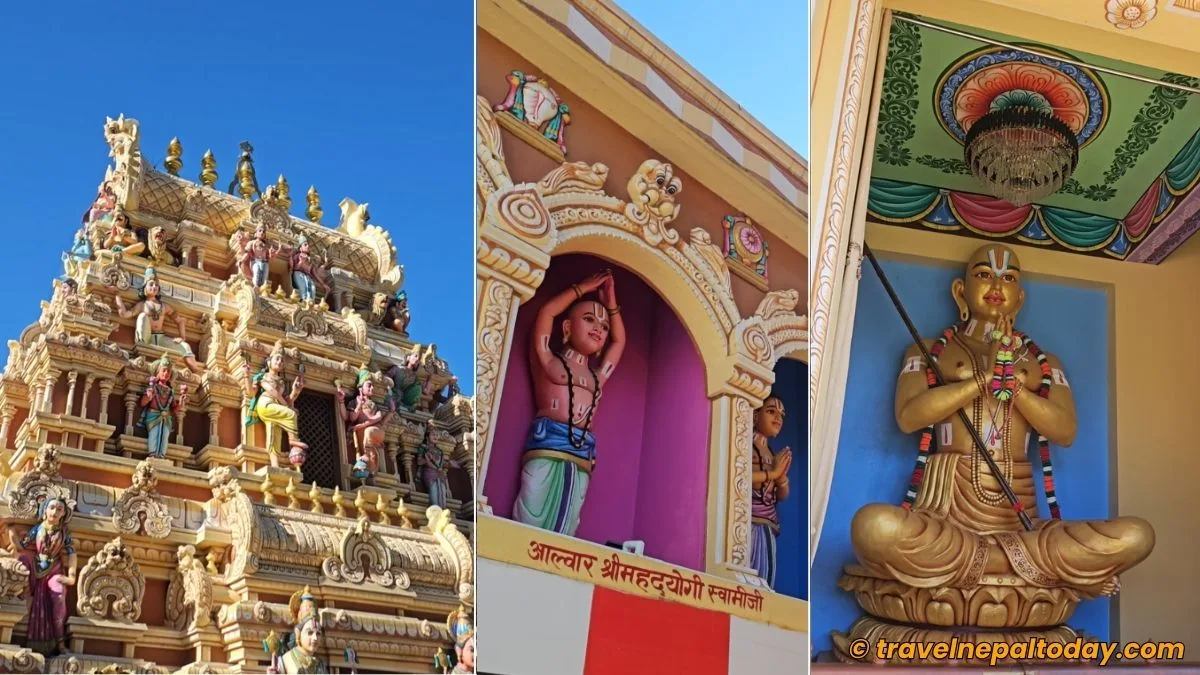
Step inside and don’t forget to remove your shoes!
You’ll be greeted by intricate wall carvings adorned with Sanskrit mantras, along with the main statue of Ramanuja and other Swamiji statues.
Sheesh Mahal
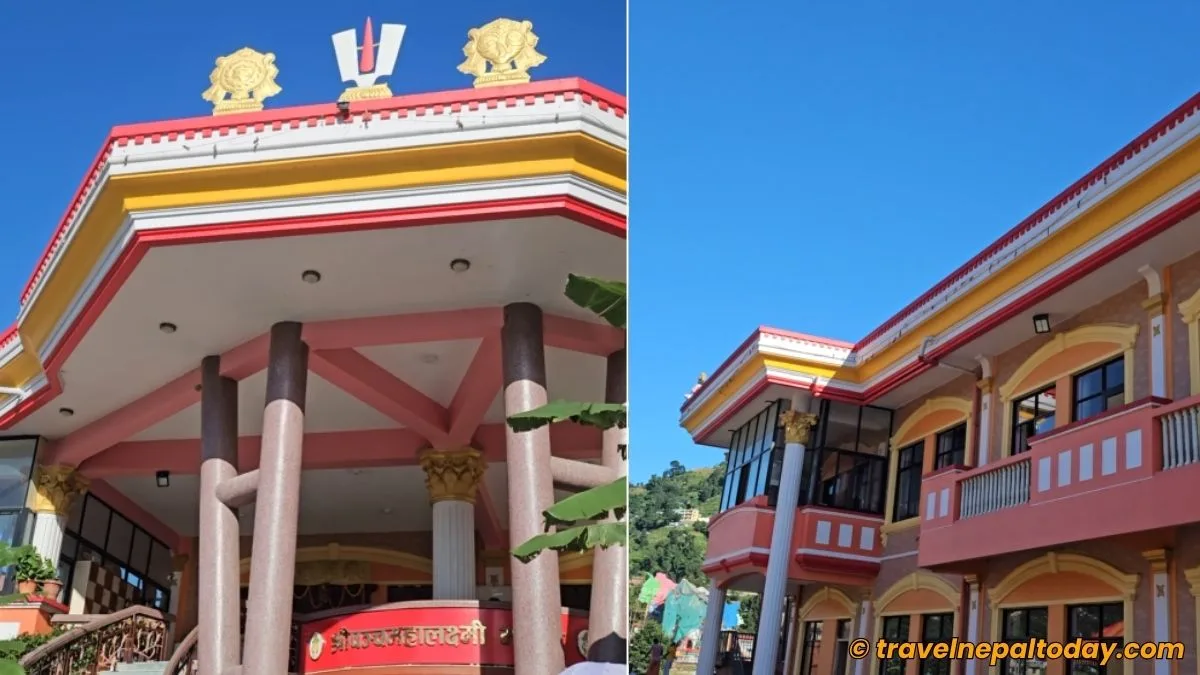
This is the main temple of Shree Panchamahalaxmi Temple. As the name suggests, it is a sacred site where five forms of Goddess Laxmi are worshipped.
Since I was in a one-year mourning period following my grandfather’s passing, I chose not to enter the temple and instead prayed from the outside.
I’d love to visit again—this time, to properly explore Sheesh Mahal. If you’ve seen the pictures online, you already know that stepping inside is a must for a truly immersive experience.
Entire Temple Premises
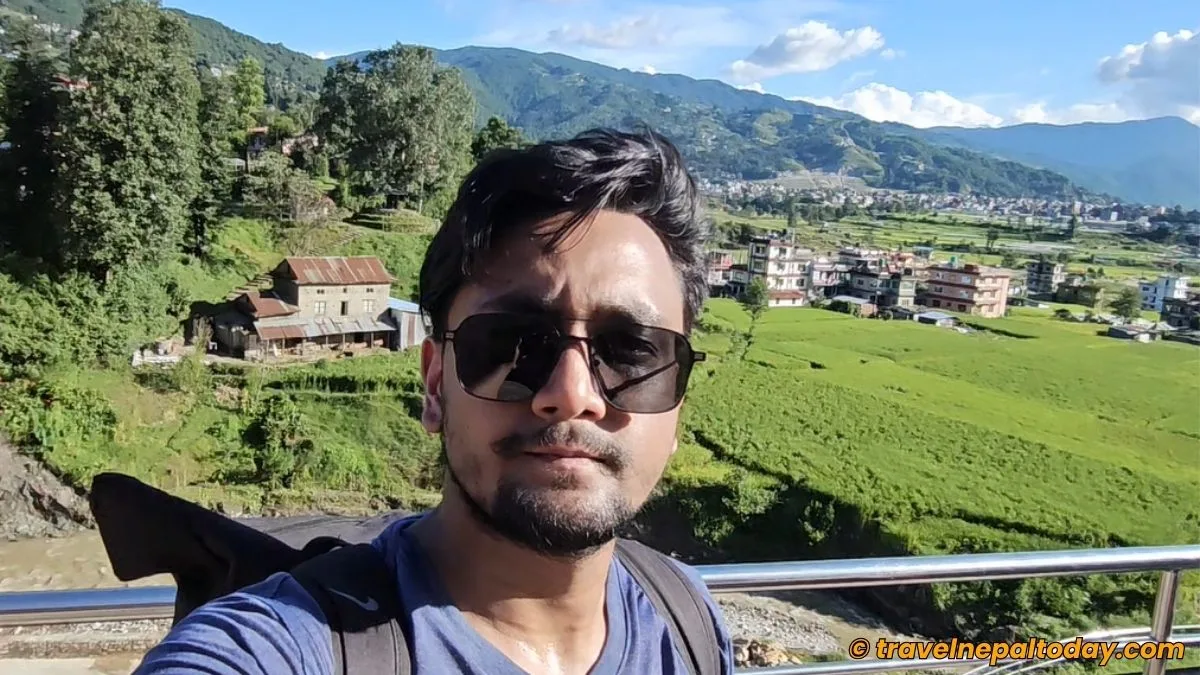
Beyond the temples, the entire premises of Shree Panchamahalaxmi Temple is absolutely breathtaking. Spanning approximately 21,812 sq. feet (4 ropani), there’s plenty to explore.
The site offers ample space for religious programs, and when I visited, a large gathering was taking place for one such event.
Additionally, you can enjoy stunning views of the surrounding landscapes and villages.
Don’t forget to check out the small pond, which features statues of two elephants.
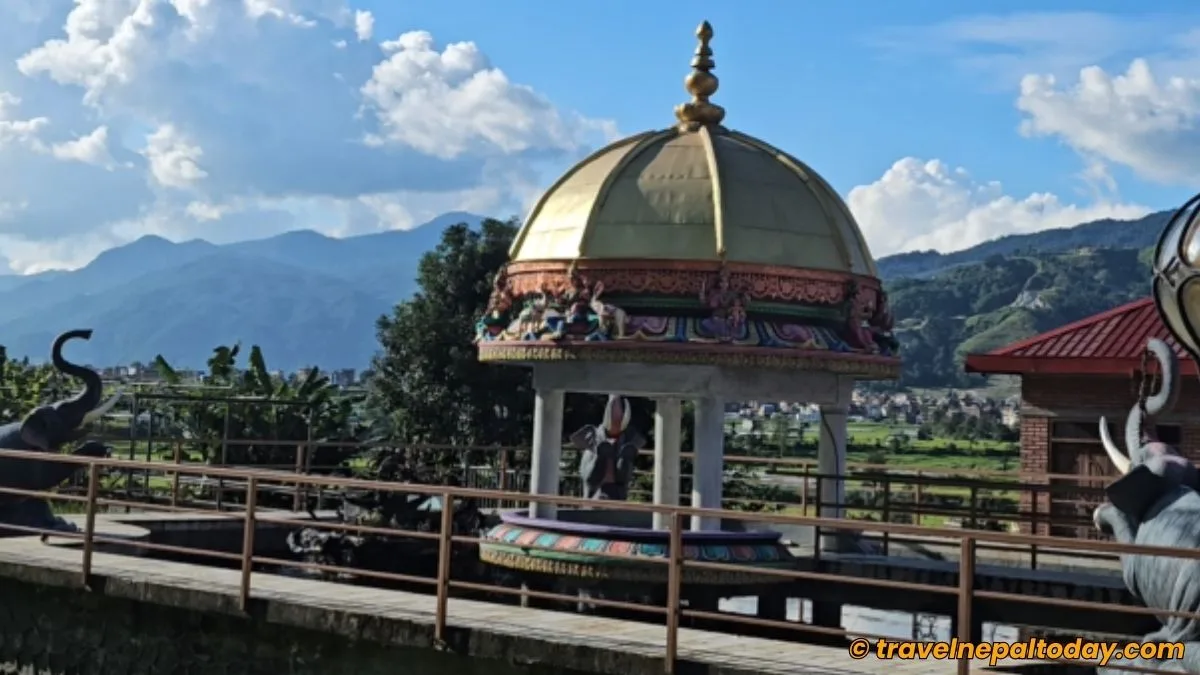
And if you visit during the monsoon season, you’ll witness local farmers working in the nearby paddy fields too.
Hayagrib Cave
Once you’ve explored all the temples within Shree Panchamahalaxmi Temple, don’t miss the Hayagrib Cave, the intriguing spot you first encountered while parking your vehicle.
Keep in mind that entry requires a ticket priced at Rs. 100.
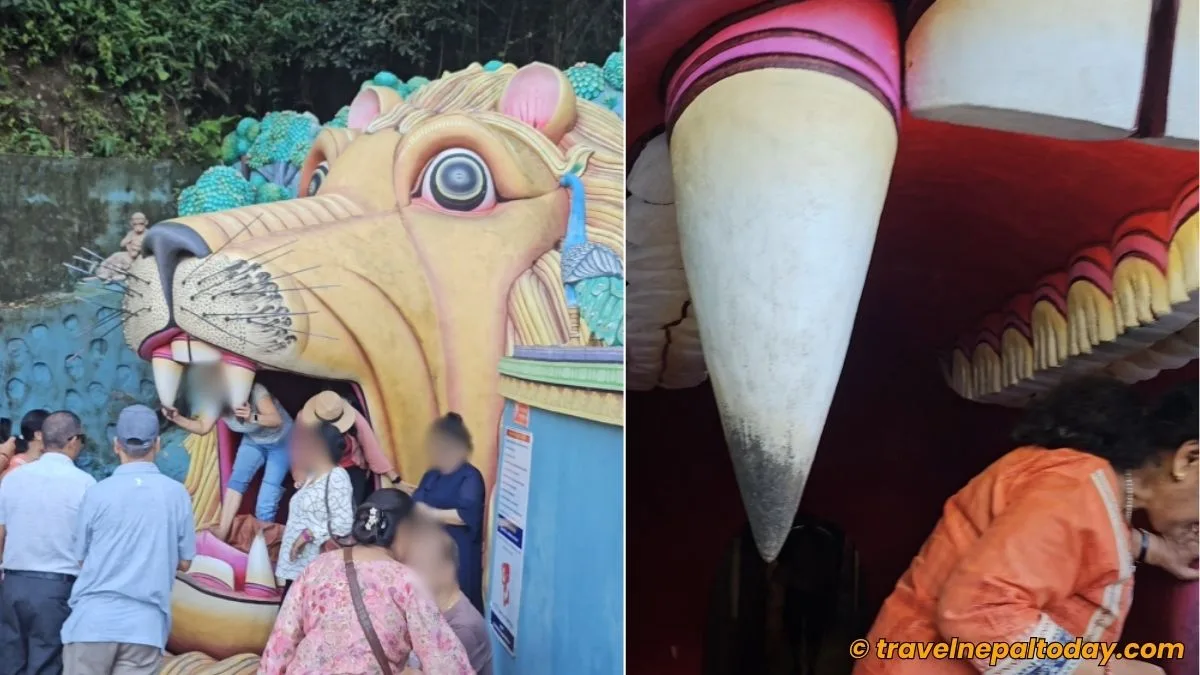
The entrance itself is quite unique, designed like a lion’s open mouth. It’s a popular photo spot for visitors. Don’t forget to capture a moment here!
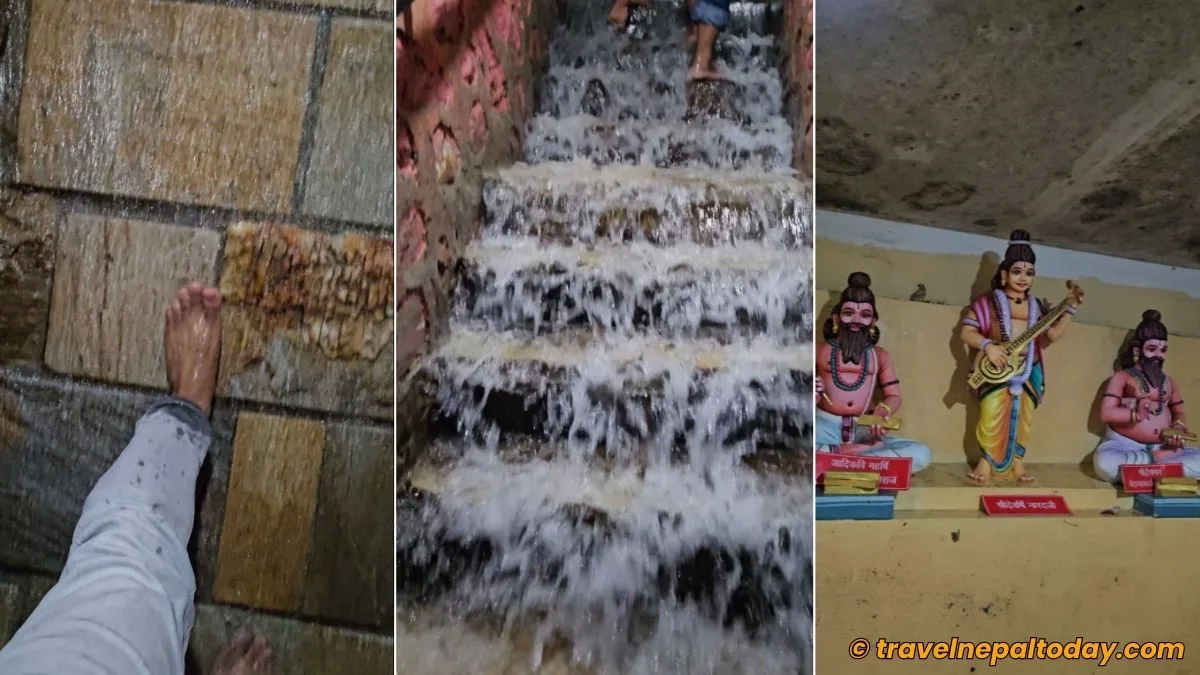
As you step inside, you’ll cross a small stream flowing over the pavement. During the monsoon season, the water level can rise so high that even the ladders inside get submerged.
Often referred to as the Mini Cave of Bhaktapur, this place is truly a hidden wonder. Let me share why I feel this way.
I had set out on a short solo ride to Nagarkot, questioning myself the entire time—”Why did I come alone?” But the moment I stepped inside this awe-inspiring cave, I realized it was absolutely worth it.
Beyond the stream, you’ll find numerous statues inside the cave, including those of Shree Dhub, Adhikavi Maharishi Valmiki, Shree Devarishi Narada, and more.
Final Words
Simply reading about Shree Panchamahalaxmi Temple won’t be enough—you have to experience it for yourself!
Even for me, there’s so much more to explore. I’d love to visit again to dive deeper into its history, religious significance, and hidden details.
If you know someone who can share more insights, feel free to reach out. And if you have any new information about this temple, drop a comment below. I’d love to hear your thoughts!
Happy traveling to Bhaktapur!
About The Author