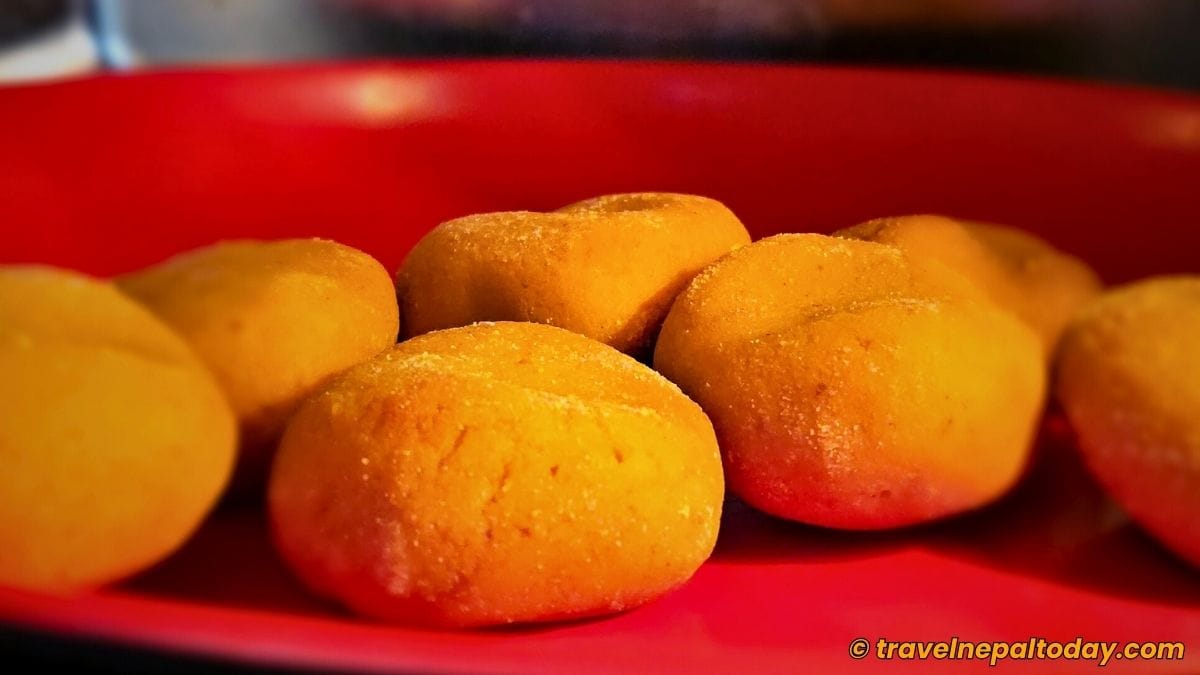
Whenever I’m returning via bus from the eastern Terai, there’s one thing I always make sure to bring home—Barmajhiya Peda!
I’ve been a fan of its taste for as long as I can remember. It has remained one of my favorite sweets for over a decade. Even my friends love it and often ask me to bring them some when I return to Kathmandu.
Seriously, Barmajhiya’s Peda, or as they call it, ‘Barmajhiya Budo Bajeko Peda’, is a must-try delicacy when you’re in Nepal.
However, I’ve decided to stop eating it temporarily due to potential health risks. Continue reading to find out why I’m saying this, even though I’m still a peda lover.
Key Facts About Barmajhiya Peda
| Type | Sweet |
| Region | Barmajhiya, Kanchanrup, Saptari, Madhesh Province |
| Cultural Roots | Madhesh community |
| Timing | Snacks |
| Price | Rs. 900 per kg |
| Best Season | All |
Which is the Real Barmajhiya Peda Store?
For the authentic taste of the very famous Barmajhiya Peda, you have to travel to Barmajhiya in the Saptari district itself.
While there are dedicated sweet shops that sell Barmajhiya Peda in Kathmandu and other city areas, the taste is never as authentic as that of the stores in Saptari.
However, even after traveling to Barmajhiya (which is very close to the Koshi Barrage), you’re going to be baffled. That’s because there are hundreds of stores in the region that sell this peda.
I’ve personally tried the Barmajhiya Peda from multiple of these sweet shops, and honestly, the taste is more or less the same.
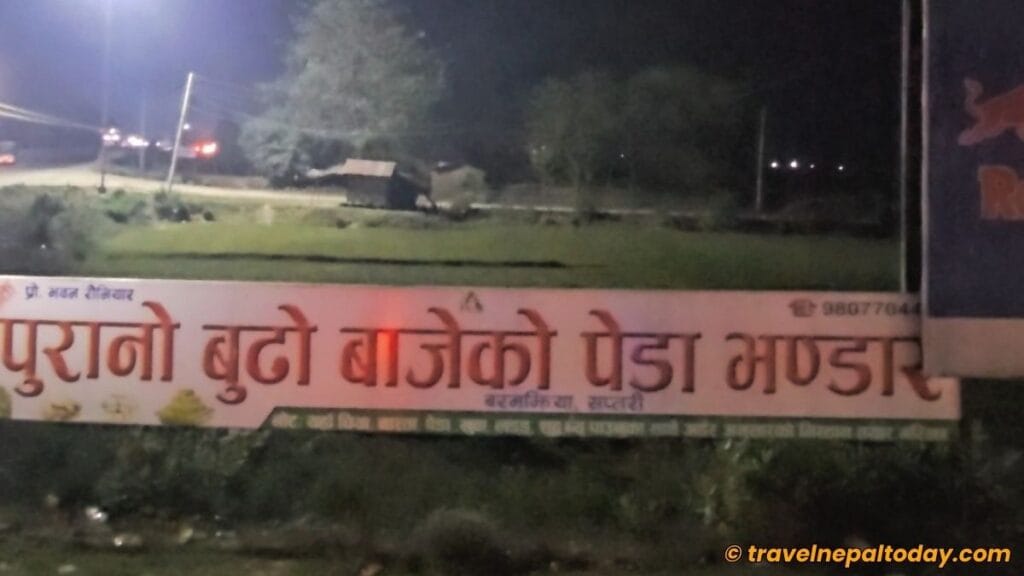
So, which Barmajhiya Peda store could be the one that started it all? The answer still remains unknown. Every business here tries to claim that they are the original ones.
What we know so far is that it was Bajinath Sah who started this business, following in the footsteps of his father, who used to sell pedas as snacks on the Koshi River bank.
After Bajinath’s passing, his son, Rajkumar Sah, took on the responsibility and has now passed on this legacy to Bibek Sah.
But where is this family store, really? I’m pretty sure I’ve never tried the Barmajhiya Peda from their store, despite the fact that I’ve been eating this sweet for over a decade.
And how could one really differentiate the stores, right? Maybe the branding hasn’t been done the way it should have. That’s why many have copied this business idea and tied up with buses so they can sell pedas directly to passengers.
Well, it’s never too late, and everyone should know what the truth really is. I’ve tried researching it on the internet, but again, many claim it was their family who started it.
If you’re from Saptari and are well aware of the Barmajhiya Peda story, don’t hesitate to contact me (comment below!). I’d love to cover the original story here on Travel Nepal Today.
Price of Barmajhiya Peda
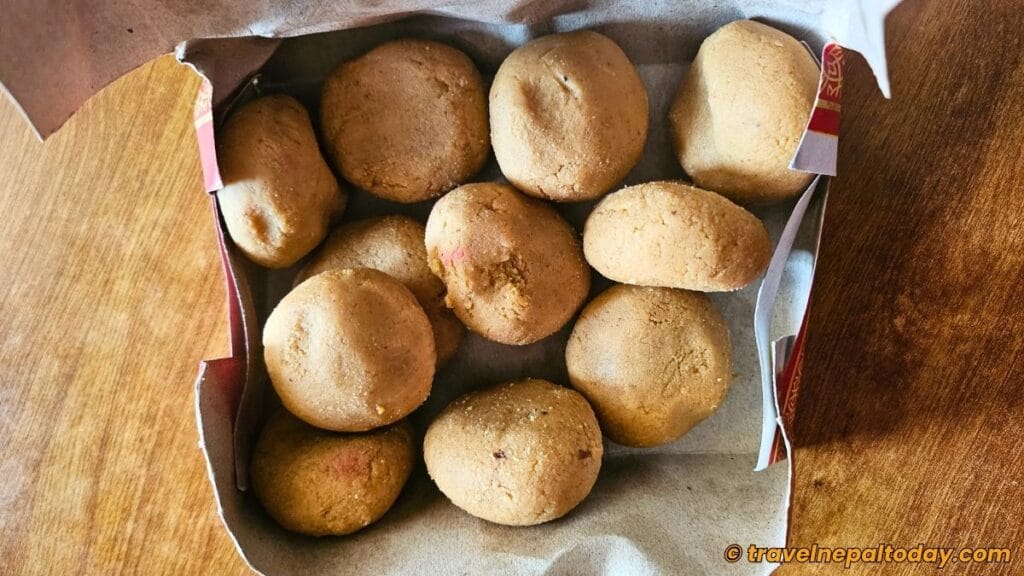
No matter where you buy the Barmajhiya Peda from, its current price is Rs. 900 per kg. You’ll even get a packet of ½ kg for Rs. 450.
Note that the price can fluctuate depending on the price of milk. And to maintain uniformity, all the stores in Kanchanrup sell Barmajhiya Peda at the same rate.
While you can try the fresh peda there itself, keep one thing in mind before taking it home—ask the vendor to pack only the fresh pedas for you. Keep an eye on the pedas they put in the box.
In case they are selling you a ready-made box, don’t hesitate to open it up and check every piece. No, you’re not being rude—it’s for your own safety!
Why I’m emphasizing this so much is because there was a literal housefly mixed in one of the pedas when my parents brought it to me a few months back. Imagine a peda with housefly flavor!
Of course, we had to throw the whole package away. A waste of money and a serious question on their quality!
How Healthy is Barmajhiya’s Peda?
That housefly-flavored peda brings us to this heading. Obviously, Barmajhiya’s Peda wouldn’t be healthy for consumers if that’s how careless they are.
The problem is that we don’t even know which store we got it from because, as mentioned earlier, there are numerous stores that sell the same thing.
Besides this housefly story, ask yourself how they prepare the Barmajhiya Peda. Sweaty hands with no proper gloves (God knows where those hands have been), no proper refrigeration, and flies roaming on top—probably leaving some natural seasoning (iykyk).
Some of us even use this as a prasad for our holy rituals. Do you really think it would be the purest choice?
There needs to be a proper study regarding how healthy it is to go for this Saptari delicacy. It’s such a wonderful sweet, but these things just make it gross.
The only ingredients used in Barmajhiya’s Peda are a mixture of pure milk, khuwa (solidified milk), and lots of sugar. The sugar in this diet can make a lot of you decide not to try it. And after learning about the preparation process, I’m sure it would be a big no for you.
Obviously, the health concerns rise. In fact, I myself suffered from diarrhea recently after tasting Barmajhiya Peda. If not diarrhea, my stomach remains upset for an entire day or two.
It could be due to some level of lactose intolerance. However, I should have similar issues when trying other pedas, right? And usually, I don’t face such problems when trying sweets from clean sweet shops.
So, my doubts about Barmajhiya Peda can’t be underestimated. Don’t worry, readers! I’ll soon collaborate with a food technician to bring out actual results.
Should You Really Try Barmajiya Peda? My Thoughts
Well, don’t get me wrong after reading the cons about Barmajhiya Peda. I’ve personally loved it, and in fact, I’m eating a few while writing this article.
A good solution I’ve found is to heat the peda. You can even melt it back into ‘khuwa’ to enjoy a much juicier taste. This personally helped me prevent my stomach issues I mentioned earlier, probably because those microorganisms get killed this way.
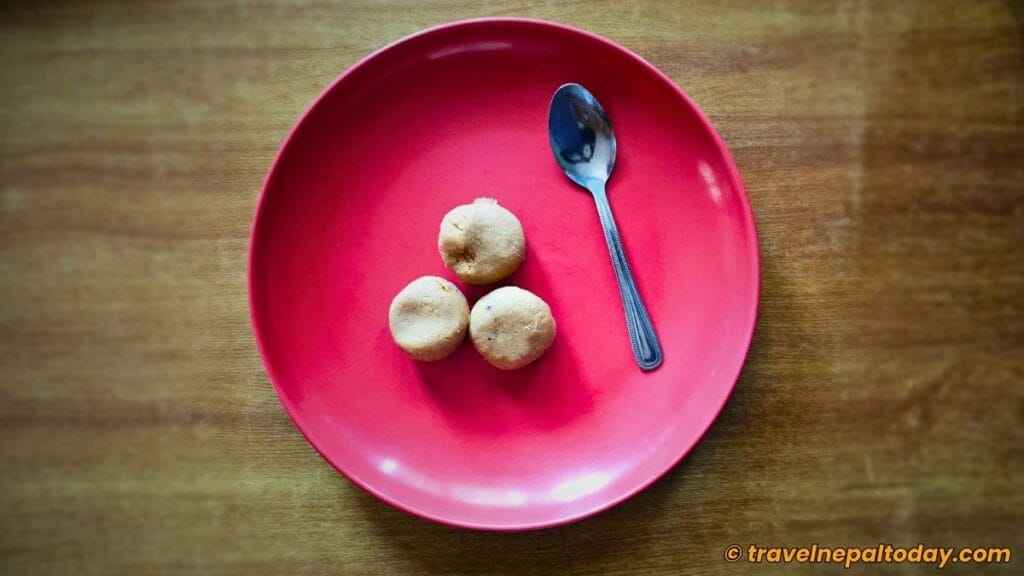
Just don’t put the peda in your mouth immediately after buying it from one of Barmajhiya’s stores. Take it home and enjoy it in a healthier way.
Definitely try it at least once despite all these cons, because I’m afraid no store will be ready for any kinds of changes anytime soon. And change will definitely not come if we (the consumers) keep our mouths shut.
Final Words
I love promoting Nepali stuff, whether it be a place or food. Everything here in our country carries culture, tradition, and history. That’s what makes Nepal unique.
And this Barmajhiya Peda happens to be one of my favorite sweets. So, obviously, I want everybody to try it at least once. But if the stores prepare it without considering consumers’ health, we must speak against it.
There are always ways to improve the quality of food. And this is the time for Barmajhiya Peda producers to step up and rethink about their procedures.
Until then, as I mentioned in the very beginning, I will be temporarily stopping the purchase of Barmajhiya ped. A kind of silent protest for consumer health and safety. And if you support me in this mission, don’t forget to comment below!
I’m hopeful that I’ll get the chance to update this article soon enough once the positive changes that take place in Barmajhiya’s Peda stores.
Happy traveling to Saptari!
Another East Nepal delicacy? Try Bhakka for breakfast!
About The Author